
Gravity and Grace? Song for Safekeeping
In The Legacy Song Project, Sarah McInnis doesn’t just see you and hear you, she also sings you.

“I have people asking me all the time, ‘How do you do this?’” Sarah McInnis tells me. “It definitely has a cost, I’m not going to lie.”
For the past two years, the singer-songwriter-turned-music therapist and end-of-life doula has been composing original songs by request from people all across Canada, as a way to support them through processes of dying, death, and grief.
“I feel like anything that’s going to mean this much—and mean this much to me and other people—is going to have to have a cost,” she explains. “But there’s also so much that I get from it as the person who gets to create the artwork knowing how it impacts people emotionally, spiritually, and otherwise.”
McInnis and I are sitting across from one another in front of an empty fireplace at a local microbrewery. I point out that the building used to house the city’s east fire station, erected after the Great Fire decimated two-thirds of the city in 1892 (before that, it was the site of the Water Works pipe yard). The graphic of the tent depicted in the brewery’s logo, I explain, is a reference to the thousands of people who took shelter in its namesake park.
Will you stand with us?
Your support is essential to making journalism like this possible.
Our meeting also happens to fall on the summer solstice. The sun is at its highest elevation, making it the longest day of the year, a time when light albeit temporarily, triumphs over darkness. As if on cue, the summer weather has finally arrived in St. John’s, right before the feast of St. John the Baptist.
It all feels very auspicious—except for the submersible lost to the depths of the North Atlantic, and the wildfire smoke that is billowing in from the west. Nonetheless, fire and water—the defining elements of the season—and life and death—the defining themes of our conversation—feel as real as they are symbolic.
McInnis has returned to St. John’s to present her show, “The Legacy Song Project: Atlantic Chapter,” which has been touring around the region. It’s playing at the LSPU Hall Sunday afternoon, June 25.
An Atlantic Canadian Quilt
At the show, McInnis will be performing all the original songs from her new album, Threads, alongside friends and collaborators such as St. John’s-based musician Valmy. But first, there will be a screening. The show begins with a 30-minute documentary, filmed by Aly Kelly and Pat LePoidevin, which includes interviews with the people whose experiences and stories informed the making of the music.
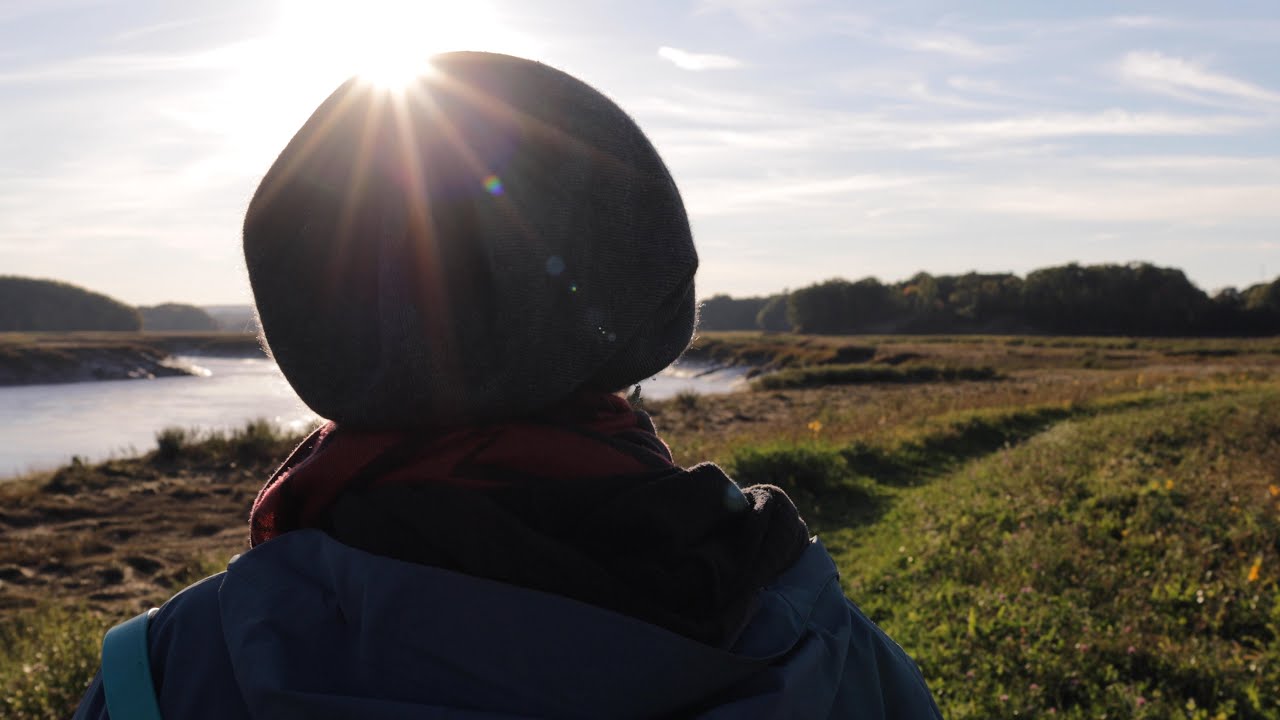
Though McInnis penned all of the songs herself, they’re custom compositions, made to the measure of those who commissioned her to write them. She’s indebted to her muses. “Without their stories,” she says, “this project wouldn’t have taken shape.”
That shape is something like a quilt. As much as Threads holds the pieces together, those pieces are fundamentally part of sprawling tapestries of their own. “I think it’s really cool for audience members because if I was just playing the songs, I could tell the stories, but I’d be relaying, like the next chain in the telephone line kind of thing. So audience members are going to be able to meet the participants through the film.”
There are eight songs in total which correspond to eight unique stories from all over the Atlantic provinces. Most of them are from Nova Scotia, where McInnis is based, but there is representation from New Brunswick, PEI, and Newfoundland and Labrador as well.
Four of the stories centre around people at the end of their lives, while the other four come from those grieving the loss of loved ones. The narratives cover the full spectrum of death and grief circumstances, McInnis explains, from sudden deaths to terminal illnesses, a car accident, a suicide, and multiple losses. One of the stories, which takes place here in St. John’s, focuses on two sisters who lost their mother and their maternal grandmother within a day of each other.
Despite the heavy subject matter, the songs themselves are not as morose as you might expect. They’re polyphonic, integrating multiple voices and styles. There are no haunting funeral dirges here, or mournful laments. These songs are carefully composed containers, treasures gleaned from lives lived, like wonder rooms or memory boxes in musical form.
Music, the Common Thread
“Music has always been such a huge part of my life,” McInnis says. She started playing piano as a toddler, and spent many years taking lessons. “I developed a love-hate relationship with the piano,” she jokes. “I did a lot of classical-based music [but] my heart wasn’t in that.” After starting with instruments, she eventually found her voice as a preteen. “I remember bringing my guitar to school and being like, ‘I’m going to learn this Ben Harper song.’”
Then, she started writing her own songs. By the time she was 16, she was performing them for audiences in coffee houses. “I have an older brother who was in the music scene so I always looked up to him. I went to a lot of concerts. I was like, ‘I can do that! I want to do that. And I don’t know how, but I’m going to do it.’”
Though music has been a constant in her life, it took her a while to realize it was something she wanted to do full-time. Her interest in social justice drew her to a degree in International Development from Trent University. Toward the end of that, she realized she didn’t want to continue in that direction. “Something in my body was like, ‘No,’” she says.
McInnis took time to reassess, and even considered becoming a paramedic. “I went as far as to apply…and I got in, only to notice, ‘Something doesn’t feel right.’” Her trajectory is peppered with such references to her intuition. Not only is it strong, she also has a propensity to honour it. “There’s been a lot of trusting that things are going to work,” she says.
Making Connections
Writing legacy songs is an intuitive process, McInnis explains. Normally, she records audio interviews with her clients, and reviews them. “I listen back and I pull out pieces that best represent the person.” There’s a tactile dimension to this work as well. “I do it all by hand because I find that’s a more intimate connection to the words,” she says. “It has to come through me to get it down on paper.”
Once she’s written it all out, McInnis starts highlighting things. “I might be inspired to write a line… Maybe I get an idea for a chorus verse, or maybe I have three verses written and I’m like, ‘Okay, what’s the title of this song going to be?’ Sometimes it’s really obvious,” she says. “Sometimes I just know, other times I need to tease it out a little more.”
It takes a lot of effort, but it’s worth it. “I really love the process of figuring out how to write the song,” McInnis says. “It’s like a puzzle and I have all the pieces, and they’re upside down and jumbled together and I figure out how they fit together.”
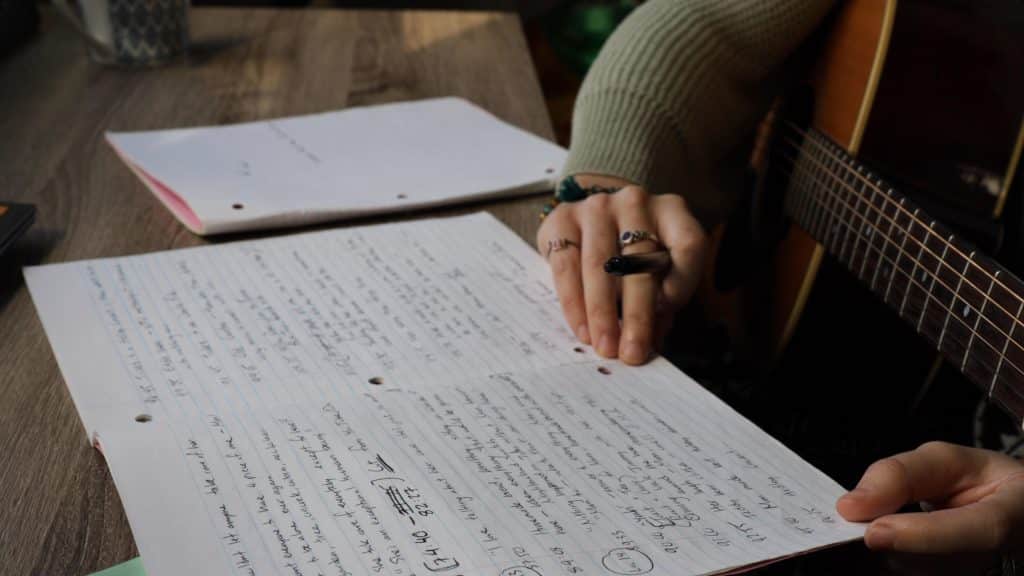
While she’s the one sorting it all out, she also relies on others to guide her. “I am also quite a spiritual person so when I’m writing the songs, I’ll often call on people to come help me.”
McInnis is a people person. Throughout our conversation, she takes great care to mention by name all of the people she’s encountered along her journey. People always seem to be there at the turning points in her life. Fiddle lessons with Julie Fitzgerald inspired her to embrace music in a more substantive way, while also connecting her to Caroline O’Grady, a music therapist. O’Grady served as the prompt for McInnis to apply to Acadia University. Meanwhile, Terra Spencer, a musician and funeral director in Nova Scotia, referred her to a legacy songwriter in California, a meeting that became a catalyst for completing end-of-life doula certification.
East Coast Calling
McInnis’s father is from Glace Bay, Nova Scotia. She had been looking for a reason to relocate to the East Coast. Acadia provided the opportunity for which she had been waiting. She applied to the Music Therapy program there but nowhere else. “I was like, it’s this or nothing,” she says.
Her grandmother died while she was finishing the last year of her program. The loss was hard. It was her first time grieving someone so close to her, and it really put the emotional limitations of those around her into relief. “I experienced how emotionally stunted people can be when it comes to talking about death and grief,” she says, “how people don’t know how to talk or how to ask questions.” She didn’t take it personally; instead, she looked at the culture.
“Growing up, I’d been to a lot of funerals,” she explains, “perhaps when I shouldn’t have been there.” Raised in the Catholic church, she sometimes helped serve mass on the weekends. She remembers at the age of 10 or 11 being pulled out of school to serve at a funeral. “I remember on the altar, sitting there, my eyes filled with tears, trying to choke them back as I’m looking at this casket with a stranger’s body, seeing other people in front of me, crying.” Later, as she made her way out of the church, some well-meaning but clueless person patted her on the shoulder, saying, “You did good.”
McInnis “was around death a lot without having anyone talk to me directly about it,” she explains. As a young person, she was often put into positions where she had to comfort people without knowing how. “I’m a very empathetic person, I can feel a lot, I can feel everyone,” she says. It can be hard to sit with your own feelings and everyone else’s, too—especially when expressing emotions is seen as a weakness. “I feel like our whole generation is recovering from that.”
Western society is so disconnected from the subject of dying, death, and grief. “Everything is about prolonging life, avoiding the pain of loss,” she notes. We’re not prepared for death when it inevitably comes. While we might know how to address the event through funerals or other customs, there’s almost always more grief to come. “As time goes by people forget because it wasn’t their loss,” McInnis says. “But that loss is always with us. We’re always present with it.”
Search for Meaning
Though she’d been performing as a singer-songwriter for a long time, she took a pause during the pandemic. “I was like, ‘Why am I doing this? What is the purpose?’” While she loves other people’s music, McInnis began to realize, “this is no longer serving me in the way that I need it to; I need it to mean more than just getting on stage and singing about my problems.
“I needed it to be more than just writing from my own perspective,” she explains. Rather than a bid for attention from the audience, McInnis says she was really seeking connection. “I want people to hear [a song] because it’s going to help them through something.”
McInnis understood the impact it could have. “For a family to hear their story just reflected back to them in this way is bigger than anything I had ever experienced before,” she says, adding it “feels like an act of service in helping people through their own grief.”
The Generosity of Attention
The process of dying is very expensive. “People don’t really realize there’s so many costs,” McInnis says. So she wanted to make her services free for people, while also supporting herself. Writing songs takes approximately two weeks, and it’s labour-intensive, she says.
“When I write every person’s song I try to do it in a way or a style that they themselves would enjoy listening to, which really stretched me as a musician. Because I’m not skilled in all genres that people like.” These considerations led her to apply for funding. With the support from the Canada Council for the Arts and Arts NS she was able to bring others into the project.
A documentary wasn’t part of her original plan. McInnis wasn’t sure the people involved would want to be filmed because it’s such a vulnerable time in their lives. But it turns out they were receptive to it. After all, people approached McInnis because they wanted a space where they could talk and share their experiences. “Put it out there in the world,” she says, “and people will find you.
She likes to give people as much space as they need. “I let people talk,” she says. “If they want to go for three hours, I’m like, go for it.” It takes a while for people to get comfortable in a conversation, and sometimes the most compelling parts of their story appear at the end of an interview.
“Generally the people that come to me, they want to talk. It’s not like I’m trying to pry information out of them. I’m actually just here to listen,” she says, explaining she just asks people, “What do you want to tell me about.” That kind of attention is in short supply these days. As one participant told her, “It was just so healing for you to sit and listen with no expectation,” she recalls. “You didn’t cut us off.”
When you lose someone, you gain the weight of grief. It’s heavy and hard to carry alone. McInnis sees the legacy song project as a way of shouldering that weight. By providing space for people to express themselves, it lightens the load. “If you get it out of your body by using your voice, it takes away some of the power of how it can impact you emotionally.”
Preparing for an Ending
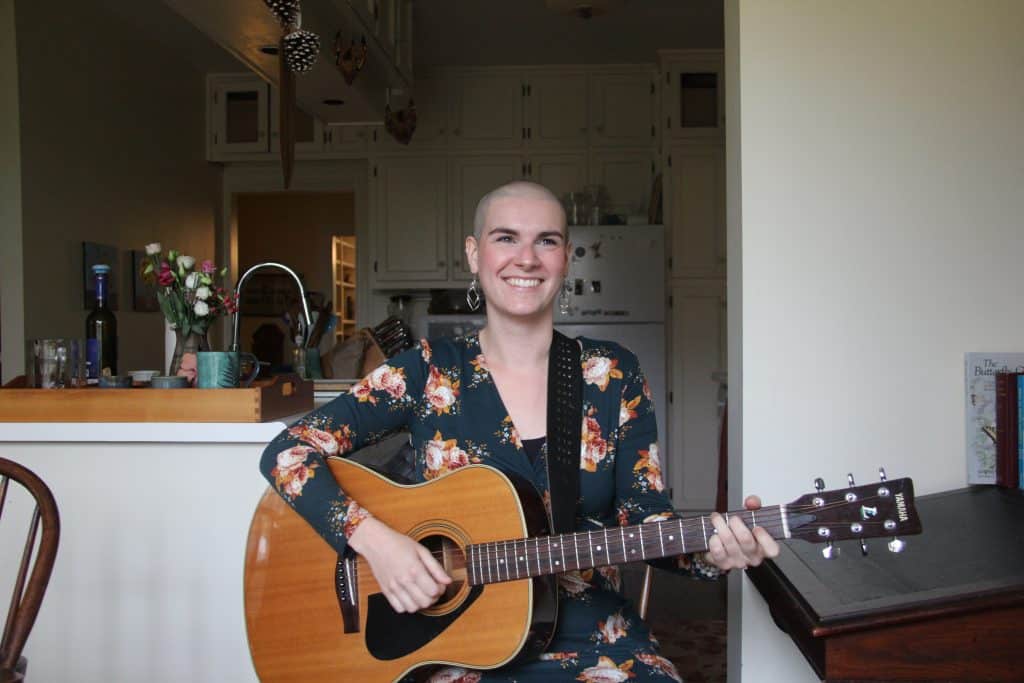
I ask McInnis who she’d like to see in the audience. “People who are curious about death and dying, who have questions, people who are fucking terrified of it,” she says. “I would love for them to be there.” At the same time, she gets it when people can’t. “I’ve had people say, ‘I really want to be at your show but I’m not in the place to be there emotionally,’ because people do cry, emotions do come up. We’re talking about some really heavy topics.”
She also knows that there might be people in the audience who have been recently diagnosed or lost a loved one, or who are simply terrified of death. In a community it’s reassuring to know that other people are there to feel things too. “The lights are down, you’re allowed to cry. Please cry. Please let it out. Or just walk away and have a conversation with the person you came with about who you lost and bring them back up.”
She mentions that a recent show in Moncton had a smaller audience. She felt disappointed—that is, until she received a message from someone who was there. They said they appreciated the way McInnis had addressed the language around suicide. They shared that they’d attempted once, and for this reason, their partner hadn’t wanted to come to the show.
In the end, they were both glad that they had. “We left feeling very calm and peaceful and we were very happy that we went,” they’d written. McInnis was amazed, “just to be able to allow someone to feel seen and heard in some way like that; that’s what matters,” she says. “The people who need to be there, I hope that they come.”
“The Legacy Song Project: Atlantic Chapter” is playing at the LSPU Hall at 2 PM, June 25. Tickets are available here.

Author

Related Articles
Lawnya Vawnya speaks to province’s thirst for musical diversity
For Montreal-based electro-punk duo HRT, St. John’s performance marks a homecoming
‘Honest storytelling’: N.L. drag icon set to unveil new show
Barbra Bardot brings her personal journey to the public stage in new St. John’s production ‘Becoming Barbra’
Queerness, science, and the Mistaken Point fossils of Newfoundland
Art meets science in a unique Eastern Edge residency