
A shared sense of snow
Remembering Snowmageddon. A desire for daycares. The importance of diverse housing types. New standards for old churches. Getting serious about harm reduction.

This week, as Cape Breton lay at a standstill under a weighted devil’s blanket of snow, St. John’s was dealt a much lighter and wetter hand. Still, on Tuesday, schools in the metro area were closed all day in anticipation of the deteriorating weather. I wasn’t even sure the regular council meeting would go ahead–but it did.
Everyone was in attendance, with Councillors Jill Bruce, Debbie Hanlon, and Ophelia Ravencroft joining remotely. Who could blame them? St. John’s was battered with rain, freezing rain and sleet–or better yet, “slottery snow.” Combined with the severe howling wind, it made for “a living screecher of storm,” a delightful phrase I gleaned from Brickle, Nish, and Knobbly, Marlene Creates’ treasury of terms for ice and snow. Water, as it turns out, takes on a lot of different qualities in winter. There’s a wide variety of textures, shapes, and consistencies and a name for each of them–but first you have to notice them.
Snow isn’t just one thing, but whatever snow means to you has a lot to do with your relationship to it. Pedestrians and transit users, elderly people, people with disabilities or injuries will have very different senses of snow than, say, someone who drives. Snow means something different to those among us who do the shoveling compared to those who use snow blowers, those who get paid to do the snow clearing, and those who do the paying.
This all may seem obvious, but it’s worth noting because snow is an incredibly polarizing topic around here. Snow clearing in particular has been an ongoing source of contention in St. John’s for years, especially when it comes to sidewalks. The common refrain has been that the city claims to care about safety, but it hasn’t been putting its money where its mouth is.
Will you stand with us?
Your support is essential to making journalism like this possible.
This year, the council did increase its snow clearing budget by 25 per cent from last year. An extra $5 million is being put towards extending snow removal contracts, purchasing and renewing equipment, and “sidewalk snow clearing enhancements,” according to the footnote on the snow clearing line item. It’s not clear what this means, but it probably means different things to different people.
You are what you pay attention to
Anecdotally, I’ve seen a lot of plowed sidewalks in my travels, but I’m not a regular pedestrian, so what do I know? I have casually polled friends and family about the situation, and they seem pretty happy about the state of things in their neighborhoods. Ok, so things are improving!
And yet, last week, some people expressed concerns about the lack of snow clearing on certain sidewalks, crosswalks, and bus stops. One resident in particular penned an open letter to the city, noting that some areas like Kenmount Road, designated “Priority 1,” were still not plowed. Meanwhile, certain crosswalks and bus stops are consistently used as dumping grounds for someone else’s displaced snow. It’s illegal to put snow on the street, but it’s not clear if such incidents are being noticed, or reported, and if they are, what’s being done about them.
It’s illegal to drive past a stopped school bus, and people who do it–even absent-mindedly–are issued hefty fines of up to $1,200, and drivers can receive up to six demerit points. It’s not just law enforcement keeping their eyes peeled for such infractions, it’s bus drivers, parents, and neighbours too. This zero-tolerance, community-invested approach is meant to demonstrate a united front when it comes to keeping children safe from cars. But again, last week another resident posted an image on Twitter/X of a school bus stop on Hamilton Avenue at Alexander Street, with a mountain of snow on it.

Taking action to address these kinds of safety issues is really important. But if the vast differences in people’s experience of snow illustrates anything, it’s that first we have to actually pay attention to these little things, and take notice of what’s happening around us–even if it’s not happening to us. That’s the only way we’ll ever feel like we’re sharing the same reality.
It’s hard not to look back at something like Snowmegeddon 2020 and be vaguely nostalgic for a time when rather than dividing people, snow became a uniting force. I wondered if that’s what Mayor Danny Breen was thinking when he reached out to commiserate with Amanda McDougall, and offer her municipality some support.
“I feel your pain,” he apparently told the current mayor of Cape Breton Regional Municipality. As he recounted the conversation to the council, he sounded almost wistful. As extreme weather conditions like this happen more and more, Breen noted, “the problems facing municipalities are growing all the time.”
Indeed, that’s been the running theme at these council meetings. Cities aren’t just microcosms for provinces, or for countries. While they exist at smaller scales, the scope of what they deal with is a lot more intense because of their higher population densities.
Back to business
Council approved parking relief for a subsidiary dwelling at 22 Blatch Ave. because of the availability of on-street parking. While there is a driveway that looks like it would accommodate two cars, it doesn’t meet the standard width requirement. The devil really is in the details.
A resident at 488 Logy Bay Rd. moved their entrance and requested to change their civic address to Robin Hood Bay Road, and council approved it. As it turns out, according to regulation, your front door is whichever one the ambulance can get to the easiest. (That’s not macabre at all).
Council approved the SPCA’s application for kennel use at 120 East White Hills Rd. because animals need homes too!
RJC Development’s discretionary use application was approved for a parking garage in the second apartment building they are proposing at 220 Newfoundland Dr. Counc. Carl Ridgely abstained. The five-storey building will be built in the same lot, adjacent to the first building which is currently Park Plaza Apartments. The parking garage will be limited to the first storey.
One daycare centre but not two
Two discretionary use applications were submitted for separate daycare centres, however, only one got approved.
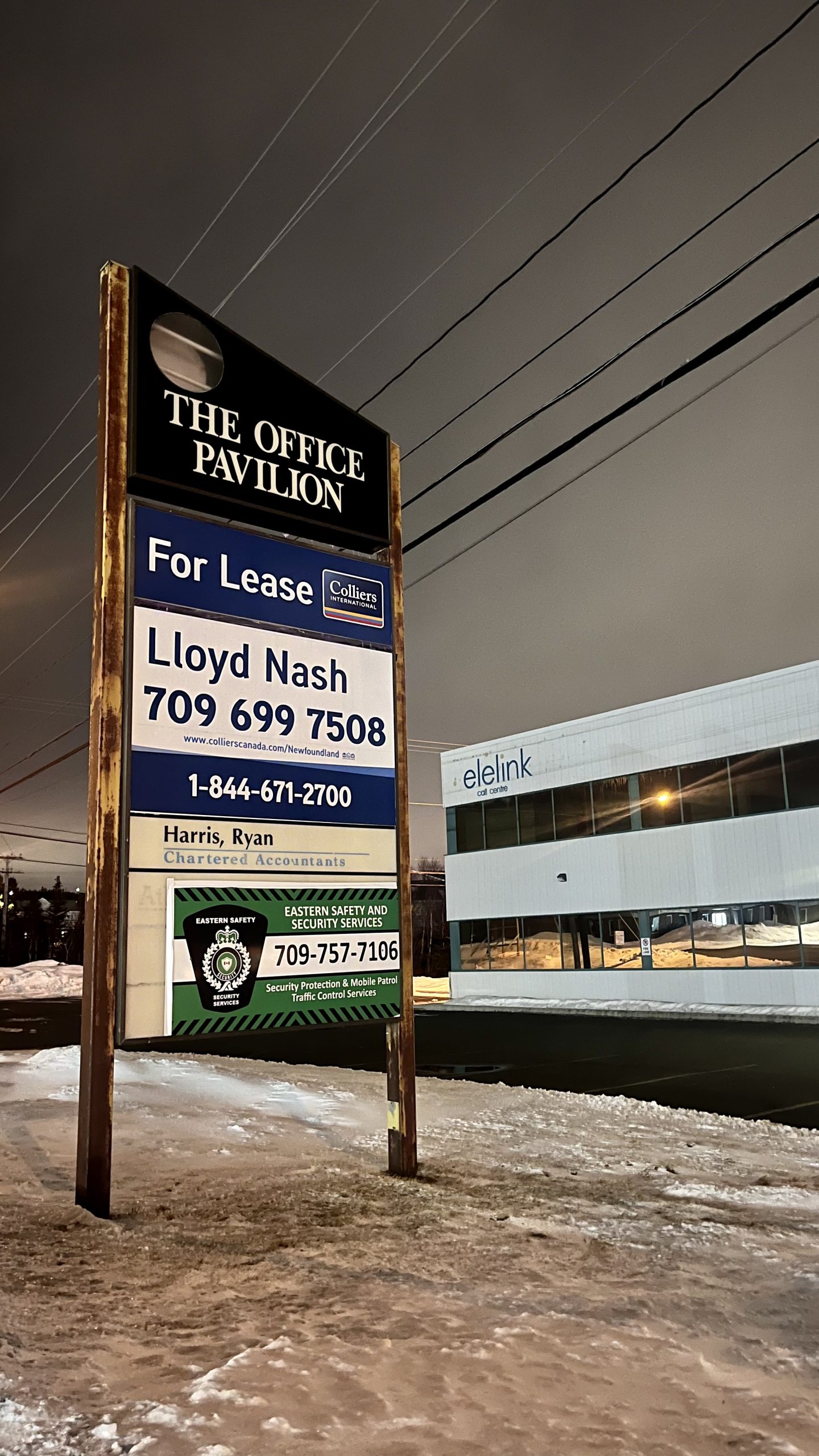
Council approved Deacon Investments’s application for a proposed daycare centre at 44 Austin St., an otherwise industrial commercial zone. The centre will accommodate up to 74 children, and up to 20 employees. Council felt it was an auspicious area as it is surrounded by sidewalks, is serviced by transit, and provides on-site parking.
Council rejected the other more ambitious application for a larger daycare at 410 Thorburn Rd., which would potentially accommodate 144 children and 20 employees.
“It gives me no joy to reject a daycare,” Coun. Burton lamented. “We need lots of new daycare spaces in the city–it’s a real need that we have–but that has to be balanced against safety risks.”
The Thorburn Road property, which is zoned rural, has a lot of things working against it–namely that it’s an unserviced area. There is no city water service, which would be a concern in case of a fire emergency. There is also no Metrobus service, no sidewalks, and the road has a very narrow shoulder, among other issues.
The application was submitted by Nidus Developments, a company with Greg Hanley at the helm. Hanley is one part of the team behind the Brookfield District revitalization. A ‘20 Questions With’ Hanley and his partner in The Telegram last fall suggests he was doing his homework. He said his current reading was “development regulations for the City of St. John’s. Dissecting it page by page.” City staff didn’t know whether or not the company would try again, but clearly council wants to say yes to more daycares.
An apartment building in a residential zone!
Council agreed–though not unanimously or without a lot of discussion–to consider rezoning 46 Hazelwood Cres. to bring the property into conformance. As an apartment building, it should technically be in the apartment 1 zone, and not the residential 1 zone.
It was noted that, if council does in fact rezone the area–pending engagement with residents–this would be a departure from the norm. Typically, a proposed development is the catalyst for rezoning and this isn’t the case here. There are no immediate plans for any alterations, but if there are, having the zoning in alignment would help shorten the process.
Councillors Jamie Korab and Ron Ellsworth raised some concerns that if the area was rezoned as apartment 1, it might open the doors for other apartment buildings to be developed there, in what is otherwise a low-density residential neighborhood.
But, as Burton pointed out, A1 is still for residential use so it’s actually not a major departure. “People live in apartment buildings, that’s what they’re for,” she said.
Furthermore, it makes sense to have an apartment building in this area given its high walkability and transit score. It may be a low-density area, she said, but “I feel very strong that we shouldn’t have homogeneous neighborhoods of only one housing type at a time.”
Supporting adaptive reuse for old churches
Given that we now live in the land of dying churches, council approved the amendment of the institutional zone standards to support their adaptive reuse. Ellsworth abstained.
Burton noted that many of the church properties sold off by the Roman Catholic Episcopal Corporation are in the institutional zone. While there is no one-size-fits-all standard that will work for each case, they decided to remove zone standards around frontage and side yards. These are posing obstacles to new owners who often want to subdivide these properties to redevelop them for new uses. Council kept the building height standards intact.
And the money goes to…
Parts for Trucks has been awarded a contract of $39,050 for electronic and hydraulic parts for the city’s fleet division.
Newfoundland and Labrador Power was awarded a contract for phase 4 of the Water Street infrastructure improvement project for $137,518.
The design of the shared use path from Portugal Cove Road to Logy Bay Road via Kenny’s Pond and Tupper-Laurier Park went to Dillon Consulting Ltd. for $349,844. The design will be done by August 2024 so that construction can begin in September, if all goes according to plan.
Breen, meanwhile, is headed to Houston, Texas in March for CERAWeek, an annual energy conference. He’ll also be attending the Federation of Canadian Municipalities Big City Mayors caucus in Ottawa in February.
Xylazine in the drug supply, and recycling in the streets
When it came time for the go round, where each councillor gets the occasion to speak freely, Bruce reminded everyone again that Chillfest begins on Friday. The six-day event will include free activities for the public, and runs February 9-14. So, if you haven’t had a chance to enjoy winter yet, there’s still time!
Ravencroft, meanwhile, used the opportunity to make a plea for radically improving harm reduction in the city.
“Immediately before heading into the council meeting today,” she said, “I was made aware that Sydney, Nova Scotia and the Cape Breton area have begun reporting instances of cocaine contaminated with Xylazine.” Xylazine is a non-opioid sedative used in veterinary medicine; in humans, it can depress the central nervous system, among other effects. Ravencroft noted that as contaminated drugs travel across the country, there is a risk they could make it into the local supply.
“I think it’s important that we de-stimgmatize topics like this so that anyone who is a member of our community can stay safe.”
She encouraged anyone who uses substances or cares about someone who does, to contact the Safe Works Access Program (SWAP) or any other distribution site, including Planned Parenthood and the Safe Harbour Outreach Project (SHOP) to access supplies such as naloxone kits and testing strips.
“The last six months have seen, I think, some increased discourse locally surrounding the need for an overdose prevention centre or a safe injection site in our downtown,” Ravencroft continued, referencing calls she’s received from the resident and non-resident protesters at the Tent City for Change encampment outside Colonial Building.
“I think it’s absolutely necessary,” she concluded. “Minister (Tom) Osborne and NLHS–anybody else, if you’re listening–it’s time to make a safe injection site happen.” Ravencroft said she’d like to see it downtown in Ward 2 where it’s most needed.
Speaking of contamination, Deputy Mayor Sheilagh O’Leary brought up a less lethal but still vexing kind: your recycling blowing around the streets. She’d like to continue reviewing how the city recycles, she said, and have conversations about blue bins again, as using loose blue bags in one of the windiest places doesn’t make sense.

The meeting ended on a somber note as O’Leary and Breen announced the passing of Dr. Frank Duff, the husband of Shannie Duff, former St. John’s mayor, long-time mentor, and friend of the city.
Dr. Duff leaves “a deep void in the family and in the community,” Breen said, offering his condolences on behalf of the council. He noted, as many others have, that Duff was an orthopedic surgeon, famous for many things, such as performing the first joint replacement in the province. Such procedures are so commonplace now, it’s easy to forget they weren’t always an option. Joints tend to be the first parts of us to wear out because they’re connectors, and holding things together involves hard work. By tending to those important but often neglected connections, Duff left a fine legacy.

Author

Related Articles

Signs of the Times
Korab joins Team Furey. A slipway ties the whole community together. An apartment building downtown. A tale of two experiences from two city parks.

St. John’s women of influence
Awards, birthdays, marriages, and retirements are celebrated as two distant food trucks duel for the night in the parking lots of old establishments history forgot

Holidaying on Indigenous land
June Day is renamed no thanks to Tom Davis. A questionable debate about parking relief. Minor sport, major expense. Trash is a symptom of a bigger problem.