
Holidaying on Indigenous land
June Day is renamed no thanks to Tom Davis. A questionable debate about parking relief. Minor sport, major expense. Trash is a symptom of a bigger problem.
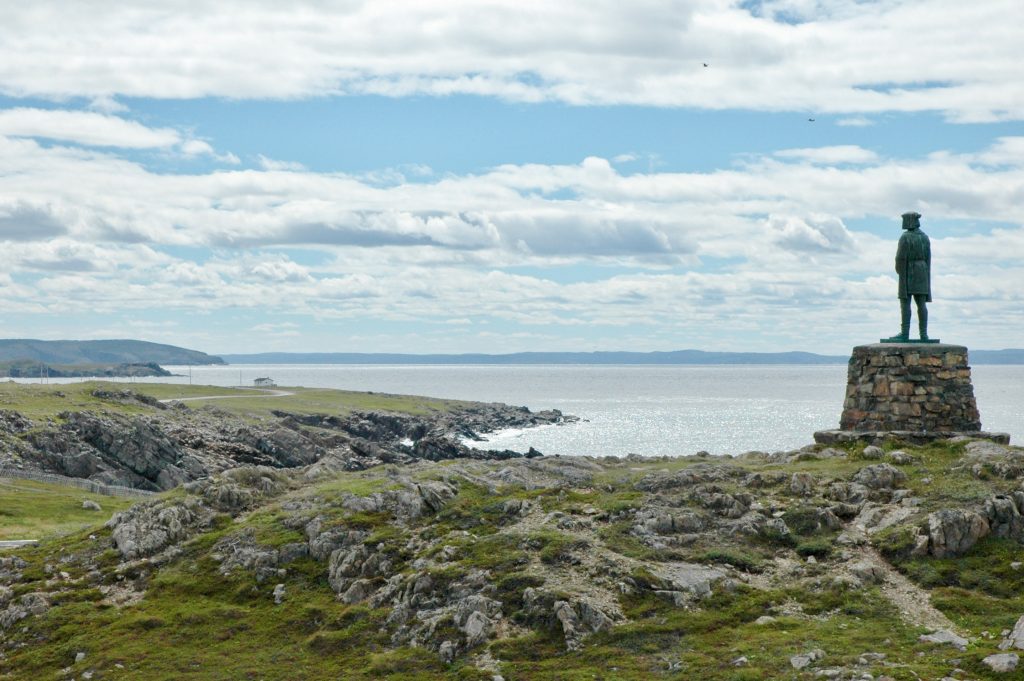
June Day, as its nondescript, unimaginative title implies, was only ever meant to be a temporary placeholder while the City of St. John’s decided on a more suitable name. I sometimes wonder if the same might be said about “Newfoundland.” Surely the Europeans who called it this did not intend “Land I Just Found” to be its forever name. At least the island’s Mi’kmaw name Ktaqmkuk—which translates as “land over the water”—acknowledges the place in relation to its surroundings, and not exclusively in relation to those who encountered it that one time. Naming matters, so it’s significant that the city council passed a motion this week to rename the June Holiday, National Indigenous Peoples’ Day, in a concerted attempt to overwrite Discovery Day once and for all.
The holiday, which usually falls on the Monday near June 24, was renamed Discovery Day in 1997 in honour of the 500th anniversary of John Cabot’s largely undocumented, casual encounter with Newfoundland in 1497. Prior to that, the June Holiday was called St. John’s Day, because Cabot is alleged to have arrived on the feast day of St. John the Baptist. Though the exact date remains up for debate, clearly the timing held some allure. John the Baptist, after all, was the man credited with preparing the world for the coming of the Messiah, just as Cabot was believed to have prepared North America for the coming of the British Empire.
While we call him John Cabot—and have named streets, buildings, and bodies of water after him—his real name was Giovanni Caboto, or possibly Zuan Chabotto. It’s unclear if anyone consulted him on the anglicized name change. The Italian merchant and property developer became an “explorer” for hire after he fled Venice trying to escape the creditors he owed. He left Bristol on a King’s errand, and showed up on the island uninvited, allegedly at Bonavista, but no one knows for sure. It’s alleged that once there, he saw some evidence of human inhabitants, though he didn’t bother waiting around to meet them. In fact, he didn’t spend much time getting to know the place. He and his men lingered at the edges, too intimidated to venture inside.
I like to imagine Cabot near the coastline, fumbling with his flagpole, trying to plant the tip into the impenetrable ground. Perhaps he never succeeded in erecting his banner at all; he simply fled in frustration and never returned. All we’re meant to know is that before he left, he called dibs, yelling into the air to an audience of seabirds that this shapely expanse of land and its fish-abundant waters were officially spoken for. They were now the sole property of King Henry VII of England, and no one else.
Will you stand with us?
Your support is essential to making journalism like this possible.
This initial encounter doesn’t seem so bad in the grand scheme of “discovery” encounters, but it sent ripple effects through time which gathered destructive momentum, changing the shape of this island, and the fates of everyone who called it home. Discovery myths are founded upon the “Doctrine of Discovery,” a fiction weathered into fact that granted Europeans the God-given right to play finders keepers with any land they stumbled upon–as long as there were no Christians on it. Non-Christians were fair game. Indigenous Peoples weren’t considered human beings, just obstacles to be overcome, so Europeans could have unrestricted access to the flora and fauna of strange lands.
This idea of the European right-of-way to other peoples’ lands has been naturalized, normalized, and strengthened through repetition. Which is why it’s important to stop repeating it, and reinforcing it, and giving it power. It’s also why the Truth and Reconciliation Commission called on all governments and citizens to acknowledge the problematic nature of the narrative of discovery. They made many other urgent calls to action too, but this one in particular stands out because it is about rewriting an origin story.
The scaffolding of the John Cabot story is so threadbare, so full of gaps and vagaries, it’s hard to believe it endured for more than half a millennium. But that’s sort of how myths work; just a key ingredient or two, we add the rest and repeat. Origin stories are powerful vehicles that carry within them the building blocks for the present and the future we create.
‘If we’re living on Indigenous lands, holidays should recognize Indigenous Peoples’
The council’s decision to rename the holiday did not come out of nowhere. As Mayor Danny Breen pointed out, there has been extensive community engagement, in collaboration with First Light and First Voice. There is a traceable throughline from the council’s 2020 Declaration in Support of the Rights of Indigenous Peoples, to the 2023 Community Action Plan. Change 20 in the plan is an explicit commitment to establish an official statutory holiday in honour of the contributions of Indigenous Peoples.
“We have a very sordid history. We need to step up and actually really embody reconciliation,” Deputy Mayor Sheilagh O’Leary said. “We can’t just talk the talk or do land acknowledgements at the beginning of the meeting, and assume that we are going to actually do something.”
While there is still much to be done, little things over time add up to a lot. She is proud of the city’s collaborations with First Voice, she said, and their combined efforts “to address in a number of different ways the wrongs that have been done to Indigenous communities,” and she hopes other municipalities follow suit.
Counc. Ophelia Ravencroft echoed this. “I’d like to see National Indigenous Peoples Day recognized in far more places than just the city of St. John’s but I’m grateful to us—to everyone around this table—for making this move, and particularly everyone over at the First Voice Coalition.
“This is work that could have been done a long time ago,” Ravencroft continued, but she is delighted that it is happening now. She described it as a turning point for the city in “recognizing that we need to move toward a decolonized future, and acknowledging that if we’re living on Indigenous lands, that holidays should recognize Indigenous Peoples.” In other words, in everything we do, we should be thinking about the land we’re on and the responsibilities that come with it.
The city’s holiday will fall after Canada’s National Indigenous Peoples Day, which is observed on June 21. That day is for celebrating the contributions of First Nations, Inuit and Métis communities across Canada. It’s not a provincial holiday, so the city’s holiday builds on this one, focusing on the achievements and contributions of the Indigenous community in St. John’s.
Counc. Maggie Burton pointed out that the day offers a counterpoint to Orange Shirt Day on September 30, which is a national day of mourning meant to acknowledge the horrors of the residential school system and their lasting impacts. Having two different days, Burton said, “creates room for joy and sorrow.”
We need to normalize having multiple days that honour Indigenous Peoples, especially given how many holidays we have celebrating Christians and royals. “The celebration of National Indigenous Peoples Day is an addition to the things we celebrate, not a subtraction from things we already celebrate,” Burton added.
“I don’t see any reason why anybody should vote against this proposal today.”
‘The right thing to do’
But Counc. Tom Davis saw a reason, seeming to summon it out of thin air, as he told the group he’d be voting against the name change.
“I’ve really struggled and spent the whole weekend thinking about this and consulting and talking about it,” he said.
He assured everyone it wasn’t because he didn’t accept the recommendations of the Truth and Reconciliation Commission. It’s not that “I don’t feel, you know, a deep sense of sadness and then sorrow for the harms that were done to many Indigenous people,” he explained.
Rather, it was because he didn’t feel ready to make such a big change in such a short time. He also didn’t really like the fact that the city’s holiday doesn’t neatly line up with Canada’s National Indigenous Peoples’ Day on June 21.
“I know my vote’s not going to impact whether [the naming] happens or not,” he said, dispassionately. But clearly, he still wanted to make his position known anyway. He admitted that his feelings might very well change, that he wants to learn, and he will be participating in the day nonetheless.
“I do want to learn more, and I’m really looking forward to being part of that day because I’ve never been part of it before. One of [the] major things I want to do is get down to the powwow in Conne River as well,” he added.
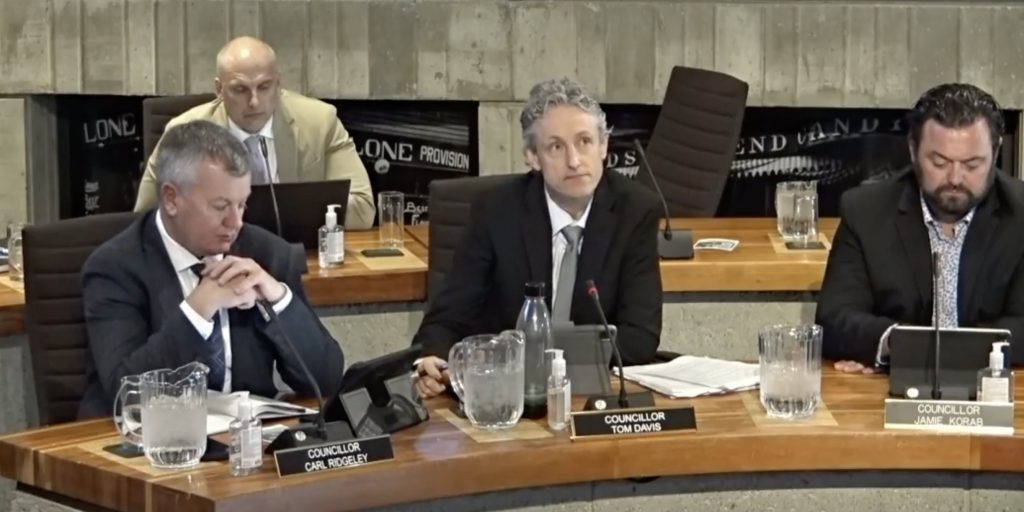
Davis may have only spent a weekend mulling over this decision, but the rest of council had been reflecting on it for years. “There has been so much consultation on whether or not to repudiate the Doctrine of Discovery,” Burton said. Back in 2018, the possibility of changing the name caused quite a stir. “I know that given how much vitriol I would face six years ago when I brought this up, people really care about this.”
“Sometimes people use consultation or lack thereof from their perspective, as a way to not support a recommendation and that’s a trick as old as politics,” Burton added. She’s right, it’s a bad faith argument, and a way of refusing to take responsibility for one’s own learning.
“Counc. Davis’s reluctance to vote in favour of this, is just one example of this sense in the community that […] we haven’t consulted enough, we haven’t gotten the will of the people,” Burton said.
“The will of people is not the only thing that matters, it’s also the good of the people. And this is the right thing to do.”
‘Accessibility and inclusion benefit us all’
Councs. Jill Bruce and Sandy Hickman were absent this week. Counc. Ravencroft tuned in from home, though due to technical difficulties she remained voiceless until the one-hour mark when her mic suddenly went hot and caused Breen to jump out of his chair.
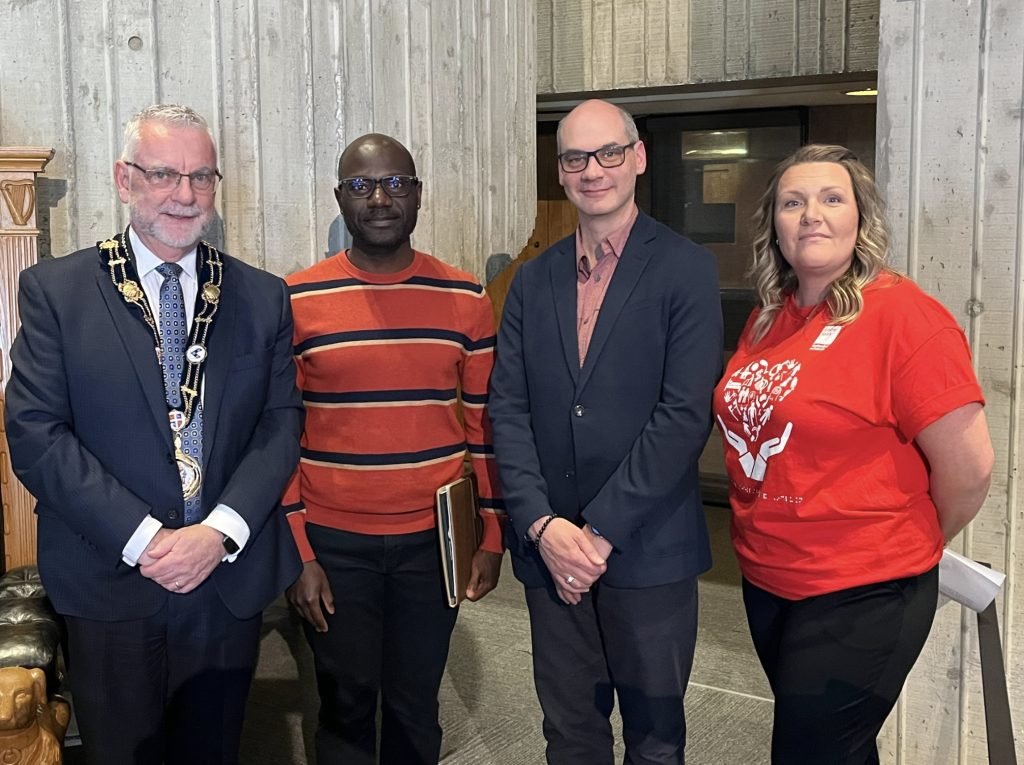
There were three proclamations. The first was National AccessAbility Week in St. John’s, which will run from May 26 to June 1. Representatives from Inclusion St. John’s and the Inclusion Advisory Committee were present for the announcement.
This year, the city is making an effort to promote the accessibility and inclusion programs and services that currently exist, as people who might benefit from them are not always aware of what supports are available.
”Accessibility and inclusion benefit us all,” Breen said, “particularly the estimated 30.9 per cent of people in NL that live with one or more disabilities.”
He noted that the City is committed to creating an accessible, inclusive, healthy, and safe community for everyone, and this is reflected in its Accessibility Plan 2024-26. “We strive to meet the diverse needs of our community by identifying, preventing and removing barriers so that all people can equitably live, work, play and learn here.”
June is also Deafblind Awareness Month, dedicated to recognizing and celebrating the contributions of individuals who are deafblind make to their communities throughout the province.
Sitting, wheeling, walking, and hiking
Breen proclaimed June 1 National Health and Fitness Day in St. John’s. Representatives from Memorial University’s School of Human Kinetics and Recreation were there to kick off the annual ParticipACTION Community Challenge, a campaign that encourages people to get active by signing up and tracking their physical activity. Whoever wins Canada’s Most Active Community will be awarded $100,000 to support local physical activity and sport initiatives.
The campaign aims to be accessible and inclusive with at least two “Walk and Wheel” events, one on June 1 at Kenny’s Pond, and another on June 29 at Bidgood Park. Getting moving is not always about motivating people, it’s also about removing obstacles, making physical movement easy and enjoyable on its own terms.
O’Leary also reminded everyone that June 1 is the 30th anniversary of the East Coast Trail. The Annual East Coast Trail fundraiser, Trail Raiser, is happening in Bay Bulls. The Association recently announced that many of its trails—which are used by residents and visitors alike—are in desperate need of repair.
Welcome to Rabbittown
Council approved a discretionary application submitted by Smiling Sisters Ltd. for a proposed home occupation for food preparation. The prepared food will be sold at farmers’ markets, and will be available as takeout. Customers will be able to place orders online and pick-up on site.
Council only received four responses from residents, all of which were strongly in support of the business, seeing it as a welcome addition to the neighbourhood.
“More business growth and expansion is a good thing for the city overall,” one resident wrote. “I wish the business all the success.” It’s nice to see Rabbitown stepping up to support such efforts, unlike some neighborhoods (East Point Landing and Clovelly Estates, I’m looking at you).
Started from the parking, now we’re here
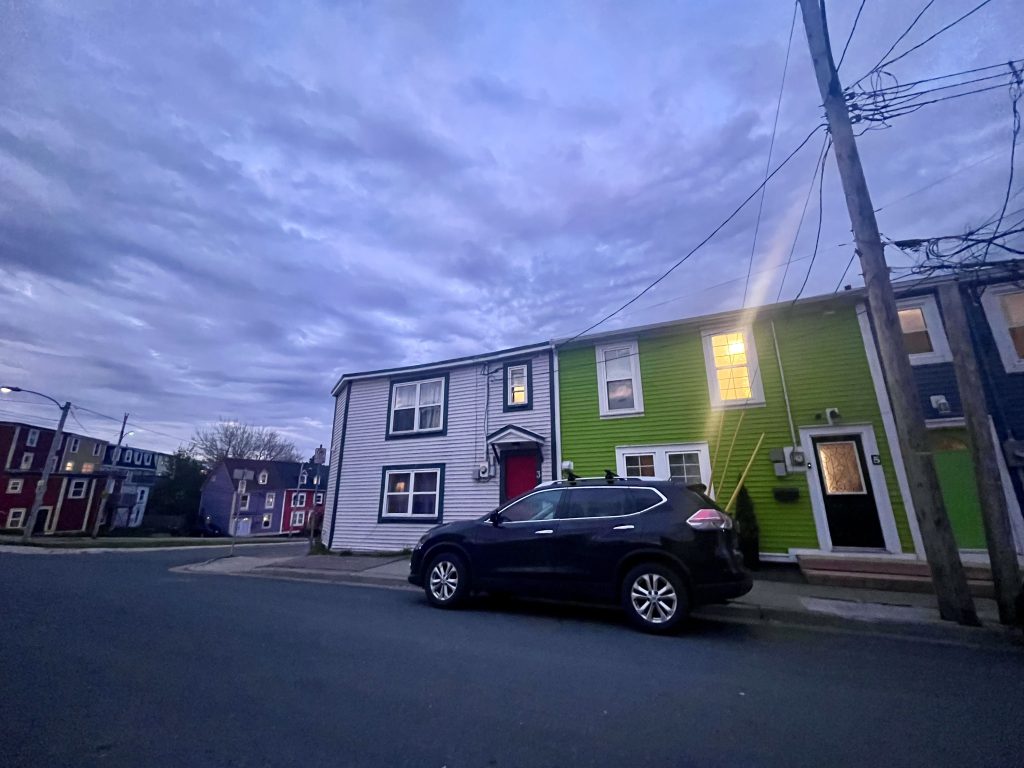
Photo by Sara Swain.
Council received an application to relieve two parking spaces at 3 Cabot St. The application itself seemed very straightforward, but the conversation about it quickly went off the rails. Instead of addressing the issue of parking relief, it devolved into a related but ultimately off-topic discussion about lodging houses, how safe they are for occupants and nearby residents, and whether there should be any more of them in the downtown area.
The property is currently a single-family dwelling being used as an emergency shelter, and the applicant, a non-profit housing provider, wants to change it to a lodging house with six rooms. This is a permitted use in the residential downtown zone. Because it doesn’t mark a change in use, it doesn’t require a discretionary use application.
The city requires one parking space for every two rented rooms and there is no onsite parking, just one on-street space. The applicant is seeking parking relief, given that the occupants are not likely to have their own vehicles anyway, so parking would not be an issue.
City staff recommended that council approve the application, but O’Leary and Counc. Carl Ridgeley said they would be voting against the motion, while Couc. Ron Ellsworth was conflicted.
“Even though I believe in support for vulnerable communities—and lodging houses, that’s what we’re dealing with most times—I can’t give my vote for parking relief,” O’Leary explained, adding that she’s been “dealing with a myriad of major neighbourhood concerns” in this area for many years.
“On the heels of celebrating diverse and vibrant communities,” O’Leary said, “accessibility, inclusion, mixed-use neighbourhoods [are] something we need to be considering when we’re approving a number of different applications.” In this case, a “lion’s share” of the housing in this area is already being used to support vulnerable people in the community.
“By continuing to support this, we are only continuing to ensure that we are moving away from diverse communities and mixed-use communities, and the problems that can come,” she said, referencing concerns that were recently highlighted in the media.
People with complex needs are not getting wraparound supports which is putting them and those who live close to them at risk, all the while private landlords hoard resources from the Department of Children, Seniors, and Social Development. This is a real issue, but it is unrelated to parking.
‘I think this entire debate is questionable’
Ridgeley said his biggest concern was “a life safety issue.” He wondered, for example, if there were smoke detectors in each bedroom at the lodging house and how that could be policed, if at all.
Deputy City Manager Jason Sinyard pointed out that the National Building Code wouldn’t apply as it only relates to new builds. However, residential property standards still apply and they require alarms.
As a housing advocate, Ellsworth said he recognizes the need for diverse units but he also knows housing needs to be safe. He wondered if a condition might be added to the application. However, City staff pointed out that wouldn’t be appropriate given it’s about parking relief and not land use. Ellsworth put forward a motion to defer council’s decision until next time, so safety regulations around lodging houses could be examined. The motion was accepted 5-3. Burton was against deferring the decision, especially on the grounds provided.
“I think that this entire debate is questionable,” she said, pointing out that none of these issues have anything to do with parking.
“I’m really uncomfortable applying our standards differently for different applicants,” Burton said. Many people have existing houses with multiple occupants, noting her own has seven people in it. “The fact that we’re applying a different lens to this particular application because of concerns about fire, smoke alarms, I just don’t think that’s fair.”
Minor sports, major expenses
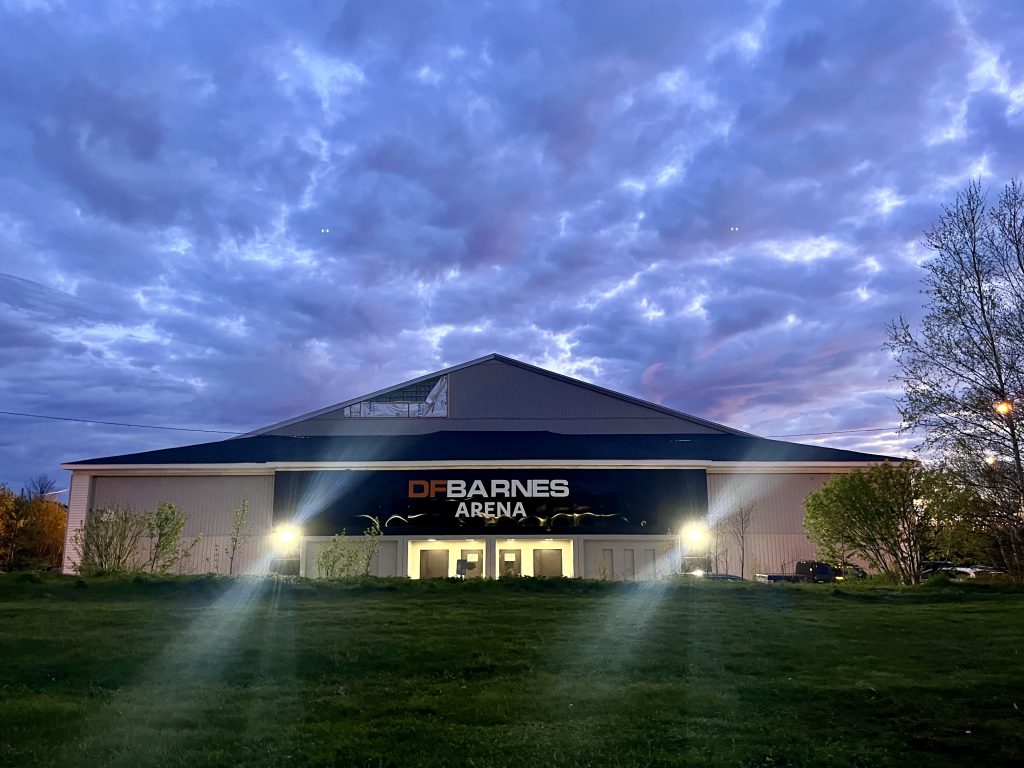
Council agreed to pay Roynat Financial more than $2.3 million, the Celtics Centre Hockey Corporation’s (CCHC) balance owing to secure the DF Barnes Arena at 244B Pennywell Rd. Ellsworth described it as a short-term solution meant to give the corporation a reprieve so it can reassess its financial situation and propose a longer-term solution.
The City stepped up as the guarantor for the CCHC acquisition of the arena back in June 2020, as the CCHC is a nonprofit organization. The City provided them with an interest-free loan to secure mortgages on the property. CCHC, due to the pandemic downturn, unforeseen maintenance and repairs, and high costs and interest rates, cannot make its payments. As a result, it will be penalized $16,000 per month, which will only exacerbate its financial situation—and the city’s.
Everyone supported the motion to help the struggling organization, allowing the City to leverage the funds it has in its cash reserves to mitigate the CCHC’s financial situation before it escalates.
O’Leary was on board, but with the caveat that supporting sports doesn’t come at the expense of the arts, which is another communal good. “There is a big gap right now in our arts and cultural community in terms of structural support for production for artists,” she said.
“I’m hoping that in the time to come, and with a number of different organizations that are starting to come together, that we will have similar kinds of conversations and supportive relationships with the cultural communities too, because they’re a part of the picture as well.”
Davis said, “I know we don’t really have any choice in the matter but I’m a hundred per cent supportive.” He also took the opportunity to point out that he wasn’t in council when this was passed, but remembered wondering: “Is this a profitable business? Does the City know what they’re getting themselves into?”
Ellsworth assured Davis that the City wouldn’t have taken this on had there not been a viable business model. A public good doesn’t always have to be profitable, but the benefits it provides should be worth the expense.
Trashing the land that feeds you
Despite the City’s ongoing clean-up campaign, trash just keeps piling up.
O’Leary shared that she’s had some dialogue with residents about overflowing garbage cans around the city, especially in centre town. Counc. Jamie Korab, who announced this week he’s hoping to run for the Liberal nomination in Waterford Valley, said he’s received complaints about illegal dumping in the Cowan Heights area near the roundabout at Blackmarsh Road and George’s Pond Road. There’s no way to catch who’s doing it, as the garbage is showing up constantly, but not always in the same place.
“Stop doing it. Knock it off. Bring it to the landfill,” he said, pointing out that the City has made it very easy to dispose of waste. Most things can go curbside, and if not, “Robin Hood Bay isn’t that far away.” Its hours of operation make it accessible and convenient, though apparently not convenient enough. Some people have poor impulse control and executive functioning challenges. Adulting is hard, and littering is far too easy.
As a case in point, the clean-up on the Outer Ring Road this past weekend, Korab reported, yielded 3,750 bags — a thousand more than last year. There were also plenty of items that wouldn’t fit into bags, like couches, tires, bike frames, and dog kennels. “Please secure your loads,” Korab implored.
“A bit of a garbage theme,” Davis observed, bringing up the City’s ongoing community clean-ups before veering off about speeding, noting his “cautious optimism” about the province’s recently-announced ticket-generating speed cameras, hoping they will be “a benefit to make our communities safer.”
Clean communities and safe communities are the dream, but litter and speeding show that good land relations have to be part of that too. The Outer Ring Road that circles St. John’s might be notorious for drive-by littering, but it’s also legendary for dangerous driving and car collisions that have taken a pretty big toll on human and animal lives. These things are not unrelated.
It’s used by many, but the road is claimed by none. It’s not a place for stopping, only passing through to get somewhere else. It should come as no surprise then, that this no man’s land has become a trash can. Land use reflects, reproduces, and reinforces land relations. Without repairing them, clean-ups and surveillance cameras can only go so far.

Author

Related Articles

Signs of the Times
Korab joins Team Furey. A slipway ties the whole community together. An apartment building downtown. A tale of two experiences from two city parks.

St. John’s women of influence
Awards, birthdays, marriages, and retirements are celebrated as two distant food trucks duel for the night in the parking lots of old establishments history forgot

The litter, my friend, is blowin’ in the wind
Land uses near landfills. Home businesses are trending. Market Family moves ahead. Sheila’s Brush abides. A private clinic…with MRI.