
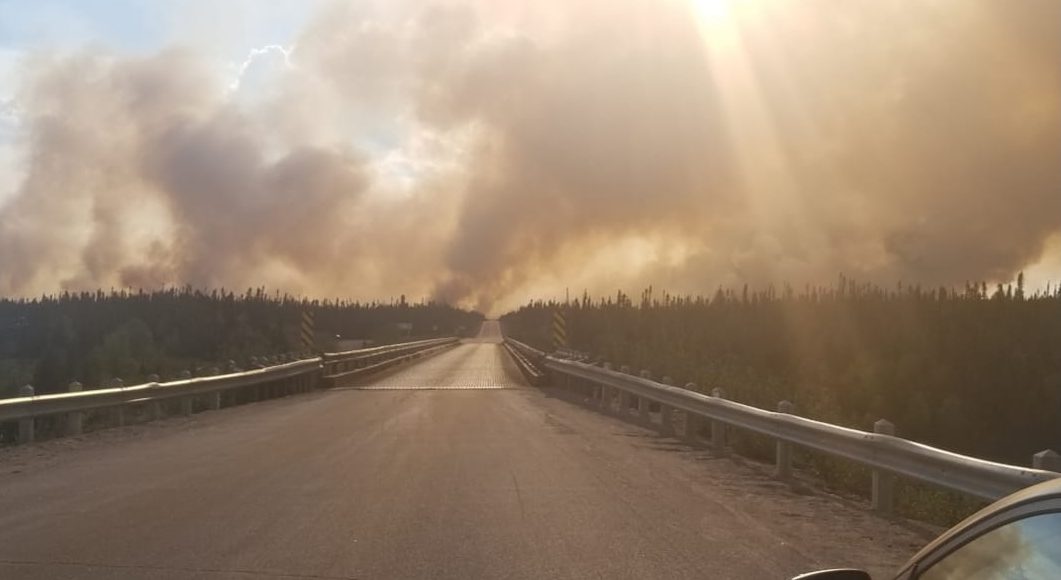
It would take as little as 10 minutes to start putting out wildfires in Labrador West when Terry Roberts started as a ground firefighter in 1988. Back then, he says, the ground crew consisted of anywhere from three to seven members, and there was a water bomber base.
“It was always three guy’s work. So, there were always two guys [who] went to a fire together. And when we get to the fire, we would size it up, look for our closest water supply, talk to the water bomber crew and tell them where we’re gonna work,” he said.
Now, when climate change is resulting in more extreme wildfire seasons, Labrador West, one of the most vulnerable regions in the province, has no water bomber and just one seasonal fighter.
The closest towns from Labrador West communities are hours away, which can delay evacuations and access to help. Labrador is also vulnerable to fires from Quebec. In 2023, forest fires in Quebec shut down the railway and Highway 389, which connect Labrador West to Quebec.
Will you stand with us?
Your support is essential to making journalism like this possible.
As of June 18, there are seven active wildfires in Labrador, four of which are out of control. Since the start of the wildfire season, the province has had 21 wildfires, including 11 in Labrador.
On June 14, the government sent the province’s four water bombers to control the six fires raging in Labrador West at the time.
But Labrador West MHA Jordan Brown says it would be more effective to reinstate a water bomber in Wabush. The government relocated the region’s plane in 2019 after the province’s fifth water bomber was damaged in 2018.
“With six fires burning in Labrador West and a single water bomber parked 600 kilometers away, it shows that this government neither understands, nor is prepared for, this upcoming fire season. These fires threatened critical infrastructure,” he said.
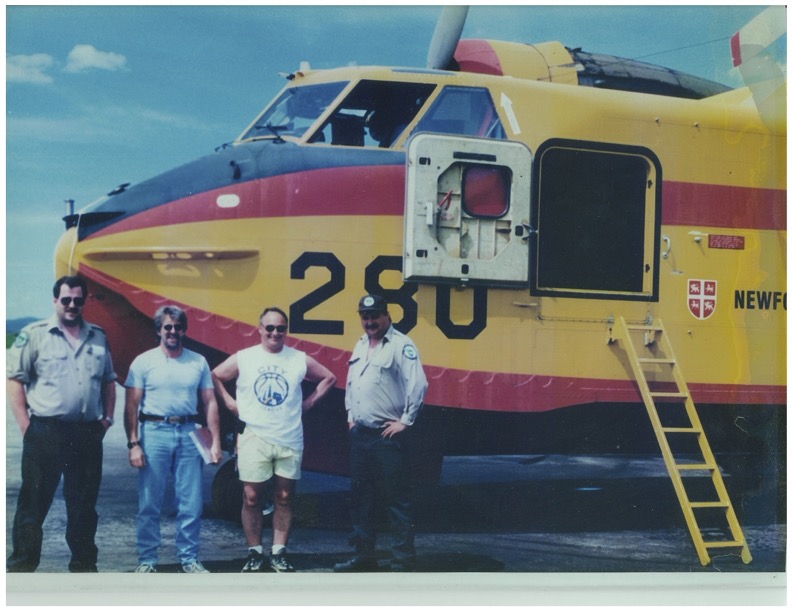
Over the years, many, including Wabush’s Mayor Ronald Barron, have repeatedly made calls for the government to fix the fifth water bomber, increase resources and place a bomber in the region.
In February of last year, the provincial government announced it was aiming to repair the fifth water bomber within the year.
However, by June the province had indefinitely delayed work on the bomber.
Now the closest water bomber is stationed in Happy Valley-Goose Bay, and it can take up to two hours for the plane to reach Labrador West. This can result in a delayed response to a fire, Brown says.
“It takes more time, more fuel and more energy to bring it all the way over here to fight fires. And they go all the way back to Happy Valley-Goose Bay at the end of the day,” he said.
Roberts agrees that two hours is too long. “The fire gets a foothold within the first 30 minutes or so, and you have a good chance to catch it if you can get it within 30 minutes.”
Last year should have been a wake-up call
Canada had its worst wildfire season in 2023, with 17,203,625 million hectares burned, an area larger than Greece.
Jerry Earle, president of NAPE, the union representing the water bomber pilots, says that even after promising better wildfire preparation the government did not adequately prepare for this season.

In an email to The Independent, the Department of Fisheries, Forestry and Agriculture said it is prepared for the season and have trained staff, purchased new equipment and planned logistics and staff distribution.”
But Earle says the wildfire preparations started late, logistics, including fire crew accommodations, are unclear, and the province still lacks essential fire crew, including water bomber pilots.
There are 11 active pilots, up from eight last wildfire season, but Earle says 14 are required to ensure all four planes are operational at total capacity.
He says the job is in high demand nationwide, and the province needs to be more aggressive with its hiring tactics.
Now one month into the wildfire season, Earle says the province still needs to hire more ground crew and forest fighters and station them more effectively so they are able to respond to fires in a timely manner. He says housing accommodations for workers are still being finalized.
Brown says housing accommodations for the ground crew in Wabush have been in discussion since last fire season. They were repeatedly put off until the end of the last season.
A year later, they still haven’t been finalized, he says. “They never decided to fix their water bomber, they never made a decision to set up a bunkhouse in Wabush. They never made these big decisions that need to be made.”
Roberts says he enjoyed his job because it allowed him to work with trained firefighters, and he had access to the resources necessary to combat fires quickly.
It is a job he still misses. “When I see a water bomber or helicopter flying over, it just sends me back to the days when we used to do that job and had a lot of fun.”
Earle says adequately staffing and equipping the region to deal with increased wildfires isn’t an unreasonable expectation.
“We’re not asking for additional resources; we’re asking to have the resources in Newfoundland and Labrador that we traditionally had.”

Author

Related Articles

Harlow operating within budget before Memorial decided to sell it: former head of U.K. campus
Emails show President Janet Morrison ‘inundated’ with messages over sale of Harlow Campus, while documents suggest former campus head was making progress at reducing costs

Watchdog says it can’t investigate Deloitte over use of AI in $1.6M government report
Internal emails reveal Deloitte helped craft government’s response to The Independent’s investigation

Mother of incarcerated youth calls for dedicated addiction care at new St. John’s prison
Government scant on specifics but health authority says new prison will have two new mental health units and larger clinical space for psychiatry and opioid dependency