
What is a ‘New Canadian’ anyway?
At a time when immigration policies are changing rapidly and impacting Canadians’ perceptions of newcomers, Coming to Newfoundland & Labrador explores the lives and experiences of “New Canadians” in the province

Everyday, I would sit down with newcomers and explain what an income-support application was and which documents it required. The principal applicant, often a father, would nod back at me, even if we both knew he had questions he didn’t feel confident asking in his limited English. Every conversation would remind me how different my experience was immigrating to Newfoundland and Labrador.
My family moved to St. John’s in 2006. I was born in Pakistan but spent most of my childhood in Montserrat, a British Territory in the Caribbean. I moved to Canada as an English speaker, having already integrated into Western culture, and as someone from an economically stable family.
I remember visiting the Association for New Canadians that year. Running behind my younger brother into a room with a large brown dining table cluttered with toys and other donations, I overheard a staff member tell my parents there were various services we could avail of as New Canadians. I didn’t think of the settlement agency again until February 2022, when I applied for a housing officer position there.
On my first day of work, my only co-worker in the housing department helped me through my first low-income housing application. I shadowed him for a day, and that was the extent of my training. My job wasn’t hard. I helped apply for available housing on Kijiji and Marketplace and arranged viewings. Then I would apply for low-income housing with St. John’s Housing and Newfoundland and Labrador Housing Corporation. And finally, I would fill out income-support applications.
Will you stand with us?
Your support is essential to making journalism like this possible.
The waitlist for low-income housing was long enough that in the six months I worked with the ANC, just two families received housing offers from the hundreds of applications I filled out.
Same family, different experiences
Even in my own family, the experience of being a New Canadian was very different. My mother, Shahida Rajput, is a hijab-wearing woman who is not fluent in English. She speaks the language well but struggles with English grammar rules. Her short sentences can unintentionally come across as rude to others — something I hadn’t noticed until I started working at ANC and heard similar efforts at English from many newcomers.
She loves art and enrolled in an arts program in her 50s, excited to have a diploma. But her confidence was shattered in the two years she spent in the program. She described feeling like the odd one out, never taken seriously. She once pointed out to a teacher that lectures on world art history should include information about art from other countries and civilizations besides Europe, which she said caused friction between her and her teacher.
I had similar opinions about my world history classes in high school, which covered post-colonial U.S. history and the World Wars. In the final weeks of classes, students individually researched and presented a summary of certain world events, and that was all we learned about non-European history. It wasn’t even from a teacher.
My mother once told me she had asked a fellow student to help her with study material. The student told my mother that their teacher had asked the students not to help her. Embarrassed by what she had learned, and wanting to avoid further conflicts with the teacher and students, she didn’t confront her teacher. Another student from Egypt who had enrolled in the same program dropped out, citing racism as a reason for leaving.

While conducting interviews for this series, a source told me she doesn’t like the term “New Canadian” because it can never be removed. The word divides those born in Canada and those new to Canada, creating a sense of “us” and “them,” she said
I could not find a consensus on how long someone is considered a New Canadian. Alex Nanoff, a spokesperson for the non-profit Institute for Canadian Citizenship, says the organization defines new Canadians as anyone in the country for fewer than 10 years. Meanwhile, ANC Executive Director Megan Morris says that while the organization doesn’t define the length of time for which someone would be considered a newcomer, some programs have time-based eligibility, like the Resettlement Assistance Program. “We’re not really worried about how long you’ve been in Canada. If you want to come, you may not receive intensive case management, but if you want to have a service, you can absolutely come see us,” she said.
Shree Mulay, a professor in the Memorial University Faculty of Medicine’s Department of Division of Population Health and Applied Health Sciences, said a New Canadian can refer to a person transitioning from an immigrant or refugee to a Canadian Citizen. “It means you have to be an immigrant for at least three years.” This is the necessary wait time a permanent resident must wait before applying for Canadian citizenship.
The lack of a standard time period means people can perpetually feel like a “New Canadian”.
No matter how many years my mother lives in Newfoundland and Labrador, she will always be a new kind of Canadian to others simply because she struggles with English grammar, wears a hijab, is visibly South Asian and prefers loose-fitting Pakistani clothes over jeans.
Being a Newfoundlander or a Labradorian
In this series, I share the experiences of newcomers to Newfoundland and Labrador.
Moving to a new country, climate, and culture presents unique challenges that can affect mental health. Newcomers can have vastly different experiences integrating into this province, depending on how and why they chose to settle here — if they had a choice at all.
Refugees who are forced to flee their countries due to persecution or war move to Newfoundland and Labrador with minimal resources or information about their new homes. Immigration, Refugees, and Citizenship Canada determines the city to which refugees are relocated. Many do not speak English (or French) and must learn the language and adjust to the culture quickly.

International students, on the other hand, apply to their programs and schools. Higher education institutions also require proof of language proficiency, previous education, and funding.
Temporary foreign workers often come to the province to work low-income jobs. Depending on the type of visa they carry, they are often reliant on their employers, which can lead to exploitative and unsafe working conditions.
These are just some ways newcomers arrive in our province. The stories in this series will recount newcomers’ experiences, including the challenges they face while settling in Newfoundland and Labrador and how those experiences impact their mental health. The articles will also explore which services are available to newcomers, and which ones are still out of reach.
If you are a newcomer and want to share your experiences settling in Newfoundland and Labrador, please email editor@theindependent.ca.
This article is part of The Independent’s Coming to Newfoundland & Labrador series. Click here to read the other stories. The series was made possible through the financial support of Carleton University’s Emerging Reporter Fund on Resettlement in Canada.

Author

Related Articles

N.L. education system struggling to meet the needs of newcomer students
Families and organizations are working to create safe spaces for refugee youth to thrive, stay connected with their roots and build strong community connections
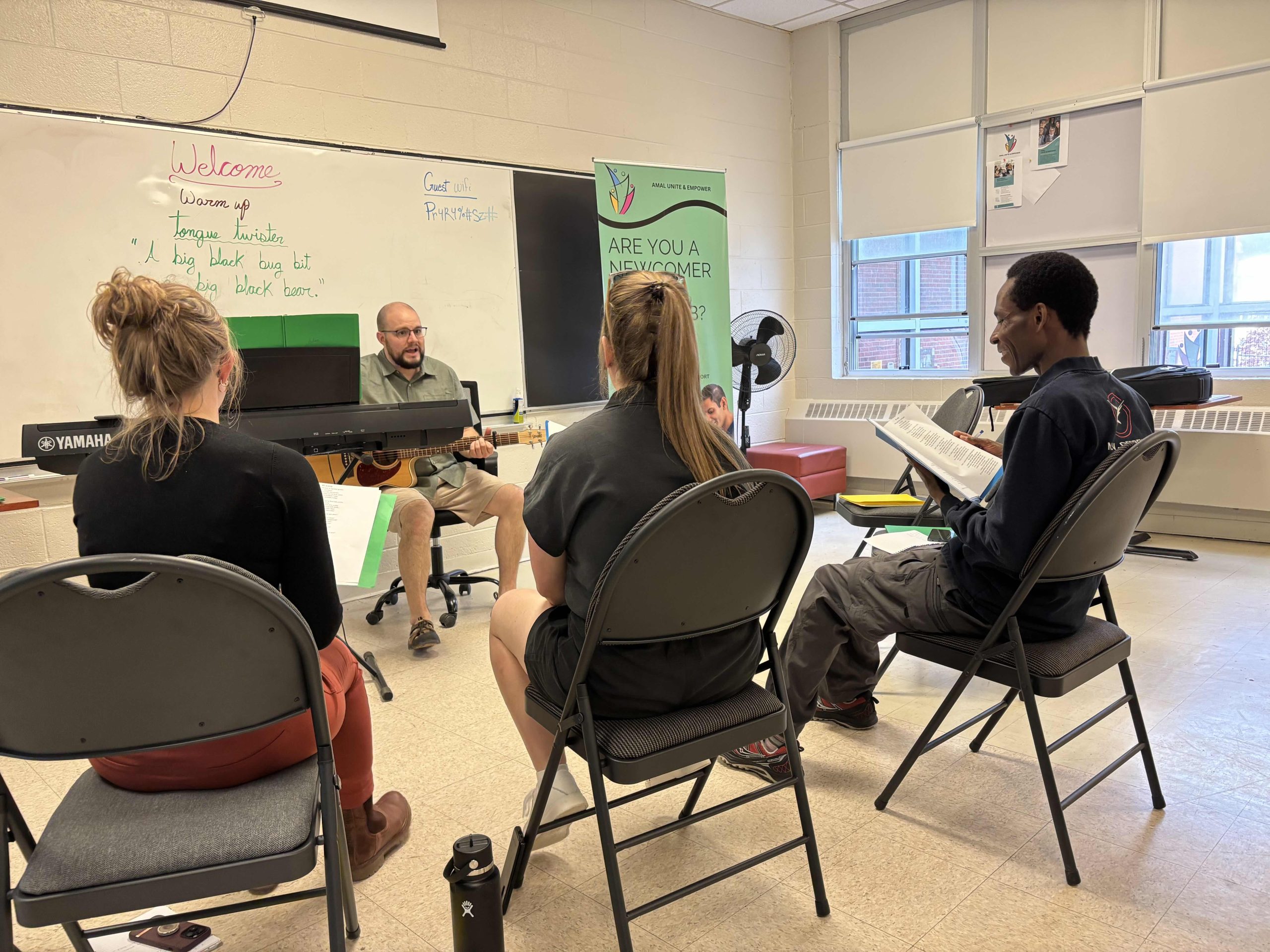
Musicians use creative approaches to help newcomers feel at home
In Newfoundland and Labrador, music plays a key role in preserving history and expressing the province’s identity and cultural heritage. Through their work, these musicians are helping newcomers connect with and become part of that cultural fabric.

Newcomers love N.L. and power economic growth, but lack of supports drive them away
The provincial government and settlement agencies must eliminate barriers that newcomers face when they arrive, say observers, or else the trend will continue