
Visibility isn’t always the answer
Instead of a Trans Day of Visibility, maybe we need a Trans Day of Intervention
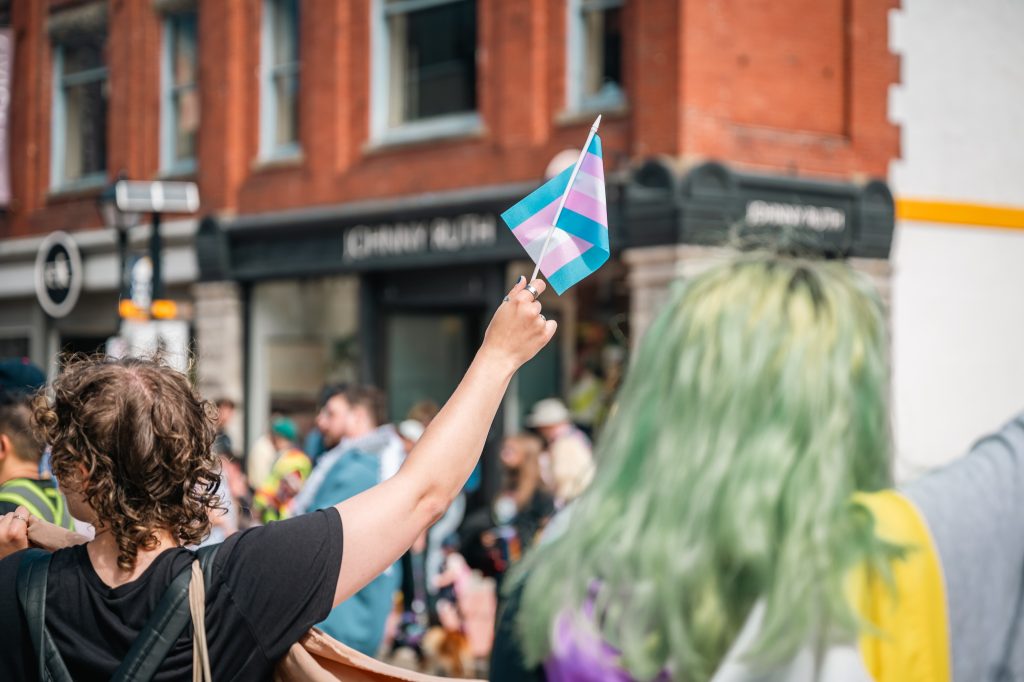
Another year, another Trans Day of Visibility.
But what does that even really mean? Some trans folks wonder the same thing.
The occasion has been celebrated for over 15 years, originating in the United States and since spreading around the world. As one of the original organizers stated, it was meant to counterbalance the fact that the only other trans-centred day was the grimly-themed Trans Day of Remembrance.
But it’s ultimately rooted in the idea that visibility gives power — and some advocates suggest that’s not necessarily the case. As Sarah Schulman writes about the quest for queer visibility in her important work The Ties That Bind: Familial Homophobia and its Consequences, “We believed that straight people hate and hurt us because they don’t know us. If we could have visibility, they would realize that we are fine and would accept us.”
Will you stand with us?
Your support is essential to making journalism like this possible.
The notion of visibility, she argues, was an experiment in “magical thinking” that hasn’t panned out. It reflected an effort by queer people to rationalize and deal with the seemingly illogical and irrational hatred they experienced from others. The idea behind visibility was that it required a certain courageous vanguard to be visible first, take the brunt of that hate, and once everyone realized queer people were actually all right, things would get better for everyone.
But they haven’t.
Instead, we have large swathes of the world, including now the United States, where rights are being repealed and hatred stoked more than ever — despite greater visibility than ever. Visibility has in fact made queer people a target. And the same is true of trans people, albeit with even more intensity.
U.S. Republicans—bankrolled by billionaires who care less about trans people and more about electing a government that will do their bidding—leveraged trans and queer visibility into a negative thing, arguing it posed a threat to children, to the ‘social order’, and to a vaguely-defined mainstream society.
Historically the powers-that-be have made the same arguments about Black people, incidentally, and female suffragettes, and Jewish people before that. It’s an argument that’s leveraged against any minority that becomes visible enough to use in this way, to stoke strong public feelings which can then be channeled for their own gain, while diverting attention from real issues. Right now, trans people are bearing the brunt of it, because they are the most convenient target.
A lot of people are invested, Schulman explains, in the idea that equality and inclusion can be achieved “painlessly” and “without anyone else’s position having to be adjusted.” But if we are to shift from an unequal to an equal society, then those who presently have more will necessarily have to have less. “Gay people’s exclusion is predicated on straight people’s privileges,” writes Schulman. “As history has shown us, when Black people can sit in the front of the bus, more white people have to stand. When jobs open up for women, they become more competitive for men.”
Visibility sends an affirmation to those who are invested in the fantasy that we’re able to achieve a more equal society without material change. But it’s material change—more jobs, more money, more opportunities for the marginalized at the expense of those who enjoy the privileges inherent in whiteness or cisness or patriarchy—that actually makes society more equal. Not visibility.
When are we not visible?
Visibility can be exhausting. The pressure to be visible can be exhausting. No one enjoys being perceived all the time, but as trans and gender-diverse people we often feel that we are. Not because we try to be, but because a cis-normative society that was raised with a skewed and narrow idea of what’s normal finds it so difficult to grow and learn and wrap its head around things it is not familiar with. It’s a pressure often felt by visible minorities in a sweepingly white place like Newfoundland and Labrador as well. Visibility is hard. I’ve witnessed, first-hand, job interviews at the universities where I’ve worked, where someone’s attire or tattoos actually become a topic of discussion. If that kind of nonsense still has traction in today’s world, how is an institution going to credibly claim that they are not also discriminating against people on the basis of their gender presentation or non-normative gender expression?
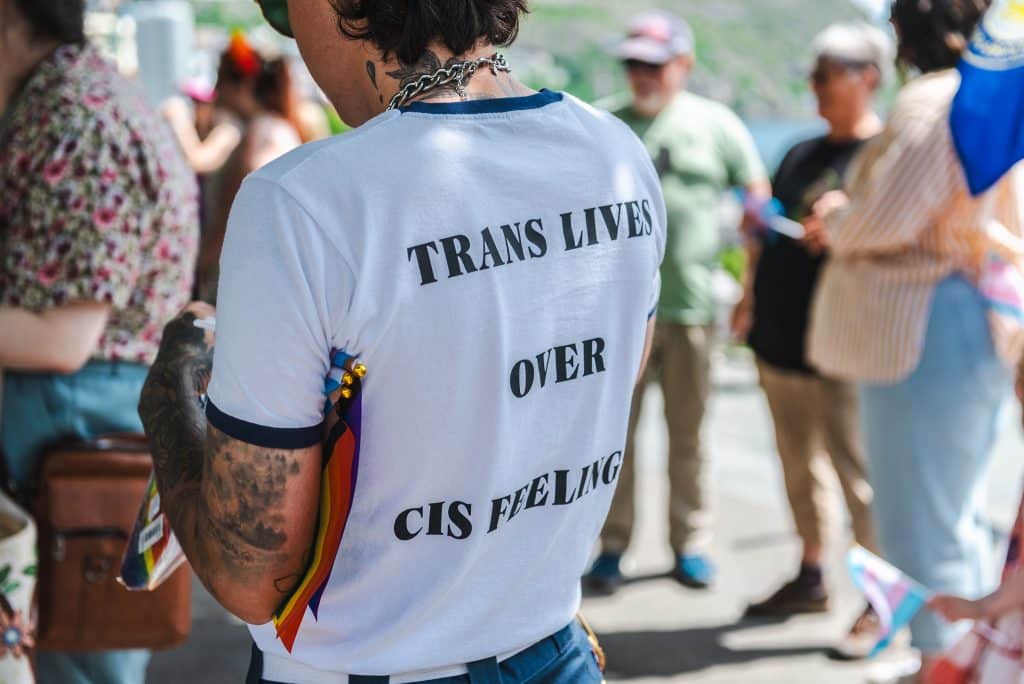
Sometimes what we all would actually prefer is less visibility, not more. And it’s hard be told that March 31 is a day to be proud in our identity, when that identity comes with a dramatically higher rate of underemployment and unemployment, poverty, and higher risks for suicide or mental health conditions because we are unable to access the medical and social supports that would be life-saving if they weren’t financially out of reach for so many.

What does true solidarity with trans people mean?
In the workplace, it means things like recognizing the additional challenges trans people face. Many gender-affirming medical procedures are costly and require lengthy recovery periods. Dealing with transphobia in both work life and in community can be draining on our mental health — and that requires understanding and compassion. It means working to improve the material conditions (money, housing, meaningful work) that shape our access to the means of improving all the other conditions of our lives. A growing number of workplaces are adding gender-affirming healthcare components to workplace health plans (they’re often optional and need to be proactively pursued). Others are establishing transition funds to support trans and gender diverse employees. These are real, practical supports that go a lot farther than cake and balloons.
It means reflecting on our personal relationships, too. Trans people come with a lot of baggage stemming from the trauma of years of gender dysphoria, coupled with very active and ongoing transphobia experienced from family, institutions, communities. For a cis person to be a friend or partner of a trans person is a commitment that takes work — a lot of it. It requires a lot of ongoing reflection on the ways your cis privileges and the ease with which you move through a transphobic and majority-cis society aren’t shared by the trans people in your life, and the additional unique needs of the trans person in your life that come from this.
In the same way that solidarity in the workplace requires cis people (and white people, and settler people) to be willing to give up some of their material benefits (job opportunities, promotions, pay raises) to minorities, solidarity across personal relationships is also often going to require harder work from the cis (white, settler) person, in understanding what the trans person is going through and how their (cis) actions might inadvertently reinforce the harm and trauma the trans person in their life has experienced, retraumatizing them. Being cognizant of that commitment, and checking in on it frequently, is critical.
Privilege isn’t just about money and job opportunities. Privilege also encompasses a greater ease in moving through the world. A person with privilege doesn’t always experience the same self-doubts, lack of self-esteem, and personal and generational trauma that others experience. It doesn’t mean privileged people don’t experience some of those things — many do. But it means keeping in mind that however much trauma one person might carry, some people carry even more.
As bell hooks writes in Killing Rage: Ending Racism: “The rage of the oppressed is never the same as the rage of the privileged. One group can change their lot only by changing the system; the other hopes to be rewarded within the system.”
Maybe what we need is a Trans Day of Rage?
hooks has a lot of wisdom to share about rage — Black rage in particular. But her insights apply to the rage felt by any oppressed minority. Rage, she explains, “is not pathological. It is an appropriate response to injustice.” Yet we often treat rage as pathological — as something that needs to be cured on an individual basis, through therapy or lawsuits or hard work and reward. We’re so busy responding to rage on an individual level that we often fail to realize that rage isn’t the problem; the true pathology or disease is white supremacy, or misogyny, or transphobia — the things that induce the rage. That’s what actually needs treating, not the individual having a perfectly appropriate response to it.
“The Black rage that white power wants to suppress is not the narcissistic whine of the Black privileged classes,” hooks observes. “It is the rage of the downtrodden and oppressed that could be mobilized to mount militant resistance to white supremacy.”
Or to any form of oppression. One day of visibility and celebration a year is a small price to pay for maintaining a system of oppression the other 364 days.
We’ve been taught to internalize rage as a non-constructive pathological response to a situation, when it can actually serve constructive uses in forcing social change. But it’s exhausting to feel rage all the time, and contributes to the isolation and alienation of those who are feeling the rage. That’s why solidarity, support and care with those who are oppressed is so important. There’s a meme that floats around the internet a lot, especially during times of political turmoil, that says some variant of, “Check in on your trans friends.” A lot of people share it, but so few actually do it. Can you say that you have?
For those with the emotional wherewithal, I highly recommend Sarah Schulman and Morgan M. Page’s essay Queer Suicidality, Conflict and Repair. It’s a political eulogy for a trans friend of theirs who died by suicide, and a reflection on the ways in which trauma impinges on trans people in unique ways, rendering it often difficult for us to handle routine conflict in the way cis or straight people can. The authors demonstrate how the deprivation of material supports—lack of access to adequate health care, therapy, housing, not to mention emotional care from others—exacerbates these underlying problems. It’s a difficult read, but I would also say it’s an essential read for any would-be trans ally.
Wait, wasn’t Trans Day of Visibility supposed to be positive?
Therein lies the crux, doesn’t it. It’s hard to be positive when the material facts of the world are so grim. And sometimes, a feigned effort to be positive only serves to mask the real needs of a population. It’s like corporations celebrating International Women’s Day with balloons, cake and gift cards, while simultaneously lobbying governments not to introduce pay equity legislation. Being visible doesn’t help when it’s just a reminder to the privileged to make sure they keep you down.
If visibility isn’t the answer, what is?
The solution is more complex than there’s room for here. But one of the big parts of the answer, say people like Schulman and hooks, is accountability and intervention. What’s needed is more people who don’t necessarily have anything to gain or lose, speaking out and having the uncomfortable conversations they usually avoid. Conversations with the awkward uncle who doesn’t mind queer people but wishes they wouldn’t be so in your face; conversations with the co-worker who buys cupcakes from a TERF; conversations with the neighbour who has a federal Conservative sign on their lawn.
Schulman emphasizes that people can’t sit on the fence or avoid uncomfortable conversations — they have an ethical duty to intervene when they see unethical or hurtful behaviour in progress, no matter how uncomfortable that intervention might feel, and no matter what private realms it butts into (the notion of a private sphere, she reminds us, is simply an excuse for maintaining a bubble zone within which someone can be treated poorly or abused without the scrutiny or critical intervention of their community).
That advice is relevant today. No one who truly, actually cares about a trans coworker, friend or family member will vote for the federal Conservatives in this election, regardless of what other policies the Conservatives are spouting and regardless of how nice a local candidate might be. Doesn’t matter. If you’re sincere about committing to equality and to the trans people in your life, there is no way you can vote for a party that is so clearly committed to harming them (and as we’ve seen in the U.S., harm to trans people is just a prelude to harming everyone else, from cis women, to Black civil service workers, to white factory workers).
Perhaps what we need instead of Trans Day of Visibility, is Trans Day of Intervention. Instead of the spotlight being on us as trans people, the spotlight ought to be turned on all the cis people who ignore their responsibilities as community members to intervene in homophobia or transphobia (or racism) by having uncomfortable conversations. Maybe for even just that one day a year, the onus ought to be on cis people to have one uncomfortable conversation with a transphobe in their lives or in their community, to make sure those transphobes know how unwelcome their behaviour is.
So what should you do on Trans Day/Week of Visibility? Well yes, celebrate and honour the trans people in your life: buy them pizza or chocolates, publicly affirm their important role in your life, and make sure they know you care. But don’t make it just about one day; make it about an ongoing commitment to intervene when they are being harmed materially or emotionally, or are at risk of it, no matter how uncomfortable that intervention might be. Make it about an ongoing commitment to give up some of your privilege to the trans people in your life and in your community, whether that’s money, financial opportunity/reward, or even just time and care. Those are the things that make a real difference.

Author

Related Articles
International Women’s Day is not a celebration
How do we build a fighting feminist movement?

It’s time for equity consultants and community organizers to ditch AI
Tools are never neutral, and artificial intelligence has no place in social justice work

External consultant controversy a first test for Wakeham government
After being sworn in as premier Wednesday, Tony Wakeham called right-wing conservative strategist and PC transition team hire Steve Outhouse “one the best political minds in the country”