
Dear Mr. Wakeham: Climate changes aren’t coming — they’re here
Not only are wildfires caused by climate change, new research links the heatwaves that cause them to oil companies active in Newfoundland and Labrador
Dear Mr. Wakeham,
Congratulations on your new gig. Yes, I’m being facetious by calling our government’s top job a gig, but we both know it won’t last forever and I’m making a point about how language is important. You don’t know me, but I write about sustainable futures and I’m currently researching political rhetoric in Newfoundland and Norway around Bay du Nord.
For the paper I recently presented at the Beyond Oil conference in Bergen, Norway, I examined 13 years of legislative hansards and government documents, speeches and social media posts. Coming off the hustings, you might find my results interesting: there is absolutely no difference in the language used by the oil and gas industry and Newfoundland and Labrador politicians, Liberal and Conservative.
Both parties repeat the fable of ‘lower carbon’ or ‘light’ oil, a myth that omits the GHG emissions from burning the oil. I recently heard someone compare the argument to saying oxycodone is a safe drug, if you don’t consider what happens when someone uses it.
Will you stand with us?
Your support is essential to making journalism like this possible.
Both parties claim our province has to keep drilling for oil in order to transition from oil—particularly baffling logic. This language ties our sustainable future to oil and gas, when the most important action we can take to decrease emissions is to stop drilling and leave it in the ground. The leave-it-in-the-ground-organization (LINGO) has been gathering research for years on “carbon bombs” and oil projects that will contribute to the world blowing past the 1.5 to 2 degree limits of human survivability. Two days ago, they added Bay du Nord and other Newfoundland projects to the “new extractions” tab of their online interactive map.
Both the Liberal and Progressive Conservative parties are clinging to some variation of the belief that “the world needs our oil.” The truth is, there’s already a global oil glut. The International Energy Association said earlier this month that we could soon see an increase of 4 million barrels-a-day above projected global demand. If Bay du Nord proceeds, counting the Cambriol field, there’ll be about 1.3 billion additional barrels added to the glut; the world clearly does not need Bay du Nord’s oil.
The language around ‘oil jobs’
Are provincial politicians being intentionally vague by using language like “person-years,” “person-hours,” and “spinoff benefits”?
Concordia University Research Chair in Environmental Ethnography Kregg Hetherington calls these kinds of projections an example of ‘future perfect’ thinking that ignores the boom-bust nature of the oil and gas industry. Federal and provincial documents say there are 11,000 person years of employment associated with Bay du Nord. This certainly sounds like a lot of jobs, but when one does the math, that’s only about 367 individual, full-time positions for the life of the project. Is it worth risking our health, our children’s health, and the future of the planet for 367 gigs?
Given the ubiquity of climate obstruction rhetoric in Newfoundland and Labrador, I wasn’t surprised by your recent comments that you don’t believe last summer’s wildfires were connected to climate change:
“I don’t believe the two are related […] We need to be prepared for those changes that are coming, yes, but simply walking away from oil production off our coast, I don’t think that’s going to have an impact on that particular situation.”
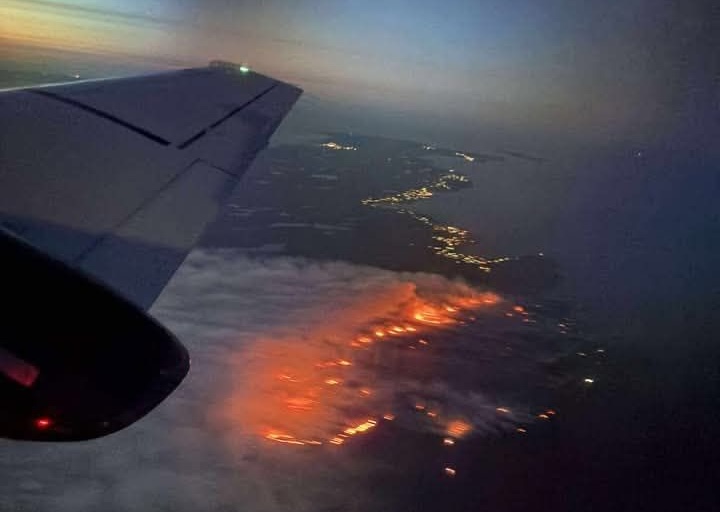
I understand you have a lot on your plate following the election, so here’s some recent research about the wildfires that destroyed the sense of peace and community well-being in Conception Bay North, along with hundreds of buildings. In the interest of transparency, my family cabin and shed burned to the ground in that fire.
Let’s start with the unprecedented drought
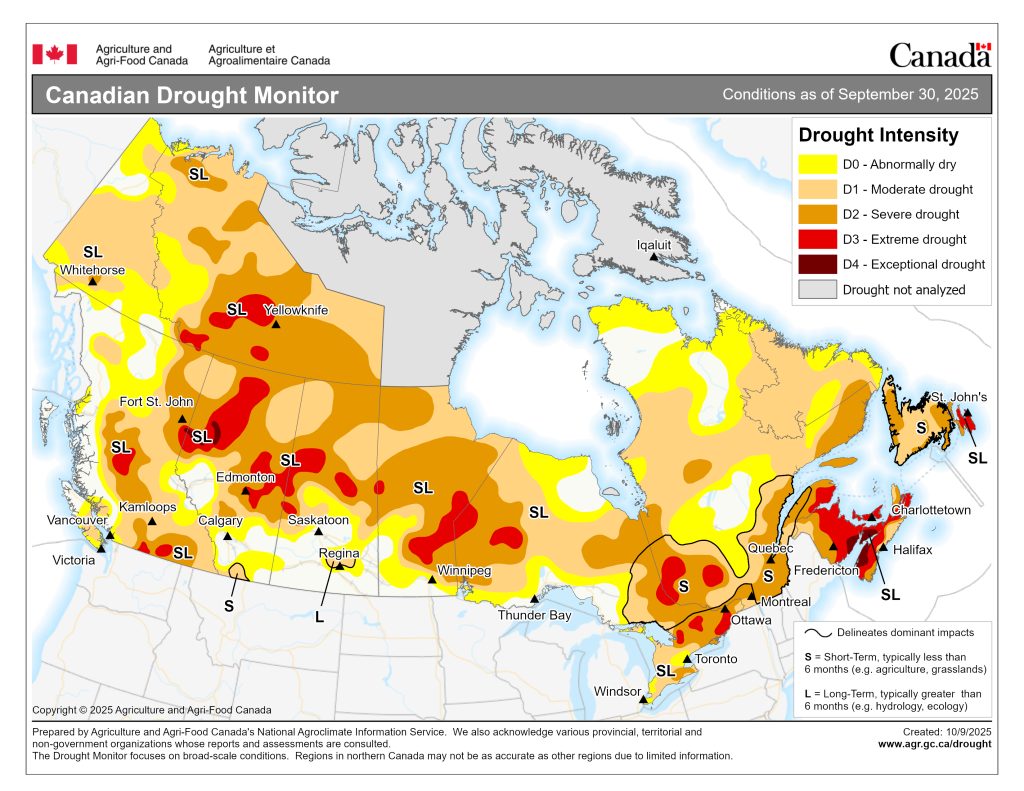
This is a map from the Canadian Drought Monitor which says “drought is a creeping phenomenon — difficult to define and measure, slow to develop, continuous, cumulative, and long lasting.” The federal government website calls the situation on the Avalon this summer an “extreme drought.” Who would’ve ever thought it possible? Where was our world-class rain, drizzle and fog when we needed it most? The Avalon drought was described as a 1-in-20-year event, which does not mean it won’t happen again until 20 years from now. It means there’s a 5 per cent chance of it happening again next year. I’m not a gambler. Are you?
British Columbia, which has a lot more experience with wildfires, says 40 per cent of wildfires are caused by humans, a claim backed by Mike Flannigan, a professor of wildland fire at Thompson Rivers University, says wildfires are comprised of three main ingredients:
- Weather: hotter, dryer, windier weather.
- Fuel: dried out trees, plants, and bogs.
- Ignition: When you’ve got ‘Weather’ and ‘Fuel’, ignition is almost incidental.
Whether fires are ignited by individuals (i.e. arson, or negligent acts like a discarded cigarette butt or a spark from a quad), whichever way you add it up, wildfires are caused by humans, just like climate change.
Linking oil and gas production to heatwaves
The world has known that burning oil and gas is causing the climate to change since 1977 because of research from Exxon’s own scientists — research it did not share with the world. Instead, that research it was revealed by investigative journalists from the LA Times and Inside Climate News in 2015. This is a company that Newfoundland and Labrador chooses not only to do business with, but to subsidize.
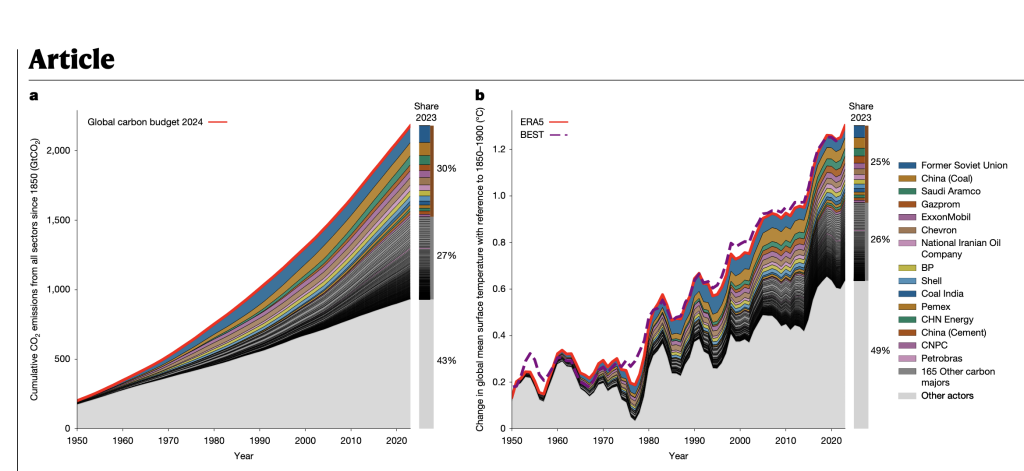
New research in one of the world’s most prestigious academic journals ties heatwaves directly to specific oil companies — a full-circle moment from the 1977 Exxon report. Quilcaille et al.’s 2025 paper published in Nature is an example of ‘attribution science’ aimed at strengthening the causality between extreme weather events and who is legally (and financially) responsible. The research examines how climate change increased the intensity and likelihood of over 200 specific heatwaves between 2000-2023 and attributes the heatwaves to specific fossil fuel and cement producers, which it calls ‘carbon majors.’
“Overall, one-quarter of these events were virtually impossible without climate change. The emissions of the carbon majors contribute to half the increase in heatwave intensity since 1850–1900,” the paper says. “Depending on the carbon major, their individual contribution is high enough to enable the occurrence of 16–53 heatwaves that would have been virtually impossible in a preindustrial climate. We, therefore, establish that the influence of climate change on heatwaves has increased, and that all carbon majors, even the smaller ones, contributed substantially to the occurrence of heatwaves.”
The researchers also found that every carbon major contributes to climate change via their GHG emissions and thus to heatwaves, even what they refer to as, relatively smaller carbon majors.
Out of curiosity, I wondered which oil companies active in our province are cited in this research. There are a few familiar names in their figure below: ExxonMobil (operator of Hebron, Hibernia partner), BP (partner in the proposed Bay du Nord) as well as Chevron (Hibernia partner).
That’s global. Let’s take it home.
Atlantic Canada’s August heatwave, which led to the Kingston wildfire and others, was 10 times more likely because of climate change. “Prolonged heat waves and longer fire seasons are major contributors to more frequent and intense wildfires across Canada,” according to the Government of Canada’s own analysis. “Extreme heat dries out forests and vegetation, which become fuel that can ignite and spread wildfires.”
So there we have it:
- Oil and gas production and use cause climate change.
- Climate change causes heatwaves.
- Heatwaves cause wildfires.
As a coach, Mr. Wakeham, I’m sure you’re familiar with the growth-mindset: instead of pretending to have the answers one should have the humility to say: “I don’t know. I’ll look into it.”
I invite you to Conception Bay North to see the ashpile that used to be my family cabin and the absolute devastation of CBN’s once beautiful communities, wetlands, trails, and forests. I am being sincere. You really should see the ground-level impacts of climate change with your own eyes.
Because of the election and perhaps the less sexy nature of a post-disaster clean-up, there are many issues that remain unresolved in Conception Bay North and elsewhere in the province where there were fires this summer. Many people don’t have the resources to rebuild their homes, there are also questions about the disposal of toxic substances, and to top it off there’s been a rash of break-ins and illegal scavenging. Our ashpile, for example, was raked through—I presume, by someone looking for copper pipes to sell. It was a violation of our grief, adding insult to injury. The scavenging is also making residents fearful, and they could use your leadership, but only if it comes with curiosity, not a dismissal of the wildfire and its causes.

Author

Related Articles
Why taxpayer subsidies for Big Oil won’t create more jobs
As Equinor delays Bay du Nord decision, report finds less than 1% of Canada’s jobs now in fossil fuels

‘Close to panic level’: Survey respondents chime in on climate crisis
More than 100 readers responded to The Indy’s first climate survey, and almost all share deep concerns
Who owns the wind?
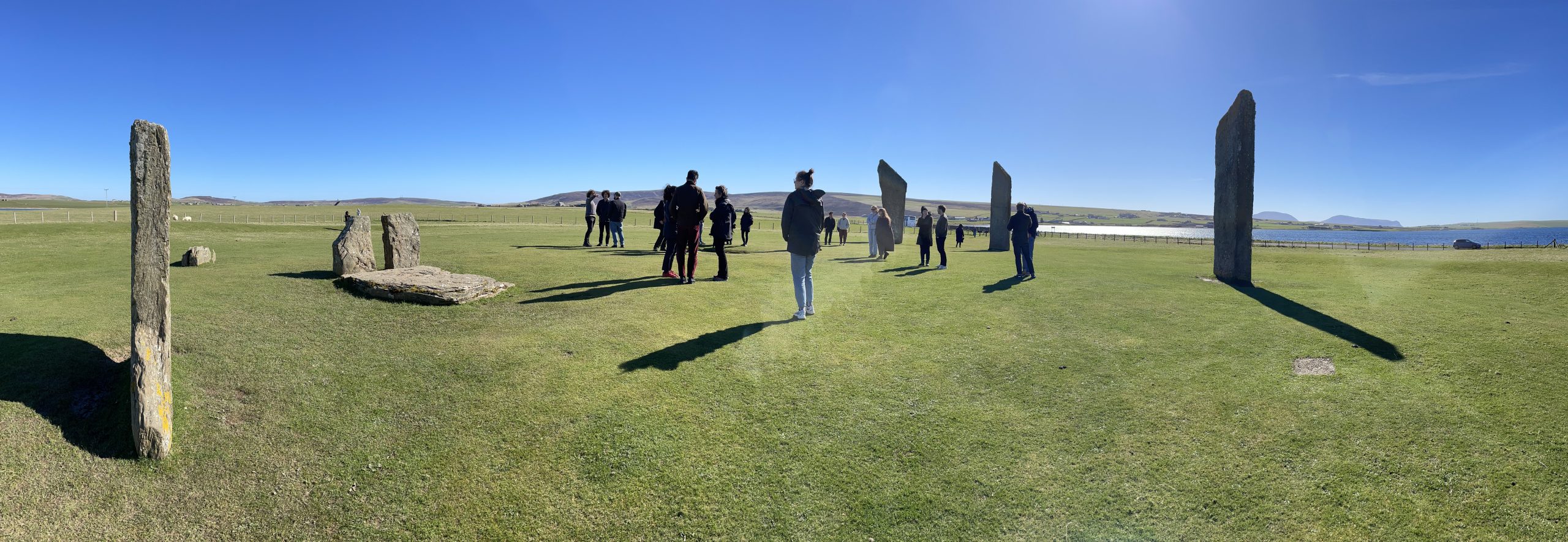
How a trip to Scotland’s Orkney Islands raises questions of renewable energy benefits for communities in Newfoundland and Labrador