
PCs suggest A.I. errors in Education Accord originated within government
Government says updated report now coming ‘in new year’

Newfoundland and Labrador’s education ministry is hinting at the government’s own culpability for more than a dozen AI-generated errors that were found in the province’s new Education Accord released in August.
Education and Early Childhood Development Media Relations Manager Lynn Robinson shared a statement from the department saying “[t]he inaccurate citations and references generated by AI was unacceptable,” and that the government “will ensure that any application of AI within government is subject to strict review, human verification, and transparent quality controls.”
The statement also said a new draft of the accord will be publicly released in the new year. The department previously said, in October, that work on the updated report would be completed “in the coming weeks,” according to CBC.
Labrador-based research and editing firm Brack and Brine was hired “to review all references and citations in the Education Accord,” the department’s statement said, adding the report’s “errors will be removed, and we are ensuring the integrity of the report has been upheld.”
Will you stand with us?
Your support is essential to making journalism like this possible.
In August the previous Liberal government released the accord, a decadal roadmap to improving the province’s education systems, including K-12 and post-secondary. The report took co-chairs Karen Goodnough and Anne Burke—professors in Memorial University’s Faculty of Education—18 months to complete, with input from education experts and others. But in September Radio-Canada revealed the 418-page document contained at least 15 fake citations which appeared to be generated by AI, calling into question the $755,000-report’s credibility and prompting government to remove it from its website.
Then-Education Minister Bernard Davis defended the report, saying the fake citations “never impacted the body of the report or any of the recommendations.” Goodnough and Burke told CBC they “don’t know where the errors were made,” and that they “can only assume that it happened with government.”
Until now, the provincial government has not publicly addressed the origins of the report’s fake citations.
Earlier this month The Independent exposed another AI-related scandal, this time with fake citations in another major government-commissioned report that cost the province $1.6 million. The Department of Health and Community Service’s recent Health Human Resources Plan, developed by global accounting and consulting firm Deloitte, contains at least four citations The Independent found not to exist.
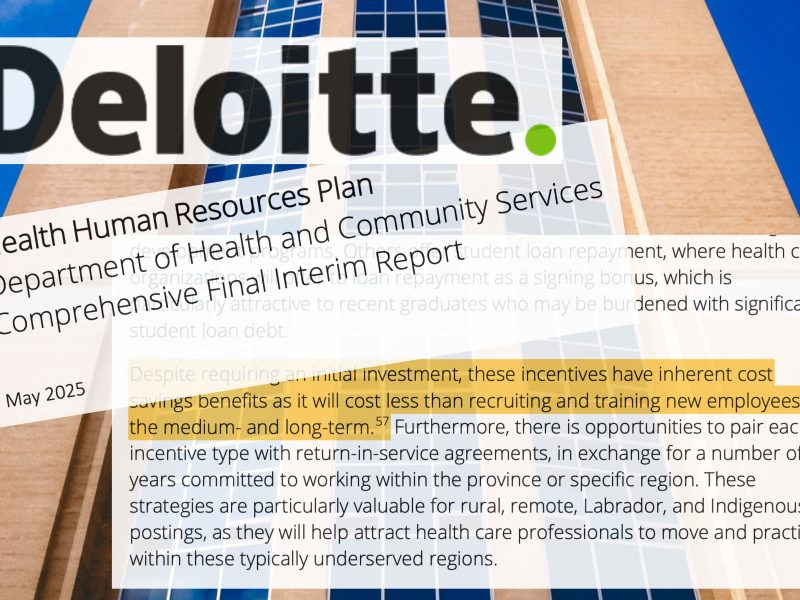
The second scandal in under three months related to artificial intelligence use in government policy documents has sparked a discussion in the province and elsewhere about the risks associated with improper AI use and the value of third party-commissioned policy reports where AI is used.
The province’s Department of Government Services has committed to reviewing government policies and to potentially developing new regulations.
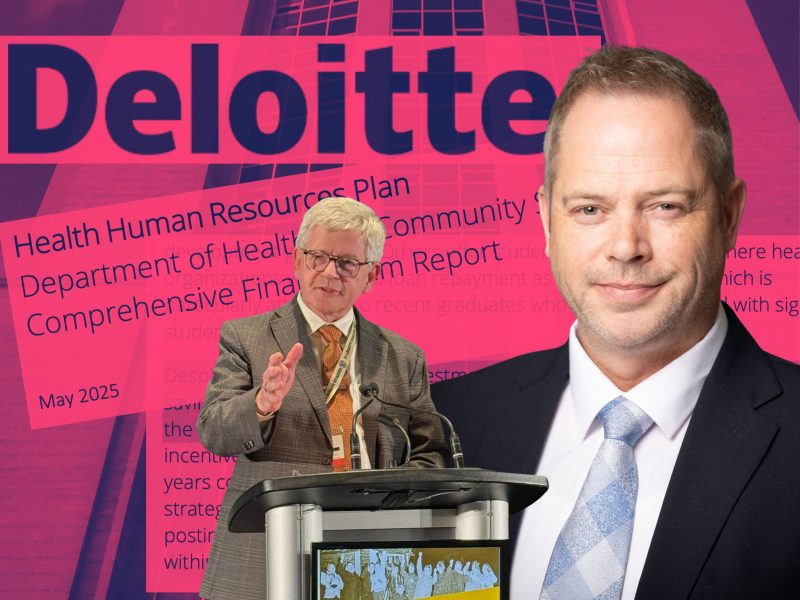
On Friday Government Services Minister Mike Goosney said in a statement to The Independent that “incorporating this technology into the public service requires oversight and accountability and training for employees on the responsible use of AI.”
He said the province’s Office of the Chief Information Officer “delivers in-person training on Microsoft Copilot to departments and offers a training course on responsible AI use in government,” while also hosting “an online dedicated AI support space with articles, guiding principles, case studies, and best practices related to AI that government employees can avail of.”
Goosney said, going forward, “we will ensure that any application of AI within government is subject to strict review, human verification, and transparent quality controls in collaboration with the Office of the Information Privacy Commissioner.”
When the accord was announced in January 2024, then PC Education Critic Paul Dinn said the new study wasn’t necessary. “The minister’s desk is full of announcements, studies and reports outlining the problems facing the education system in our province,” Dinn, who is now the province’s education minister, said in a statement at the time.
“Teachers, parents, childcare workers and other stakeholders have been calling for action for years. Yet the Liberal government wants to do another study and kick the can down the road.”
Author

Related Articles
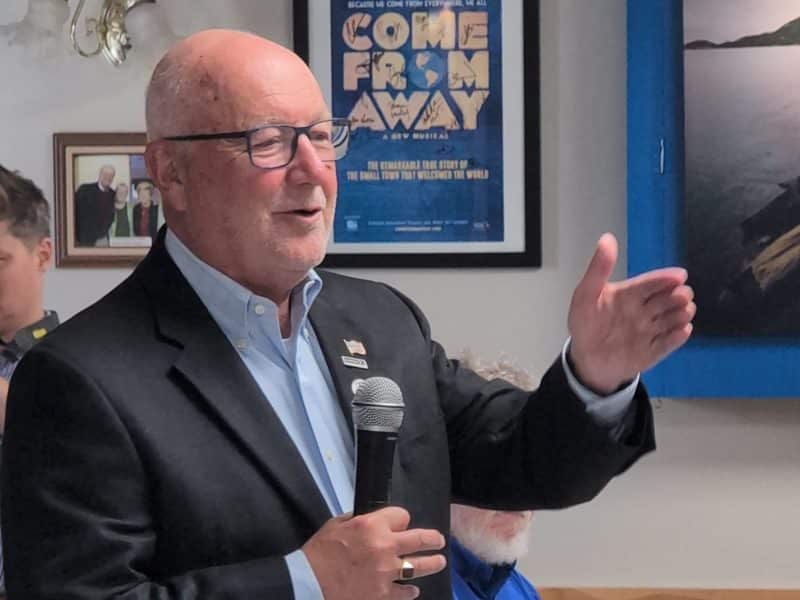
Gander didn’t protest U.S. ambassador during 9/11 visit, but still sent a clear message to Trump
There were no boos when Pete Hoekstra appeared at the 25th anniversary commemoration. Instead, Newfoundlanders kept their focus on the nearly 3,000 lives lost — and reminded America that Canada will not bow to anyone

Watchdog says it can’t investigate Deloitte over use of AI in $1.6M government report
Internal emails reveal Deloitte helped craft government’s response to The Independent’s investigation
Will declaring an epidemic help end gender-based violence?
Three provinces in Atlantic Canada have made formal declarations — but is that enough to quell violence against women, girls and gender-diverse people?