
An LNG future for Fermeuse?
Proposal for massive liquefied natural gas hub exhumed on Newfoundland’s Southern Shore
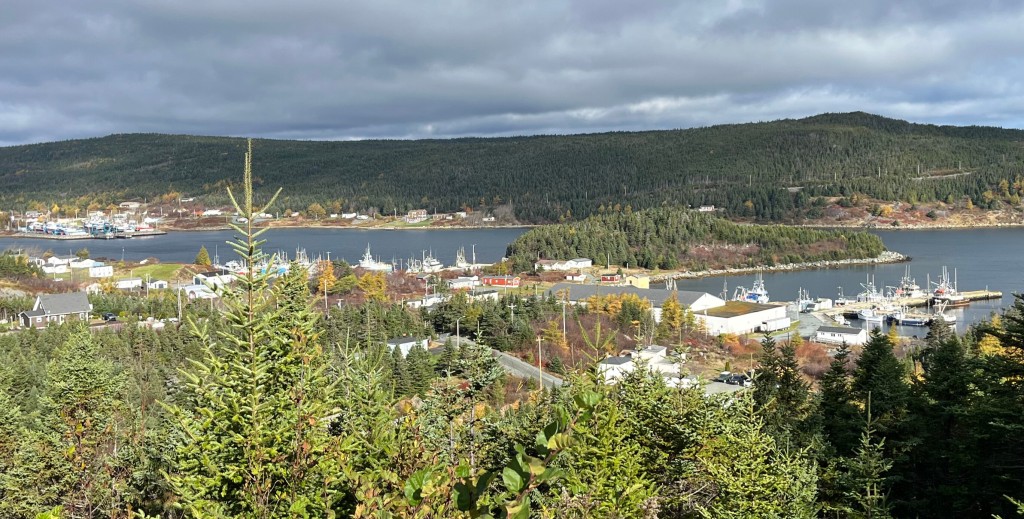
The announcement of a massive $15-billion liquefied natural gas (LNG) hub proposal in Fermeuse last September sent shockwaves through the local community. Fermeuse Energy Limited (FEL) proposed to use Fermeuse’s harbour to bring 9.7 trillion cubic feet of gas by pipeline from the Jeanne d’Arc Basin offshore, then liquefy it for tanker export to Scotland or India by 2031. But after residents began contesting the project, proponents went quiet for months—until a new announcement last week, supported by MHAs.
Where did this announcement come from and what does it mean for the future of Fermeuse and the Southern Shore?
Fish to wind to… LNG?
Once a booming fishing community, Fermeuse was home to one of the largest and most active fish plants on the Southern Shore. But by 1992, like many outport communities, the town struggled as the fishery floundered. The population declined by nearly half over the next 15 years but the fishery continues to be an important source of employment in the town.
Will you stand with us?
Your support is essential to making journalism like this possible.
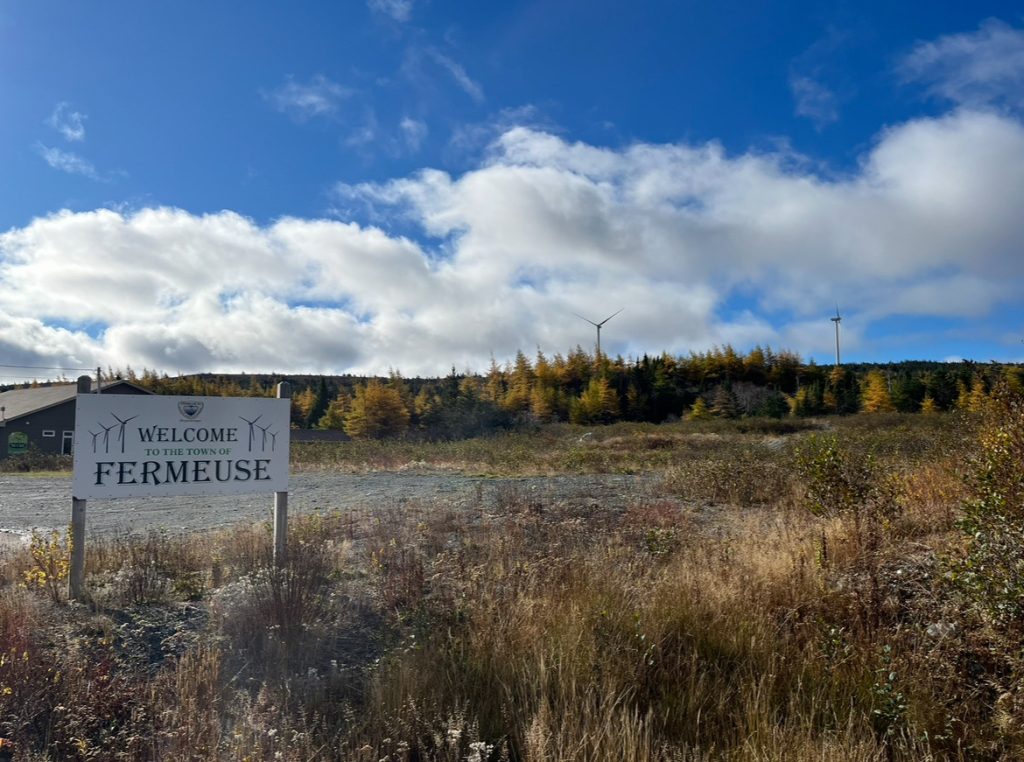
Fermeuse then became the site of one of only two wind farms in the province when Elemental Energy erected nine turbines in 2009 to take advantage of the Southern Shore’s infamous wind. The sign welcoming visitors nods to both sustainable sectors, stating Fermeuse is built on “the strength of the sea,” framed by the wind turbines.
In more recent years, the oil and gas sector set its sights on the town. Fermeuse Enterprises Limited, attracted by the town’s 20-metre-deep harbour, proposed an oil and gas marine base in 2014; it was granted environmental approval by the province in early 2023. The company rebranded as Fermeuse Energy Limited and in 2025 returned with an LNG-hub proposal, hoping to fast-track it by using the environmental approval for the previous project. The company anticipated environmental consultation to be completed within 18 months and to be “up and running” by 2031.
Residents blindsided
Most locals found out about the new project not from the company or government, but through Facebook posts from concerned residents who discovered a media release published by FEL on Sept. 2. Yet the Town of Fermeuse was clearly engaged and supportive.
“We are thrilled to see Fermeuse Energy’s vision come to life in our community,” Mayor Jerome Kenny said, according to LNG Industry coverage from Sept. 10. “This project represents a tremendous opportunity for economic development, bringing well-paying jobs and long-term stability to our residents.”
Some residents began contesting the project given its social, economic, and environmental impacts. The company went quiet in early September. By late October, the Town of Fermeuse refused to discuss it, indicating there was no LNG project proposed for the community and that FEL had informed the town’s council it would not be pursuing their announced plans.
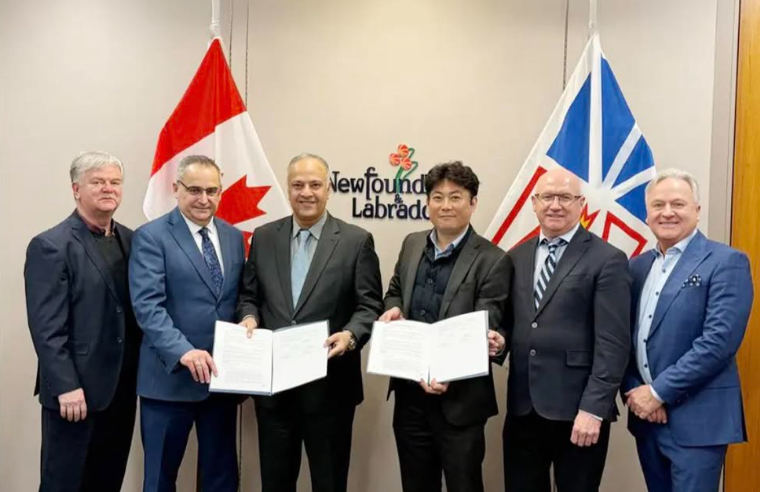
Then, last week, Fermeuse Energy announced it had signed an MOU with South Korean company Hanwha Group to develop the project. FEL had in fact been pursuing the project, this time with MHA support. Hanwha’s Jan. 21 press release included a photo featuring Minister of Fisheries and Aquaculture Loyola O’Driscoll, and Minister of Rural Development and Jobs and Growth Lin Paddock.
Unlock gas, boost local economy?
Project supporters claim it will bring a number of benefits, notably bringing gas to market. Since oil was discovered in the 1970s, the provincial government has aspired to produce gas commercially. In response to the 2025 provincial gas assessment, then Minister of Industry Energy and Technology Steve Crocker touted offshore gas development as a “tremendous opportunity” for the province given the 9.7 trillion cubic feet of reserves that have been estimated to represent royalties and taxes exceeding $100 billion. But no company has ever been able to “land” the gas. A project proposed in Placentia Bay in 2006 by Newfoundland LNG Ltd. stalled out due to a lack of buyers. It resurfaced in 2021-2023, then fell dormant. Now FEL is stepping up to unlock Newfoundland and Labrador’s offshore gas.
Residents, for their part, focus more on FEL’s claims of jobs and economic benefits. The company’s website asserts the project would generate 500 permanent jobs, a significant boost to a community experiencing steep population decline. The project is also speculated to generate activity that would bolster the struggling local economy and to bring other infrastructure improvements, like upgrading the Southern Shore highway. These promises speak to residents’ longing to rejuvenate their town and bring young people back. In essence, for some the project represents a chance for Fermeuse to have a future.
LNG glut today, sinkhole tomorrow
The problem, however, is whether any of these benefits will materialize. Newfoundlanders and Labradorians are now skeptical of the promise of jobs that never quite appear. There is also the matter of labour shortages already in the region. But another issue looms larger: the economic viability of new LNG projects. In simplest terms, the risk of this project is that it proposes to capture and export what no one wants to buy.
Only days before the new MOU on the Fermeuse LNG project, Reuters reported that Shell (the largest LNG trader in the world) and Mitsubishi are trying to offload shares in the LNG Canada project in British Columbia, citing “industry fears of global oversupply.” As analystRichard Brooks observed, the “LNG supply glut” is now underway, the “long term outlook is nosediving,” and projects “are being cancelled and delayed everywhere, even in the USA.” Analysts now warn of an LNG sinkhole—or bubble poised to pop—given the rapid rise of renewable energy and battery storage outcompeting gas on a cost basis.
The International Energy Agency’s (IEA) World Energy Outlook 2025 signals the market risks of new LNG. In the scenario where energy transition is slow—and all evidence indicates it is anything but—there is market room only for LNG projects that are currently under construction. But the IEA’s more realistic assessment of the pace of energy transition indicates that these projects already exceed demand. If the global community aligned its energy policy with climate safety, reaching net zero by 2050, then “many of the LNG projects currently under construction are no longer necessary,” the IEA says, adding those projects would be “unable to compete in a supply glut.” If already-underway LNG projects are at risk, then early-stage projects are even more so.
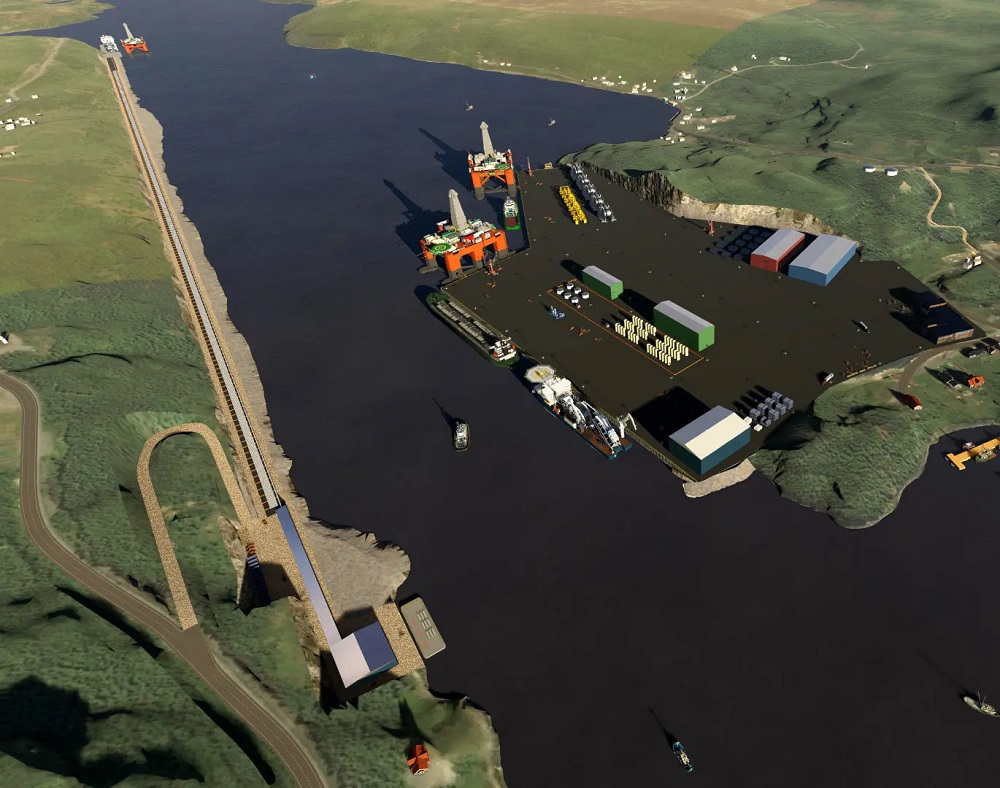
LNG exports on Canada’s East Coast are particularly poorly positioned. A recent report documented the “missing business case,” indicating there is no viable target market for LNG exports from Eastern Canada. EU demand is declining as cheaper renewable energy is brought online. Asian markets are creating alternatives to LNG or are accessing closer and cheaper supply. Moreover, transporting gas from Newfoundland’s offshore is not cost-competitive, given the need for a 350-kilometre pipeline or long-haul LNG tankers.
The hole in LNG projects’ business case is filled by taxpayers: the only way these projects become viable is if they get billions of dollars in subsidies from governments. Fermeuse Energy Ltd. CEO Swapan Kataria has already appealed for project support from Prime Minister Carney, arguing the LNG hub is a “nation-building” project.
Yet this scale of public investment would be better directed toward jobs-rich decarbonization projects. Public funds are needed for economic diversification and renewable energy so workers and communities can come through the energy transition with economic and social stability.
Lives upended
While the benefits are uncertain, LNG’s consequences are not. Residents pay a high price for LNG infrastructure like that proposed by FEL. In Kitimat, BC, home to Canada’s first LNG export facility which began operating in 2025, life in the small town is described as “upended” by the project. Residents report intense noise and the smell of pollution.
Then there are the health impacts of LNG infrastructure. Hundreds of health professionals, led by the Canadian Association of Nurses for the Environment and the Canadian Association of Physicians for the Environment, have repeatedly asked for an independent health impact assessment on LNG facilities to assess cardiovascular and respiratory problems associated with air contamination from LNG projects. Given the toxic discharges of a facility of this scale, the project also risks degrading land and water.

Meanwhile the LNG infrastructure proposed for Fermeuse would dominate the harbour, impeding and threatening the crab and other fisheries. Building and operating LNG export facilities can negatively impact surrounding ecosystems by exposing wildlife to toxic chemicals, noise pollution, and habitat disturbances. It would also stifle the town’s and region’s growing nature-based tourism industry—the “green tourists” from around the world who currently visit the Southern Shore have no wish to hike alongside an LNG terminal.
Then there are the climate costs of the LNG hub, an issue at the forefront after our summer of fossil-fuelled fires. FEL has echoed the provincial government’s “low carbon oil” myth, claiming gas would be a bridge to transition from coal to renewable energy. Yet gas is a fossil fuel and still, therefore, a lead cause of emissions fuelling the climate crisis. All LNG stages–extracting, liquefying, transporting via tanker or pipeline, and re-gasifying–are extremely emissions-intensive. Considering the full scope of emissions from LNG, its climate impact is on par with or even exceeds that of coal. Put simply, this project contradicts Newfoundland and Labrador’s climate targets and would impede the province from achieving its commitment to reach net-zero emissions by 2050. Liquefied natural gas is not a bridge to energy transition: it’s a wall.
Not a future, but a future at risk
Fermeuse Energy’s LNG hub is being framed as Fermeuse’s lifeline. Yet ultimately the project risks the community’s future to develop an industry without one.
Is there an alternative path? Success stories in Ferryland and Bay Bulls point to opportunities to enhance the tourism sector. Fermeuse’s familiarity with wind energy could be the basis for building out small-scale renewable energy projects that directly benefit the town. These would perhaps be more aligned with Fermeuse’s character and quality of life.
The benefits of this project are likely a mirage, yet the risks are real and staggering. Rather than offering Fermeuse a future, as FEL claims, this LNG project erodes it.

Authors




Related Articles

Thinking beyond the crisis in journalism
There are many legitimate reasons for concern, but news media have an unprecedented opportunity to innovate and create a new era of journalism

N.L. long-term care needs more nurses, who need more time with residents
Only the NDP and PCs are committed to improving nurse-to-patient ratios

How N.L. became the life (and death) of the party
We’re cutting through the undergrowth to find out why our political parties feel dead — and what might liven them up