
No energy justice with Bay du Nord
Newfoundland and Labrador’s Bay du Nord ambitions are out of step with the dire need to phase out global oil production and the province’s benefits agreement with Equinor underscores the need for a new approach to fossil fuels
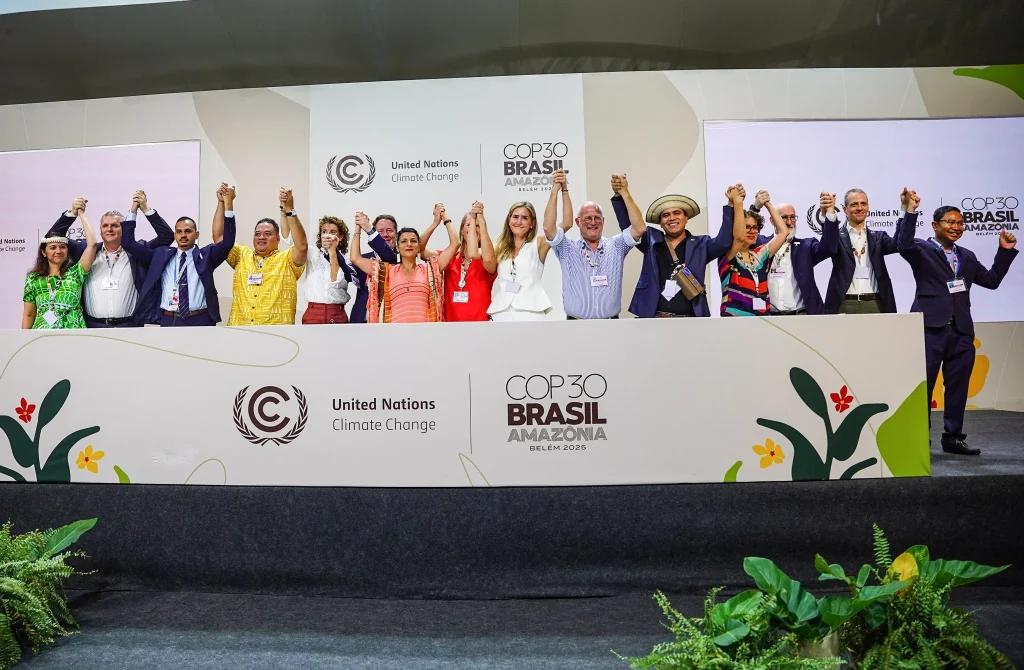
This week, in the midst of yet another oil-based conflict in the Middle East, representatives of 50-plus countries are meeting in Colombia to accelerate the global transition away from oil and gas production. This “coalition of the willing” is needed now more than ever as blockages in the Strait of Hormuz trigger oil price surges and fuel shortages. International Energy Agency Executive Director Fatih Birol has called the ongoing conflict between Iran, the US and Israel the worst energy crisis in history.
We are feeling the consequences here in Newfoundland and Labrador, and not just at the gas pump; rising fuel costs have driven up the price of everything we buy. Global leaders are now seeking renewable alternatives to the economic precarity, climate crisis, and war that results from oil dependence. A similar effort is needed here at home; instead, our political leaders are short-sightedly fixated on oil, in particular the Bay du Nord project.
More clarity on (limited) benefits
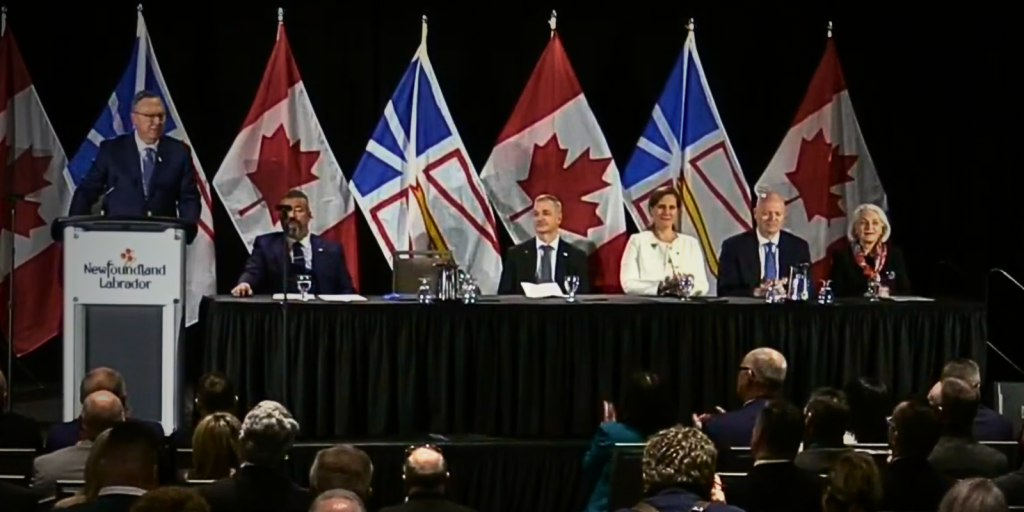
There was a lot of hoopla around the province’s March 3 announcement it had struck a benefits agreement with Norway’s Equinor on Bay du Nord, a project the state-owned corporation has still not fully committed to building.
Will you stand with us?
Your support is essential to making journalism like this possible.
Premier Tony Wakeham framed the agreement as a game-changer for the oil sector, and for the province more broadly. While it clarifies the project’s job impacts, the agreement’s numbers are disappointing. The 31-million person hours of work over the project’s anticipated 25-year lifespan sounds enormous but amount to only about 700 full-time jobs annually.
Moreover, there’s no guarantee about the quality of associated trades jobs, or whether they will be unionized. And while the agreement includes apprenticeship targets, which are vital given how apprentices struggle in this province to get qualifying hours, yet again, the agreement refers only to targets, not binding commitments.
The agreement also retains the Bull Arm dry dock as exclusive to oil and gas, undoing months of negotiations and an MOU with North Atlantic to establish a renewable energy hub to diversify the province’s energy sector.
As for revenues, on the basis of the agreement, the province claims it would get $6.4 billion in direct revenue for the first phase of oil production. That may sound like a lot, but it represents only about 15 per cent of the total value of the oil — around $40 billion — assuming the estimated 430-million barrels of oil and average 2025 prices.
Just as we want to protect ourselves from another unfair deal with Hydro Quebec on Churchill Falls, we also need to ensure Newfoundland and Labrador is getting a fair share of the oil’s value from Bay du Nord. Equinor, for its part, knows it is getting a sweet deal. It would be paying dramatically higher taxes and surcharges in the UK and Norway. An oil project of Bay du Nord’s size would generate an estimated $10-14 billion in public revenues in the UK—about twice what Newfoundland and Labrador hopes to collect—and between $16-20 billion in Norway.
As with most large resource development agreements, the devil is in the details. Full clarity on the actual benefits to our province are vital, especially when we’re dealing with multinational corporations that reap the lion’s share of benefits from our resources.
Put simply, the agreement is still weak tea in terms of jobs, apprenticeships, and revenues for our province.
Equinor has not fully committed to Bay du Nord
More to the point, while the photo op and media circus around the agreement gave the impression that Bay du Nord is a “go,” it is not. Equinor has yet to decide whether to make the investment; without that, none of the speculated work hours, apprenticeship targets, floating dry dock benefits, or revenues will come to pass.
The reason for Equinor’s delay speaks volumes, signalling major risks for a province that has positioned itself as dependent on growing oil production. In 2023, the company delayed the project’s start for three years, citing “changing market conditions and subsequent high cost inflation.”
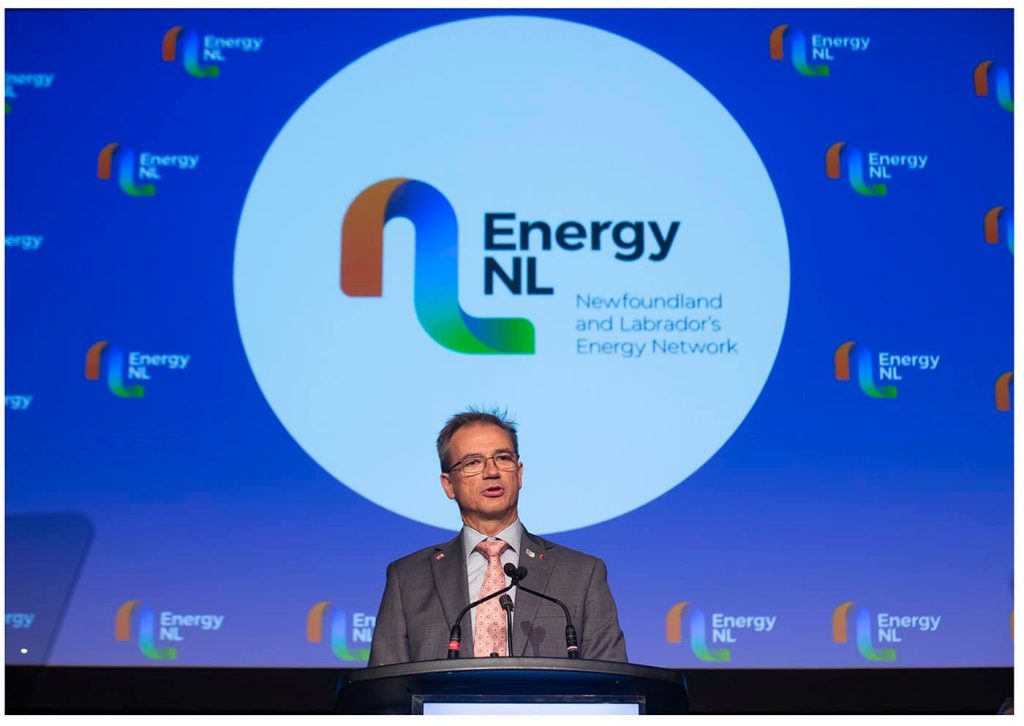
In 2025, Equinor’s manager for Canada, Tore Løseth, said projects like this are “a huge investment decision” with “a lot of risks,” and Equinor was focused on what future “oil price level” the company would require “to have a profitable project, to make money.” For Equinor to proceed with Bay du Nord, “it needs to be an investment proposition that makes sense.”
Newfoundland and Labrador’s oil sector in decline
Yet the “investment proposition” in Newfoundland and Labrador’s offshore is now in question given anticipated long-term oil market declines. The International Energy Agency anticipates global oil demand decline will occur around 2030—less than five years from now—then continue dropping until 2050.
The ongoing oil price surge resulting from the conflict in the Middle East is a momentary deviation from this long term trend. Indeed, this price spike may yet accelerate energy transition. As seen after Russia invaded Ukraine in 2022, high prices motivate states and citizens to replace oil with cheaper and more secure energy, undermining long term oil demand. The European Union is a case in point: the last round of high prices spurred a massive ramp up of renewable energy production to reduce oil and gas demand.
Oil is being replaced with cheaper, more efficient, and more accessible renewable energy preferred by people and governments that are seeking affordable, secure energy now more than ever. Renewable electricity generation, like solar and wind, has seen exponential growth in recent decades. The sharp uptick in electric vehicle adoption globally is also cutting into oil demand.
How does this trend land here in Newfoundland and Labrador? According to the most recent federal government analysis, very little or virtually no oil will be produced in this province by 2050.
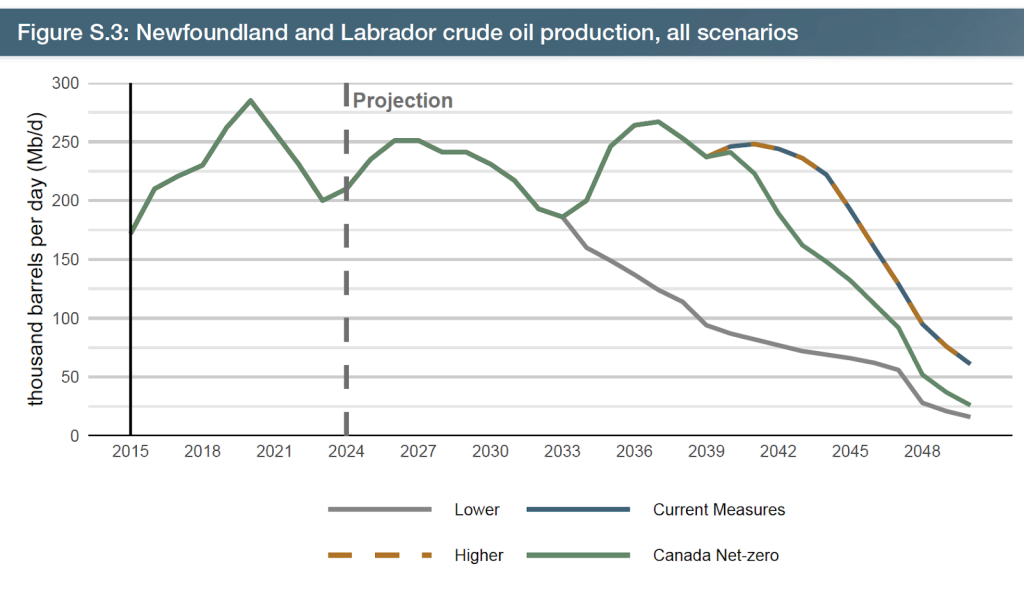
The anticipated downturn has nothing to do with bold climate policies, though we desperately need those. Instead, as shown by the blue and orange line representing “current measures” and “higher” projection scenarios in the above graph, Newfoundland and Labrador’s oil production declines, even under a scenario where Canada doesn’t implement new measures to reduce emissions or reach its net-zero emissions goal. Even with the most conservative set of assumptions, which see Canada and the world doing little to respond to the climate crisis, our province’s oil sector declines steeply.
This makes Wakeham’s declaration that Newfoundland and Labrador is “back in the oil business” — and his statement that Bay du Nord is “the starting line” of our province’s foray into the offshore oil sector — aspirational fictions. Saying something out loud doesn’t make it true. All evidence indicates the opposite: the oil sector is sunsetting.
In this context, financial incentives offered by the federal and provincial governments to persuade Equinor are misplaced. Notably, the federal government offered to cover the project’s $1-billion tab for United Nations Law of the Sea payments, required since the project would be situated outside Canadian waters.
Provincially, Wakeham vowed to provide “unwavering support for the oil and gas industry,” and we expect Budget 2026 this week will offer continued financial incentives to the sector, despite the fact major oil companies don’t need corporate welfare from our province. Equinor registered $6.2 billion in profits in the last quarter of 2025 alone. Handing precious public money to these oil companies—funds we need for energy transition, among other things—is like giving Jeff Bezos an Amazon gift card.
Leaving people behind in an oil boom
The provincial government continues to ignore warnings about the need to prepare workers, communities, and the economy for the oil sector’s decline. Instead, provincial leaders and oil industry proponents are praying for another oil boom, even though previous oil booms never quite worked out as promised.
For nearly 30 years, oil companies have extracted 2.37 billion barrels of oil off Newfoundland and Labrador shores. The value of sales from that oil, up to 2024, was a staggering $179 billion. Most of that money left the province, and we face many of the same problems we did before we welcomed the industry to our waters.
Newfoundland and Labrador’s 2024 Vital Signs Report, aimed at measuring quality of life here, found that 31 per cent of the province’s residents have difficulty affording basic needs like transportation, housing, food, and clothing, while 20 per cent experience housing insecurity. Despite the introduction of provincial pay equity legislation, the pay gap persists and is amongst the highest in Canada. Women in Newfoundland and Labrador, on average, still earn significantly less than men for the same work. We have one of Canada’s highest rates of child hunger, with more than a third of children under 18 living in food-insecure homes. In 2025, a report found food bank visits in Newfoundland and Labrador had risen 44 per cent over six years.
Rather than gambling on another oil boom, our political leaders could set the province up for success by planning for the oil downturn and kick-starting a jobs-rich energy transition, from which other countries are now benefitting immensely.
Bay du Nord indeed a ‘generational’ project, but not as advertised
Politicians and oil lobbyists are calling Bay du Nord a “generational” project, which is true in the sense that there are about 25 years left in Newfoundland and Labrador’s oil industry, meaning one generation of oil production remains.
Just as risky, the Equinor benefits agreement fanfare completely obscures the climate costs of this sector, and of Bay du Nord specifically, that will be borne by the next generations. As we argued in detail after last summer’s devastating fires, the fossil fuel sector is directly responsible for the vast majority of emissions causing the very climate crisis hammering our province every year, whether through fires, floods, storms, and the rising cost of everything. Projects like Bay du Nord will add hundreds of millions of tonnes of emissions to the global atmosphere, throwing fuel on the climate fires. Without course-correction, we are saddling future generations with unimaginable costs and suffering.
So yes, Bay du Nord is indeed a generational project, but not in the way its cheerleaders want us to believe. In reality, it’s a generational project because it underscores some of the toughest long-term questions facing our province. How can we join the energy transition in a way that is fair to workers and communities dependent on the oil sector, delivers widespread socio-economic benefits, and contributes to climate safety?
The leaders convening in Colombia as this very moment are providing some of the answers, laying out pathways for this province to build a fair and stable future beyond oil.

Authors


Related Articles

What Québec’s provincial election could mean for the Churchill Falls deal
With the separatist Parti Québécois leading in the polls and 29 per cent of Quebecers undecided on who to vote for, anything could happen on Oct. 5, and beyond
Hydrogen Hype?
It seems the wind has been taken out of the sails of Newfoundland and Labrador’s wind-to-hydrogen hype. So what does this mean for the province’s renewable energy transition?
Canada must reverse refugee healthcare funding cuts
The cuts are likely to reduce medication adherence, increase hospitalizations, and download healthcare costs to the province