
Not Just Your Backyard: Housing in N.L. municipal elections
Mayors and councils have tools at their disposal to radically improve accessible, affordable housing in their communities
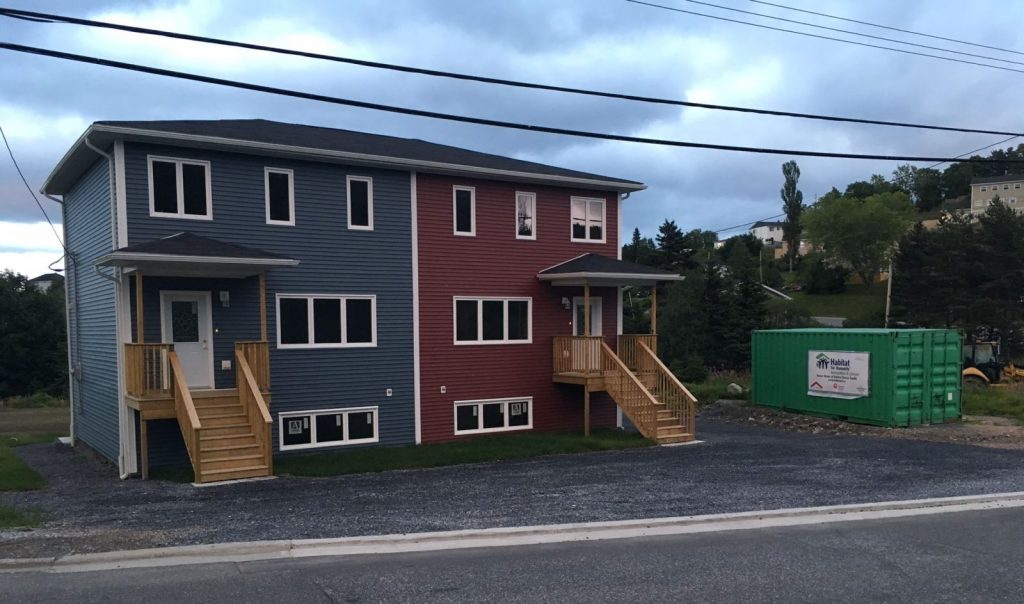
As municipal voters go to the polls Thursday (Oct. 8 in St. John’s), housing is a primary matter of concern.
A lack of affordable and available housing is an issue across the province and municipal responses to it vary widely given the significant differences in capacity when comparing the capital city to smaller municipalities which generally have far fewer financial and human resources to tackle major issues.
The tools available to any town or city in this province are constrained by the powers given to municipal governments by the provincial government. Many incentives used by municipalities in other jurisdictions, such as laneway housing, density bonusing in exchange for affordability, or inclusionary zoning (a requirement that any large development contain some percentage of affordable units or pay a fee intended to be dedicated to their creation elsewhere) are unavailable in Newfoundland and Labrador due to legislative limitations.
Furthermore, the municipal development approvals process—which was identified as a barrier to development by every community housing provider I spoke to when doing research for a recent report—is provincially mandated. This means the process—which includes multiple layers of rework whereby an application must be approved by both the municipality and the province repeatedly before a development can proceed—cannot be changed by the municipalities themselves. In essence, towns and cities are working under heavy constraints, even in the areas over which they have jurisdiction.
Will you stand with us?
Your support is essential to making journalism like this possible.
NIMBYism must be challenged
This doesn’t make municipalities blameless in the creation of our current crisis though. NIMBYism remains a strong force in delaying and preventing much-needed housing from being built, as residents decry perceived negative impacts of proposed developments on their quality of life, such as decreased property values and parking challenges. And councillors often listen.
In January, the City of St. John’s rejected a 96-unit building due to a request from the developer to waive the requirement for 16 parking spaces. A revised proposal for a 78-unit building was approved in April, and as such, 18 potential units of housing were lost. A cursory glance at the submissions for any large development mirror the same ones that drove the decision on this file: a protectionist desire to preserve the status quo for existing homeowners at the expense of those feeling the pinch of the tight housing market.

Even as interest in housing is heightened in public discourse and in the policy space, the cultural underpinnings of these attitudes remain. In December 2024, the City’s housing text amendment was passed with the stated intention to stimulate more development. Included was a provision to expand the list of permitted uses—which do not require a vote of council or public commentary and as such can be approved much more quickly—in the municipal development regulations.
But the R1 zone—where the only permitted residential uses had previously been single-family homes and subsidiary apartments—was amended to permit four-plexes on corner lots only, whereas four other residential zones now permit four-plex development on any lot zoned as such.
The same type of development is notably absent from the list of discretionary uses—which conversely require a vote of council and a public engagement process—in the R1 zone. This means a substantial swath of the city remains highly constrained in the building types and amount of density allowed, which contributes to the scarcity, and corresponding high cost, of urban land.
Surplus land and buildings
Beyond land-use planning, many municipalities across the province hold the key to an essential catalyst for affordable housing development in the form of surplus land and buildings. This is one notable gap in the funding landscape for housing projects and an essential component of accessing other essential funds. By partnering with community groups to create affordable housing using these assets, municipalities have an opportunity to turn something currently underutilized, and which costs money, into something which both generates tax revenue and benefits the community.
As a part of its 2019 Housing Strategy the City of St. John’s identified several pieces of land for potential housing development. One was used to develop three homes in partnership with Habitat for Humanity after a lengthy battle against NIMBYism, while no further projects have been initiated on the remaining lots.
Municipalities taking stock of their own holdings and creating a transparent framework for partnering with community organizations to develop permanently affordable housing would fill an unmet need in the resources available to community housing providers and in the housing ecosystem overall. Pre-emptive rezonings on the lots would lower the costs of development and allow municipalities to clarify their desired uses.
While the steps in the development process are set out by the province, municipalities can support the creation of affordable housing projects by expanding the list of discretionary uses further, as well as fast-tracking approvals for multi-family housing. With vacancy rates as low as zero per cent for certain kinds of apartments in some municipalities, according to CMHC, urgent action to create more rental housing is needed.
Sufficient human resources to handle the pipeline of development applications received by municipalities is an essential part of this, and one which smaller municipalities in particular may be challenged by. Another aspect is simply one of priorities, both in terms of the allocation of resources that a municipality has at its disposal and in terms of the weighing of interests of homeowners and the interests of those in need of housing. Public engagement is important, to be sure, but as long as the human right to housing is vulnerable to being subordinated to the desire for easy parking for those with a roof over their heads, another way of doing things is needed.
The City of St. John’s differs from other municipalities in the province. St. John’s itself is a housing provider with 476 units of social housing in its portfolio. Most of these were constructed during a very different era of social housing development in this country, when the federal government was an active partner in creating social housing with provinces and municipalities.
Social housing an essential service
Expansions to the portfolio since the change in federal participation in the early 1990s have been few and far between. Nevertheless, social housing provides an essential service, particularly given 64 per cent of those interviewed in the 2024 End Homelessness St. John’s Point-in-Time Count cited “rent too high” and 53 per cent cited “low income” as significant barriers to accessing housing.
By leveraging the equity in its housing stock to develop more social housing, the City stands to address housing insecurity for more residents, which has social and financial benefits to the City overall and allows it to use and expand its existing organizational infrastructure rather than asking already overburdened not-for-profit groups to continue shouldering the responsibility of tackling the housing crisis.
While municipalities are limited in the avenues they can take to increase the affordability and availability of housing, they also play a critical role in resolving this issue, and in the absence of real and thoughtful dedication to action on their part, the crisis will persist. It remains to be seen whether the successful candidates will use the tools at their disposal to build a future for all, or whether they will continue to defend the status quo at the expense of those in need.

Author

Related Articles

An LNG future for Fermeuse?
Proposal for massive liquefied natural gas hub exhumed on Newfoundland’s Southern Shore

Thinking beyond the crisis in journalism
There are many legitimate reasons for concern, but news media have an unprecedented opportunity to innovate and create a new era of journalism

N.L. long-term care needs more nurses, who need more time with residents
Only the NDP and PCs are committed to improving nurse-to-patient ratios