
Safer Communities: election promises and a bleak Liberal track record
Will the Liberals’ plan to address crime actually make communities safer?
The Liberal Party and the Progressive Conservative Party have made countering crime a high priority in the provincial election. The crime severity index reflecting the volume and severity of police-reported crime in Newfoundland and Labrador was historically among the lowest in Canada. For instance, in 2008 only PEI fared better by a small margin. Our province is no longer among the safest in Canada.
The number of police-reported crimes in Newfoundland and Labrador in 2024 grew by 5 per cent compared to 2023. Among other provinces and territories, only Nova Scotia witnessed an increase in police-reported crimes, albeit less significant (3 per cent).
Unlike the PCs, the Liberals have spent a decade in power and have had ample time to respond to the growing sentiment of insecurity in our province. Let’s assess the party’s track record of addressing public safety concerns in our communities.
The Liberals have made several commitments aimed at making communities safer. They have promised to hire 90 new RNC officers by 2030; to renegotiate the policing agreement with the RCMP to ensure they deploy 30 additional officers to rural and remote areas of the province; to increase training opportunities for public safety professionals; to “modernize” public safety legislation; to create a joint RNC/RCMP Crime Reduction Unit to conduct compliance checks for individuals under court conditions; and to create a provincial Victims of Crime Support Unit.
Will you stand with us?
Your support is essential to making journalism like this possible.
The Liberals’ commitments “to reduce crime and improve public safety” do not mention a civilian police oversight board — a telling omission since Newfoundland and Labrador is one of the last jurisdictions in Canada without one.
The premier’s brainchild
In November 2023, as the minister of Justice and Public Safety and Attorney General, Premier John Hogan announced the creation of the Policing Transformation Working Group. Its purpose, according to a news release at the time, was to “to evaluate the current provincial policing model, conduct public engagement, and provide ongoing advice to ensure Newfoundlanders and Labradorians receive the most effective and efficient policing services possible.”
The group was created amidst calls for strengthened policing oversight, since the public had no role in the policies or procedures which shape the RNC Public Complaints Commission and the Civilian Review and Public Complaints Commission for the RCMP. Each of these is led by a commissioner appointed by the government.
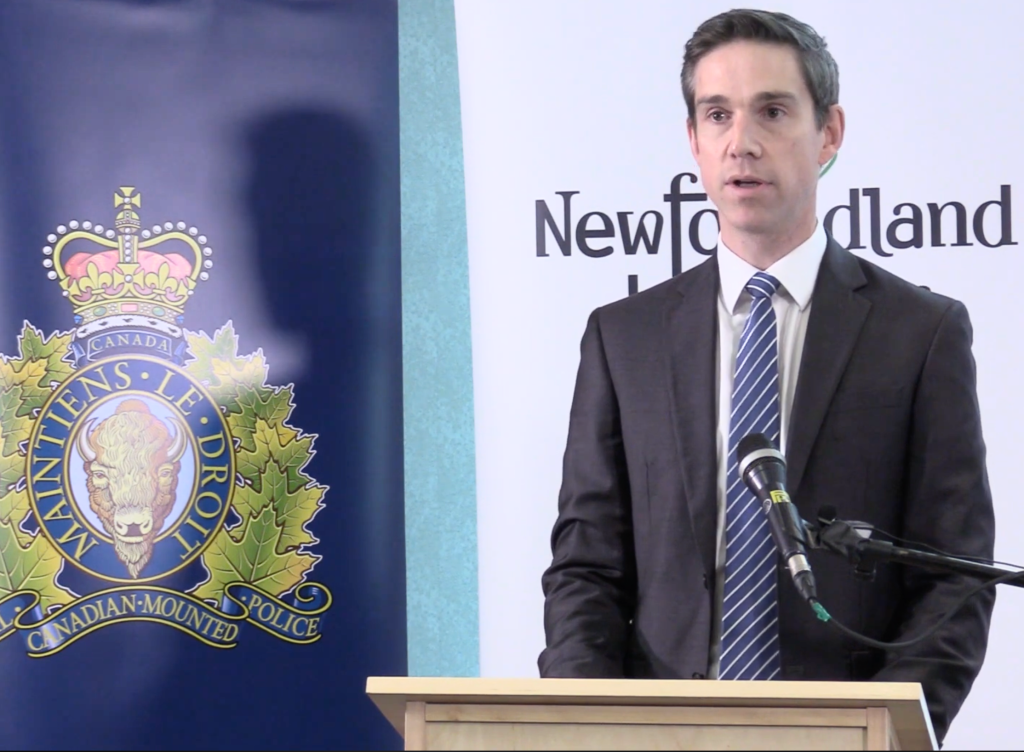
The Liberals allocated a lavish budget of $800,000 annually to the four-member group, which means around $1.5 million of taxpayers’ money has already been spent on evaluating and improving policing services in this province. To compare, the Liberals plan to spend roughly the same amount on offering $20,000 bursaries to 90 new RNC recruits, as per their first ‘safer communities’ commitment.
The group reported to then Deputy Minister of Justice and Public Safety (JPS) Denis Mahoney, Hogan’s trusted associate who followed the minister from JPS to the premier’s office earlier this year. Interestingly, Mahoney has also been the province’s chief negotiator in talks with Québec over the Churchill River hydro development, Hogan’s other flagship project.
Although the group was tasked to collect “information, opinions, and perspectives on policing in Newfoundland and Labrador from numerous stakeholders, including the public,” it does not have a website with contact information. Several expressions of interest in contributing to the group’s work have been answered by Hogan in a ‘thank you, but no’ manner.
To receive feedback from the public, the group developed an online survey, which was open for little more than a month and included the December holiday season. Unlike town hall meetings, group discussions, and individual submissions, surveys offer one-way communication; the organizers decide on the topics they want to hear about and set limits on how much they want to hear.
Although the participants were self-selected, which makes the survey results non-generalizable, some opinions are quite notable. More than a third of participants reported feeling ‘unsafe’ in their communities. When comparing their current sense of safety with how they felt five years ago, almost three-quarters of the respondents said they feel ‘less safe’ now. More than half assessed the overall effectiveness of police in keeping the respondent’s community safe as ‘ineffective.’
Having ‘no faith in the justice system to resolve the issue’ prevents almost two-thirds of survey participants from reporting a crime to the police, which means the province’s 5 per cent increase in the crime rate between 2023 and 2024 may not fully capture the severity of the situation.
The fact that the public has no input on law enforcement emerged as a key explanation for the growing sentiment of unsafety. More than half of the respondents do not feel they have an opportunity to provide input on policing priorities in their community. The relative majority are not confident that a complaint about a police officer would be addressed fairly.
How to respond to the public’s concern without changing anything
The survey was conducted between mid-December 2024 and mid-January 2025. Although the government publicly released its results in late May, the results were likely already known in February. Being aware of the bleak picture that emerged from the survey, the government took a proactive step in fast-tracking the Law Enforcement Oversight Commission Act. Bill 102 went through the second reading on March 3, the third reading on March 12, and received royal assent on March 18. Thus, when releasing the survey results on May 26, the government claimed it “has already prioritized some of the suggestions received.”
The new Act established the Law Enforcement Oversight Commission, which succeeded the RNC Public Complaints Commission. However, there is no substantive progress besides the name change. Like its predecessor, the Lieutenant-Governor in Council appoints the Law Enforcement Oversight Commissioner. The chief of the RNC retained the privilege to investigate some complaints and to dismiss the Commissioner’s recommendations.
The Law Enforcement Oversight Commission is a far cry from a Police Oversight Board that would be independent of police, civilian-led, politically neutral, and representative of the province’s diverse communities. Several civic groups, including the Indigenous coalition First Voice, have advocated the idea of a Public Oversight Board. The Policing Transformation Working Group was deaf to their voices.
Allergy to complaints
The survey, however selective, suggested that the sentiment of unsafety should be attributed to the absent feedback loops in relationships between the public and the law enforcement agencies. In those circumstances, the public’s growing dissatisfaction with their safety cannot be adequately expressed, let alone acted upon.
The refusal to establish a civilian-led police oversight board highlights the current government’s fear of complaints and other unwelcome opinions. The Liberals perceive the prospects for independently investigating complaints as particularly threatening. Independent investigation of complaints will make communities safer in reality. At the same time, independent investigations risk undermining the effectiveness of the government’s public relations campaigns aimed at creating the perception that problems either do not exist or are promptly addressed.
The priority given to image-building at the expense of practical work on the ground characterizes several other initiatives undertaken by the government against the backdrop of the general election. Campaigning in Happy Valley-Goose Bay, Hogan announced that a re-elected Liberal government would establish a Churchill Transformation Readiness Strategy for Labrador, a key feature of which would be a “collaborative forum focused on the social and economic impacts related to the development on the Churchill River and other resulting industrial growth arising from the increased power capacity for Labrador.”
The promise sounds familiar. The Policing Transformation Working Group had a similar mandate and ambitions. The two years of its operation resulted in little more than stylistic changes in the legislation. A Labrador Community Engagement Committee may well have a similar fate.
The Liberal government did not respond to valid criticism concerning the contemplated deal with Québec. It has been prepared with no independent oversight and with little information available to the public.
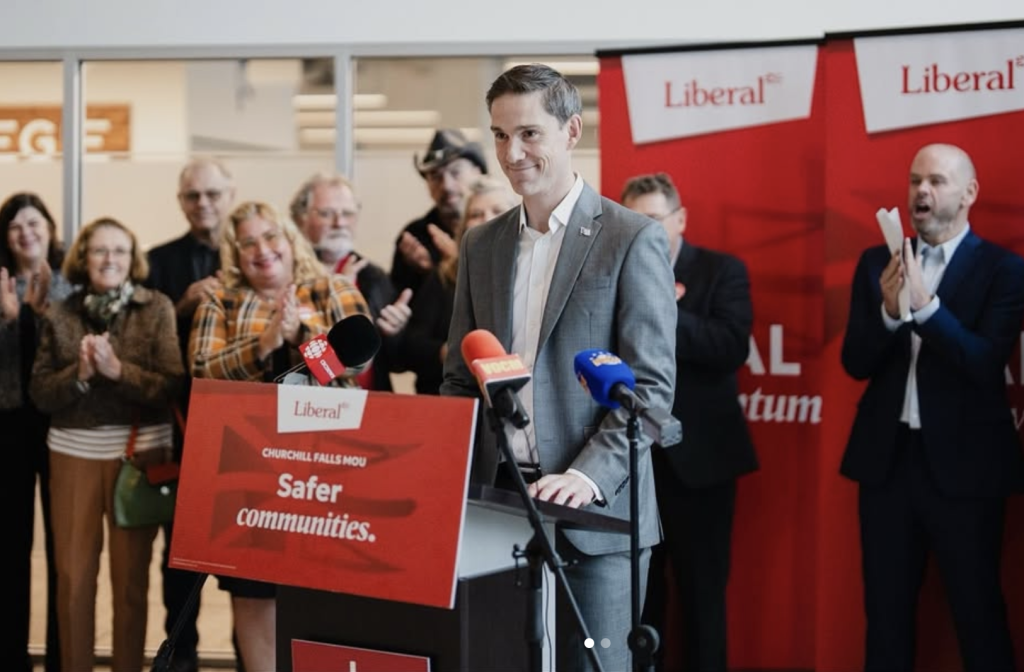
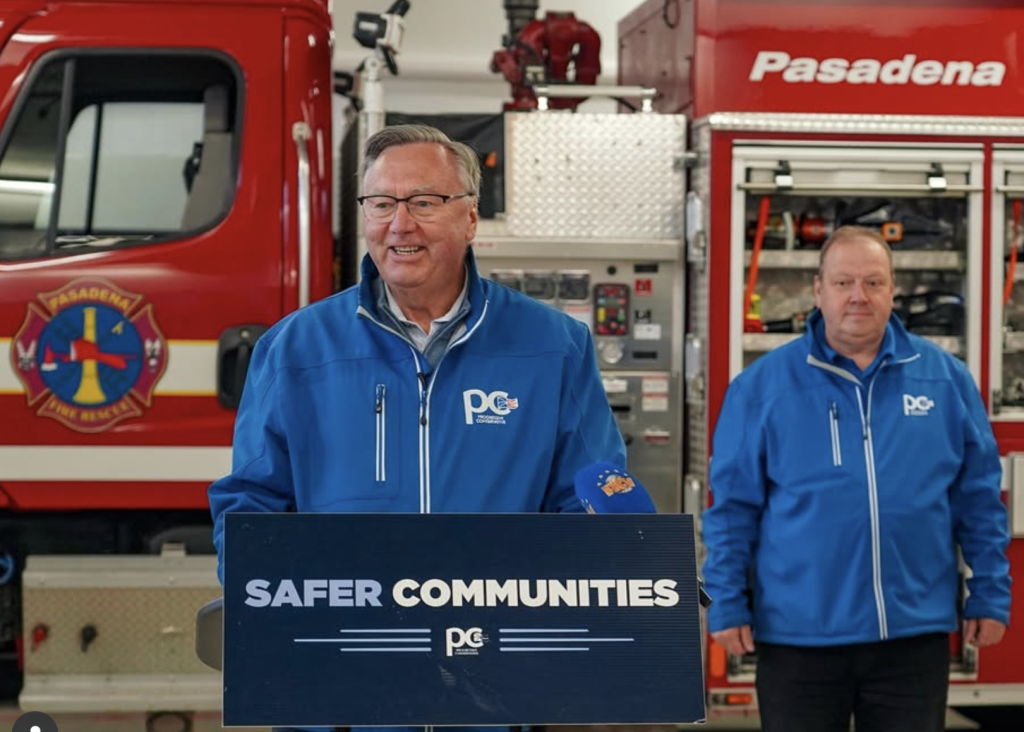
The premier rebuked PC accusations that the Liberals ‘copied and pasted’ the ‘safer communities’ slogan after both party’s leaders recently used podium signs that said “Safer Communities” on them. “I do think there’s a big difference,” Hogan said during a Sept. 24 campaign stop. “Their sign doesn’t say Churchill Falls MOU on it.”
But at the end of the day, mentioning the Churchill Falls MOU in the context of the Liberals’ ‘safer communities’ program has a deeper meaning. Non-transparency distinguishes both of them, and the public has no active role in either of them.

Author

Related Articles
An LNG future for Fermeuse?
Proposal for massive liquefied natural gas hub exhumed on Newfoundland’s Southern Shore
Thinking beyond the crisis in journalism
There are many legitimate reasons for concern, but news media have an unprecedented opportunity to innovate and create a new era of journalism

N.L. long-term care needs more nurses, who need more time with residents
Only the NDP and PCs are committed to improving nurse-to-patient ratios