Appealing the mega-destruction of wind-to-hydrogen
Residents appealed the province’s decision to release the controversial Port-au-Port-Stephenville wind-to-hydrogen project from environmental assessment. But their concerns were dismissed.
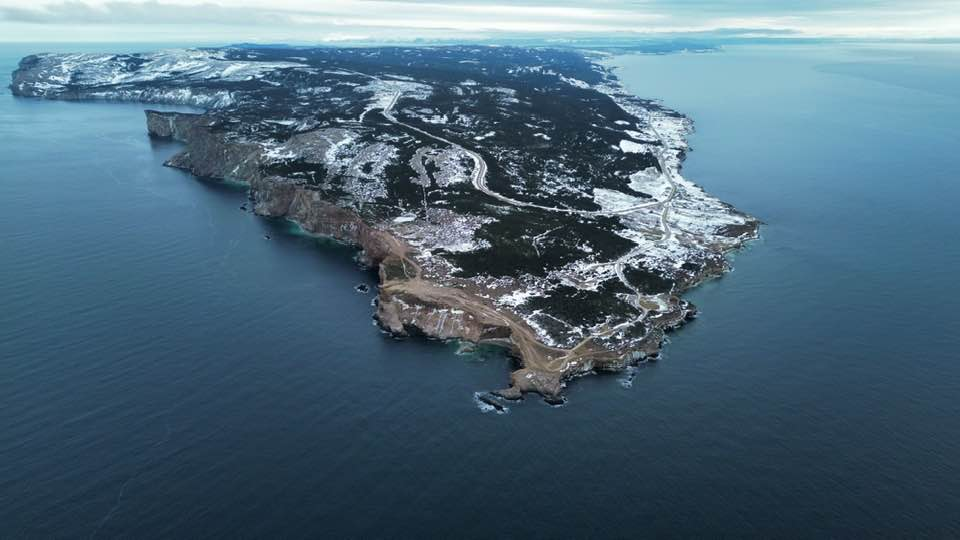
In April the provincial government gave World Energy GH2 the go-ahead to proceed with its controversial and unprecedented wind-to-hydrogen megaproject on the island’s southwest coast. Already the impacts are being felt.
If built, the project would see hundreds of massive wind turbines scattered across the Port au Port Peninsula and Codroy Valley, generating energy to power a plant in Stephenville to produce hydrogen for export. From its initial registration in the summer of 2022 and throughout the subsequent environmental assessment, the proposal has been highly contentious.
As our society finally decides to try to decarbonize and limit global warming, and in light of rural Newfoundland’s need for jobs, political leaders may have thought the introduction of a so-called “green energy” industry in the province would be welcomed. Instead, this precedent-setting mega-project has drawn strong opposition not only from the local communities affected but from other experts and citizens across the province and beyond.
And the battle is far from over.
Will you stand with us?
Your support is essential to making journalism like this possible.
In early June, more than a dozen individuals and groups formally appealed the decision by then-Minister Bernard Davis to release of the project from environmental assessment. Section 107 of the provincial Environmental Protection Act provides this option for challenging a government decision on an environmental issue. Those who appealed under Section 107 explain that they have spent almost two years following all the rules, researching and providing detailed input to the assessment process at every stage – and having it ignored. They hoped this appeal process would give them one more chance to stop what they know to be a disastrous project.
A month later, however, each appellant received a lengthy letter from Davis, explaining in ponderous bureaucratese how comprehensive the assessment process had been, detailing how each concern raised had been “mitigated,” and stating that their appeals were therefore dismissed
The next steps will be up to the appellants to decide.
Meanwhile, the public deserves to understand what this far-reaching and unproven scheme would really mean for our province. The letters of appeal make the impacts painfully clear.
They describe in detail the toll that the project’s preparatory stages have already taken on the people and the land in the Port au Port and Codroy Valley areas. The letters also document the drastic and largely irreversible effects that the project, and the various other industrial-scale wind-to-hydrogen projects poised to follow, will have on the province as a whole if they are allowed to go ahead. The most devastating of these effects are fundamental to the whole concept of the project, and are in no way “mitigatable”.
Two summers ago, World Energy GH2’s project plan was sprung on locals and the media, complete with promotional photos of Prime Minister Justin Trudeau and German Chancellor Olaf Scholz signing a memorandum of understanding in Stephenville. Ever since, the Port au Port Peninsula’s grassroots Environmental Transparency Committee (ETC) has been investigating and raising questions about the multiplicity of issues involved, including greenwashing, disturbing technical details, and conflicts of interest.
The concerns
In their appeal letter, the ETC refers to its prior communications with provincial, federal and Indigenous leaders, documenting its in-depth research on the impacts the project would have.
“As detailed in our documentation, those impacts include threats to public health and safety, noise and dangers from traffic and turbines, air and water pollution, erosion of Indigenous and other local traditions, social upheaval and dangers to women and children, fragmentation and devastation of fragile ecosystems and wildlife habitat, deforestation and flooding, damage to fisheries and tourism, potential spills of ammonia and other toxic substances, problems of waste upon decommissioning, and much more.”
Most of the appeal letters came from groups and individuals in the two southwest coast regions where World Energy GH2 plans to erect more than 300 giant wind turbines. Four others came from residents of Labrador and the Avalon Peninsula. All are concerned about the project’s impacts on communities and the natural environment, the flawed economic and political rationale behind it, and the highly dubious environmental assessment process which now sets the stage for the problems to be replicated through other projects across the province.
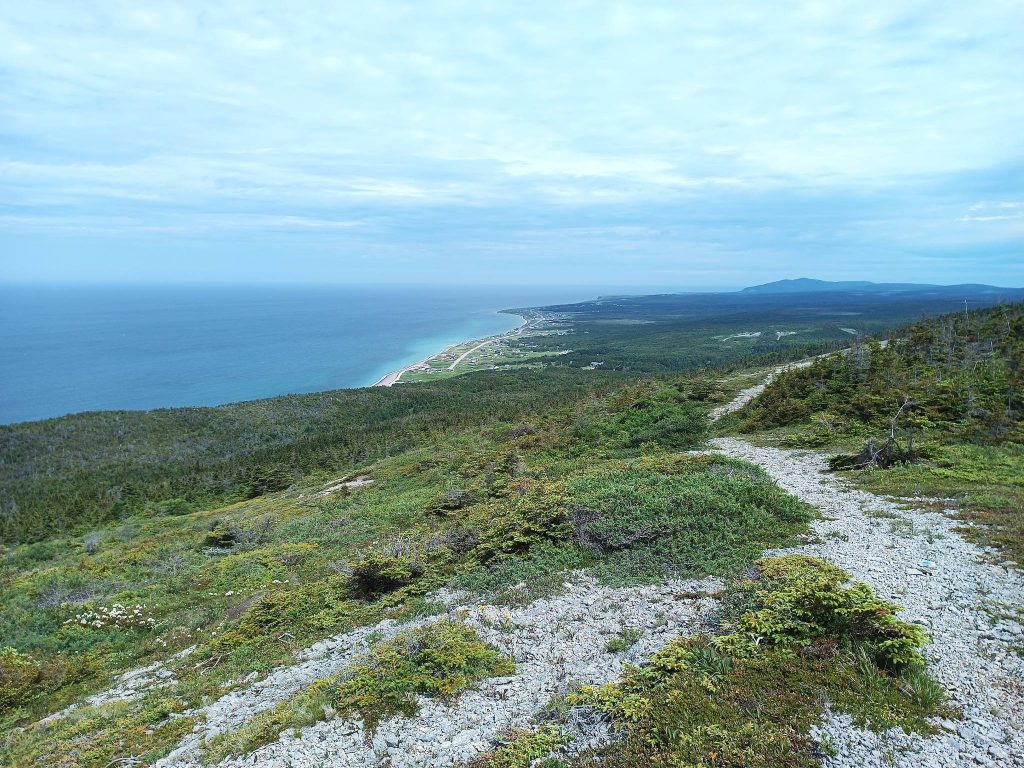
“I am a resident of Mi’kmaq descent on the Port au Port Peninsula. I am deeply troubled by the proposed WEGH2 project and its negative impact on our beloved ecosystem,” one appeal letter reads. “My existence is intertwined with the Peninsula’s grandeur, from the towering cliffs that stand sentinel over our coast to the verdant forests teeming with life. The Peninsula is not just scenery; it embodies our shared past, a refuge we cherish, and a legacy we are morally obligated to defend for posterity. The thought of the WEGH2 project altering our landscape and upsetting the ecological equilibrium fills me with a deep sense of sorrow.”
Another appeal, from the Codroy Valley, says the project’s release from environmental assessment, “without conducting detailed studies to assess its potential impacts demonstrates a disregard for evidence-based decision making.
“Prior to approval, it is crucial to have a complete understanding of local ecosystems. Such diligence is not just a matter of regulatory compliance and the backbone of [the] Environmental Protection Act, but a fundamental responsibility of all of us to preserve our environment for future generations.”
A former math and physics instructor and a father and grandfather from St. John’s writes that he is “concerned about how to ensure a viable future for our Province and our people.
“Given that [this] Project is the first of its kind in NL, how it is handled will set us on a path that will probably be followed in the future. It is therefore especially important to me as a citizen that all elements be examined with full input from reliable independent sources and from the public. This project has potential for being a boondoggle, and we cannot afford another of those.”
And this from another Port au Port resident: “As a francophone of Mi’kmaq descent I was raised on my ancestral land. I am proud of my roots and care deeply for my family and region,” they write. “I have returned to my childhood community to give back to ensure that it continues to grow and provide a safe place for all. While I am in favour of exploring sensible renewable energy options, the Port au Port Peninsula is not a suitable site for this mega large-scale industrial wind farm.”
A resident in Labrador wonders why the government doesn’t appear to have learned its lesson from the chaos and harm caused by the process that led to the Muskrat Falls project.
“When I read your decision on April 9th, I was heartbroken. I was yet again seeing how senseless it seemed for communities to spend their every waking hour for months on end trying to get you to understand how these projects are impacting their lives. I lived through numerous of those ‘waking hours’ for years, trying to get you folks in government to see what a farce the Lower Churchill (Muskrat Falls) project was. You are now (or will be very soon) dealing with the fallout of not paying attention to our cries for consideration.”
Beyond NIMBYism
Those who dismiss local concerns as “NIMBYism” must realize that most of those concerns would be theirs too if the project were slated for their home communities. When more and more people directly affected by a proposed project are saying, ‘Not in my backyard,’ and providing solid reasons, it probably should be seen as meaning ‘Not in anybody’s backyard.’ And with the provincial government having set aside huge areas of Crown land for this kind of industrial wind development, an awful lot of our backyards will be affected.
As one of the Port au Port appellants writes, “The social impact of the Nujio’qonik GH2 project on the Port au Port Peninsula cannot be overstated. The construction phase of the wind measurement towers and the roads leading to them, brought with it an influx of workers from outside the region, leading to social disruption and a strain on local resources. Traffic was disrupted, lives were put in danger due to the workers’ ill regard for the local roads and traffic laws, and the land was treated savagely. While the project promised economic benefits, the reality for many local residents has been quite different. The promised jobs have not materialized, and those that have been created are often temporary and do not offer long-term stability.”
“I am a Mi’Kmaq woman, a breast cancer survivor, and have lived in [this] community for the majority of my life,” writes another Port au Port resident. “I love our forests and mountains and the peace and tranquility of going for walks in the woods. I enjoy picking berries, bird watching, family picnics, and listening to the sounds of the brooks. The installation of 155 654-ft wind turbines on our mountain tops will destroy any peace and privacy I have left. They will be using over six million pounds of explosives to make the concrete pads for the bases of these industrial sized turbines. It will be like living in a war zone!”
The appeal from the grassroots group Codroy Valley United stresses both the environment and the local economy. “The Codroy Valley area is an important tourist attraction. It is surrounded by the Grand Codroy Estuary, the province’s most important wetland. It has a high concentration of birds, and attracts bird watchers from all over. The lack of comprehensive and detailed studies on migratory birds, flora and fauna, moose and other wildlife directly in our territory is a significant oversight that could lead to irreversible consequences. Our residents depend on tourism jobs to provide for their basic needs and put food on their tables. Our livelihoods and our dependence on wildlife and tourism has been totally disregarded.”
What is being sacrificed?
“The Port au Port Peninsula serves as a pillar of education and harmony—a haven where the youth learn to value our ecological heritage, where families forge strong connections, and where the community comes together in awe of the beauty and grandeur of our environment. It is a gem that deserves to be conserved, recognized not only for its ecological importance but also for the cultural, traditional, and spiritual richness it bestows upon us all. The expected disturbances, contamination, and traffic influx threaten to permanently change the essence of our home, affecting the natural habitat and the mental health of those who live here.”
And for what?
“The information in global media is very contradictory as to whether hydrogen is the energy of the future,” notes a Labrador appellant. But even though the ‘subsidy farmers’ are reaching into the pockets of average citizen’s tax dollars and carrying away millions, no one seems to have done a proper assessment of what happens if private corporations get those subsidies but fail to bring the projects to fruition. It doesn’t matter if it is touted as a loan or an out-and-out gift, the money is needed more in health care and other systems NOW. And who knows what will be left behind for citizens of the province to pay to have cleaned up.”
One of the appeal letters from Port au Port sums it up. “Our Indigenous leaders have signed off on this project without consultation with their members. I along with many others had to step in and try to protect Mother Earth from being destroyed by subsidy harvesters who will rape our lands, destroy our water, ruin our ecologically sensitive limestone barrens, displace our wildlife and poison our soil and fishery.
“This letter is not a rejection of progress, it’s a Letter of grievance; it is a plea for responsible stewardship of our invaluable ecological treasures. It demands that we place the long-term welfare of our community above short-term gains.”
These are the voices—passionate, evidence-based and eloquent—of the people whose homes, health and livelihoods are directly threatened, and of the rest of us who say, “Not on our watch!” These are the realities and arguments that our government has been dismissing for the past two years, despite the massive evidence of technical and economic problems and the absence of social license. Now these voices have been dismissed again.
Such dismissal is not new to Indigenous people, women, or other marginalized peoples. But it is through persistence, insistence, and speaking truth to power that disaster can be staved off and gains made. Whether the new environment minister, Lisa Dempster, the government, and other leaders eventually listen this time or choose to continue on the path of ignorance and greed, the struggle continues.

Author

Related Articles

International Women’s Day is not a celebration
How do we build a fighting feminist movement?

The PC’s subtle Throne Speech caveat
Wakeham government quietly places an asterisk next to its promise, ‘For all of us’