
It’s time for a reckoning on public university education in our province
Successive Liberal governments have presided over the destruction of Memorial University
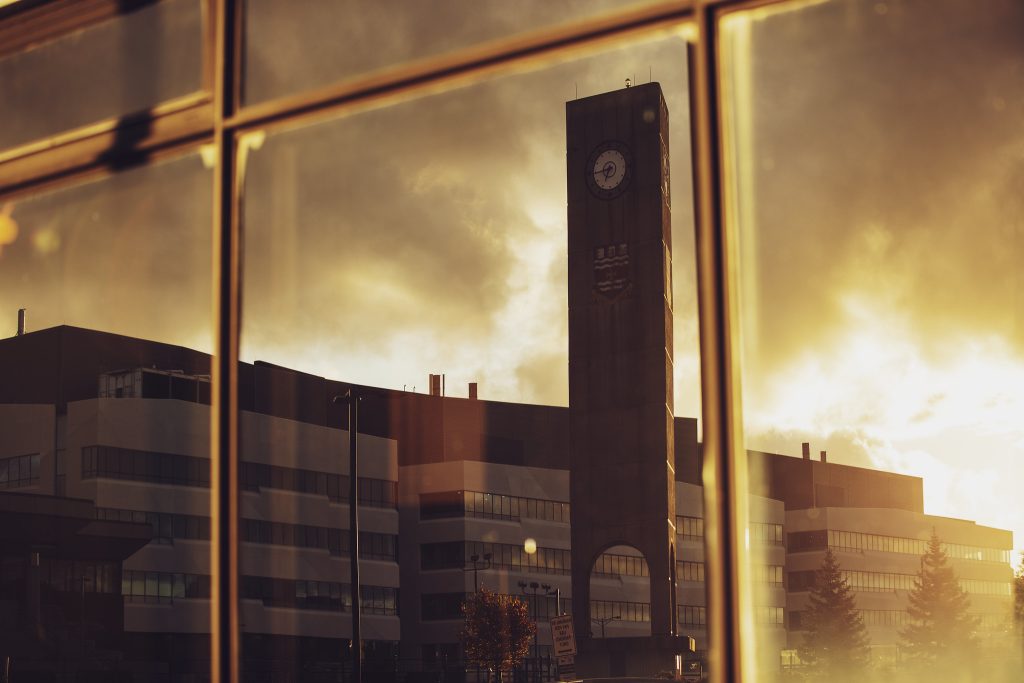
Memorial University has suffered the worst kind of austerity under successive Liberal governments over the last decade, losing up to 50 per cent of its government funding. This has been carried out by governments which consistently claim the university has autonomy, despite the fact the province appoints 14 of 30 members of Memorial’s board of regents, including the board chair.
Appointments are made by the provincial government’s Independent Appointments Commission which is currently chaired by Karen McCarthy, who has held a variety of political appointments in the provincial government. This “independent” commission has previously appointed chairs Iris Petten, currently a Canadian senator appointed under a Liberal government, Glenn Barnes, a provincial Liberal donor, and now Justin Ladha, who has sat on the board of Nalcor.
The provincial government and Memorial’s senior administration often point the finger at one another over the defunding and demise of the university, reducing accountability for both. This pattern has become extremely dysfunctional for one of our most important public institutions.
Political economist Russell Williams recently noted that Memorial University doesn’t make its budget public in the same way other universities do. He also pointed out the university claimed it was cutting 20 jobs, while failing to acknowledge the contractual instructors who simply weren’t renewed.
Will you stand with us?
Your support is essential to making journalism like this possible.
The board of regents recently approved a budget that increased tuition yet again, cut instructional resources, cut funding for public engagement, and increased administrative costs. It also added another vice-president position at a university which already had the highest administrative salaries per student in the country. Salaries were found to be as much as 27 per cent above the market average, according to a 2023 Auditor General report.
Notably, a financial advisor had to be brought in to complete the budgeting process this year. Members of the current administration also presided over some of Memorial’s worst declines in enrollments in the university’s history.
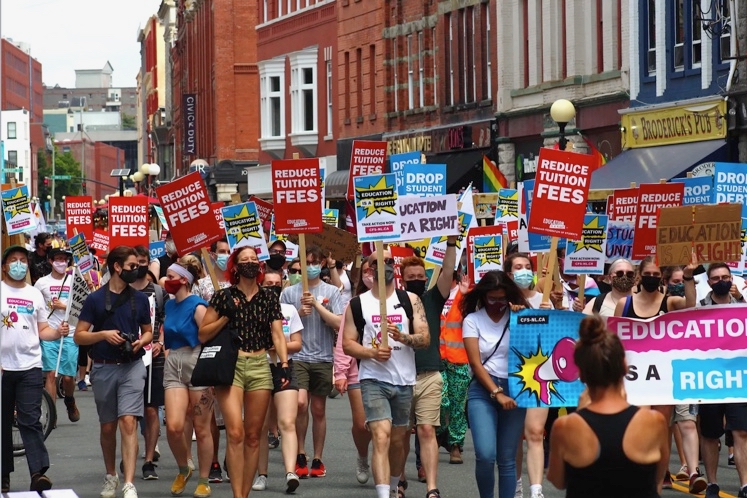
Cuts impacting students and families
Government’s cuts to Memorial have largely come down on the backs of students and families who want to send their kids to university. My students are shocked when I tell them that my tuition used to be about $500 a semester. I paid approximately $750 a term for each of my master’s degrees.
I come from a working-class background. My father put away Canada Savings Bonds to get me through undergrad in his final years as a correctional officer at Her Majesty’s Penitentiary. The descendent of two fishing families, I was one of the first members of my family to attend university. I can say without a doubt that I would not have made it through under the current tuition structure.
The provincial government argues the money that was cut has been replaced by student aid. However, as the Memorial University Faculty Association (MUNFA) has noted, there have been cuts of up to 50 per cent of the core budget for Memorial since 2014. The voted budget for Memorial this year is $313 million, according to the provincial government’s own budget estimates. With inflation of 36 per cent since 2014 factored in, this represents a loss of $174 million annually. Notably, the total provincial budget has increased by about 40 per cent in that time.
Even with the increases to student aid this year, the total program is only worth $33.5 million. This in no way makes up for the loss to students and families. Such programs are also more difficult to access for students and families who need them the most. Increasing paperwork and bureaucracy is often a strategy to drive people away from government support, hence the drastic difference between funding cuts and the cost of the student aid program.
Services I depended on as a student, such as the Counselling Centre and Student Health, have now been combined into the Student Wellness and Counselling Centre, with a fraction of the resources. For example, Dr. Lisa Moores from the Counselling Care Team has noted that the psychology residency program has been on the brink of collapse. Infrastructure like elevators that worked when I was a student, no longer do. Students and families are paying considerably more for fewer student supports.
Thanks to the existence of good quality public education in this province I was able to be accepted to a high-ranking Ph.D. program, with full funding. I had beaten the odds for a person with a father who had been put to work in a fish plant at 14 because there was limited educational opportunities in his community. In the 1950s, the school there only went to Grade 9; these were the days before school buses were widely available in the province.
As an undergraduate I benefited from smaller class sizes, which helped me build confidence. Today, I teach classes three times the size of some of my undergraduate courses in the 1990s, although I work hard to build community in my classes and to get to know my students.
I have also been fortunate to get a job as a contractual Teaching Assistant Professor at Memorial. This means I have to be renewed every year, take on extra teaching, and do not get paid to do research. However, it saved me from the precariousness of living on $7,500 per course—I’m grateful for that every day of my life. But I’m also laid off every summer. I wonder every year if my contract will be renewed and I take on extra teaching where I can to guard against financial precarity in the summer months. This fall I expect to teach up to 190 students in four courses. Some universities have teaching loads of four courses a year for tenure track and tenured faculty.
There’s a widely-held assumption that professors are privileged, but this kind of extraction and precarity is the reality for many of us. The move towards per-course instruction and contractual teaching is a serious labour relations issue in universities. Indeed, one of the key issues in the last faculty strike was the precarity of contractual staff. Contractual professors also don’t really have the same academic freedom to speak out, which removes an important check-and-balance function a university should provide to taxpayers.
Even though I’m not paid to do research, I have an active research agenda. I even managed to bring a Social Sciences and Humanities Research Council (SSHRC) Insight Development Grant into the university, valued at $44,000. Again, I beat the odds, completing my funding application over Christmas vacation.
My SSHRC grant funds research on Newfoundland and Labrador’s resource economy. I tell my students about the research on both high school and university education in this province and how the greatest period of economic development we’ve ever known was at a time when the provincial government was investing heavily in all forms of education. More parents sent their kids to school following the Joey Smallwood government’s investment in education, and university tuition was made free. During the Smallwood years, per capita incomes in the province increased by 300 per cent and the population increased by 40 per cent.
The missing context
Government often tells us Memorial’s funding is higher than other Canadian universities, and that tuition is on par with other Atlantic universities. But we also have a high cost of living in this province, as shown by the 2024 living wage report. Things like poor access to public transit and high food costs in this province need to be factored into the cost of education.
Costs are also driven by a provincial government that wants to preserve multiple campuses across the province. This is an admirable goal, but it shouldn’t be paid for by impoverishing students.
Newfoundland and Labrador used to be the crown jewel in Canadian public education, on par with European countries for cost-effective education. We were doing it right as the rest of Canada moved toward defunding public education. As an economically-depressed region, we need more development of human capital.
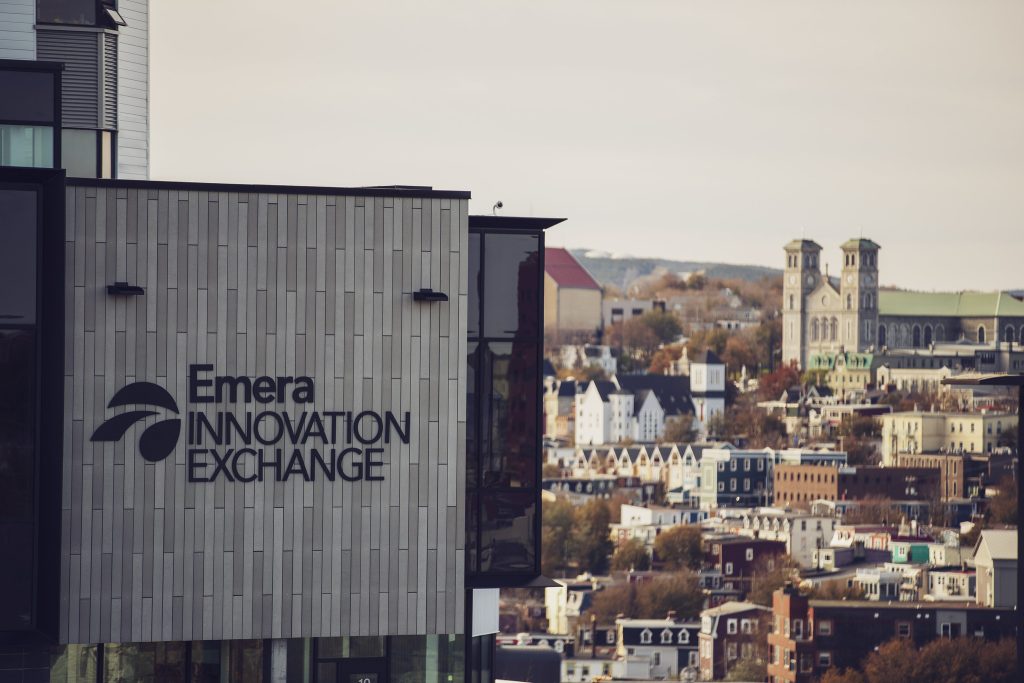
Successive administrations and boards of regents have also taken on liabilities that have nothing to do with teaching — things like the Geo Centre, the Railway Museum, and building conference facilities at the Signal Hill campus that most academics can’t afford to use for our own needs. A January 2025 auditor general’s report found that the new science building, which cost $347 million, had no shared classrooms or laboratories and a 16 per cent utilization rate.
Cuts were made and tuition increased with full knowledge it would drive down enrollment by approximately 20 per cent. I fear what this means for the future of our province. Universities create higher levels of economic growth, including for surrounding regions, and increase human capital and innovation. The benefits have been found to outweigh the costs. Memorial University is an important asset in driving economic development in a province that has always struggled economically.
This is our university. One must wonder what the government’s economic development plan is for the future of our province. I guess the next generation might find work for a few years at Gull Island, if they stay here at all. I’d strongly recommend we remember all of this come election time.

Author

Related Articles

Hope, grief, and value: a reflection on the Humanities
‘I saw the magic that happened in our seminars as the seed of something that could only benefit society by spreading.’
Memorial University students can’t afford silence
Why we’re taking action on Oct. 1

From Black Excellence to Black Flourishing at Memorial University
Excellence on its own will never keep us safe