
Slowly killing research at Memorial University
A university is not its buildings, and it doesn’t exist to serve private-sector interests. It is about the pursuit of knowledge.
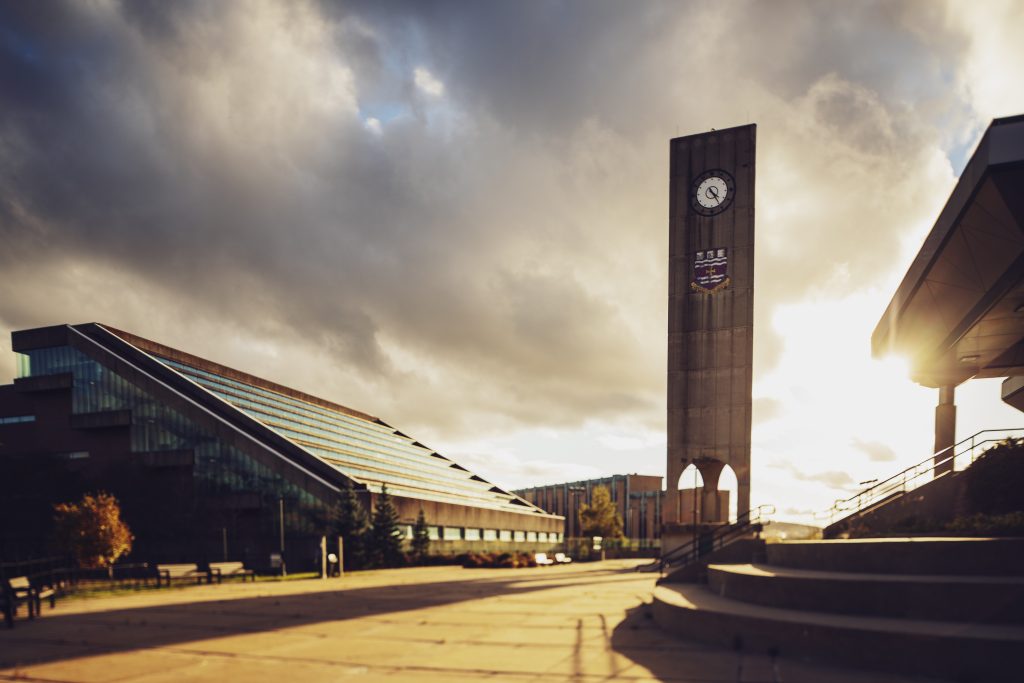
Selling underused university buildings is not, in itself, a bad idea. Signal Hill was never a campus. No classes were taught there, and no research that I know of was conducted there. Faculty who wished to use the space had to rent it, like anyone else. If its sale helps stabilize Memorial’s finances, so be it. One can only hope the proceeds are reinvested in the buildings most of us actually use—before they quite literally fall apart.
Every time I walk through the tunnels and see another jerry-rigged patch on a leaking pipe, I wonder how long it will be before one collapses. Institutional neglect is visible, daily, and physical.
Yet as the buildings have deteriorated, Memorial’s academic reputation has improved. That is not a paradox. A university is not its buildings. Thomas Aquinas likely taught at one end of a market hall with goats and chickens being sold at the other end.
Over the past two decades, Memorial has become a competitive research university for three reasons. First, it has never been harder to secure a tenure-track position in North America. Memorial has therefore been able to hire outstanding young and mid-career scholars—people who, in an earlier era, would never have ended up here.
Will you stand with us?
Your support is essential to making journalism like this possible.
Second, since the early 2000s, Memorial’s School of Graduate Studies has actively supported the expansion of graduate programs, offering modest fellowships for MA and PhD students. Many students willingly accepted smaller stipends than are standardly offered in order to study here.
Third, faculty research has been made possible by extensive teaching support from per-course and contractual instructors. We have long argued these teachers deserve better conditions. No one denies that without them, research at Memorial is much more difficult to maintain.
This system is poorly understood outside the university, so it bears explaining.
Wilhelm von Humboldt, who founded the modern teaching and research university, believed that only those actively pushing the boundaries of knowledge via research could teach at the highest level. Today, tenured professors are expected to devote roughly 40 per cent of their time to research: reading, writing, conferencing, publishing, and mentoring graduate students and junior researchers on the national and international stages. This is why they get paid more than high school teachers.
Per-course instructors often teach large introductory classes, freeing full-time faculty to offer advanced seminars. Research attracts graduate students, who advance it while contributing to faculty projects. Modest course releases for graduate supervision provide just enough time—barely enough—to sustain research alongside teaching.
The system is imperfect. But some things are worth doing badly rather than not at all.
Systematic dismantling
What we are now witnessing, however, is the systematic dismantling of every one of these supports. The number of per-course instructors has been cut by more than half, with threats of their complete elimination. Long-serving contractual workers are being let go. Departments have been ordered to reduce graduate admissions to 25 per cent of their undergraduate cohort.
Philosophy—one of the most research-intensive departments in the Humanities—has close to a one-to-one ratio of graduate to undergraduate students. What I once regarded as philosophy’s mark of distinction is now treated as an embarrassment, allegedly because it “drains resources.”
Last fall, an attempt to eliminate course remissions for graduate supervision was defeated by a faculty vote. Next year, however—by executive decision of the dean, whose hand seems forced by the provost’s office due to drastic cuts to contractual teaching—no remissions will be permitted in the Humanities and Social Sciences. This combination of factors means faculty will teach far more, and far larger, classes. In some cases, student numbers for a single professor will more than triple. I know this because I am that professor.
Each cut sends the same message, never stated outright but unmistakable: research not directly tied to immediate economic outcomes is dispensable.
The People are the true stakeholders
Memorial’s relationship to Newfoundland and Labrador is unlike that of most Canadian universities to their provinces. Founded as a centre for education and research for the people of Newfoundland and Labrador, it is the only university in the province and the only place to conduct academic research. When the St. John’s campus opened in the early 1960s, Memorial was an audacious experiment: the expansion of Memorial College, founded in 1925 as a preparatory school with a strong emphasis on Greek and Latin, into a comprehensive research university. The opening was attended by Prime Minister John Diefenbaker and Eleanor Roosevelt. Delegations came from across the island. Newfoundlanders were proud—and rightly so.
Because Memorial is roughly 80 per cent publicly funded, the people of Newfoundland and Labrador are its true stakeholders. Major changes to the university’s mission should therefore be cautious, publicly accountable, and guided by a long memory of why Memorial exists. This year marks its centenary. I hear much about what some want Memorial to become—an “entrepreneurial hub,” an “economic driver.” I hear far less about what it was meant to be.
Memorial’s improved research profile did not happen by accident. It was built by scholars who achieved international distinction while teaching and researching here: George Story, whose Dictionary of Newfoundland English convinced philologists that a distinct dialect of English developed here in the past four centuries; David Bell, who put Religious Studies at Memorial on the international map with his important contributions to the study of Christian monasticism in the Middle Ages; Vit Bubenik, whose work on Indo-European linguistics is now standard; and John Mannion, the world’s leading historian of the Irish in Newfoundland.
I chose these examples among many possible others to show how university research is not the same as private-sector research. It is traditionally not primarily motivated by immediate economic return. To ask what research in Philosophy, Classics, Religious Studies, Folklore, or History does for the provincial economy is therefore to ask the wrong question.
When students ask me what they will do with a graduate degree in Philosophy, I answer with a question of my own: what won’t you do with it? Even economically relevant fields—Ocean Sciences, Geology—ultimately suffer under this logic, because the best work in those disciplines, too, is driven by the pursuit of knowledge itself.
A university that forgets this does not become more efficient or more creative. It becomes something less than a university. And Newfoundland and Labrador deserve better than that.

Author
Related Articles

Hope, grief, and value: a reflection on the Humanities
‘I saw the magic that happened in our seminars as the seed of something that could only benefit society by spreading.’

Memorial University students can’t afford silence
Why we’re taking action on Oct. 1

From Black Excellence to Black Flourishing at Memorial University
Excellence on its own will never keep us safe