
We have given you a university — if you can keep it
The defunding of Memorial is not a story of fiscal misfortune or demographic bad luck. It is one of a deliberate, decades-long ideological project whose purpose is the transformation of public universities from civic institutions into market instruments.

When Benjamin Franklin emerged from the Constitutional Convention in Philadelphia, in 1787, a citizen is said to have asked what kind of government had been created. Legend has it Franklin replied, “A republic, if you can keep it.”
Samuel J. Hefferton was an educator, labour leader, journalist and politician from Bonavista Bay; he served as Newfoundland and Labrador’s minister of education in the years following Confederation. His words are not that of legend but of record, spoken in the House of Assembly during the second reading of the Act that established Memorial University: “If we contend that economic development provides the means of employment for our people, equally true is it that a university provides the medium for a higher cultural and social minded people.”
No focus on revenue streams. No entrepreneurial ecosystems. No labour-market-ready degrees and outcomes. A higher cultural and social minded people—that is the heart of Memorial University. The people who built our university understood something their successors appear to have forgotten: a university is not an economic instrument. It is a civic achievement. And like Franklin’s republic, which now seems in the most dire of straits, the university, too, can be lost.
Forty years after Hefferton spoke, Memorial President Leslie Harris was still holding the line. In his 1989-90 annual report, Harris observed that, “studies related to the human condition, though they in the long run may be most critically important to the survival of the species, tend to be short-changed,” whenever universities chase political support by advertising their technological and applied achievements.
Will you stand with us?
Your support is essential to making journalism like this possible.
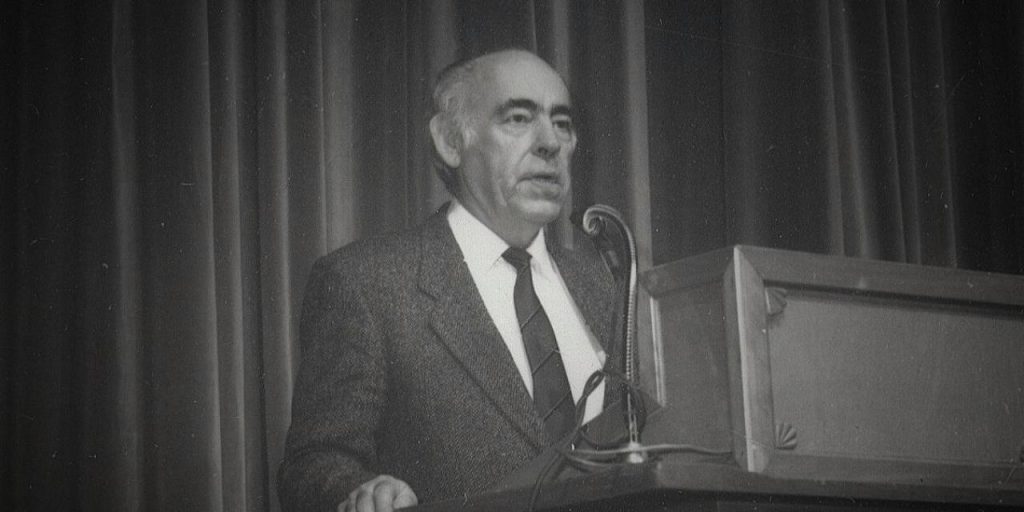
Harris warned that the university “must take the long view of human society,” and “cannot permit its time horizons to be foreshortened as are those of the politician who must seek re-election within a five-year term.” He closed with a phrase that now reads like an epitaph: the university, he said, “must accept and act upon the simple proposition that man does not live by bread alone.”
A decade earlier, Memorial University President M.O. Morgan had been equally direct. Asking what was to become of the humanities in an era of resource booms and market pressures, he answered his own question without hesitation: “The Humanities and the Fine Arts must be strengthened and even expanded, for they are the bastions of our cultural heritage.” They help us understand, he wrote, “who we are and from whence we came.” They needed and must receive “every possible encouragement.”
Such convictions seem worlds away now. These were not distant founders speaking—Harris and Morgan were sitting presidents within living memory, and both felt compelled to defend what should never have needed defending.
What happened, in a word, is neoliberalism, and we are living through its endgame.
The defunding of Memorial is not a story of fiscal misfortune or demographic bad luck. It is one of a deliberate, decades-long ideological project whose purpose is the transformation of public universities from civic institutions into market instruments.
The goal, rarely stated openly but unmistakable in its effects, is privatization: the conversion of institutions built on public investment into entities that generate returns for private interests, price out lower-income students, and concentrate resources on research that serves corporate, technological, and defence priorities.
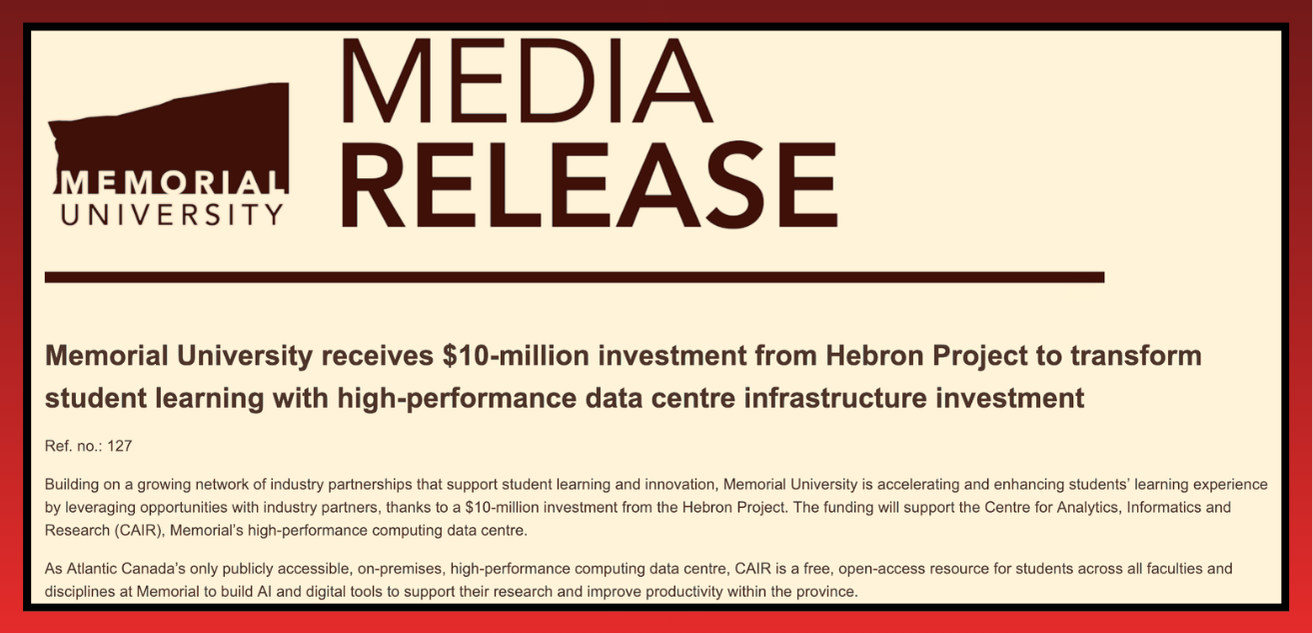
Universities represent an enormous pool of public assets—tuition revenue, government grants, real estate, research infrastructure, knowledge—that has historically been insulated from private profit-taking. The mechanisms of what researchers call ‘academic capitalism’ are designed to open that pool. Every administrative function that gets outsourced, every program that gets cut and replaced by a private credentialing provider, every research partnership that ties scholarly inquiry to corporate priorities—each of these transfers a piece of the public university into private hands. The university doesn’t disappear. It becomes a conduit through which public money flows to private benefit.
Among the instruments of this transformation is the performance funding model, which links public grants to measurable outputs: enrolment numbers, graduation rates, post-degree earnings, research income. What gets measured gets funded. What cannot be so easily measured—the cultivation of critical thought, the transmission of cultural memory, the formation of democratic citizens, paths for personal development—gets cut.
Harris saw this coming in 1989. He noted that the university was already tempted to privilege whatever had “technological applications or shorter-term payoff on investment.” The temptation has since become de facto policy, and universities are travelling the road to becoming polytechs, professional, and vocational schools.
When humanities, social sciences, Indigenous studies, languages, philosophy, and critical theory programs are eliminated—and this is what has been happening, consistently, across North America and Europe—the consequences are not merely cultural — they are political. A university that produces only technically-skilled and commercially-useful graduates is a university that has stopped producing people trained to analyze power, question received wisdom, understand history, conserve and transmit the best of the past, or imagine alternatives to the present arrangement.
A society without such people is a society less capable of governing itself—which is, one suspects, increasingly the point for those who would prefer their employees uncomplicated by history, philosophy, or critical theory.

Memorial was founded as a living memorial to the sacrifices of Newfoundlanders and Labradorians on the battlefields of Europe—a tribute, in the words of the plaque on display in the university’s Arts and Administration building, to “the freedom of learning.” Hefferton understood that freedom as inseparable from civic life. Harris and Morgan understood it as a trust to be protected against short-term pressures.
What the current era has produced, instead, is a Board of Regents drawn from the corporate world, a strategic plan saturated with the language of ‘revenue streams,’ ‘entrepreneurial ecosystems,’ and ‘market engagement,’ and a provincial operating grant reduced by 47 per cent in inflation-adjusted dollars since 2014.
This week’s Budget 2026 funds a tuition freeze, and this is welcome news for students facing affordability pressures. But as the Memorial University Faculty Association has noted, it does nothing to address a decade of structural underfunding that has already eliminated more than 19 academic programs and discontinued nearly 100 course sections in the humanities and social sciences alone.The Hon. S.J. Hefferton is no doubt rolling in his grave.
Today’s big question is not whether we can afford to fund Memorial as a genuine public university. The question—the one Hefferton answered clearly—is, what kind of people do we want to be, and what kind of society do we intend to encourage?
Budgets are choices, and the choice being made right now, year after year, is to dismantle one of the few institutions whose entire purpose is to ask that question and help us answer it well—but only if we choose to keep it.

Author

Related Articles

May Day Rally Shows New Face of Today’s Labour Movement
Turnout for May 1 march and rally in St. John’s one of the biggest yet in this province

Recimply the Best: Pitch and Pick Competition Winner Aims to Reduce Paper Waste
Recimply won big at Genesis’ annual Pitch and Pick competition last week. The startup is solving the problem of non-recyclable paper receipts.

Coming Home Queer for the Very First Time
For three days in July, queer Newfoundlanders and Labradorians from all over the world celebrated a rural homecoming 30 years in the making.
Slowly killing research at Memorial University
A university is not its buildings, and it doesn’t exist to serve private-sector interests. It is about the pursuit of knowledge.

Hope, grief, and value: a reflection on the Humanities
‘I saw the magic that happened in our seminars as the seed of something that could only benefit society by spreading.’
Memorial University students can’t afford silence
Why we’re taking action on Oct. 1