About that Apology
For Innu and Inuit, it’s not about money. It’s about the beneficiaries of colonization giving back what was taken.
Healing can be far less burdensome when the person who inflicted the pain comes to realize how wrong they were to behave so hurtfully or abusively, and then apologizes for that behaviour.
But if a person apologizes while continuing their hurtful behaviour, then the target of the violence or hurt might feel foolish to accept the apology.
“Sorry” amid ongoing injustice?
The colonization of Labrador by the Newfoundland and Canadian governments has unequivocally left Innu and Inuit in a long fight for their rights, sovereignty —and even for their very lives.
Will you stand with us?
Your support is essential to making journalism like this possible.
Residential school survivors in this province waited almost a decade after Canada apologized to their counterparts from other provinces. When that apology finally came, in 2017, the Trudeau government deliberately excluded some of the survivors. What was communicated as a personal, heartfelt apology by a teary-eyed prime minister six years ago, was really a political event with lawyers’ fingerprints all over it.
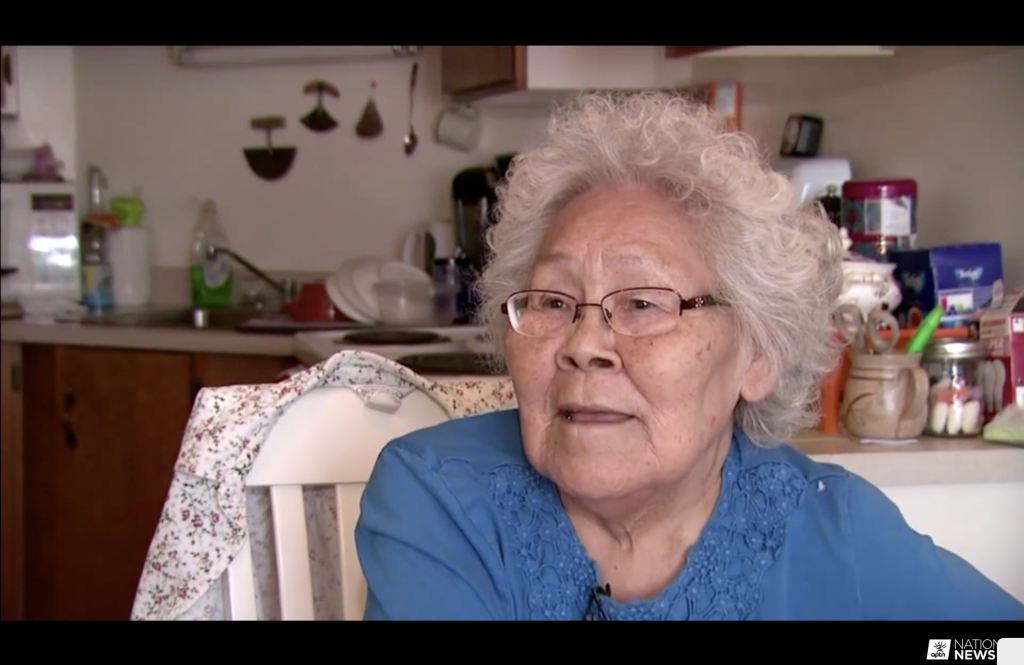
Why else would Canada have left out survivors like Leah Ford, an Inuk senior from Hopedale who was abused the Makkovik boarding school? Like many Inuit, Ford was abused before Newfoundland joined Confederation. And because of that technicality, Canada decided she was not worthy of its apology and settlement.
The squabbling over who would accept responsibility for Innu and Inuit who were systematically subjected to abuse, assimilation, and genocide (in the federal government’s own words) left victims believing—hoping—they might one day see an apology. For many, receiving an apology is a crucial component of their healing.
In November 2017, Innu rejected Trudeau’s apology. At the time, they were fighting for a child welfare inquiry to address the ongoing forced removal of Innu children from their families, communities and culture—the very thing residential schools accomplished.
“Our Elders are not ready to accept an apology that is made for such a small part of our experience,” Gregory Rich, then-Grand Chief of the Innu Nation, said in a statement. “Frankly, I don’t think Canada is truly ready to make an apology to Innu if it does not include recognition of other damages done to our people – I’m not satisfied that Canada understands yet what it has done to Innu and what it is still doing.”
Last month, Innu leaders withdrew from the Premier’s Indigenous Round Table, citing Furey’s refusal to address Innu concerns over the participation of the NunatuKavut Community Council, a political organization that represents self-identified Inuit in Southern Labrador who are not recognized by Inuit across the north. Innu have also called for the removal of Indigenous Affairs Minister Lisa Dempster, who they say is in a conflict of interest and has shown a bias as a self-identified Inuk and former NunatuKavut employee.
Next week marks the 12th anniversary of the Tshash Petapen Agreement, the trilateral deal that paved the way for the construction of Muskrat Falls by way of Innu Nation’s consent to the project. In exchange, the federal and provincial governments promised to settle the Innu Nation’s longstanding land claim, and offer redress to Innu for the harm caused by the Churchill Falls Hydro Dam.
A decade later, Innu found themselves with no choice but to file a lawsuit against the governments after Canada and the province struck a rate mitigation deal for Muskrat Falls that was likely to leave the Innu without the financial benefits they were promised. The litigation, Innu leaders said at the time, was “based on the fact that Canada and the Province took direct, deliberate and decisive action to extinguish the financial benefits that the Innu people were promised in return for their consent that Muskrat Falls could be built.”
The list of historical and ongoing systemic violence against Innu and Inuit in Labrador… is long.
And while the Nunatsiavut Government and the NunatuKavut Community Council accepted Premier Andrew Furey’s apologies this fall—for their own reasons—Innu show us that apologies don’t have to be accepted if they’re not felt to be honest, sincere and meaningful.
And for many in Sheshatshiu and Natuashish, it’s clear that apologies are not welcome at this time.
A meaningful apology?
Minutes after Trudeau’s 2017 apology in Happy Valley-Goose Bay, I tracked down then-Premier Dwight Ball in the Lawrence O’Brien Arts Centre lobby and asked him: Will the province apologize too?
An apology will be coming, following consultations with the Indigenous groups, he told me.
Almost six years later—on September 25, 2023—I followed up with Newfoundland and Labrador’s Office of Indigenous Affairs and Reconciliation. In an email to the office’s director of communications, Allan Bock, I said, “I’m looking for an update on the province’s promised apology to residential school survivors. Can you tell me what progress, if any, has occurred since Andrew Furey became premier?”
Bock said he’d look into it and get back to me.
He never did.
But 48 hours later, the province announced it would finally apologize to residential school survivors.
First, to survivors affiliated with the NunatuKavut Community Council. Then, last week, to survivors in Nunatsiavut.
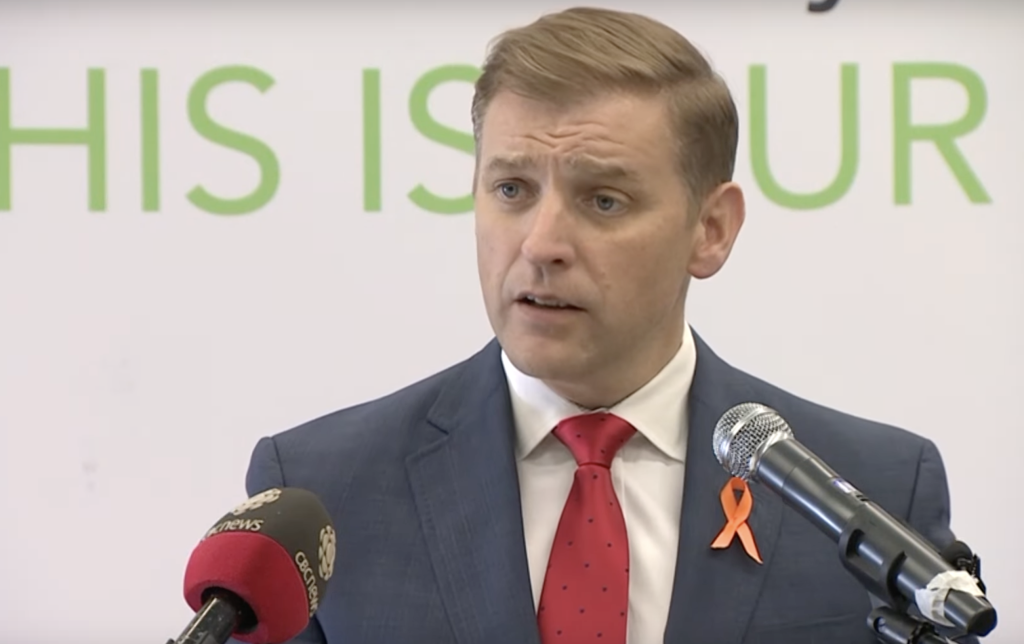
“As Prime Minister Justin Trudeau stated, saying sorry is not enough. It cannot turn back the clock and undo the harm. The tragedy of enduring separation from families and communities is something you live with every day. I do not want my words to suggest that an apology relieves the weight of the pain and suffering that you have endured,” Furey says in the written apology.
“I admire your strength and resilience,” he continues. “It is my belief and the belief of the Government that I lead, that we have to truly understand the history of residential schools if we ever hope to advance reconciliation with Labrador Inuit. We must also acknowledge the ongoing challenges faced by Inuit when interacting with programs and services such as child welfare, health and justice.
“I am here today to give you my unwavering commitment, and the commitment of my Government, that we will continue to work hand in hand, government-to-government, to advance the priorities of Labrador Inuit. Only by coming to terms with the past and apologizing for our failures can we forge a path towards re-shaping a future for our children and our grandchildren. Reconciliation is a difficult process. It takes time, effort, and sincerity. Today is an important step in rebuilding our relationship – one that must be founded on respect, cooperation, partnership, and trust.”
There was a notable absence at Furey’s apology tour in Labrador last week.
Lead Ford died in March 2022 at the age of 84, almost eight decades after she was abused at the Moravian Church-run “school” in Makkovik. No apology from the federal government. No apology from the province. Or from the church.
But she probably didn’t have high expectations. When Trudeau made his apology in 2017, Ford sat in her apartment just a few blocks away since the apology wasn’t for her.
“I was really disappointed, but I won’t cry about it,” she told me in 2018. “They can keep their money.”
More than an apology, many residential school survivors and their families have said they would much prefer an end to the ongoing crises in their homelands: from mental health and addition, to youth suicide, to climate change’s erosion of Inuit ways of life.
As 11-year-old Aaju Lightfoot of Makkovik told CBC after Furey’s apology in her community last week, “I think if he doesn’t give money to our culture and our language, then his sorry doesn’t mean anything. Those residential schools tried to take away our culture.”
For Innu and Inuit, it’s not about money. It’s about the beneficiaries of colonization giving back what was taken.
Furey, Trudeau—and whomever follows—must go far beyond the apologies and platitudes of “continuing to work hand in hand, government-to-government” to improve the lives of Indigenous Peoples in Newfoundland and Labrador.
Innu and Inuit have been fighting for their land back for a long time — fighting for their survival. And our federal and provincial governments ought to know that, as settlers, we still benefit from the residential school system. Those so-called schools were one of many tools used in an attempt to assimilate Indigenous peoples, and to destroy Indigenous life — at least enough to claim and settle their lands and profit from their resources.
That’s how Newfoundland and Labrador, and Canada, were built.
Any apology that I, as a Newfoundlander, could stand behind would be accompanied by a full return of lands, resources and adequate support for Innu and Inuit to be liberated from colonization and to rebuild their communities and nations.
Today, I am thinking of Leah Ford.

Author

Related Articles
Workers deserve allyship, not lip service
On Labour Day 2026, some tips for Labour Minister Lloyd Parrott
The PC’s subtle Throne Speech caveat
Wakeham government quietly places an asterisk next to its promise, ‘For all of us’