
Housing is a Right, not a Commodity
Would someone tell the government?
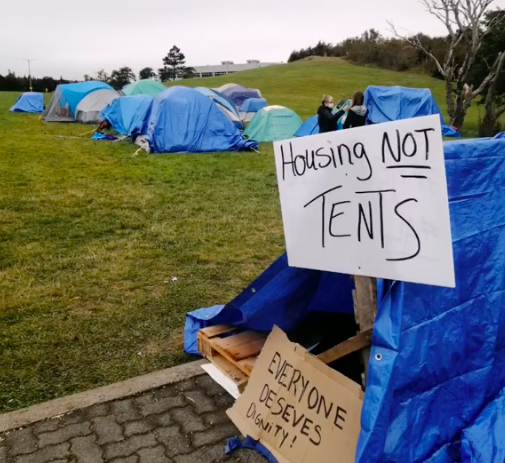
“Housing is the basis of stability and security for an individual or family. The centre of our social, emotional and sometimes economic lives, a home should be a sanctuary—a place to live in peace, security and dignity.”
That’s according to the United Nations Commission on Human Rights. Housing advocates across our province, country—and indeed across the world—agree.
So why hasn’t that message reached Confederation Hill in St. John’s? It’s not like the most visible manifestation of failed housing policies isn’t playing out directly across the street on Prince Philip Drive.
On Thursday, one national headline read: “After two weeks, [housing] minister hasn’t visited tent city outside Newfoundland legislature”.
Will you stand with us?
Your support is essential to making journalism like this possible.
While some politicians have crossed the road to speak with those experiencing homelessness and protesting the province’s failures to address the crisis, that engagement hasn’t led to any sufficient action.
Instead, during the first week of the House of Assembly’s fall sitting, MHAs bickered about who visited the encampment, and how many times.
The Liberals and PCs are on shaky moral high ground since today’s crisis is the result of years of their failed policies — no matter how much Premier Andrew Furey wants us to associate the crisis with COVID-19 or the increased costs of living.
“Of course, society changes, the pressures are more intense than they were two years ago, Mr. Speaker, and the government has to respond and we are responding,” Furey said on Monday. “You can’t have a plan for something that hasn’t occurred yet.”
But as Furey and others well know, today’s housing and homelessness crisis isn’t new. There are new variables influencing why and how people are experiencing homelessness, but underlying factors and upstream solutions to prevent homelessness in the first place have long been advocated at the provincial level.
And politicians have long taken notice — and made promises.
Many policy ideas have been floated inside and outside the legislature. But the bottom line is that in a province that can come up with tens of millions of dollars a year to subsidize some of the most profitable industries and companies in the world—*cough* ExxonMobil—then we have the means to put a roof over everyone’s heads and to fund programs and services that reduce inequality and poverty.
We just don’t have the political will. The same political will that got Muskrat Falls built. The political will that sends large delegations overseas to industry conferences. The same will government musters to heap further massive energy projects on locals despite the absence of social license.
On Monday, Furey announced a $65-million five-point housing plan he said would add 500 new housing units to the province. But that announcement follows months of cabinet ministers—and Furey himself earlier this week—alleging government had already funded 750 new housing “options” over the past two years.
But as CBC Investigates reported Thursday after fact-checking those claims, the actual number of new government-owned social housing units that are built and ready for tenants is… 11.
One could be forgiven for not trusting a government that’s either too incompetent to keep track of housing units it has built, or too dishonest to admit that it is miserably failing the most vulnerable people in our province.
In the opening 48 hours of the fall sitting, the PCs and NDP both asked for an emergency debate on the housing and homelessness crisis.
“We are facing a human catastrophe and I fear that without action many people are going to face enormous suffering this winter, the likes of which we have not seen in living memory. We cannot wait a day longer to have this debate, while people suffer through no fault of their own. This House must take this opportunity to discuss and propose effective solutions for the constituents we serve,” NDP Leader Jim Dinn told the House on Tuesday, putting forward a motion for the emergency debate.
Newly-elected PC Leader Tony Wakeham agreed. “I think that if we are serious about making people healthier and we believe in better health outcomes, then addressing the social determinants of health are the first thing we should be talking about. Housing and having a roof over your head is one of those important steps,” he said. “There is an urgent need to do this. We’ve been waiting for eight years for a housing strategy which hasn’t come and now we find ourselves again in another crisis.”
Perhaps Grand Falls-Windsor–Buchans PC MHA Chris Tibbs put it best: “We have the opportunity to show today that we can use this House for the people’s purposes. That’s Newfoundlanders and Labradorians, b’ys, we have out on the lawn right now sleeping in the freezing rain,” he said. “That’s sad — it is. I know we all care. Let’s show this province how urgent it actually is.”
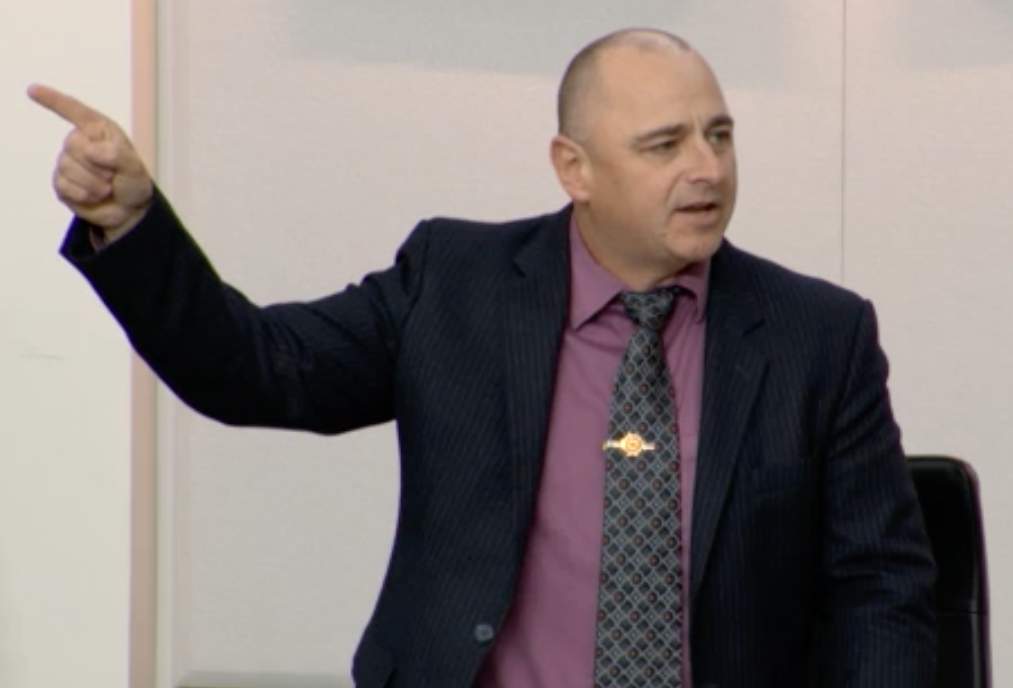
House Speaker Derek Bennett—Liberal MHA for Lewisporte–Twillingate—ruled that while the crisis itself is urgent, “the matter of urgency of debate has not been established.”
And so, despite the political will of opposition parties to debate solutions to the crisis, an emergency debate on the housing and homelessness crisis did not happen. Not even as police literally remove the pieces of fabric separating unhoused people from the cold wind and rain… within view of politicians’ office windows.
These are the scenes you won’t find in Newfoundland and Labrador tourism commercials.
But this is our Newfoundland and Labrador.
If you have a roof over your head and a place to call home, count your blessings.
If you believe everyone else should have the same, perhaps appealing to the Furey government isn’t the best way to expend your energy.

Author

Related Articles
The PC’s subtle Throne Speech caveat
Wakeham government quietly places an asterisk next to its promise, ‘For all of us’


Thank you Air Canada flight attendants
Why the CUPE-led flight attendants’ strike and labour victory is a win for us all