
The federal budget and Furey’s fine-line carbon tax saunter
The Liberals fall short on many progressive policies, but kowtowing to Pierre Poilievre on the carbon tax is dangerous

Last week the Trudeau government unveiled its annual federal budget — and for all investments it holds, above all else it signals that the Liberals are desperately trying to change young people’s perceptions of their party ahead of the next federal election.
The politics of budgets and elections aside, the Liberals announced significant investments that advocates say, if properly implemented, could help Canadians on some key issues in the coming few years.
Housing
They announced $8.5 billion in new spending on housing as part of their new housing plan — a revised response to the housing crisis in the wake of the Liberals’ largely ineffective National Housing Strategy. They want to build and “unlock” upward of 3.9 million new homes by 2031.
Will you stand with us?
Your support is essential to making journalism like this possible.
They also announced a new $15-million Tenant Protection Fund to fund legal services and tenants’ rights advocacy organizations “to better protect tenants against unfairly rising rent payments, renovictions, or bad landlords.”
The plan would also increase the supply of affordable housing, including $1.5 billion for a new Rental Protection Fund, $1.5 billion for a Co-operative Housing Development Program, $1 billion for the Affordable Housing Fund, and a new Rapid Housing Stream, $1.1 billion for their Interim Housing Assistance Program to support asylum seekers, and $1.3 billion for Canada’s Homelessness Strategy, the latter of which includes $250 million for human rights-based encampment responses “intended to be cost-matched by provinces and territories, for a total of $500 million.”
It’s unclear how the Furey government will respond to some of these measures given its reticence on housing as a human right. (The Trudeau government enshrined housing as a human right in law in 2019.)
Furey was involved in a letter from Canadian premiers to Trudeau last week that accused the feds of “overreaching into provincial and territorial jurisdiction, particularly in the areas of health, education, and housing.”
The letter said every government “should have the right to receive ongoing financial compensation representing their fair share [including] provinces and territories that reserve the right to require unconditional federal funding.”
The National Right to Housing Network — a grassroots civil society network that advocates for Canadians’ right to adequate housing — says the new investments are a “meaningful first step for women, gender-diverse people, Indigenous peoples, Black and racialized people, people with disabilities, asylum seekers, and low-income people who disproportionately face poverty, core housing need, and homelessness—and too often don’t have access to the supports they need.” But the network also says this “is just a start,” and that the feds need to “regulate the private market and improve the affordability criteria across all federal housing programs, subsidies, and tax benefits.
To address the immediate needs of tenants struggling with rising rents, the network is also calling for “stronger tenant protections in the Renters’ Bill of Rights, including rent control and vacancy control.” And they’re urging provincial governments to “cooperate in implementing these critical measures,” which is another big question mark for the Furey government in light of its failure to implement effective rent control legislation.
Child care
The federal government also announced an expansion of its $10-a-day child care program, which has been stymied by a lack of service providers.
While the announcement was welcomed by advocates, the Liberals’ new $1-billion Child Care Expansion Loan Program includes just $60 million in “non-repayable contributions to public and not-for-profit child care providers to build more child care spaces and renovate their existing child care centres.”
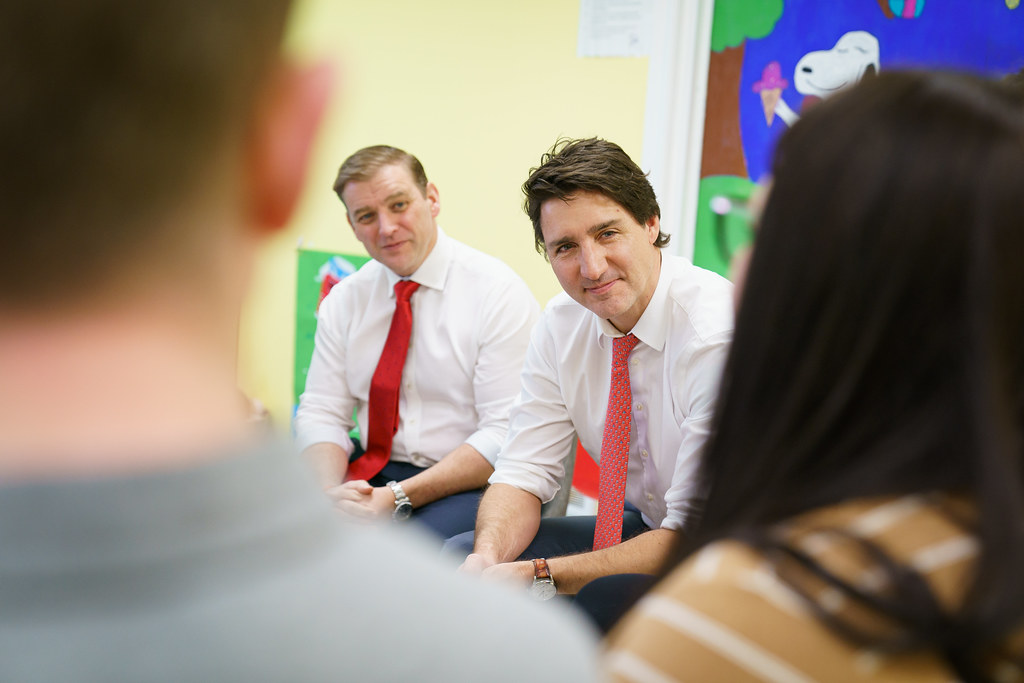
The Trudeau government’s vision for accessible $10-a-day child care across Canada can only be fully realized with “explicit funding for improving working conditions and attracting workers to a field, which is desperately short of the staff it needs,” according to the Canadian Centre for Policy Alternatives.
“Addressing the low wages and poor working conditions of care workers is central to any plausible or just strategy for addressing Canada’s care deficit,” says CCPA Senior Researcher Katherine Scott. “Yet the budget is silent on this critical issue.”
Capital gains tax
To pay for much of the Liberals’ new spending, they also increased the capital gains tax inclusion rate, which means those profiting from the sale of a secondary residence — or of other assets like stocks or bonds — after June 25, 2024 will be taxed on 66.7 per cent of the capital gain instead of the previous 50 per cent.
There’s a lot of fear-mongering happening from Canada’s business lobby, who say the move will deter investment and decrease employment. But economist David Macdonald offers a host of scenarios that show the new inclusion rate won’t hit the middle class the way conservative politicians and lobbyists want you to believe.
With a projected $40-billion deficit this year, Conservative Leader Pierre Poilievre has characterized the budget as an “orgy of spending,” while NDP Leader Jagmeet Singh says Trudeau isn’t going far enough to challenge corporate greed at a time when millions of Canadians are struggling to make ends meet.
“[T]his is not an NDP budget,” he said, referring to the Liberal-NDP supply-confidence agreement and the NDP’s expectations. “Justin Trudeau will not take on the corporate greed that is driving up Canadians’ bills. The prime minister refused to reverse Pierre Poilievre’s $60 billion corporate handouts or put in place an excess profits tax. It’s disappointing the Liberals haven’t shown more courage.”
The NDP hasn’t yet announced whether they will vote in support of the budget.
Climate crisis
The federal budget falls far short on climate action, especially given the Liberals’ $63 billion in new climate spending announced in last year’s budget. This year, the Canadian Centre for Policy Alternative estimates, the Liberals’ budget includes about $14 billion in new climate-related spending, “but that money is spread out over 11 years and is heavily backloaded,” they say. “This budget announces only $2 billion in net new climate spending over the next five years.”
Here at home, Furey seems to have aligned with the Conservatives’ position that the coming federal election will be a “carbon tax election,” in Poilievre’s words.
While the latest carbon tax increase amounts to about 3.3 centre per litre of gas at the pump, much of that or more is paid back to individuals and households through the federal government’s Canada Carbon Rebate. In Newfoundland and Labrador, that amounts to four payments per year at a rate of $149 for individuals, and more for households with a spouse and children.
On top of that, residents in rural areas get an additional 20 per cent due to the lack of fuel alternatives and green alternatives outside city centres.
Canada’s Parliamentary Budget Officer estimates that, in Newfoundland and Labrador, “most households will see a net gain, receiving more in rebates from Climate Action Incentive payments than the total amount they pay in the federal fuel charge (directly and indirectly) and related GST…”
Still, Poilievre and the Conservatives have turned the carbon tax into a polarizing issue at a time when growing inequality and Canada’s failure to implement a wealth tax on the super rich (i.e. billionaires and major corporations) are far more pressing policy issues that could help reduce the cost of living and close the gap between the rich and the rest of us.

Meanwhile, Furey has played right into the Conservatives’ hands, stating publicly the Trudeau Liberals “have a very different opinion on the carbon tax,” and that “it’s not right for the people of the province right now.
“I wish the prime minister would understand that,” Furey said. “He’s being very sclerotic in his approach on this ideological marriage that he has to this principle. That’s not to say that we don’t believe in fighting climate change. We certainly do, but this policy is wrong.”
Onlookers might question the Furey government’s commitment to climate action given its loyalty to the fossil fuel sector and its plans to expand offshore oil when the global climate science consensus says we need to halt new production.
In the interests of Newfoundlanders and Labradorians, Furey might want to start considering what kowtowing to Conservative leaders across the country on the carbon tax could mean at federal election time when the people of this province go to the polls.
We may only have seven seats in Parliament, but they could be the difference between keeping what the province has gained under a federal Liberal goverment, and what could be lost (like Pharmacare) under a Poilievre government.

Author

Related Articles

May Day Rally Shows New Face of Today’s Labour Movement
Turnout for May 1 march and rally in St. John’s one of the biggest yet in this province

Recimply the Best: Pitch and Pick Competition Winner Aims to Reduce Paper Waste
Recimply won big at Genesis’ annual Pitch and Pick competition last week. The startup is solving the problem of non-recyclable paper receipts.

Coming Home Queer for the Very First Time
For three days in July, queer Newfoundlanders and Labradorians from all over the world celebrated a rural homecoming 30 years in the making.

The Wakeham government doesn’t care about Indigenous Peoples
11 years later, the province is still not publicly sharing details on its alleged efforts to implement the Truth and Reconciliation Commission’s calls to action
Workers deserve allyship, not lip service
On Labour Day 2026, some tips for Labour Minister Lloyd Parrott
The PC’s subtle Throne Speech caveat
Wakeham government quietly places an asterisk next to its promise, ‘For all of us’