
The PC’s subtle Throne Speech caveat
Wakeham government quietly places an asterisk next to its promise, ‘For all of us’
After more than a decade in opposition, last fall the Progressive Conservative Party returned to power on a road paved with optimism and big promises.
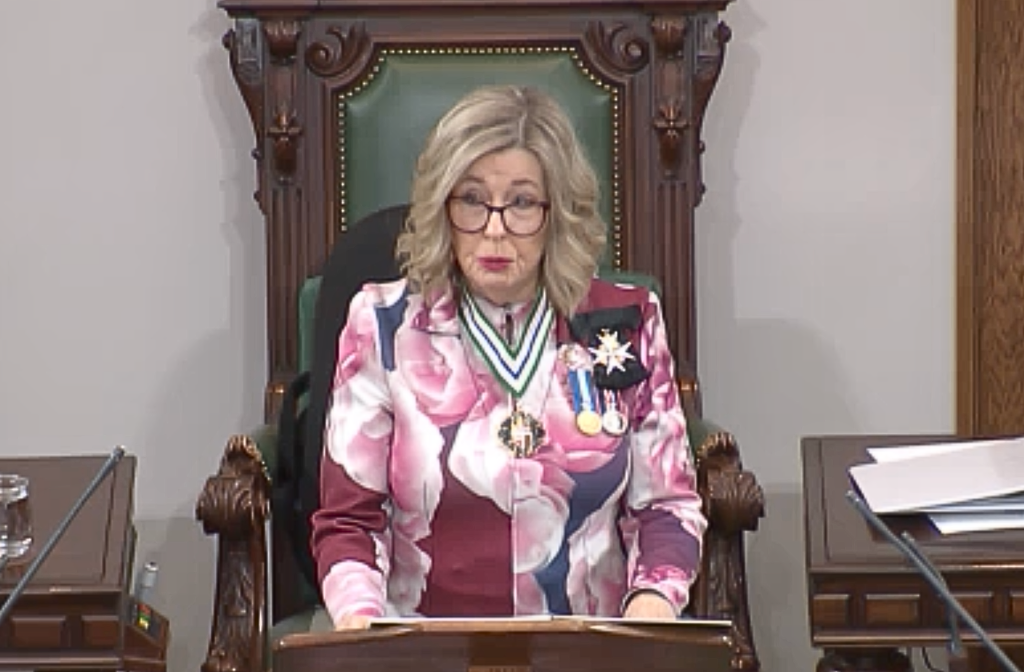
On Monday, nearly five months after the provincial election, Newfoundland and Labrador Lieutenant General Joan Aylward delivered the Tony Wakeham government’s first Speech from the Throne—a tradition to open each new session of parliament and an oration of the government’s intentions.
Critical observers often look beyond the substance of a Throne Speech to its omissions. Government priorities will be touted, they expect; areas of anticipated government neglect will not.
Led by Wakeham, MHA for Stephenville–Port au Port and a former health authority CEO, last year the PCs garnered enough rural voter support by offering a more progressive vision for the province than the Liberals—in certain policy areas, that is. They promised a tuition freeze for Memorial University students, tax relief for small businesses and low-income earners, to fix the Liberals’ wanting pay equity legislation, an expansion of healthcare coverage to cover all those who pay out of pocket to see a nurse practitioner, to cover travel costs for all essential medical care, to work in partnership with labour unions to improve working conditions, and to “make progress on the implementation” of the United Nations’ Declaration on the Rights of Indigenous Peoples.
Will you stand with us?
Your support is essential to making journalism like this possible.
Broadly speaking, the PC’s promised lower taxes, better health care, and safer communities. Those same promises were repeated by Aylward on Monday
Improving public services and infrastructure comes at a cost, however, as government after government has told us. In Monday’s Throne Speech, the PCs were clear about where much of that money would come from: expansion of mining, offshore oil, and hydroelectric development.
The PCs will work toward “ensuring access to global markets for all sectors of the Newfoundland and Labrador economy,” Aylward said on Wakeham’s behalf. “Newfoundland and Labrador has both the resources that the world needs, and the skilled workers that the future requires. That is why, after a hiatus, Newfoundland and Labrador is back in the oil business.”
What ‘all of us’ means to the PCs
When the PCs botched their recognition of Black History Month in February, critics pointed out the party’s slogan, “For all of us,” necessitates action around inclusion, equity and diversity.
“If this government believes in inclusion, accountability, and leadership, that belief must be demonstrated clearly and publicly,” St. John’s EDI and anti-racism advocate Lauralbel Mba said last month. “Black communities in this province deserve more than a quiet nod. We deserve acknowledgement that is intentional, visible, and led from the top.”
On Monday, Aylward offered a more nuanced explanation of the PC’s slogan.
“‘All of us’ means we are all Newfoundlanders and Labradorians. ‘All of us’ means that regardless of whether you are Indigenous, whether your family has been here for 10 generations, or whether you have just arrived, you deserve to live an affordable life—with access to health care and other services—and to live free of fear from violence and crime.”
“‘All of us’ means all generations are respected in this House,” Aylward continued, citing seniors, students, “vulnerable families,” rural Newfoundlanders and Labradorians, women and gender-diverse people, racialized and disabled folks as segments of society that won’t be left out.
“‘All of Us’ means that our government embraces and celebrates all people for the rich diversity, experiences and perspectives they bring to our province. And let all of us commit to continuing the work to ensure there is never a place for racism, antisemitism, or any other form of hatred in our province.”
This part of Wakeham’s explanation of ‘all of us’ should be celebrated, even by the sceptics among us who’ve heard it all before, then witnessed successive governments fail to deliver on their promises of equity and social justice.
But the premier didn’t stop there.
“At the same time, let us understand what ‘all of us’ does not mean,” Aylward continued.
“It does not mean that any special interest—from inside or outside of our province—gets to veto or overrule the clear commitments that our government was elected on. Newfoundlanders and Labradorians voted for change, and they are right to expect their government to follow through on that promise.” Is Wakeham talking about the federal government, multinational corporations, groups here at home advocating for energy justice, gender equality, Indigenous rights? We don’t know.
“Nor does ‘all of us’ mean that the government can be all things to all people. No government can be.”
Uh oh.
“All voices deserve to be heard. But when the time comes to make a difficult decision, our government will be prepared to act.”
Is this a hint the Progressive Conservatives are anticipating controversial decisions that could benefit some at others’ expense?
The hidden costs of extractivism
Wakeham has been clear his government will bolster extractivism, the large-scale extraction of natural resources for export. In other words, more hydroelectricity for Quebec. Oil, and potentially natural gas, for countries overseas. Gold and critical minerals taken from ancestral Indigenous lands to supply global markets.
Beyond the obvious contradictions between protectionist policies—like Wakeham’s assertion that Bay du Nord will only be developed if certain components of the Floating Production, Storage, and Offloading unit is constructed locally—and the province’s need to attract international investment, these industries come with huge, typically less obvious, social and economic costs. Just asked residents of Central Labrador, where the consequences of Muskrat Falls are still felt daily.
While mines, oil platforms and hydro dams create jobs, they are short-term solutions that won’t solve long-term problems. They will leave long-lasting, even permanent, scars on Newfoundland and Labrador society, and on the land.
Perhaps as we turn outward to national and global markets, we must equally turn inward for solutions to our greatest challenge: how to improve quality of life for Newfoundlanders and Labradorians through the development of a sustainable economy that is not rooted in extractivism, the displacement of Indigenous Peoples, and which comes at the grave social costs that large resource development projects create.
“If there is one truth that defines this province, it is this,” Aylward said Monday. “Newfoundlanders and Labradorians take care of one another.”
It’s a nice thought, but how aspirational is the stereotype if our own government doesn’t lead the way?
“As you engage in this sacred trust, and engage in rigorous and respectful debate, we expect you to ask the most important question,” Wakeham said through Aylward, addressing all MHAs in the legislature. “Will this help the people of Newfoundland and Labrador? Will this help all of us?”
Sorry, premier, we’re going to need a better explanation of what is meant by ‘all of us’, and how deep the PCs are willing to look inward in order to ensure this government doesn’t continue the longstanding tradition of feeding provincial coffers at the expense of the province’s most vulnerable communities.

Author

Related Articles

Thank you Air Canada flight attendants
Why the CUPE-led flight attendants’ strike and labour victory is a win for us all

Why Furey must not call a snap election
Trump’s chaos and confusion demand solid daily leadership from the Liberal Party of N.L.