
Why it matters that Fred Hutton won’t say housing is a human right
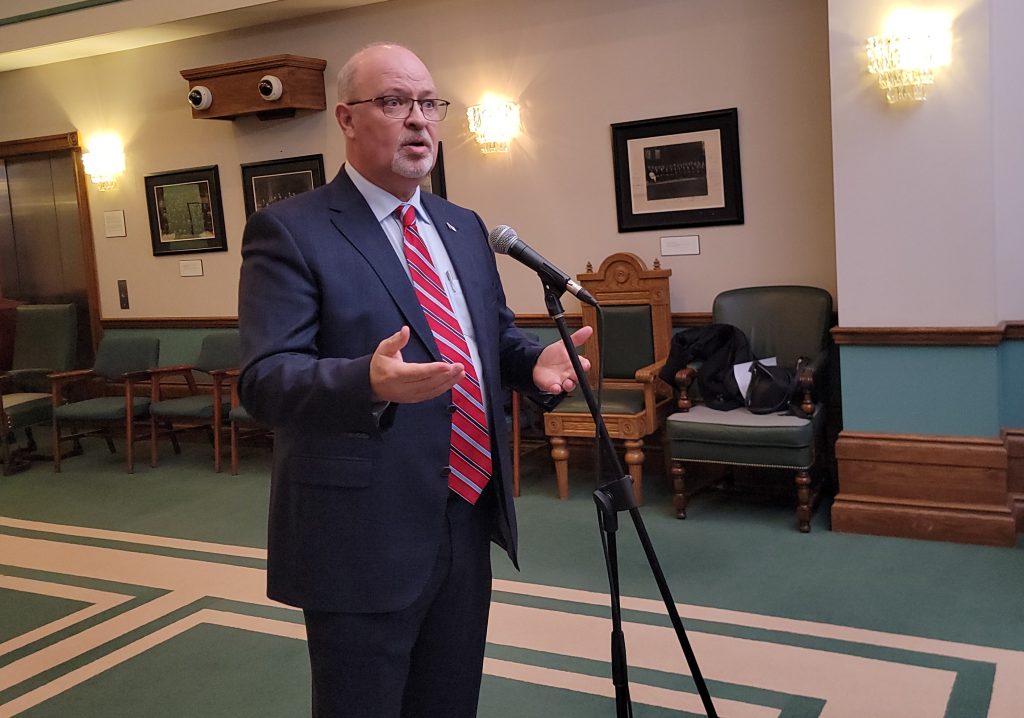
On March 4 I put a straightforward, fundamental question to newly minted housing minister Fred Hutton: ‘Do you believe housing is a human right?’
Housing has been recognized as a human right in international law longer than Newfoundland and Labrador have been a province of Canada. And in 2019 the Trudeau government passed the National Housing Strategy Act recognizing adequate housing as a human right in federal law for the first time.
On top of that, a recent report on homeless encampments from Federal Housing Advocate Marie-Josée Houle calls on provinces to “adopt provincial or territorial legislation recognizing the human right to adequate housing as defined in international law.”
Still, Hutton wouldn’t utter the words. Instead, he scrambled to explain that he’s new to the job and hasn’t yet read Houle’s report. Minutes later, both PC leader Tony Wakeham and NDP leader Jim Dinn affirmed their parties’ beliefs that housing is, indeed, a human right.
Will you stand with us?
Your support is essential to making journalism like this possible.
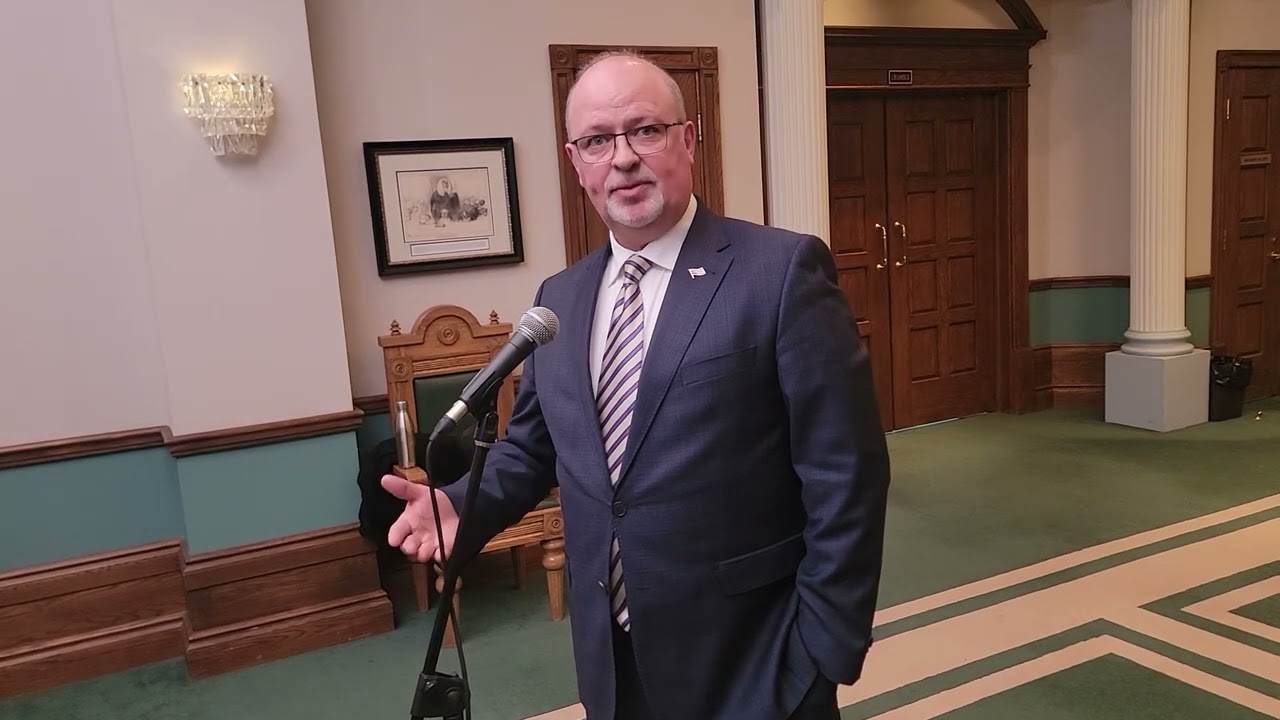
The Telegram published a story by legislative reporter Juanita Mercer with the headline, ‘Is housing a human right? N.L.’s new minister won’t say it is or isn’t’. And The Independent published a piece headlined: Housing minister refuses to say housing is a human right.
On Tuesday, the NDP put the question straight to Hutton in the legislature: “Speaker, the Universal Declaration of Human Rights, the National Housing Strategy Act and the federal housing advocate, Marie-Josée Houle, all recognize housing as a human right. Does the new Minister of Housing also recognize housing as a fundamental human right?”
Justice Minister John Hogan responded, reading from a United Nations document “which I wholeheartedly agree with,” he said. “‘The right to adequate housing covers measures that are needed to prevent homelessness, prohibit forced evictions, address discrimination, focus on the most vulnerable…’
“That, Mr. Speaker, is societal standards that this government strives to meet each and every day, which every policy we have and we put forward to deal with individuals in this province, who are vulnerable, who need supports,” Hogan continued. “I’m very proud of those policies and very proud of the position this government has taken on all those issues to help deal with people who are vulnerable.”
Dinn asked the Liberals again if they would enshrine housing as a human right in provincial legislation, but Hutton still wouldn’t utter the words ‘housing’ and ‘human right’ side by side. “Safe and affordable housing is fundamental,” he said. “It’s fundamental for a person’s well-being. We understood that and we understand it even better now, and further, thanks to the Health Accord…”
The province’s health accord recognizes housing as a determinant of health: “Poor quality housing and homelessness are clear threats to the health of people,” it says. “Quality housing is affordable and provides a stable and secure base, is a place where we feel safe and comfortable, provides for all the household’s requirements, and is connected to community, work, and services.”
The accord also notes that “a healthy person who ends up in poor housing or homeless will become unhealthy,” while “stable housing facilitates the provision of services that help address issues commonly experienced by individuals experiencing homelessness, including mental health and addictions.”
Still, none of the language firmly acknowledges that the province has a moral and legal obligation under federal and international law to stop failing a growing number of its most vulnerable residents.
In his response to Dinn Tuesday, Hogan did offer a hint as to the government’s thinking on housing as a human right though: “It’s not just about housing. It’s about discrimination,” he said, apparently alluding to the province’s Human Rights Act, which prohibits discrimination on various grounds, such as race, gender and source of income, which could potentially protect someone from discrimination when it comes to housing.
But as Carey Majid, executive director of the province’s human rights commission, told The Independent last fall in Ep. 1 of our Lock & Key podcast series, the act has limitations. The complaint-based process has a limitation period of 12 months, during which time unhoused or precariously housed folks may not have the time or resources to initiate a complaint process against a landlord or employer who may have refused them housing or otherwise discriminated against them based on a personal characteristic as defined in the Act.
Majid pointed out that the legislation “does not cover people who live in poverty — or sometimes it’s called social condition — [who] can’t afford a house.”
So while some might have recourse for being denied housing based on prohibited grounds of discrimination in our human rights laws, the act itself doesn’t do anything to address the conditions that create homelessness in the first place. The Liberals’ failure to have a strong social safety net in place to meet the needs of unhoused folks, many of whom live with complex needs, therefore boils down to failed policies.
On Wednesday, Deputy Premier Siobhan Coady also refused to say that adequate housing is a human right.
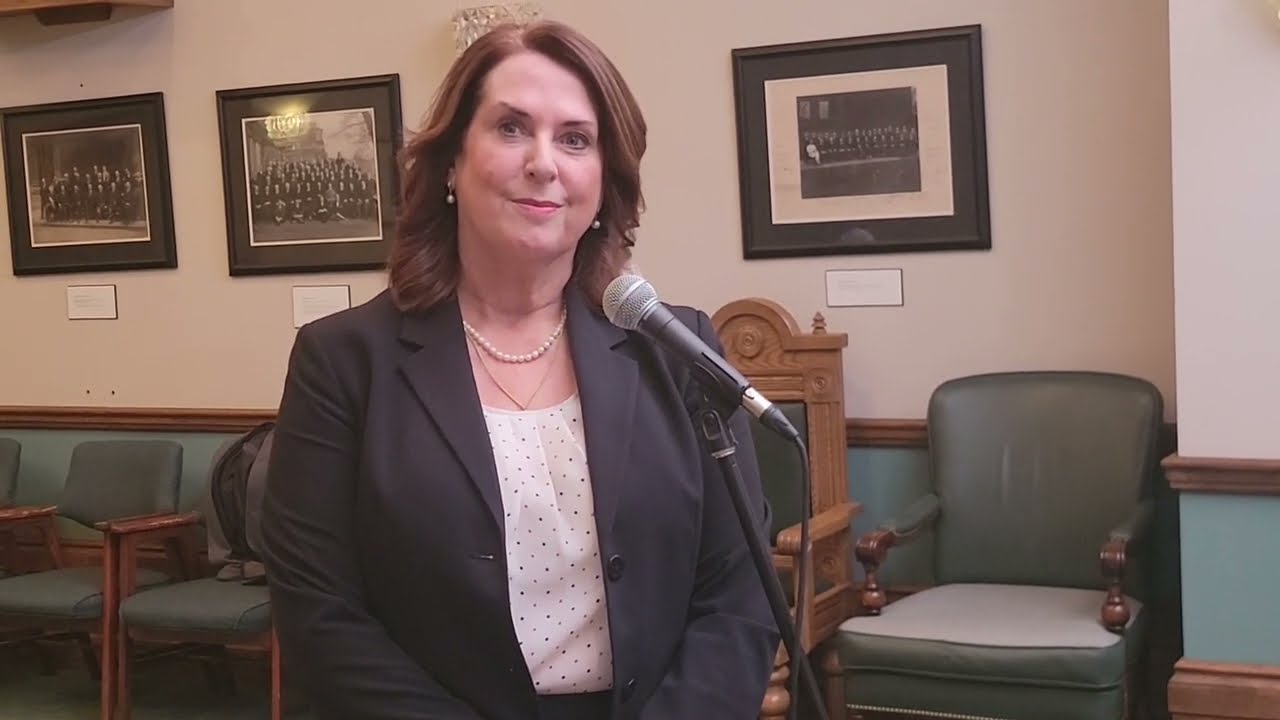
On Thursday, with a massive winter storm forecast to hit the region that afternoon, unhoused folks and volunteers from Tent City for Change brought their demands for safe, long-term, affordable housing straight to the provincial legislature.
NDP leader Jim Dinn asked Minister of Transportation and Infrastructure John Abbobtt — MHA for St. John’s East – Quidi Vidi, which encompasses the tent encampment — what he has to say to resident protestors at tent city about his failure to get everyone out of the encampment by Christmas, as was promised last December.
Abbott said he and Hutton had visited the encampment that morning, and he reiterated the Liberal talking point that “we are on site on a daily basis to talk to the individuals to find out what their needs are, and to address those.” Abbott also said government has placed “quite a number of individuals” throughout the fall and winter, and that the Liberals are “expanding our affordable housing [and] social housing.”
Still in question period, Dinn asked Hutton if he would “introduce legislation in this session declaring housing a fundamental human right? A simple thing,” he said. Hutton said they have “spent this entire week focusing on making sure that everybody has somewhere to stay each and every night.”
Before he could finish, the housing minister was interrupted by tent city volunteer and housing advocate Robyn LeGrow, who shouted from the public gallery that Hutton should speak directly to the people seated beside her.
LeGrow and the others then left the gallery and met with Abbott in the Confederation Building lobby, where a tent city resident who uses a wheelchair pleaded with the minister for help. Abbott said he would speak with Hutton. A staffer with Abbott’s office told The Independent Saturday that Abbott “followed up with NLHC who were able to secure her appropriate shelter.”
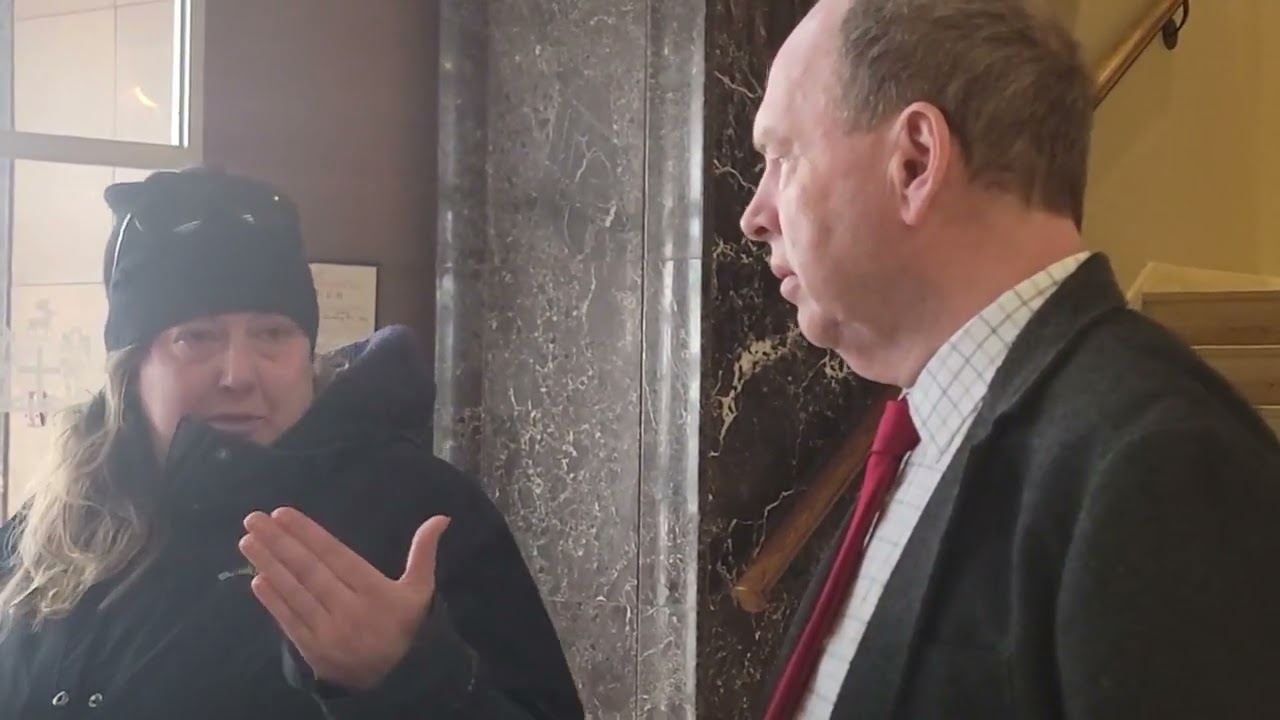
Glen, a Tent City for Change resident protestor, told The Independent Thursday he went to the House of Assembly “to support our people and the cause of letting them know that we still are asking for what we wanted. We want homes,” he said.
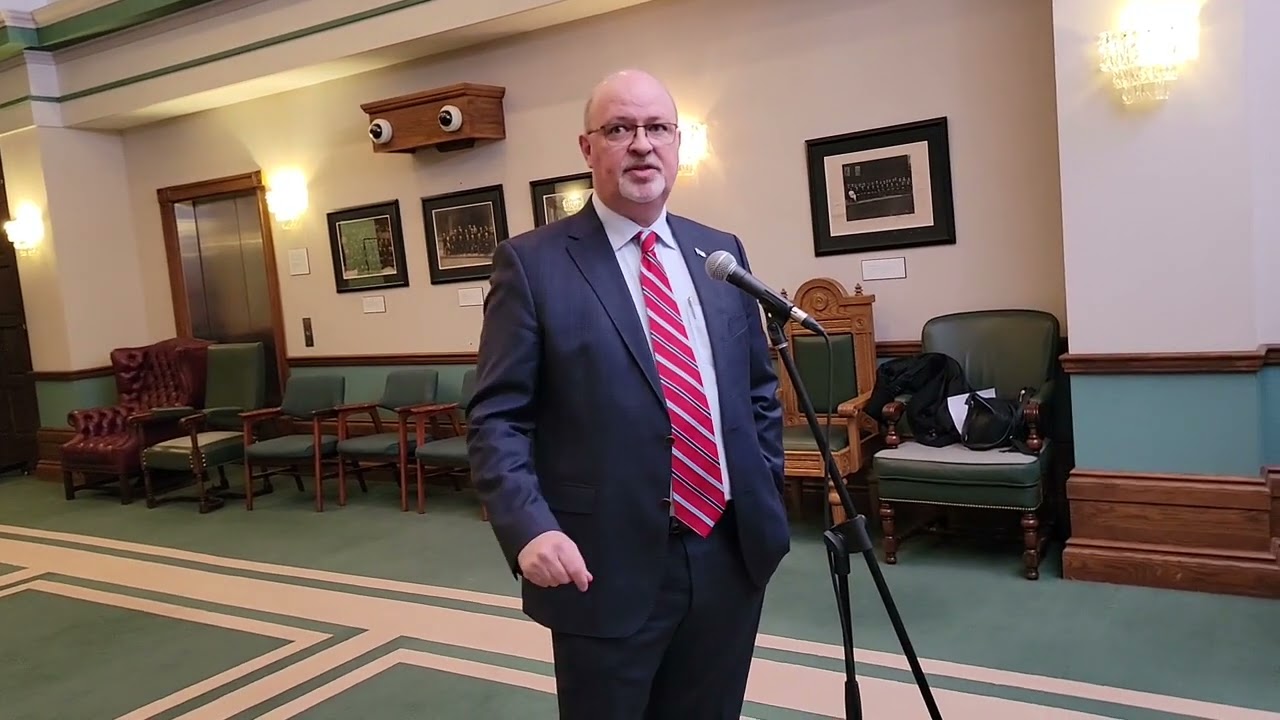
After question period Thursday, Hutton was pressed by reporters about the crisis. He still wouldn’t say out loud that housing is a human right. But he did seem to acknowledge the fact in a roundabout way.
“The UN Convention already signed by Canada means that we are covered by that,” he said, adding the province’s own Human Rights Act “already shows that we prevent people from being discriminated against for renting, for example. So, it’s something we’re going to be continually looking at.”
The UN Declaration of Human Rights states that “everyone has the right to a standard of living adequate for the health and well-being of himself and of his family, including food, clothing, housing and medical care and necessary social services, and the right to security in the event of unemployment, sickness, disability, widowhood, old age or other lack of livelihood in circumstances beyond his control.”
Meanwhile, the International Covenant on Economic, Social and Cultural Rights, a separate treaty of which Canada is a signatory, says state parties must “recognize the right of everyone to an adequate standard of living for himself and his family, including adequate food, clothing and housing, and to the continuous improvement of living conditions.” It also says signatories “will take appropriate steps to ensure the realization of this right, recognizing to this effect the essential importance of international co-operation based on free consent.”
If the housing minister disagrees with the federal housing advocate’s belief that housing should be enshrined as a human right in provincial law, one wonders what he actually thinks of Newfoundland and Labrador’s Human Rights Act, since many of the protections it affords to the people of our province are also covered under international law and/or federal law.
The whole point of my initial question on Monday wasn’t to catch the new minister in a “gotcha” situation. While there are legitimate conversations and debates to be had about what recognizing housing as a human right in provincial law might mean, the people of the province — especially those who are unhoused, precariously housed, or on the brink of homelessness — deserve to know if Hutton holds the fundamental belief that they have a human right to adequate housing.
If Pam Parsons, the minister responsible for women and gender equality, refused to say that people have the right to be free from discrimination based on gender, presumably the people of the province might question whether she is the right person for the job.
The same goes for Fred Hutton, who on Thursday responded to journalists’ questions by drawing attention to the individuals at Tent City for Change.
“My primary focus right now, is making sure — and I will say today, just because there’s a big storm coming — that nobody […] has to stay outdoors tonight or sleep in a tent.”
Hutton also said Thursday he still had not read the federal housing advocate’s report. If he had, he might have recognized that his response to tent city ahead of the storm also failed to recognize some of Houle’s other calls to action.
“Many encampment residents expressed greater fear about being alone on the streets or in certain temporary housing situations, such as shelters and single room occupancy units,” Houle writes. “Many expressed that they see encampments as a place that provides community, support, and safety for most of the people living there.”
Tent city residents have been telling us this all along, as Hutton should know. Many of them — along with community volunteers who are providing them with the essentials of life — have also been saying for months that they would prefer to stay at the encampment than go into shelters or temporary housing, where they are often turned away or kicked out due to a lack of adequate supports.
Houle addresses this too in her report.
“All governments and political leaders at all levels have obligations to promote and protect the human rights and dignity of people experiencing homelessness,” she writes. “Leaders must refrain from actions and language that further stigmatizes the residents of encampments, or people experiencing homelessness, which exposes them to greater risk of rights violations.”
Far from avoiding language that further stigmatizes unhoused people as incapable of looking after themselves, or of making appropriate decisions, Hutton and his colleagues continue telling us that government officials are visiting the encampment every day and “offering options” to residents there. It’s a statement that, without proper context, leaves many with the impression that tent city residents are irrational or unreasonable.
“Supporting the dignity and autonomy of the person means governments must respect the rights of encampment residents to decide for themselves if shelter solutions best meet their needs, including for safety and security,” Houle says in her report. “People living in encampments must play a leading role in decision-making processes that affect them. All governments must implement ongoing and meaningful engagement with people living in encampments and those who support them.”
Tent city residents and volunteers say they have not been meaningfully consulted about the Liberals’ “task force” to address homelessness in St. John’s.
But the task force is almost an afterthought now, because Tent City for Change residents are also protesting. Some refuse to leave the encampment because they know that in the absence of significant change, they will return to the in-and-out cycle that ultimately brought them to the encampment in the first place.
“If I could get somewhere that’s safe to stay, I’m not going up to one shelter that’s nothing but drugs, and another shelter that’s nothing but criminals,” he said. “You’re gonna get drugged up or you’re gonna get robbed.
“The shelters are too big,” he continued. “There’s too much danger. A lot of people won’t go there.”
Wraparound supports, LeGrow said Thursday, is “the one thing that is missing from all of these shelter options.” She said when unhoused folks go into shelters, “they’re treated like they’re in an institution.

“There’s security guards. It’s very much focused on maintaining the peace, which I understand from an operator’s point of view. However, if that is all most of these people have been offered for the last three years, you can understand why going back to a space that they’ve deemed unsafe or detrimental to their mental health there has to be more options for them. But those options have to include wraparound supports.”
The epidemic of homelessness also comes down to lack of funding and supports for the services and institutions that contribute to a person’s likelihood to end up unhoused,” Le Grow added.
“A lot of the folks that are here are chronically homeless because they don’t have access to health care, they don’t have access to social supports. There’s no humanity behind how we provide income support,” she said. “All of our community groups are under-resourced and over-taxed. They’re having a hard time maintaining staff because of all the trauma that’s happening. So any bit of connection and humanity and compassion between residents of tent city and the service providers is non-existent.”
We also learned last week that Hutton had not received his mandate letter from Furey. Seizing on the opportunity to put forth a mandate for Hutton with policies that echo the calls of housing advocates, Jim Dinn sent Hutton a letter titled “First Steps Towards Solving the Housing Crisis”.
In it, the NDP leader encourages Hutton to “design and properly fund a ‘housing first’ policy that actually works for those experiencing homelessness, existing social housing tenants with complex needs, and the community as a whole.”
He also calls for expanding the First-Time Homebuyer Program, self-financing new public housing, and “[becoming] the last jurisdiction in Canada to end the practice of no-cause evictions.” Dinn wants Hutton to implement rent controls and to “tighten loopholes in the existing regulations to prevent frivolous use by landlords of “‘renovictions’ and conversion of apartments to condominiums in an effort to evade rent stabilization measures.”
It’s unclear if a government that won’t say publicly whether it believes housing is a human right would consider such policies.
The ball is in Furey and Hutton’s court.

Author

Related Articles


Thank you Air Canada flight attendants
Why the CUPE-led flight attendants’ strike and labour victory is a win for us all

Why Furey must not call a snap election
Trump’s chaos and confusion demand solid daily leadership from the Liberal Party of N.L.