
‘Close to panic level’: Survey respondents chime in on climate crisis
More than 100 readers responded to The Indy’s first climate survey, and almost all share deep concerns
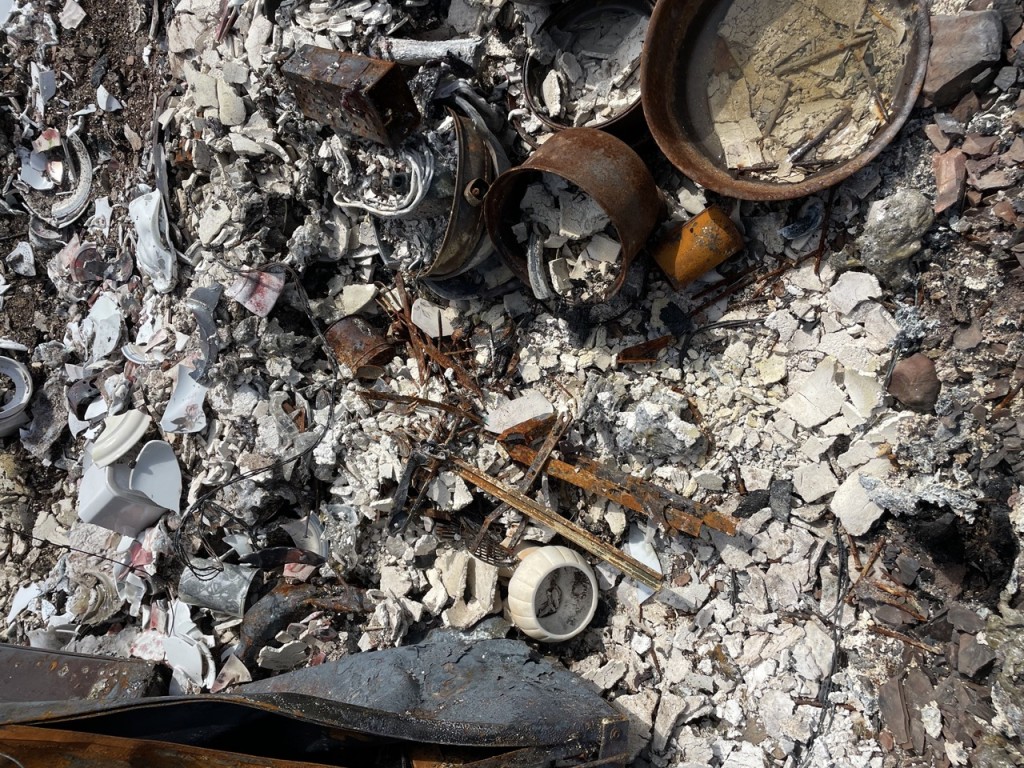
My neighbour points to a clutch of chicken eggs nesting in the ash of what was her bathroom sink in what was her bathroom. “It’s a sign of hope,” she says. I want to believe her, but as I scan the charred and ashy path the wildfire took through Broad Cove, my hope ‘muscles’ are scrambled.
Over the last few months I’ve been asking Indy readers to respond to a climate survey — 110 accepted the challenge (thank you!). I created the survey to test the theory that people are reluctant to talk about climate change because they feel no one else shares their concerns.
Although the survey is not about numbers, it’s worth noting that 107 of 110 respondents are extremely or very concerned about climate change. While there are three respondents who do not believe there is cause for concern, they did not provide in-depth answers, which is a shame because I want to understand where they’re coming from.
Although the majority of respondents report “high levels” of frustration with current climate policies, many share the attitude that we can have our cake and eat it too—that we can continue to develop oil and gas while transitioning from oil and gas.
Will you stand with us?
Your support is essential to making journalism like this possible.
With over 1,500 answers, I’m choosing and anonymously quoting three answers for each of the 14 questions. In the interest of transparency, at the end of the column I’ve included a link to the spreadsheet of answers if you’d like to read the whole thing (and use it in your classrooms, or start a conversation with friends and family). Have at ‘er.
Please note all of these answers were collected before August’s wildfires in Conception Bay North that burned over 10,000+ hectares of land and over 200 structures.
Q: How concerned are you about climate change in NL?
A: Very concerned — for the future of children, grandchildren & young ppl of today. Concerned for the future of the provincial economy that is so dependent on oil industries, for workers here & across Canada.
A: Very concerned. I have visions of my grandchildren living in underground housing to be safe from winds, hurricanes and tornadoes. Not to [mention] floods and avalanches. Plus rising seas and eroding shore lines. That we are going to be spending gobs of money on the military to be prepared for the whims of a couple of mad men when we need to save our country from imminent physical destruction worries me…and maddens me.
A: I am close to panic level. I teach and practice mind-body practices, and I strive to remain calm. I am profoundly concerned that those closest to me, as well as my neighbours, are not obsessed with how we live at the time of the most massive inequality in human history and that climate change is only one of the nine planetary boundaries that we have crossed and that we need to work together to co-create less suffering and more peace and joy for all the inhabitants of our beautiful living planet.
Q: What changes to the environment have you experienced?
A: I grow vegetables every year and have noticed, particularly in the last 5 years, that the early spring rains seem to be more frequent and heavier. I have had years (last year and the year before) where the rain, usually helpful with germination, has simply washed away everything I planted. I am also concerned about the increase in forest fires, having had to evacuate at least once.
A: I’ve seen a marked decrease in marine life and mammals in the Bay of Islands and an increase in Aquatic Invasive Species. I’ve seen a shift in the types of vegetables that can be grown, and a shift in the types of trees that are more prevalent in the forests. The increase of insect and tick activity. The violence of wave surges has increased and thereby the coastal erosion and negative impacts this has on the ferry and airport schedules.
A: Ocean productivity has changed, fishery stocks are unpredictable, more so now than before, and the cautionary science by our fisheries scientists is not being followed by the Crown. You can not blame the seals for everything. Does it make sense to continue to fish capelin — cod and whales’ main prey? These are almost at historic lows being at 10 per cent or so of the 1980s biomass, and the cod are not in recovery, yet? In spite of this, the minister offers up commercial fisheries for cod and doubles commercial catch in 2025, against best science advice! We have been playing God with our ecosystems for a long time, including the climate impacts. As the late John Crosbie once said, paraphrasing here: I didn’t take the GD fish out of the ocean. Obviously history repeats itself, and its’ overlaid with climate impacts.
Other impacts I have noticed: increased prevalence of pests and diseases on sea and on land animal and plant production (all predicted long ago), as well as lack of foresight by elected officials to tackle the real problems (only to gain votes), increases in drought and more violent weather events (these 1-in-100-year events are occurring almost every second year in NL) are related to climate change. Food insecurity is on the rise, as is poverty, and so is fascism, also because of climate change, and ideological tenets from both the far left and right. What a pickle!
Q: How worried are you about the state of the environment we are leaving to the younger generation?
A: Super worried. I am so afraid of what we are leaving my grandchildren’s generation. We should be ashamed.
A: Not as worried as some. The next generation will have to cope as we did. The challenges may be different but they will do it!
A: I am appalled. I feel genuinely guilty that [nearly] 70 per cent of [biodiversity] has decreased in number throughout my life. I am furious or heartbroken, depending on the day, that despite my best efforts in our home to share my belief that all life has some form of consciousness. All is sacred to my beloved sons, so far, they do not share my concerns or my interest in Indigenous languages and culture. My sons grew up here, immersed in what I now know is called neo-liberalism and neo-Darwinism. I have always found certain opinions expressed to me by the lovely people I’ve met since coming to Canada in 1985 to be disturbing and upsetting. I see the love of imperialism and militarism, and the use of the word resources to describe conscious non-human beings is concerning. I find it disturbing that people treat live fish as if they are not mindful, intelligent beings. I am not vegan, but I am upset when people treat fish as if they are inert. I cried for days when I learned that millions of salmon died as conditions are so awful in the salmon pens. An Bradán is special to me as a type of kin. I grew up with views that appear to be closer to some First Nations’ worldviews than those of modern Canadians, such as my beloved and loving sons. They both care deeply about people and pets. They are wary of my ‘counter-cultural’ beliefs and do not share my horror of plastic, toxic chemicals, burning fossil fuels, LNG, pipelines, etc.
Q: What measures are you taking to alleviate the impacts of global warming?
A: Personally, I am recycling a lot, reducing waste, and moving to a hybrid vehicle. The cost of living and increased tax load has been a struggle, even after 30 years of full-time employment while raising 3 children. None of my children want to stay in NL, which is a sad testimony to the state of affairs, all declining over the past 35 years or so.
A: On a personal level, I donate monthly to a climate-related cause, I have purchased a hybrid vehicle and will only purchase hybrid or electric vehicles, I avoid fast fashion and avoid purchasing large amounts of clothing, I prioritize mending clothing, I prioritize carpooling, I read books about climate change, and I have been involved with climate organizing through various groups. That’s what I’m doing to prevent worsening climate change—in terms of protecting from the existing impacts, not as much.
A: Hahahaha, that’s a good one. Climate change is a collective action problem, not an individual impact problem. But sure, let’s pretend that individual voluntary actions can make a meaningful difference.
Q: Do you think N.L. politicians are doing enough to address climate change?
Do you think NL politicians are doing enough to address climate change?
A: The NL politicians in government have done absolutely nothing to reduce GHG emissions despite their BS ‘Climate Action Plan’. The Muskrat Falls project was not even done in a way to reduce methane emissions from rotting vegetation beneath the reservoir and we are still burning crude oil at Holyrood. The official opposition has never indicated they would do better. Also, the two main parties are clinging to a dying fossil fuel industry rather than transitioning to a green economy.
A: No. Not until there’s real movement on decommissioning Hibernia, Terra Nova, White Rose, and/or Hebron. Which to me would signal that popular politics has actually made a commitment to ending their relationship to oil and gas, which is an actual avenue to confront climate change.
A: No, I cried through the entire 2022 Liberal Party AGM and then left the party. I could not bear to say, ‘our oil is clean.’
Q: If you answered ‘No’ to the previous question, why do you think that is?
A: They’ve doubled down on oil and gas, they’ve blown any chance we had to build a renewables sector, and they seem to be completely ignorant about mitigation, long-term risks, and any number of other implications and responsibilities. Jobs for da boys and money in the coffers matters far more.
A: Civil servants are not empowered to make meaningful change and push back against ministers, and the politicians are too easily led by people who are skilled at amassing personal wealth. Communities have no meaningful say in the decision-making process and rural communities are completely devalued.
A: Oil and gas is perceived as a safe revenue stream, and one that provincial politicians might see as an ally, or an easy campaigning point. Also, I speculate it’s because there’s probably a lot of folks who’re being lobbied or receiving gifts/funding in some way or shape from oil and gas investors/allies. Plus, those companies are doubly ingrained in provincial social life/events by sponsoring a lot of established provincial arts stuff like the folk festival […] which wouldn’t likely have enough funding without them. But those are also tax write-offs for those companies, so the government is paying for it anyways… so it’s all interconnected in a more nebulous way than just friends in government. The arts sector is just a quick and easy example.
Q: What would you like to see N.L. politicians do?
A: 1) STOP subsidizing the fossil fuel industry in any way, shape or form. 2) Use those funds to transition to a green economy. 3) Scrap the proposed corporate-owned-and-run wind turbine projects for locally-owned-and-directed wind power projects. 4) Increase local agriculture (including modern greenhouse agriculture) to increase food security and create good jobs. 5) Increase funding for public transit in major centres, and create regional transit systems (like Go Transit in Ontario) as well as intra-provincial transportation.
A: Have an honest conversation with citizens about the dire realities of the situation and about how we MUST make all the admittedly hard changes necessary to deal with climate change. If they don’t, future generations will curse them (and us for not pushing our politicians harder). Their (and our) legacy is on the line!
A: Develop a comprehensive plan for climate change adaptation at the community level, including a massive build-out for local food production sustainability, and to begin implementing that plan immediately. I would like to see more investment in electric vehicle infrastructure. I would like to see more attention put on Labrador and the impacts climate change is having on the economy, well-being, and development.
I would like to see collaboration with DFO on monitoring the Grand Banks and the fisheries, especially with regard to plastic pollution, ocean acidification, the slowing of [Atlantic Meridional Overturning Circulation], etc. I would like to see a comprehensive transit plan for the island, coordinating existing local resources and building on those strengths.
Q: Are you concerned that by continuing to develop oil and gas, N.L. will be left behind as the world transitions to renewable energy?
A: No, that is a serious logical flaw to that argument. It presupposes that the same capacity (capital, companies, labour) is the same as it is for renewables, or that government can’t encourage both at once.
A: Absolutely. It is frustrating to see our government staring into the rearview mirror rather than keeping up with the global trend that recognizes and acts on climate change (with the obvious exception of the US administration, Alberta, and Saskatchewan).
A: Yes and no. I’m not concerned about keeping up with whatever the next Big Thing in green energy is. But I’m concerned that that’s what the provincial government will, fall for, or has already fallen for, with respect to the hydrogen plant situation in Stephenville. Simultaneously, I don’t want government to keep relying on or developing oil and gas infrastructure either. I care a lot about living in a place that doesn’t actively contribute to ruining the global climate as a whole, which also ruins our backyard, all the while having random individuals run away with that money/capital/those resources.
Q: What’s your opinion about the mega wind+hydrogen projects?
A: I am in favor of clean energy. I would not be in favor of that clean energy being used to power data centers, which are very damaging to environments with their massive use of clean water for cooling.”
A: I understand the complexity of the discussion, especially when it comes to folks and Indigenous folks directly in the area. But the alternative of staying the course is unacceptable. I’ve spent a fair amount of time in areas of the US with large wind farms and don’t find them as unsightly as they are made out to be. For me they stand as a message of intent: they signal an area and a people who are conscious about the planet, not the opposite.
A: I think they’re promising and low-hanging fruit from an alternative/renewable energy alternative. I think the way the project on the West Coast was managed is deplorable, the lack of transparency a harbinger of the corruption and incompetence that plagues mega-projects, especially ones attempted by the local grifters and crooks (e.g. Muskrat Falls). I think people wringing their hands about impacts to wildlife and esthetics can’t see the forest for the trees, since catastrophic global warming will incinerate their view and house cats will kill far more birds. And I think the local reporting has been shite.
Q: What is your opinion about the calls for offshore wind?
A: There is no economic case for offshore wind in Newfoundland. I don’t know if or when there ever will be.
A: What a crazy idea. The Northwest Atlantic Ocean produces enormous storms that would destroy any on-sea installations, and why do that when there is lots of solid land readily available? It’s nuts.
A: When we lived in Nova Scotia, there were concerns about how offshore wind harvesting would impact the ‘look’ of the coastline and the adaptation of ocean life. I guess I wonder about that too, but I’d take wind energy over oil any day.
Q: Do you think N.L. should develop Bay du Nord?
A: I think if oil companies want to develop Bay du Nord, they should pay hefty royalties and deposits against environmental damage before they are allowed to do so. I do not think NL should put a penny into it, unless it is money that will be almost immediately refunded.
A: No. The entire thing perpetuates resource extractive cycles that look more and more like a pump and dump every day. The people actually relying on the land known as Newfoundland and Labrador have been subjected to reprehensible resource mismanagement since permanent colonial settlements set up shop. Bay du Nord is a nail in provincial climate action’s coffin.
A: No!! I am fairly well-informed on this. We should not, both because the IEA said in 2022 that there should be no new oil and gas developments and because DFO found Equinor’s environmental assessment fraught with bias, untruths and omissions. Developing this project will make it impossible for Canada to meet its climate targets.
Q: What is your vision for a more sustainable N.L.?
A: Hydroelectric, supplemented by solar and possibly wind. Local solar farms run at the local level. Energy should be public, not a profit-driven enterprise. We should have more EVs with a better charging network and more public transit. Solar has to be taken seriously. I don’t think it’s unreasonable to require all new builds use renewables for energy. Is it any more expensive, when at the building stage, to install solar or wind or geothermal? And incentives need to be provided for retrofits. When I see what’s happening in Scandinavia, in China and elsewhere, I feel we are cheating our children.
A: We stop focusing on living such a high standard of life by consuming more and the best of everything. We learn how to be content with less. Our government focuses on sustainability instead of trying to ensure the middle class gets high paying jobs that destroy the earth for the future.
A: Electoral reform. Communities not built for cars and giant business hubs like Galway. Better trade with nearby provinces to create more independence from fuel-heavy importing practices. Sustainable, humane, worker-owned, and ecologically-responsible agricultural reform. Make big businesses supply a majority of local or regional products, not limited to just food. Penalize big businesses (and government) for resorting to temporary foreign workers, and give those folks who are/come here better support and protections. In particular, make it mandatorily available, on the employer’s dime, for temp workers to become permanent residents if they want to. Have offshore fishery control returned to provinces’ control. At least then I can shake my fist at someone down the road, and not at a government body 5,000 km away. Better yet, full-fledged resource stewardship and prioritization to Indigenous institutions and communities before colonial establishments. Oh, and Universal Basic Income if I’m being idealistic.
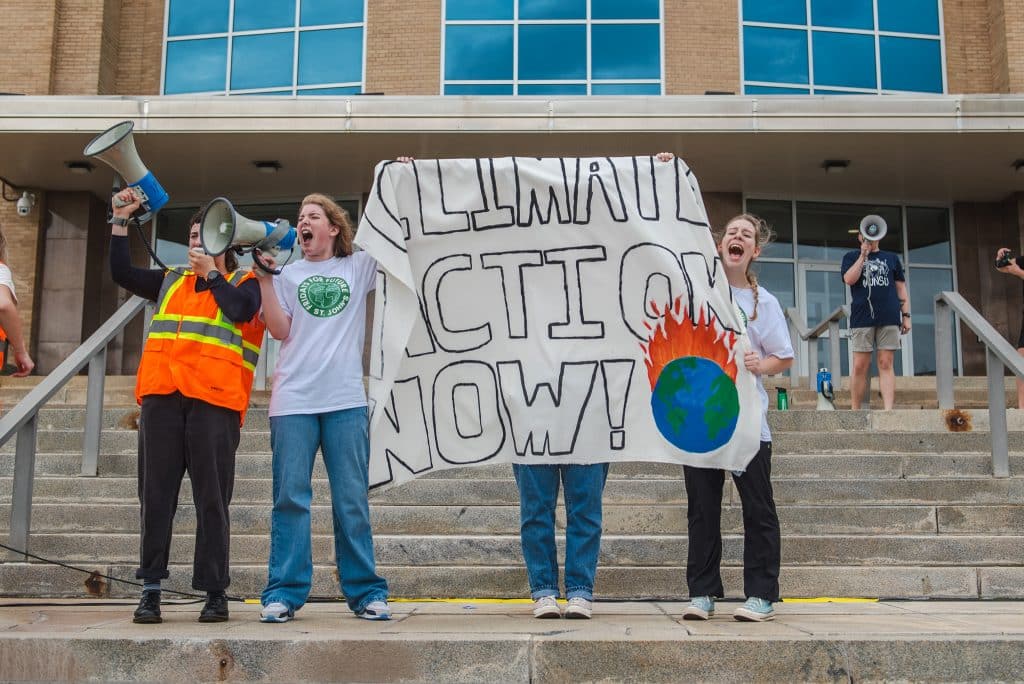
Climate change no longer a back-burner political issue
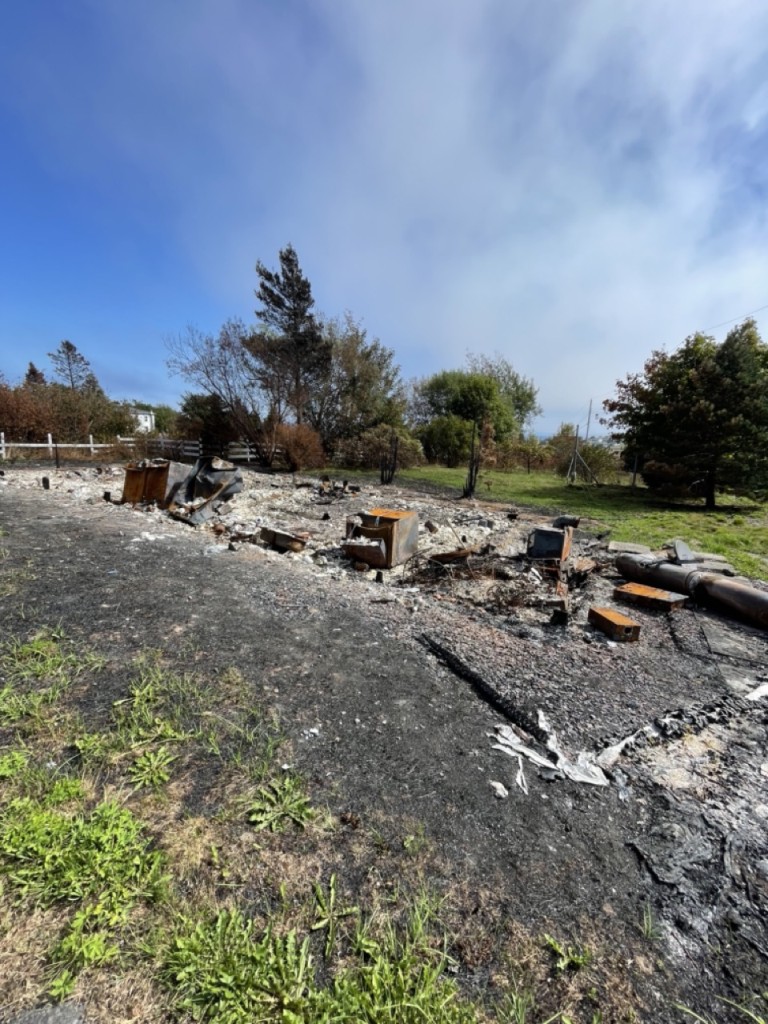
Here is the link to the full anonymized spreadsheet of survey answers. The photos I’ve included in this column are of my family’s summer place in Conception Bay North, a modest bungalow we were pinning our retirement, future writing, and gardening dreams on. A safe refuge we hoped to pass onto our kids. The total destruction of which by the Kingston wildfire has broken our hearts and further cemented my belief that we all need to speak up and share our climate concerns with municipal and provincial candidates in the upcoming elections. Politicians are taking our silence on climate change as tacit permission to keep drilling.
Researching climate change is anxiety-inducing, but I thought if it all gets to be too much, I can always go live in Conception Bay and grow cabbages (or something along those lines). What the wildfire taught me is that there is no refuge for anyone — not in Newfoundland, not anywhere.
If we don’t respond to the need for action on climate change now, what will it take?
The passionate and thoughtful answers of these survey respondents are proof to me that, at the very least, there is a growing community of voters who are as concerned, who want politicians to come up with a plan—now—to divest from oil and gas and develop renewable energy projects that benefit communities, not corporations.
Climate is no longer a back-burner political issue. To the political parties and municipal candidates running, I say: ignore the issue of climate change and the urgent need to transition from fossil fuels at your peril. People are much more concerned than you think. We can no longer put all our eggs in the oil basket.

Author

Related Articles
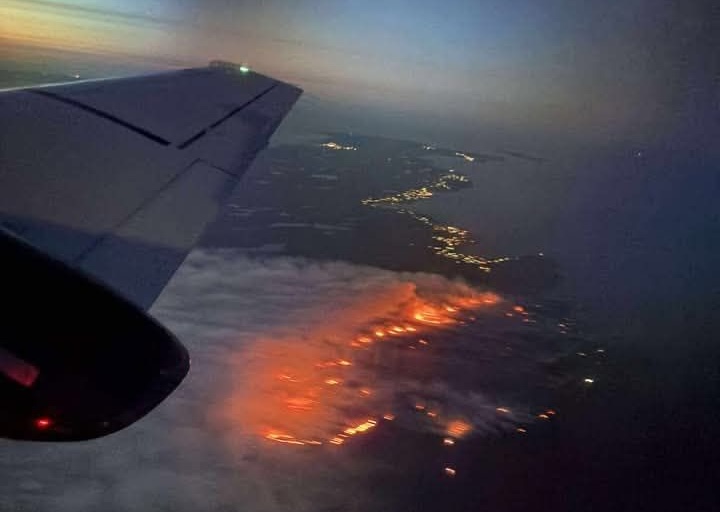
Dear Mr. Wakeham: Climate changes aren’t coming — they’re here
Not only are wildfires caused by climate change, new research links the heatwaves that cause them to oil companies active in Newfoundland and Labrador
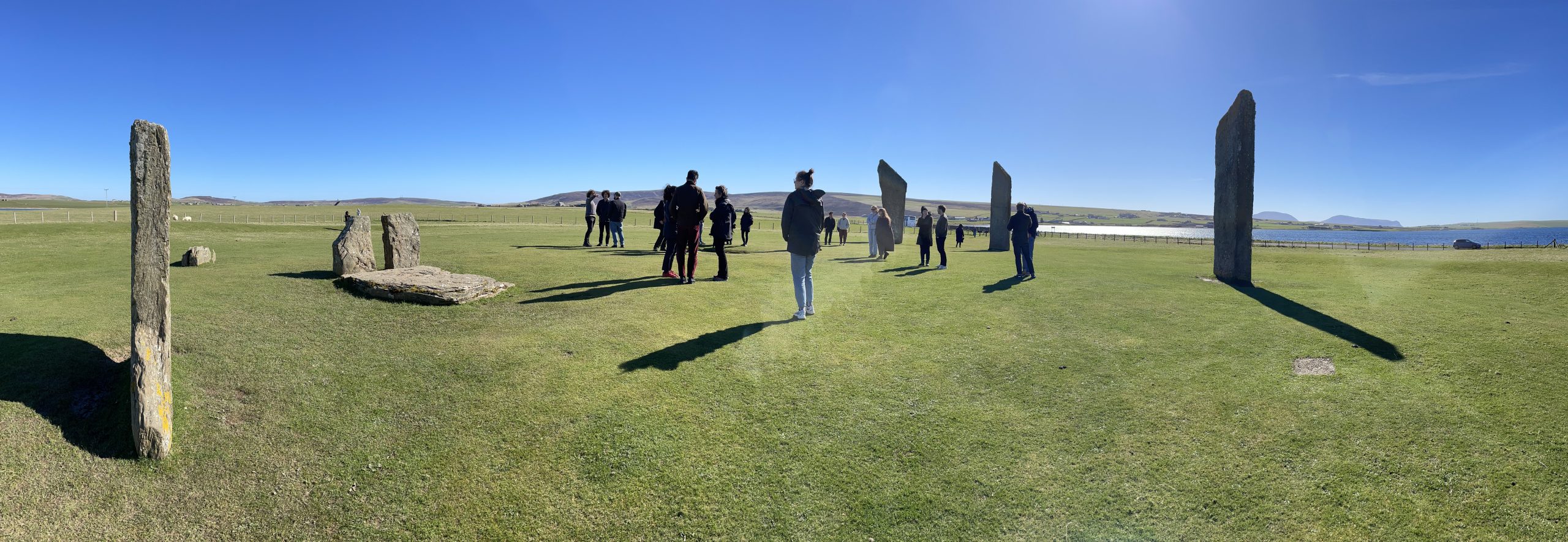
Who owns the wind?
How a trip to Scotland’s Orkney Islands raises questions of renewable energy benefits for communities in Newfoundland and Labrador

Our fossil gerontocracy pops the ‘P’ out of C-NLOPB
Changing C-NLOPB to C-NLOER will not improve our lives, decrease our power bills, or contribute to our equitable transition from fossil fuels