
Our fossil gerontocracy pops the ‘P’ out of C-NLOPB
Changing C-NLOPB to C-NLOER will not improve our lives, decrease our power bills, or contribute to our equitable transition from fossil fuels

As part of the Atlantic Accord proposed in May 2023, the C-NLOPB’s mandate was expanded to include offshore renewable energy and at some point it will be renamed the Canada Newfoundland and Labrador Offshore Energy Regulator. The C-NLOER. Everytime I type it, Google wants to change it to CNBLOWER, which is catchier.
Greenwashing the CNLOPB is too little, too late.
If you live on the Avalon, you may be feeling a perverse glee this winter in the lack of shovelling. You may even be thinking, is this climate change thing for real? Despite global warming sometimes feeling ‘good’, political scientists Patrick J. Eagan and Megan Mullin analyzed NOAA and NASA weather history and warn in their 2016 Nature paper that we shouldn’t be fooled; their projections demonstrate as climate trends shift the weather will become more unpleasant.
Maybe that’s why the feds and the province think there’s still time left to drill baby drill. Both governments are counting on hitting it big with Bay du Nord. It’s the ultimate ‘Set for Life’ lottery win, unless one considers the threats to life. At potentially 1 billion barrels, Bay du Nord will emit 400-million tonnes of carbon if extracted and burned. Just our luck isn’t it? We were getting a leg up out of our post-moratorium dory, more people are moving here—or coming home—making our lives better, our downtowns are coming back to life, our real estate market rebounds, our Costco quadruples in size —and then because of our climate change the arse will fall out of ‘er…again.
Will you stand with us?
Your support is essential to making journalism like this possible.
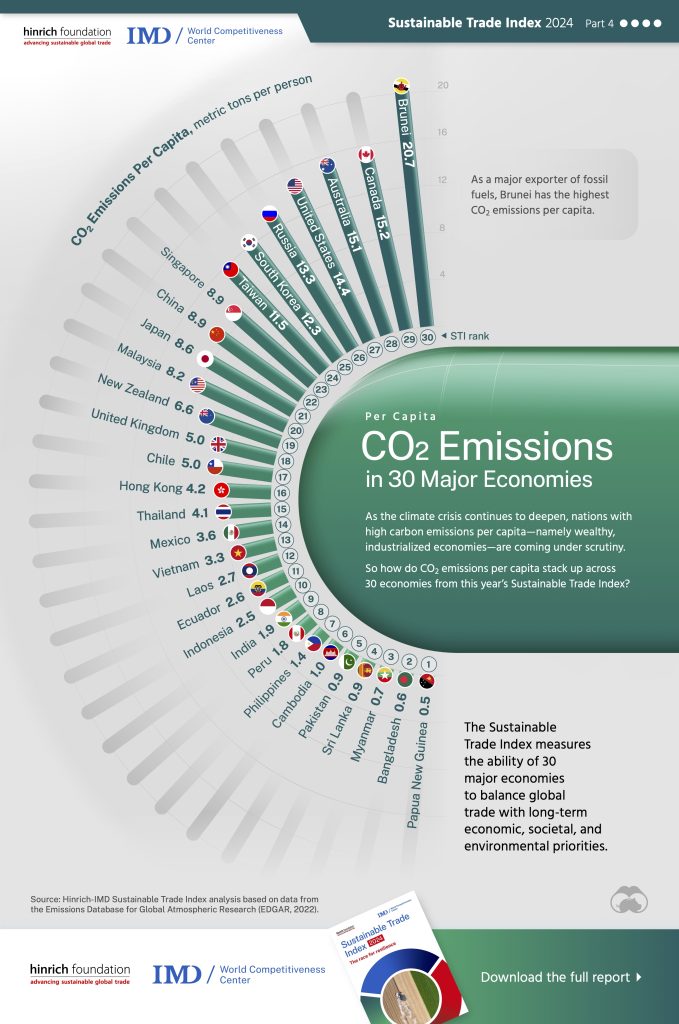
What? You don’t think of climate change as ours? Check this infographic. Canadians are right up there in second place with 15.5 CO₂ emissions per capita (metric tons per person). And yes, yes, yes, I know you’re thinking, that’s Alberta’s fault. Our oil is ‘light’. But, light or heavy, when you add up the greenhouse gas emissions from drilling, transporting, refining, and burning it— all oil is threatening life on our planet.
So what exactly is our plan to take on our fossil gerontocracy?
In No More Fossils, Dominic Boyer calls the promises of the oil and gas industry, “an ecological ponzi scheme.” He refers to oil leaders and their cronies as the fossil gerontocracy – a system with three interlocking layers: the Petrostate, Petrohabits, and Petroknowledge.
The petrostate is governance that assumes “the interests of the oil industry align with the interests of the society as a whole.” And hasn’t that been the case in Newfoundland and Labrador for decades! Boyer says petrostates also tend to binge their new oil revenues on “prestige industrial projects that fail to improve living standards among their populations.”
Hellooo. Muskrat Falls!
Of course we need to diversify our economy, and god knows we need to develop renewable energy projects, but Churchill Falls 2.0 and the green hydrogen projects coming down the pipeline—like the Everwind project on the Burin peninsula, with 1,500 wind turbines and a Trump-supporting CEO—aren’t going to benefit our workers with well-paid, long-lasting employment, keep our kids home, alleviate our energy poverty, restore and respect our environment, or prepare our coastal communities for more climate impacts.
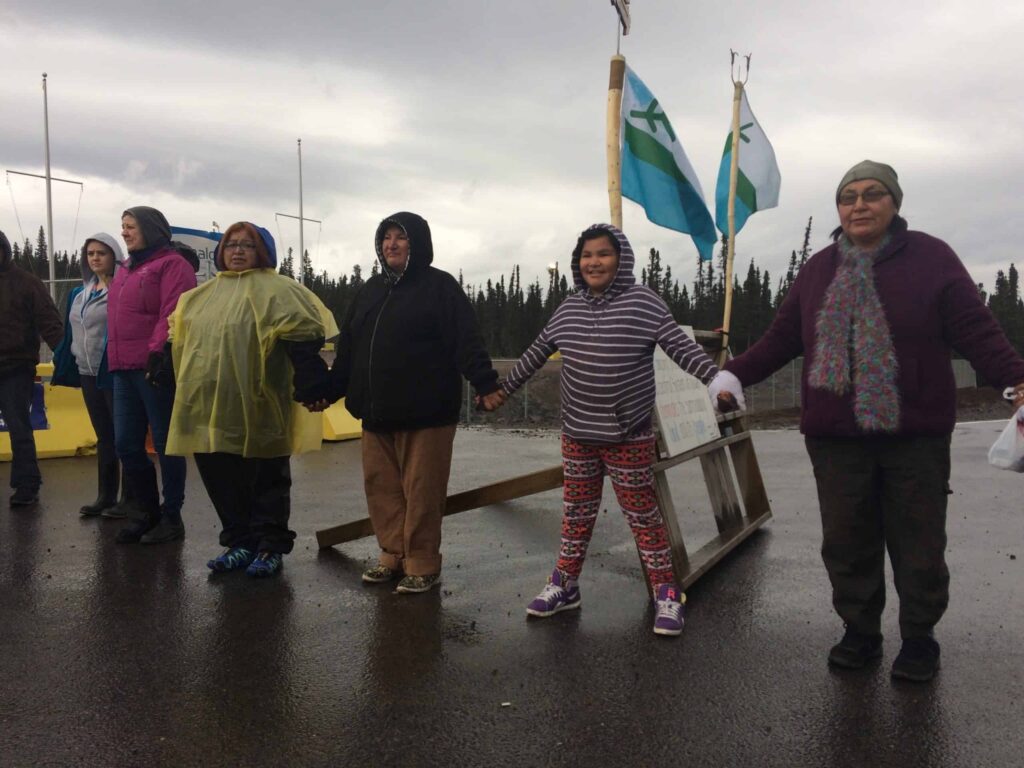
Boyer characterises ‘petrohabits’ as thoughts and action, “constant energy expenditure…consumption without satisfaction”, and he doesn’t just mean that icky feeling you get when you bring home another score from Winners. “Mobility, consumption, and expenditure are all undertaken habitually as ends in themselves. Sometimes petrohabits justify themselves by appealing towards abstract principles like Freedom or Nation.” We saw this linking of oil and gas, Alberta, highways, driving, big rigs, and oil workers, during the ‘freedom convoy’ and I suspect we’ll see more patriotic ideals linked to fossil fuels in the coming federal election.
Petroknowledge is the twisting of facts to serve the oil economy. Boyer calls it the,“original post-truth [and] the widespread conviction that economic growth via mega projects is always good.” Without Bay du Nord, you might say, our GDP will tank. It will probably decrease, but as a 2019 Stantec report on the socio-economic benefits of oil states, “much of the business income earned in Newfoundland and Labrador’s offshore petroleum industry accrues to non-resident companies.” If this is a surprise to you, it’s because petroknowledge, in Boyer’s words, “frequently twists logic and revels in misdirection creating surreal noted narratives that often scarcely concealed outright contradictions.” Premier Andrew Furey’s oft-repeated talking point that we have a “responsibility” to drill our oil, for example. Responsibility to whom? Multi-billion-dollar oil companies? Or to us, the people he serves? Or the environment we live in and depend on? An expression of twisted petroknowledge if I ever heard one.
The striking image at the top of the article is from Scottish photographer and oil worker Peter Iain Campbell. In Scotland, the energy transition is well under way. They are breaking down the rigs, not drawing up plans for a new FPSOs like Equinor is doing with Bay du Nord. They’re putting up wind turbines and getting on with it. Is it perfect? Probably not. But looking at the infographic above the U.K’s emissions are sitting at 5 CO₂ tons per person while Canada’s are 15.2.
All of this will get more extreme with the ‘drill baby drill’ petro authoritarianism in the U.S., the firing of NOAA scientists, the removal of climate information from websites and cuts to climate research funding. And really who wants to be onside with that?
The only options for resisting Trump’s agenda, so far, are to flex your so-called ‘buying power’ by cancelling your Amazon subscription, buying Canadian-made products, and on Feb. 28, a new activist group called The People’s Union USA led a buy nothing day to hit the billionaire bros where it hurts. While I agree with the sentiment of buying less, buying local, and not buying from mega corporations, I’m not sure we can buy or boycott our way out of this. It’s a start, I suppose, but we need to imagine a future in which we are more than consumers – where we are active citizens.

We can also take the boots to the fossil gerontocracy by standing for our environment and our future. By demanding alternative futures that benefit all people, not just the petro elite. The fossil gerontocracy’s grip is so tight that it’s easier to imagine the end of the world than it is to imagine a post-oil future. How can we ensure the energy transition will be a just transition that benefits communities, not just corporations, pays better wages, offers longer-lasting employment, enriches the environment, supports justice for Indigenous Peoples, helps our coastal towns adapt, and creates sustainable opportunities and futures for all of our kids and grandkids.
Business as usual is not inevitable. With federal and provincial elections coming up, tell your MHA and MP you don’t support the Bay du Nord project. While we might get some short-term jobs out of it (some service companies will get some contracts), Bay du Nord will contribute to propelling our world past 1.5 degrees of warming. Once past that irreversible limit, our lives will be threatened by even more extreme weather and the loss of our ecological and food-production systems.
Climate communication researcher Matthew Goldberg says there are two main reasons people hesitate to talk about climate change: they underestimate how pro-climate others are, and they worry the conversation will be unpleasant. So try it out on those earnest politicians knocking on your door. Ask them what they know about climate budgets and how they will support the legally-binding goals of the Paris Agreement. Start talking about climate change with family, friends, and frenemies – talking will hopefully lessen the polarization of opinion that is holding back change.
Looking for a bright side on the greenwashing of the CNLOPB, maybe the absence of the ‘P’, means they will welcome some new board members. Younger folks, perhaps? People with pro-environment and renewable energy experience to balance the seven current members’ oil backgrounds (five of the seven members have worked for oil and gas companies, and three of those have also done work with the Canadian Association of Petroleum Producers, the country’s most powerful oil and gas lobby group). It’s hard to imagine the current crowd will embrace the bold and innovative decisions necessary for our futures.

Author

Related Articles
Dear Mr. Wakeham: Climate changes aren’t coming — they’re here
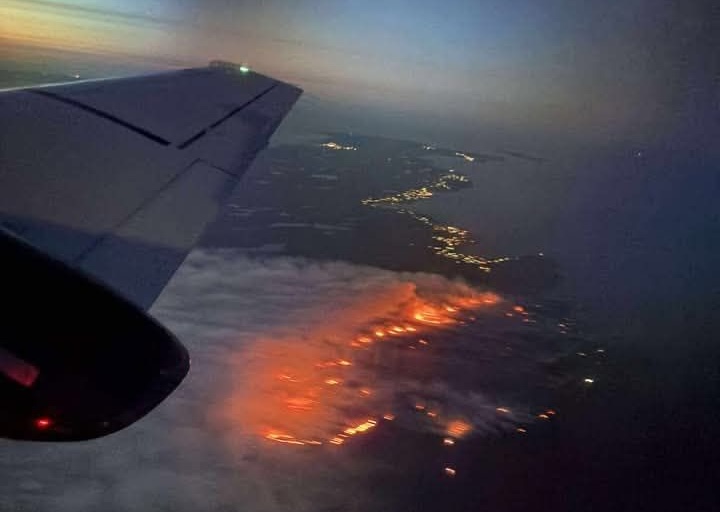
Not only are wildfires caused by climate change, new research links the heatwaves that cause them to oil companies active in Newfoundland and Labrador

‘Close to panic level’: Survey respondents chime in on climate crisis
More than 100 readers responded to The Indy’s first climate survey, and almost all share deep concerns
Who owns the wind?
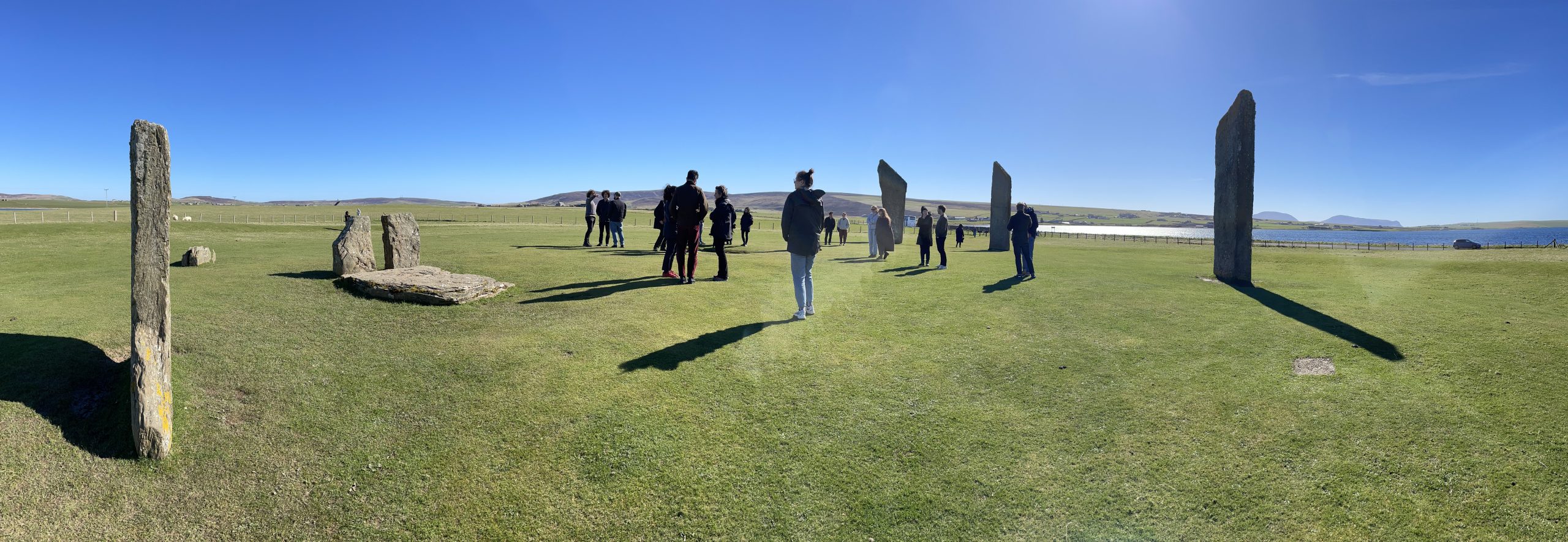
How a trip to Scotland’s Orkney Islands raises questions of renewable energy benefits for communities in Newfoundland and Labrador