
The litter, my friend, is blowin’ in the wind
Land uses near landfills. Home businesses are trending. Market Family moves ahead. Sheila’s Brush abides. A private clinic…with MRI.

Litter and landfills were trending at the council meeting this week. Mayor Danny Breen proclaimed May 14 the beginning of this year’s Pick It Up for YYT campaign. All across the city, residents and council members alike, friends, neighbours, co-workers, and classmates are registering and participating in community clean-ups, collecting unruly litter and putting it back where it belongs: in the landfill. Meanwhile, a recent rezoning application for an apartment building near the Robin Hood Bay Regional Waste Management Facility threw council for a loop.
Litter always makes for an interesting topic of conversation, because it’s never really about litter. Litter, after all, is just another word for garbage that’s out of place. When garbage is on the street, it’s litter, but the moment it’s put in a trash can, or sent to the dump, it changes from litter back to garbage again. Landfills are full of garbage that was once litter. Sometimes, on a windy day, it can become litter again. This week, the city awarded a contract to 86790 Newfoundland & Labrador Ltd. for mobile “litter fencing” to help control wind-blown litter at the Robin Hood Bay Landfill. They were the lowest bidder at $299,000.
It takes a lot of effort and money to keep garbage in its rightful place. Which is why conversations about litter are inevitably about categories, classifications, and boundaries, sorting and figuring out what belongs where, and what doesn’t. The items on this week’s agenda were varied, but they’re also variations on these themes, whether it’s garbage in the street, or commercial activity in residential areas, residential buildings in industrial zones, or new synthetic materials on old natural heritage structures.
‘All I could see was litter’
Will you stand with us?
Your support is essential to making journalism like this possible.
Everyone was present at Tuesday’s meeting. Deputy Mayor Sheilagh O’Leary and Councs. Maggie Burton and Jamie Korab joined remotely. Ashley Burke, board chair of Clean St. John’s, was in chambers for the council’s proclamation, alongside Maddie Budgell from Northern Mining Equipment, the Pick It Up for YYT campaign’s corporate sponsor.
“I just had my second—and last child—two weeks ago,” Burke said, not to humble brag about her dedicated volunteerism, but to make a point.
Leading up to the birth, she explained, she’d spent a lot of time “curb walking” with one foot on the street and the other on the curb, trying to stimulate labour. When she looked down at the space between her feet, “All I could see was litter,” she said, in horror. “It was so much more in my face, I think, than ever before.”
Indeed, litter is unsightly, so we put it out of sight. Picking it up is a sign of care and good will — the will to get our hands dirty, to take stock of some of the weight and volume of the waste we accumulate, and reckon with its effect on our surroundings. It’s a worthy exercise.
“We all know Clean St. John’s has been doing incredible work in the community for a long time,” O’Leary said. She lauded the success of their recent youth-engagement effort, the Grade 6 Super Speak-off, and spoke fondly of her own time volunteering for the organization. “Truthfully, it’s really where I began my career,” she said.
O’Leary concluded with a call to action: “I take this opportunity right now to challenge the corporations and the businesses in our community to get out there and clean up their own properties, and take that challenge because we all have a part to play.”
Post-consumer waste isn’t just an individual responsibility, it’s a corporate one, too. But as satisfying as sorting and storing is, that work is never done, because ultimately waste is an industrial production problem that can only be meaningfully addressed through regulation.

There’s no business like a home business
Council reviewed a number of development applications this week, three of them for home businesses in residential zones. One application was for Salt Water Bath Bombs at 61 Nautilus St. in Kenmount Terrace where orders can be placed online and customers can pick them up or have them delivered.
The other two applications were for food-related enterprises. One was for Ajoke Naija Stores, which will sell pre-packed African grocery items at 31 Julieanne Pl. in East Point Landing. Orders will be placed online or by phone, and delivered locally twice a week. Customers outside the delivery area can make pick-ups during select times during the week. There will be no on-site sales. The third was for Jamaican Taste Catering at 43 Brooklyn Ave. in Estates at Clovelly. Orders will also be made online or by phone. No customers will visit the site, and the owners will be delivering orders themselves.
The consensus among city staff and council was that the commercial impacts of these little businesses on their residential areas would be minimal so council approved them all, despite the mixed feedback they received from residents.
The Salt Water Bath Bombs application didn’t seem to cause too much of a stir in Kenmount Terrace. The city only received three submissions, two in favour and one against, citing concerns about parking availability.
The city received far more submissions for the other two applications. For Ajoke Naija Stores, the city received 12 submissions from residents of East Point Landing, 10 of which opposed the application. The city received 10 submissions from the Clovelly area on the Jamaican Taste Catering application, with eight of those opposed. Though the residents were from two different subdivisions, the concerns they expressed shared some common themes.

‘Sort of like a gated community’
Residents in both areas were worried about competition for street parking, the increased flow of cars into their neighborhoods, and the disruption and danger this might pose, “introducing all kinds of people coming to our area,” one resident wrote of Julieann Pl. The lack of sidewalks on that street was also listed as a potential hazard to children and seniors.
“East Point Landing is sort of like a gated community,” another resident wrote, “with just two access points from Logy Bay Rd.” Just to be clear though, it doesn’t have physical gates — only imaginary ones.
Another point of contention seemed to be around residential and commercial mixing. Residents expressed concern about the effect that business activities could have on the residential character and value of their respective areas.
“This is a residential neighborhood for which we pay high taxes for the privilege of not having businesses in,” a resident of East Point Landing wrote.
“This application goes against the residential spirit of the neighborhood,” another stated. “I believe approving this application would negatively alter the neighborhood’s makeup and would have a negative impact on home values.”
Restrictive covenants
Significantly, a couple of residents mentioned the stipulations of the “restrictive covenants” in their respective subdivisions that prohibited commercial activity of any kind. City staff responded, saying they are not aware of or responsible for what is outlined in these covenants; they are outside city regulations, and would be up to the developer to enforce.
These protective or restrictive covenants are not uncommon in planned subdivisions; Danny Williams has one in place for Galway Estates. They are essentially lists of conditions that a developer sets for how a buyer can use their property once they own it.
At the crux of these covenants though, is what a community ought to look like. While they may not set out to be malicious, they have a dark history of being used for discriminatory purposes throughout North America, to exclude people from buying property in certain areas.
‘Home businesses are an equitable way people can begin a business’
Any increase in the frequency of home businesses is a trend worth paying attention to. Historically, it was not uncommon for people to work where they lived. The legacy of this practice remains memorialized in many old buildings around St. John’s: mainfloor storefronts with living spaces upstairs. “Purely” residential areas are a modern invention, a consequence of industrialization and urban sprawl — and yes, privilege.
It used to make practical, logistical, and financial sense to live and work in the same place, and clearly for some, it still does. Given the high cost of living, inflation, and rising interest rates, it’s a challenging time to make ends meet, let alone start a business. It’s understandable why it would be an attractive option for individuals, but it also benefits communities, too.
As one articulate and supportive resident of East Point Landing wrote in their submission to the city: “it is crucial for us to embrace and encourage initiatives that foster diversity, support minority-owned businesses, and promote entrepreneurship within our city.”
Meanwhile, another like-minded resident from the Estates at Clovelly observed: “Home businesses are an equitable way people can begin a business and remove some of the financial barriers. I am delighted to see more cultural businesses in our city and I believe that it will add to an increased sense of belonging.
An apartment building near Robin Hood Bay
Speaking of living where you work, Newco Metal and Auto Recycling Ltd. wants to build an apartment building to provide housing for its employees. They submitted an application to rezone 38 Robin Hood Bay Rd. ‘apartment 2’; it’s currently ‘industrial commercial’. The company is proposing a three-storey apartment building with 12 units.
“We have immigrant staff, new Canadian staff, and existing staff from across the province that cannot find housing for themselves and their families in the metro region. We want our people to make a life and future in the city and the province, to make a better life and future for them, and their families,” the proponent wrote in his email to the city.
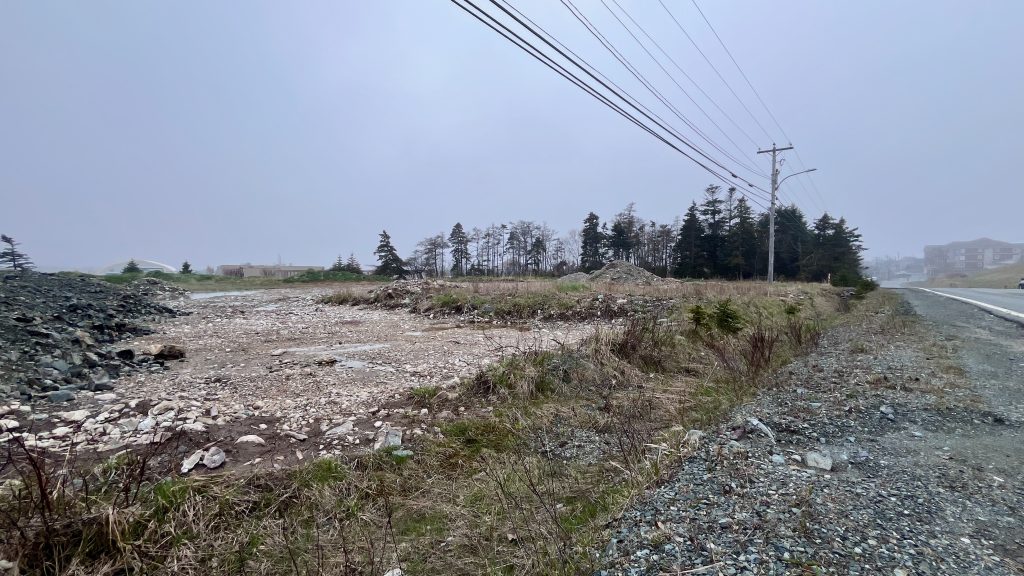
City staff recommended that council reject the application on the grounds that the location is not suitable for residential use. Council discussed the complexity of the application at the Committee of the Whole last week, where most members were of two minds.
“Any municipal planner would say this is a terrible idea due to the zoning and the proximity to the landfill,” Korab said. However, most everyone agreed, given the housing crisis, the scarcity of affordable housing stock, and the labour shortage, the proposal deserves more consideration and an opportunity to propose solutions to the obvious challenges of the site.
“My first concern always is about the health and safety of the people who would be living in that area,” O’Leary said. When she met with the operations manager, they discussed the possibility of adding a buffer around the property, or potentially adding sidewalks. This area is changing, O’Leary remarked, and there are amenities nearby.
In the end, most members of council voted to consider rezoning the property, remaining skeptical yet curious to see what a Land Use Report and a public consultation might bring.
Counc. Jill Bruce held her ground. “I’m ok with drawing a hardline between the residential and the industrial commercial,” she said, “especially when it takes in the landfill.”
‘Pushing back against car culture’
In other good news, council finally approved the discretionary-use application submitted by the Market Family for their takeout restaurant at 319 Hamilton Ave. The application has been in limbo since the winter due to a tie. City staff initially recommended the application be rejected due to insufficient on-street parking around the property, even though the property had previously been used for commercial purposes and is also adjacent to other businesses.
This time the city had received enough positive feedback from residents to tip the scales. Council voted against the staff recommendation and put forward a new motion to approve the application, which passed 9-1. Counc. Ron Ellsworth was the only holdout, as he still had concerns about potential blocked driveways on Richmond Street and concealed sightlines at the intersection.
Counc. Ophelia Ravencroft was happy the application was moving forward and saw it as a sign of the times. “The nature of these businesses is changing, and I think the nature of our city is changing,” she said.
“We really have to start thinking—when we do these developments—how are we making it suitable for our neighborhoods, how are we making it suitable for residents, in terms of everything?” she added. “Access to amenities, access to food, access to culture in your neighborhood, support for small local business, and support for pedestrianization and pushing back against car culture.”
Oh my, an MRI!
Council received a discretionary use application for a proposed private out-patient clinic at 63 Thorburn Rd. that would have endoscopy, operating, and MRI rooms. The area is currently zoned ‘industrial commercial’.
The city received eight submissions from residents in the area, some in favour, others citing concerns about parking. According to parking calculations there are sufficient spaces. The clinic will only be open in the daytime, which will make more parking available for the evening customers of nearby businesses.
Council unanimously approved the application.“This is a pretty exciting project,” Counc. Tom Davis said. “Although this is a private clinic, it’s gonna fill a lot of needs in the city,” referencing the lengthy MRI waitlist in the province.

One man’s trash is… a downtown community treasure
The storied Sheila’s Brush mural, recently restored by artist Gary Taylor, is finally getting a new home at the Benevolent Irish Society building at 30 Harvey Rd.
Council accepted the Heritage Panel’s recommendation to approve the application to mount the mural on the side of the B.I.S building. Though it’s not a designated heritage structure, it’s still located in a heritage area. The mural is technically considered a wall sign, and though it is larger than what city by-laws permit, the Heritage Panel supported the application anyway.
The three wooden panels will adorn the upper wall of the building, a plaque below will explain the significance of the work. Originally created by artist Helen Gregory for the St. John’s “City of Legends” campaign some 30 years ago, the painting features the mythical Sheila of Irish Newfoundland folklore who delivers an annual snowstorm right after St. Patrick’s Day.
The mural glimmered in the corner of the Neil Building’s eye at the east end of Harbour Drive for decades — until it was taken down and discarded in 2021 by the property owner. The painting might have ended up in the landfill if it wasn’t for the discerning eyes and swift actions of Diana Daly. After discovering the work in a snowbank, Daly, the new executive director of the NL Folk Arts Society, enlisted help from the community to coordinate a rescue, a restoration, and now finally, a rehome.
“I just wanted to thank the people involved for making sure this mural has been refurbished, and it is going to be enjoyed for generations to come,” Burton added.

De-vinyl intervention at 8 Riverview Ave.
Council approved an application for renovations at 8 Riverview Ave., a designated heritage building off Rennie’s Mill Rd. in the ‘Heritage 1’ area. The proponents wanted to replace windows, corner boards, and trims using more modern materials, and replace the clapboard with vinyl siding.
The Heritage Panel recommended that council accept the application, though they vetoed the vinyl siding as it is against the heritage by-laws for the area. They recommended that the owners retain the window style, size, and shape, and use wood for all cladding and any trim.
The property was the home of William Vallance Whiteway, the English-born lawyer and freemason who was also Newfoundland’s longest-serving prime minister. I don’t know where Whiteway would fall in the vinyl-siding-on-heritage-homes debate, but he’d certainly roll over in his grave if he knew what happened to the Newfoundland railway. One of its most vocal champions, he believed it was the key to the colony’s future success.
Summer in the city
With June approaching, the council approved its meeting schedule for the summer season. Regular council meetings will continue bi-weekly, but the Committee of the Whole meetings will be held only when deemed necessary by council or senior management.
Counc. Davis voted against the motion. He said while he understood the rationale for removing the scheduling obligation for the summer, “on principle, I always want to be here serving.”
The council will still be serving, Breen replied. “We are here to serve 365 days a year,” Ellsworth added, noting meetings are just one part of the work council does. Applications will still go through regular meetings, and any urgent items can be voted on over email.
Everyone seemed to miss that the issue with pausing the Committee of the Whole meetings is not the reduction in service, but transparency. After all, these are the meetings where the public can witness the discussions that inform the decisions made at regular meetings.
Councillors are public servants, but they’re also people who want to enjoy their summer, the city’s shortest season.
The Go Round
Korab promoted the city’s Residential Re-Leaf Program, wherein residents can apply for a $200 voucher to plant a tree on their property. They can choose from 42 different trees. The initiative is meant to improve the city streetscape and the urban forest.
Burton offered her well-wishes to Workliv on their new development. The company behind the much-needed new student housing project at Memorial University broke ground on Tuesday for their Wester-land project on Lambe’s Lane.
The little stretch of land between the Aquarena and St. Augustine’s Church at the corner of Westerland Road and Elizabeth Avenue is going to be the site of three six-storey buildings which will provide 205 furnished units for undergraduate students, so they can live where they learn.
Davis and Bruce concluded the meeting by circling back to litter, the topic of the hour. They both mentioned recent and upcoming litter clean-ups, and thanked resident volunteers, as well as members of Clean St. John’s and Public Works for all their efforts.
It’s not all hard work. Bruce wanted to remind everyone there’s pleasure in it, too. At the clean-up at St. Paul’s School last week, Bruce said she overheard one teacher remark: “‘They’re all junior high students and too cool for school — until a garbage truck pulls in, and then they’re like five-year-olds. They love the garbage trucks!’”

Author

Related Articles

Signs of the Times
Korab joins Team Furey. A slipway ties the whole community together. An apartment building downtown. A tale of two experiences from two city parks.

St. John’s women of influence
Awards, birthdays, marriages, and retirements are celebrated as two distant food trucks duel for the night in the parking lots of old establishments history forgot

Holidaying on Indigenous land
June Day is renamed no thanks to Tom Davis. A questionable debate about parking relief. Minor sport, major expense. Trash is a symptom of a bigger problem.