
Our brain has lost its mind
Hate is not inherent; it is learned

“We were all sitting around the TV, drinking and rooting for the troops as they began to invade Iraq.”
It was 2016. My boyfriend and I were talking to a bartender in the Gowanus neighborhood of Brooklyn.
He was from the South, talking about how different he and his girlfriend were—she was a liberal New Yorker, while he was a recovering conservative from the South. Recounting the incident, he reflected on not being that person anymore.
In 2003, as the U.S. began its long drawn-out war in Iraq, I was on a road trip for spring break down to Valdosta, a small town in Georgia, to build houses for Habitat for Humanity. To say I was at odds with this guy would be an understatement.
Will you stand with us?
Your support is essential to making journalism like this possible.
Three strangers from our university packed into a car to spend a week together. As we rambled through the small towns of the South, the radio documented the beginnings of a war I opposed—and of course I wasn’t alone in that sentiment.
Since I didn’t know my car mates, I sat silently as the radio went on. We passed church after church with signs proclaiming, “God Bless America,” and “Support our troops.” I was a fish out of water, originally from New York City, having grown up and lived in a privileged bubble of liberalism.

I studied neuroscience in college and later pursued my PhD, where I researched memory and cognition, the crux of it being behavior—how and why do we do the things we do? Which parts of the brain control our cognitive processes? How do we process information, and what is it that makes us different from other animals? Not much, it seems.
What made that guy growing up in the South different from me came down to environment. What else could it be? He eventually came around to believing the war was unjust and that his support was misguided. But why does environment play such a role in behaviour? Why are we so easily influenced by the sentiment around us?
Our brains are complex lumps of tissue encased within a thick skull to keep it safe. But there are in fact two distinct brains—our “primitive” brain controlling basic functions, and the cerebrum, a thick layer that has elaborated over time to enable human language, decision-making, and what you might consider “morality.”
We dismiss the primitive brain we share with other mammals. We claim that cerebral differentiation makes us superior to animals — many going further in thinking we have the right to use the environment and other animals as we please, damn the effects it has on the delicate ecosystem.
Collectively, humans are taught at an early age that killing is wrong — plain and simply wrong and severely punished. But do we need to be taught that? Isn’t it inherent to our morality, the result of hundreds of years of brain evolution?
Yet prisons are full of murderers throughout the world. Despite knowing the consequences of killing, despite understanding that it’s “wrong.”
So why does this happen? Why do we think some killings are justified? And please tell me why we condone, support, applaud killing in the name of religion, land, or policy?
People are sent into battle with everything they’ve ever learned turned on its head; they are now allowed, even rewarded, for killing — and killing everyone. We’re told there is an international code of war — but when is it actually upheld? In the midst of horrors surrounding us, where children are being slaughtered, it seems like that morality has disappeared entirely.
And there’s a good, albeit devastating, reason for that.
Our brain has failed to evolve far enough to override our primitive impulses. Hate, anger, and fear overwhelm us on a daily basis. We are prone to fall for propaganda, social media fanning the flames.
Humans fear death. They search their lives for meaning. They rebel against but are stuck in a capitalist wheel that controls every action in their lives. They seek comfort and reassurance, and despite the fact that science has revealed answers to many questions about the beginning of life, they cling to religion, to stories written thousands of years ago. Against logic, against all evidence to the contrary.
Humans need to feel safe and secure, and adhering to rhetoric that enables a comfortable life is enticing.
It’s not a matter of intelligence or education; we’ve seen science deniers across all walks of life. The pandemic has taught us that rational thought cannot exist in most when there is a loss of control, or even a perceived loss.
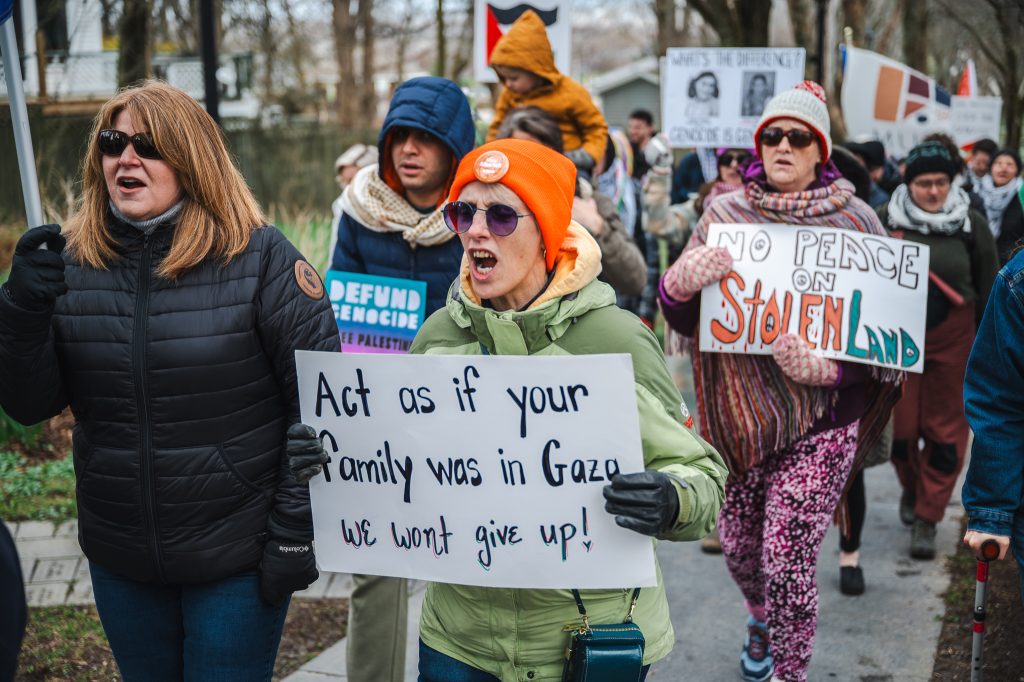
And now, the ongoing and most recent events in Palestine. Humans cling once again to their religion, their country of origin, and demand that you pick “a side.” Dox you, threaten you if you chose wrong, in their eyes.
Surely if we were taught—or if morality was inherent to the ever-evolved cortex—that murder is wrong, that genocide is wrong, why is anything about this up for debate? It’s not logical, it’s not rational. It’s pure emotion: fear, hate, insecurity.
It’s our primitive brain in full force. And the cerebrum on fire, trying to quell an ever-lasting chemical dump into every crevice of tissues, the sulci, the grey matter, white matter, despite trying to balance out the entourage of all of these neurons firing against each other.
Are we as humans destined to repeat history, to relive the same events ad nauseam? Or will our brain alone, limited in its inhibitory capacity, drive us to continue atrocities? In a world where the James Webb Space Telescope hovers above us, pushing us into unexplored regions of the universe, fueled by the power of our collective intellect, blood continues to spill on Earth below it.
So are we to blame the brain and its failings and call it a day? Or can we remind each other that killing is wrong, the military is wrong, genocide is wrong?
We have the ability to override the primitive brain. We can tap into our logic. We can change our minds. And we should.
There never has been and never will be a time, place, or circumstance where killing is acceptable in any form. That’s not a side. That’s my rational cerebrum, my dorsolateral prefrontal cortex, cutting through the noise and focusing singularly on what I know, what I’ve learned, what it is to be human.
And not let my brain lose my mind.

Author

Related Articles
Throwing shade on solar myths
‘Someday the sun will shine and have-not will be no more,’ Brian Peckford famously said. Solar ‘someday’ can’t come soon enough, writes Angela Antle
No energy justice with Bay du Nord
Newfoundland and Labrador’s Bay du Nord ambitions are out of step with the dire need to phase out global oil production and the province’s benefits agreement with Equinor underscores the need for a new approach to fossil fuels

A housing corporation without a housing mandate
The Liberals and PCs have no right to point fingers at each other in response to the auditor general’s scathing report on social housing