

“It hurts me to talk about it,” says Brad Genge, a 51-year-old inshore fisherman from Anchor Point, on the west coast of Newfoundland’s northern peninsula. Genge says what should have been a good news story – the Government of Canada’s historic reopening of the east coast commercial redfish fishery – is hitting fishermen in this province hard.
“Worst news we could have gotten,” says Genge. “Only thing that could have hurt more is if they came down and hit us in the face with a piece of lumber.”
When The Independent first spoke to Genge last August, he estimated that in the last five years, he had invested $250,000 into gearing up for the commercial fishery to reopen. Now, following Fisheries and Oceans Canada’s (DFO’s) January 26 announcement – which will see most Redfish quota allocated to Nova Scotia (33 per cent) and Quebec (32 per cent) with lower shares to Newfoundland and Labrador (19 per cent), New Brunswick (11 per cent) and Prince Edward Island (five per cent) (see Table 1) – The Independent reached Genge this week for his reaction.
“We are done, we are out of the fishery,” says Genge, who tied up his trawler, the BNB Mariner, in early February.
Will you stand with us?
Your support is essential to making journalism like this possible.
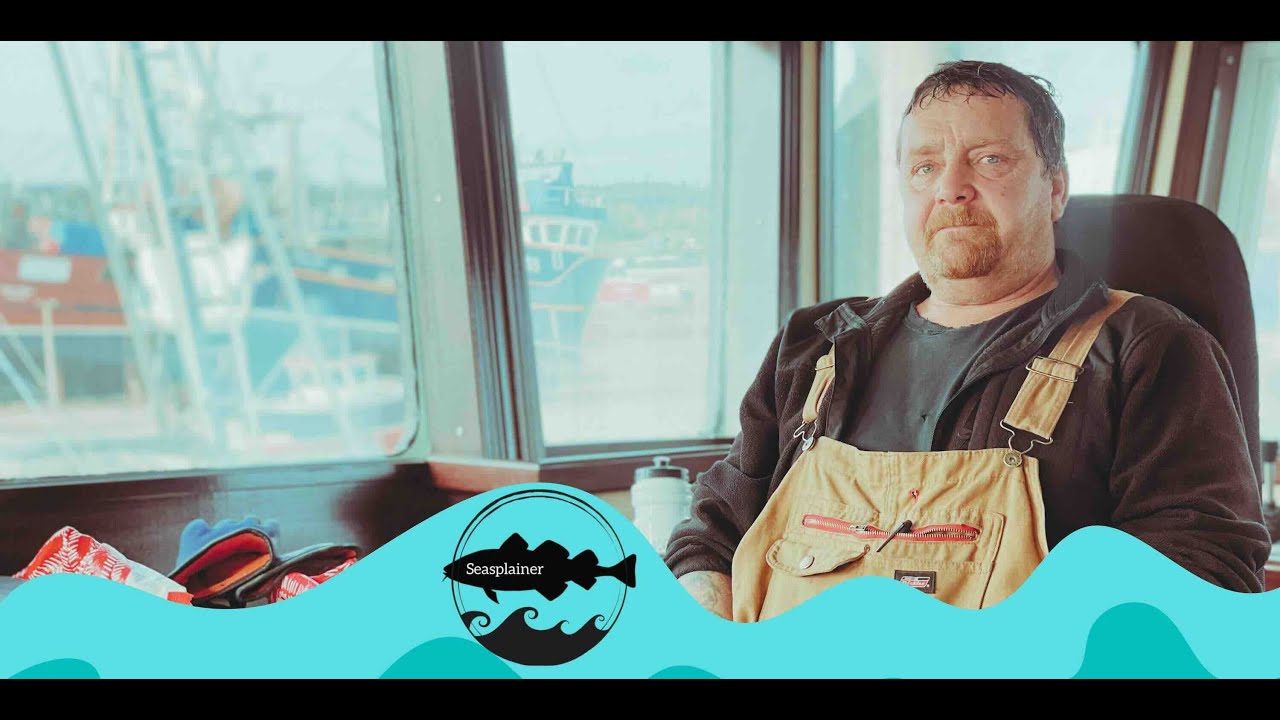
It’s been nearly three decades since Canada operated a commercial redfish fishery. DFO closed that fishery in 1995 to help redfish stocks rebuild after the early-90s collapse from overfishing. With increasing signs of stock growth, DFO opened an experimental redfish fishery in 2018. That gave scientists catch data to further monitor the stock, fishers like Genge a chance to build a redfish enterprise, and processors a chance to create a buyer’s market. Last month, DFO reported that “redfish abundance has reached levels that allow commercial catches to resume.”
“This morning’s announcement is really a historic one, after 30 years of closure, to announce the start of commercial fishing for Redfish,” federal fisheries minister Diane Lebouthillier said at the January 26 announcement in Ottawa.
But Genge says the news – and the quota allocations yet to come – will likely prevent fishers in this province from making a living at the promised fishery.
The commercial redfish fishery operates across the four Atlantic provinces and Quebec in an area of the Gulf of St. Lawrence–the Estuary and the northern gulf–called Unit 1. While the fishery is not managed on a provincial share basis, following the January 26announcement, DFO provided a snapshot of quota allocations by province, which The Independent has outlined below.
In the announcement, Lebouthillier indicated that quotas would follow historical allocations and that Nova Scotia would maintain the greatest share, but it was only when questioned by journalists that DFO shared the provincial breakdowns (Table 1) and fleet breakdowns (Table 2).

Proliferating redfish, plummeting shrimp
On February 2, the provincial government called on the federal government to ensure Newfoundland and Labrador receives its fair share of quota allocations.
“I am disappointed that the provincial share of the quota does not reflect the historic attachment and adjacency of Newfoundland and Labrador to the redfish fishery,” provincial fisheries minister Elvis Loveless said. “I call upon the federal minister for an increase in the redfish quota for shrimp harvesters and consideration of a licence buyback program for impacted harvesters.”
Fishers in the gulf have commonly relied on what many refer to as the “Holy Trinity of fisheries” – Northern shrimp, Atlantic snow crab and Atlantic lobster. But with declining shrimp, and low prices for crab, many fishers were counting on redfish to help fill in the gap.
“This was our only chance to make a living. With no buyouts, with all the reductions in shrimp, there’s nothing left. I’m sitting here waiting for the bank to come take her,” says Genge, referring to his trawler.
In recent years, the redfish population has grown considerably, but the average size per fish is running smaller. While redfish has proliferated, the population of a more valuable fishery – Northern shrimp – has plummeted.

“We did an assessment this week and it stated that the biomass of redfish over 22 cm is just over the two-million limit,” says Caroline Senay, the redfish stock lead in DFO’s Québec region. “So there’s still good news for the redfish, however we don’t have a lot of growth and recruitment in the past years, so we’re expecting that, with or without fishing, the biomass will slowly decrease in the coming years, just due to natural mortality.”
In theory, it’s possible that reopening the commercial redfish fishery could benefit both fisheries, Senay says. But in practice, it’s complicated.
“We know that Northern shrimp is part of the redfish’s diet, so reducing the [redfish] biomass population should help them, but the ecosystem is complex,” Senay explains. “The shrimp are also having a lot of problems because of [warmer ocean] temperature, so we’ll see how the fish react. But it’s not one-year of fishing that will make much difference, unfortunately.”
Due to the decline in Northern shrimp, DFO reduced shrimp quota, including for Shrimp Fishing Area 8, located adjacent to Newfoundland’s west coast, by 58 per cent (from 4,222 metric tonnes [t] in 2023 to 1,757 t for 2024). That’s why the provincial government is asking that Newfoundland and Labrador shrimpers get a greater share in DFO’s quota considerations.
Building the offshore on the backs of the inshore fleet
Genge says the allocations will devastate communities on the island’s gulf coast, especially because the price per pound he’s seeing paid at the wharf is hovering at 30 cents, which means his enterprise would be lucky to make $30,000 a season from redfish.
“Most of us are going bankrupt this year. As I’m talking to you right now I’ve got a knob in my stomach,” says Genge, adding he’s been waiting his entire career for the redfish fishery to reopen.
He is urging the federal fisheries minister to rethink the quota allocation across the provinces, but also between inshore and offshore boat operators.
“There’s no positive at all,” he says. “If they don’t step up and change, we are literally done. And they are still building bigger for the offshore.”
With the poor status of other gulf fisheries, especially Northern shrimp, the reopening of the redfish fishery comes at an especially important time. In its redfish campaign, launched by fisher’s union FFAW-Unifor back in 2021, the union called the redfish fishery one of “the most important economic generators for the west coast of Newfoundland and Labrador for the next several decades – but only if the inshore receives access.”
With DFO’s reopening announcement, the union’s January 26 press release is even more forthright, accusing the federal government of “corporatizing redfish” and “giving up on coastal communities”.
Historically, DFO has allocated a greater share of quota to offshore boat operators than the inshore fleet. With the redfish fishery’s reopening in 2024, that trend continues, with the offshore fleet receiving four times the allocation of the inshore fleet. However, that marks a reduction for the offshore – from nearly 75 per cent share of the redfish quota in the early ‘90s to closer to 60 per cent in 2024 (see Table 2).
Meanwhile, Todd Williams, senior director of resource management for DFO, said 2024 introduces two new allocations: 10 per cent each for estuary and Gulf of St. Lawrence shrimp harvesters (given recent quota cuts), and Indigenous communities (what the Lebouthillier referenced in her announcement as part of DFO’s reconciliation agenda).

Ahead of reopening the commercial redfish fishery, DFO anticipated allocation decisions would present major challenges. In 2023, the department reported that the 24 individuals and groups from Quebec, New Brunswick, Prince Edward Island, Nova Scotia and Newfoundland and Labrador approved to participate–five of which are Indigenous groups–represented “unprecedented interest” in the fishery.
“Participation in the experimental fishing plan does not provide priority access or priority consideration in any future access or allocation decisions related to the Unit 1 redfish fishery,” DFO advised, tempering expectations ahead of the commercial reopening.

Phased reopening
In the January 26 announcement, Lebouthillier announced the total allowable catch in the fishery would start at 25,000 t. While that amount is five times the allocation set in last year’s experimental fishery (5,000 t in 2023-24 – itself an increase from the 2022-23 allocation of 2,500 t), it’s significantly lower than what many expected, given advice from DFO’s Canadian Science Advisory Secretariat had considered a viable total allowable catch as high as 88,000 t to 318,000 t.
But 25,000 tonnes is a “floor,” Lebouthillier said. “We’ll see what the [Redfish Advisory Committee] recommends, and then it could very well be that the committee recommends 40,000 tonnes, 50,000 tonnes, but I’m going to go with the committee’s recommendations, and this committee will include people from the harvesting sector, Indigenous communities and provincial governments.”
In a year when DFO has committed to publishing rebuilding plans for upwards of 10 critically depleted stocks, Oceana Canada, the country’s largest ocean charity, is calling on the federal fisheries minister and DFO to take a cautious approach to the redfish fishery reopening to ensure management efforts lead to sustainable fishing.
“We call on the Canadian government to develop a redfish management plan to prevent the same overfishing that led to its collapse 30 years ago,” Oceana fishery scientist Rebecca Schijns said in a February 2 statement. “It must include rigorous monitoring requirements in line with DFO’s Fishery Monitoring Policy.”
Careful monitoring is essential, the ocean charity says, because there are two species of redfish in the Gulf of St. Lawrence that look identical to the untrained eye: “Deepwater redfish (Sebastes mentella) are healthy and flourishing, while Acadian redfish (Sebastes fasciatus) are in the cautious zone,” they say. To avoid S. fasciatus, scientists have recommended fishing below 300 metres.
Meanwhile, the marine conservation group Oceans North is also calling on DFO to take a “low and slow approach” to the commercial fishery’s reopening.
“There are other potential ecosystem impacts, as well,” Oceans North fisheries director Katie Schleit said on January 26. “An increase in bottom trawling could disturb the sediment and cause an additional release of carbon from seabed areas in what’s already a climate hot spot. Furthermore, little is known about how changes to the ecosystem are impacting redfish, and similarly little is being considered in terms of how removing fish could affect the ecosystem.”
For its part, DFO says its phased reopening is proof that it’s taking a measured approach. The fishery will open in two-phases: first, a two-year transition phase, and second, a development phase (the time frame for which is to be determined). In the transition phase, the fisheries minister says DFO will closely watch participation in the fishery and the management issues that may arrive. She says this will create new jobs and stimulate the economy of coastal communities; it will also help advance reconciliation in fisheries. Plus, the catch information will give scientists more time with the data and provide industry more predictability to develop markets, which is expected to be a major part of phase two.

However, the average size of fish has some questioning the degree to which the redfish fishery will thrive in a fillet market. Redfish has become a replacement bait for mackerel, a fishery which remained closed last year in the gulf. But financial viability for redfish requires building a market for consumer products.
Oceans North calls the economic benefits of this fishery “uncertain,” given “harvesters participating in the smaller experimental fishery are currently getting less than 50 cents per pound of redfish, with most of it being used for lobster bait.”
Lebouthillier has also said the federal government plans to extend the Atlantic Fisheries Fund and Quebec Fisheries Fund to support redfish harvesters in the transition. But the decision is pending discussions between the federal and provincial governments.
As to when the redfish fishery will officially open this year, that decision – along with final quota allocation decisions for each fleet, fisheries management measures and the final total allowable catch – all depends on discussions with DFO’s Redfish Advisory Committee taking place over the next few weeks.

Authors


Related Articles
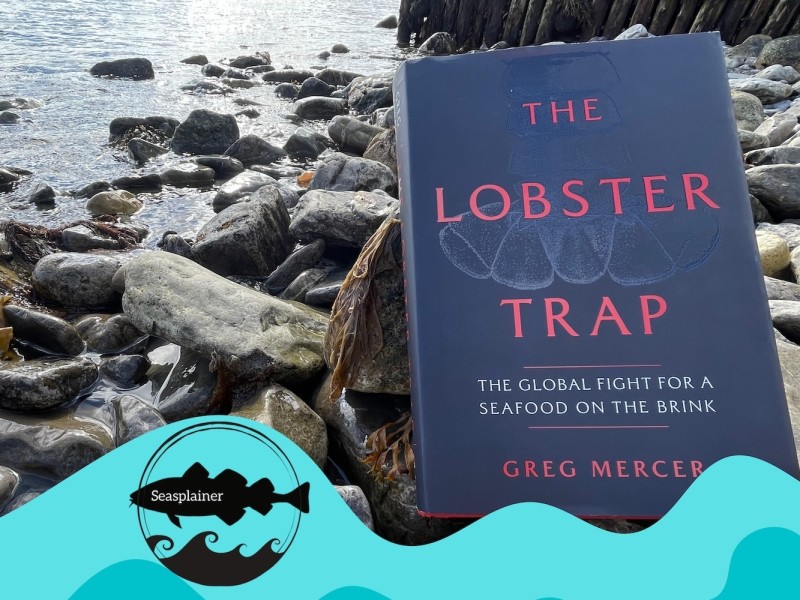
The Lobster Trap: Why Atlantic Canada’s golden fishery may be headed for collapse
Greg Mercer’s book exposes how million-dollar debts, climate change, and market forces are pushing harvesters—and lobster—toward the breaking point
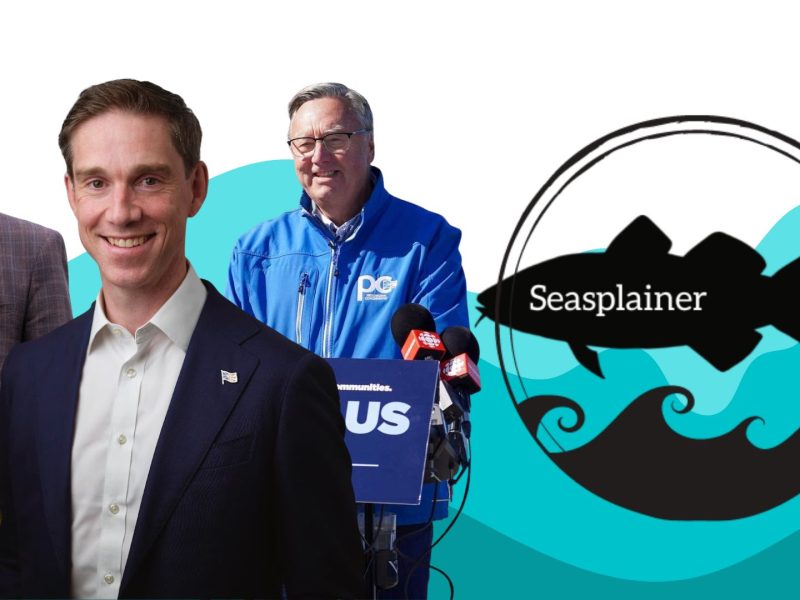
N.L. parties agree we need more say on fisheries — but what about climate change?
What three party leaders said about provincial fisheries and ocean priorities—and what they didn’t say
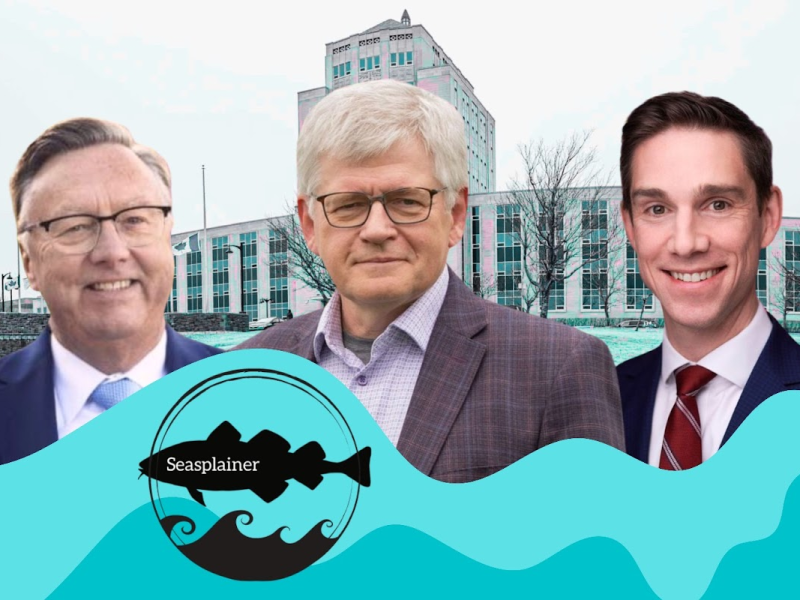
Where N.L. parties stand on fisheries and ocean priorities
Ahead of the provincial election, all parties agree the province needs a stronger voice with Ottawa, but they diverge on priority areas