

On Wednesday the Liberal government announced “the historic return of the commercial Northern cod fishery.”
“Ending the Northern cod moratorium is a historic milestone for Newfoundlanders and Labradorians,” said Minister of Fisheries, Oceans, and the Canadian Coast Guard Diane Lebouthillier in the announcement.
While lifting the Department of Fisheries and Oceans Canada’s (DFO) 32-year-long moratorium on commercial cod fishing may be considered “historic,” the reopening decision is in stark contrast to DFO’s own science advice, which puts Atlantic cod in Canadian waters at historically low levels and cautions that any fishing could send cod right back into the critical zone.

Will you stand with us?
Your support is essential to making journalism like this possible.
The news also means DFO is now renagging on its commitment to update its Northern cod rebuilding plan – one of the first to be released under 2019 Fisheries Act revisions meant to strengthen critically-depleted commercial fisheries — to ensure the plan’s rebuilding targets and timelines were in line with the legal requirements under the Fisheries Act.
“DFO is rolling the dice on this important fishery,” says long-time cod scientist George Rose of the decision. Rose spent 40 years studying Atlantic cod, including eight years at DFO.
“Let’s not celebrate too soon,” says fisher Jasmine Paul, whose Placentia Bay family has fished Atlantic cod since the 1990s.
“We have to be very careful we don’t let it all happen again,” Paul adds, referring to the collapse of cod and the 1992 moratorium.
As Seasplainer reported last fall, none of the eight Atlantic cod populations in the Northwest Atlantic ocean are considered healthy. And yet, most of these populations continue to be fished, with a 2022 landed value of $24 million, according to the Government of NL’s Seafood Industry Year in Review.
Add to that, this isn’t the first time DFO has operated a commercial cod fishery since the federal department shuttered cod fishing in 1992. Since 2006, DFO has allowed a small inshore commercial cod fishery (called the “stewardship fishery”) along with a recreational (or food) fishery and an Indigenous FSC (Food, Social and Ceremonial) fishery.
Citing this year’s reopening as a “return of the commercial Northern cod fishery” also ignores that the allocated quota — like the Northern cod population itself — is a fraction of its one-time abundance. The total allowable catch (TAC) set in 1992 was 185,000 metric tonnes, 10 times more than this year’s commercial cod fishery quota set at 18,000 metric tonnes. This year’s TAC doesn’t include recreational or FSC fishery shares.
History speaks for itself with regards to how the 1992 TAC played out. On July 2, 1992, with cod having suffered a devastating collapse from decades of overfishing, DFO closed the commercial cod fishery. That decision, meant to last two years, continued on for 30 years longer than planned.
Until today. At least, for one population of Atlantic cod.

Northern cod is a population of the Atlantic cod species that inhabits the waters between the tip of the Grand Banks, in eastern Newfoundland, all the way north to Hopedale, Labrador. In fisheries terms, that’s area 2J3KL. This week’s announcement to reopen the 2J3KL commercial cod fishery follows news last fall that Northern cod likely moved out of the “critical zone” into the “cautious zone.”
The federal fisheries department categorises commercial fish populations (called “stocks”) into one of four zones: healthy, cautious, critical, or uncertain. That categorization is based on DFO’s “precautionary approach,” a policy which calls for greater caution whenever scientific knowledge is uncertain.
As Seasplainer reported last fall, the news of Northern cod’s change in “stock” status came after DFO scientists adjusted their scientific assessment model, taking into consideration new data on cod’s primary prey, capelin, more information about juvenile cod, and a longer period of population data — adding three decades of data, expanding the period from 1954 to 2021.
“It is not a change in the stock, which hasn’t grown significantly since 2015-16, just a change in the goalposts by which the stock is judged,” says Rose.
The latest scientific stock assessment of Northern cod, released in March 2024, reaffirmed that the fish population had moved from the critical to the cautious zone. But that news came with strong cautionary advice against ramping up fishing.
“The Northern cod stock has not shown growth since 2016 and, even with no fishing, the risk of decline over the next three years is moderately high,” reads the March 2024 assessment, prepared by Canadian Science Advisory Secretariat (CSAS), the national body that oversees the scientific peer review and provision of science advice to inform DFO management decisions.
The stock assessment further notes that “increased fishing removals increases the risk of the stock declining back into the Critical Zone,” and that “the probability of the stock declining into the Critical Zone increases from 42% with zero removals to 52% if removals are doubled from current levels.”
With no recent signs of growth, and the latest science on capelin, cod’s primary prey, is also in the cautious zone (yet still fished), Rose says DFO’s fisheries management decision this week sends a strong signal.
“DFO has thrown in the towel,” he says. “We never seem to learn much.”
“While there was a lot of good scientific advances made this year to apply an ecosystem approach linking cod and capelin health, the management decisions for both of these fisheries ignores this intrinsic link, and frames success as crawling above the threshold of disaster,” says Rebecca Schijns, a fishery scientist with ocean charity Oceana Canada.
As capelin has followed a similar historical trajectory as Atlantic cod, understanding the dynamics of the two species offers a more realistic understanding of both stocks. Managing the species with that understanding would also mark a historic move away from ‘single-species’ fisheries management to an ‘ecosystem approach’ in which fish populations are considered not independently but as interacting with other species in their environment.
“To promote sustainable fishing practices, capelin and cod stocks should be managed together, as their health and recovery are intrinsically linked. By continuing to focus on single-species management, the minister missed the opportunity to factor in the ecosystem and climate change, which offers the best chance to rebuild these and other fisheries to healthy levels,” says Katie Schleit, fisheries director with the marine research conservation group Oceans North.
Earlier this month, Oceana Canada called for a pause and Oceans North called for a 50 per cent reduction on the commercial capelin fishery, given its depleted status. Capelin in 2J3KL are also considered to have a high climate risk, according to a new research paper released this week by Daniel Boyce and colleagues. While DFO’s latest modeling considers capelin dynamics, it doesn’t factor in cod predation, like seals, or ocean conditions such as warming waters due to climate change — though these factors are on the table for future revisions to the modeling, DFO’s Paul Regular told Seasplainer last fall.
“We also spent quite a bit of time trying to quantify the impacts of seals on the cod population. We know they eat cod, but we don’t know the precise numbers they’re removing,” Regular said in last fall’s interview with The Independent.
Of this week’s reopening announcement, Schijns — whose modeling research has examined 500 years of Northern cod catch data — calls DFO’s decision “premature and short-sighted,” adding it “actively ignores the science and intent of the Fisheries Act, and will likely not contribute to a fishery with longevity or growth.”
“It’s not a happy day and it’s made worse by happy politicians,” says Rose, referring to the lengthy list of quotes for attribution that appeared in DFO’s announcement.
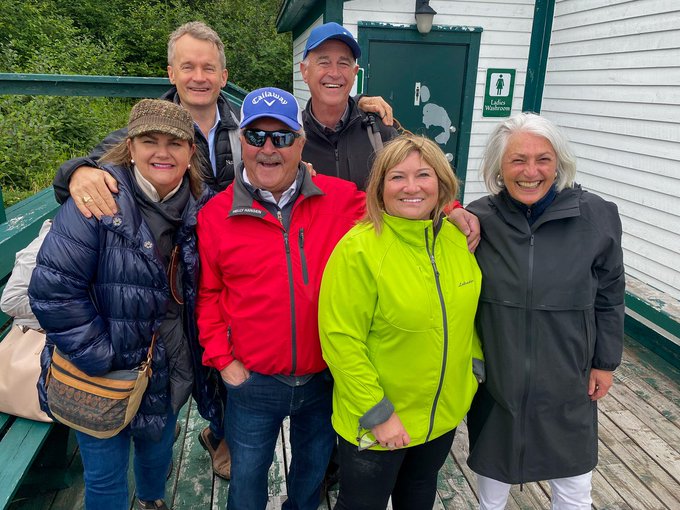
In addition to the federal fisheries minister, all six Liberal members of parliament in Newfoundland and Labrador noted the historic significance of the fishery’s reopening.
“Northern Cod has a bright future in Newfoundland and Labrador. Our fishers have waited a long time for the return of a commercial cod fishery, and they are ready to meet the moment. Our processors are ready to deliver our province’s best product to markets at home, and abroad. Cod has been a part of our history, and it will be a part of our future,” said Long Range Mountains MP Gudie Hutchings, who also serves as Minister of Rural Economic Development.
“The shutdown of the Northern Cod fishery more than 30 years ago changed our province. Its return is historic. We now have the chance to build a sustainable cod fishery that reflects the modern industry it has — and can — become,” said Minister of Labour and Seniors Seamus O’Regan, MP for St. John’s South — Mount Pearl.
“Historically, the Northern Cod Fishery has been one of the most important industries in the province, it has defined our heritage and our culture for generations. As MP for Avalon, I fully support a lucrative and sustainable fishery,” said Ken McDonald.
The lone Conservative member of parliament in Newfoundland and Labrador, Clifford Small, who is also the Conservatives’ fisheries shadow minister, called Wednesday’s announcement “a complete Liberal screw up!”
In a statement released Wednesday evening, Small called the announcement’s details “disgusting for the vast majority of fishermen in this province.” He criticised the Liberals’ decision to change the fishery’s classification from ‘stewardship’ to ‘commercial’ because re-opening the commercial fishery will open a share of the total allowable catch to international vessels. Small also said fishers were expecting a greater TAC.
But all of the sentiments from politicians run in sharp contrast to what those who have long-studied the cod fishery collapse contend.
“I am saddened by the misuse of language and the cynical attempt to gain political advantage from a lived reality that is only getting worse for all of us,” says Dean Bavington, a geography professor at Memorial University and author of the book Managed Annihilation: An Unnatural History of the Newfoundland Cod Collapse. “The cod collapse is a story with many lessons, but our leaders never seem to learn.”
The news also means DFO is walking back its commitment to update its Northern cod rebuilding plan. The plan — one of the first to be released under 2019 Fisheries Act revisions meant to strengthen critically-depleted commercial fisheries — was highly criticised upon its release in December 2020 for failing to include rebuilding targets and timelines.
Rose was among the independent scientists who led that critique, calling the plan “flawed”. He said it was more of a fishing plan than a rebuilding plan, so “sufficiently riddled with weaknesses from a science and policy perspective that it is unclear whether it will help or hinder the recovery of Northern cod.”

DFO had been scheduled to produce an updated Northern cod rebuilding plan by April 2024 that corrected the plan’s failings to put it in line with the legal requirements under the Fisheries Act.
“DFO is off the hook officially for the rebuilding plan since the stock has more than a 50% chance of being in the cautious zone,” says Schleit. “However, DFO still needs some sort of plan to rebuild Northern cod out of the cautious zone and into the healthy zone of the Precautionary Approach framework.”
Schleit is also critical of DFO’s agenda to extend commercial cod fishing to offshore vessels, with 6 per cent going to Canada’s offshore and 5 per cent going to intergovernmental fisheries science and management body, the Northwest Atlantic Fisheries Organization (NAFO).
“This fishery will now be open to offshore vessels in Canada and European vessels through NAFO,” Schleit says, adding “there are a lot more players in this fishery now.”
The details of DFO’s allocation for the 2024 commercial Northern cod fishery TAC are available on its website (and noted in Table 1). However, that allocation only references the Canadian offshore share (6 per cent), while the NAFO offshore share (5 per cent) is separately noted in the government’s press release, bringing the offshore allocation total to 11 per cent.
“The Northwest Atlantic Fisheries Organization (NAFO) previously established a measure to allocate five per cent of the overall TAC to other NAFO contracting parties when Canada re-opens its commercial Northern cod fishery. The Canadian TAC of 18,000t is considered 95 per cent of the overall TAC,” reads the Canadian government’s press release.
“The inshore fleet sector will receive approximately 84 per cent of the TAC, with 20 per cent of this inshore sector allocation provided to 2J-based harvesters and six per cent of the TAC is allocated to the Canadian offshore fleet,” the federal government’s announcement reads.
Table 1. 2024 2J3KL Northern cod fishery Total Allowable Catch by fleet/group and percentage (%) and quota (tonnes) share
| Fleet | Per cent share (%) | Quota (t) |
| Inshore (<65′)DFO notes that “the 6.66 per cent share of the TAC is from the inshore sector allocation of 15,071.4 t, 20 per cent (3,014.28 t) is provided for 2J-based inshore harvesters” | 83.73 | 15,071.4 |
| Indigenous AllocationDFO notes this allocation is “distributed equally between the Nunatsiavut Government and the Innu Nation. A special allocation of 3.33 per cent is provided to the NunatuKavut Community Council (NCC)” | 6.66 | 1,198.8 |
| Special Allocation – NunatuKavut Community Council | 3.33 | 599.4 |
| Midshore (65-100′) Fixed-Gear | 0.23 | 41.4 |
| Midshore (65-100′) Mobile-Gear | 0.05 | 9.0 |
| Offshore (>100′)The Government of Canada’s announcement notes: “The Northwest Atlantic Fisheries Organization (NAFO) previously established a measure to allocate five per cent of the overall TAC to other NAFO contracting parties when Canada re-opens its commercial Northern cod fishery. The Canadian TAC of 18,000t is considered 95 per cent of the overall TAC.” | 6.00 | 1,080.0 |
Total | 100 | 18,000.0 |
The same reopening announcement contends that the inshore fleet will receive the majority share of the total allowable catch.
But the offshore allocation is a point of contention for the province’s fishermen’s union. The Fish Food and Allied Workers Union (FFAW-Unifor) condemned what it calls “another blow in a long string of Liberal Government failures to protect coastal communities while they prop up their corporate buddies,” the union’s announcement reads.
Evidence of that failure, says the union, is the federal government’s decision to abandon its own decades-long commitment promising the first 115,000 tonnes of commercial Northern cod allocation to inshore groups.
“When a total allowable catch for northern cod is established, the first 115,000 tonnes of directed Canadian access will be allocated to the inshore sector and Indigenous groups in Newfoundland and Labrador,” reads DFO’s 2021 Integrated Fisheries Management Plan.
“We will cautiously but optimistically build back this fishery with the prime beneficiaries being coastal and Indigenous communities throughout Newfoundland and Labrador,” Lebouthillier reiterated in Wednesday’s announcement.
“The Department will consult with industry in the coming days to determine season dates and other management measures for the Northern cod fishery as part of a Conservation Harvesting Plan,” a DFO spokesperson told The Independent.
The announcement also reiterated the reopening of this year’s recreational or food fishery, and noting that the department would mandate a tagging regime beginning in 2025, with consultations to tour boat operators in fall 2024 as a step toward meeting this requirement.
DFO’s historic decision this week may wind up going down in history as yet another failed attempt to bring cod — and the communities who depend on it — back from the brink. A decision to reopen a fishery teetering on the edge in the cautious zone after more than 30 years in the critical zone could be considered akin to spending money you don’t have, right on the heels of three decades of bankruptcy.
“A more sensible plan would be to keep the moratorium in place and perhaps increase the Canadian quota a bit, but not much, until there is firm evidence of stock growth,” says Rose.

Authors


Related Articles
The Lobster Trap: Why Atlantic Canada’s golden fishery may be headed for collapse
Greg Mercer’s book exposes how million-dollar debts, climate change, and market forces are pushing harvesters—and lobster—toward the breaking point
N.L. parties agree we need more say on fisheries — but what about climate change?
What three party leaders said about provincial fisheries and ocean priorities—and what they didn’t say

Where N.L. parties stand on fisheries and ocean priorities
Ahead of the provincial election, all parties agree the province needs a stronger voice with Ottawa, but they diverge on priority areas