
How can Fisheries Support Biodiversity Recovery?
A “one with nature” approach is needed to protect fish, fisheries, and fishing communities.

Newfoundlanders and Labradorians know full well that those who live next to a resource stand to lose the most when that resource is depleted. Two words summarize that lesson: cod moratorium. Pre-moratorium, bottom trawlers – fishing vessels equipped with wide-mouthed trawls, or nets, hauled along the ocean floor – made up nearly all offshore cod landings. The trawlers – many foreign-owned and -operated, and among the largest of their kind – descended on the Grand Banks, once home to the most productive fisheries in the world. Unquestionably, trawler overfishing predicated the cod collapse, with one estimate (by Hutchings and Myers, 1995) suggesting more cod had been fished in a fifteen-year period (1960-1975) than had been fished in a 250-year period (1500-1750). Fishing communities felt the brunt of that overfishing – the cod collapse jeopardized a 500-year-long human-cod relationship in the Northwest Atlantic Ocean.
But it’s in that human-cod relationship that we find a different story: how generations of people, mostly Indigenous communities, lived for a half-millennium in harmony with their natural surroundings, including fish. Premised on the idea that home is where the harvest is, people lived and worked in nature, with nature, indeed, as a part of nature.
“Small-scale fisheries in most countries are more a way of life than an economic activity. By understanding that, only then can we see that we need small-scale fisheries for conservation,” says Vivienne Solis Rivera, a biologist from Central America specializing in marine conservation and human rights.
The predominant thinking about how to protect nature – to limit people’s access to it – ignores the fundamental interdependence between coastal communities and sustainable fisheries, says Rivera, echoing a key message of small-scale fishers who gathered this month in Montreal. The fishers raised their concerns to governments who gathered for the Fifteenth meeting of the Conference of the Parties to the Convention on Biological Diversity (COP15). Many have applauded the outcome of COP15, where 196 countries adopted a historic agreement to halt and reverse biodiversity loss by 2030. It is what many tout as a global goal equivalent to climate’s pathway to 1.5C. However, others contend that the decision-making process side-stepped the critical perspectives from smaller communities.
Will you stand with us?
Your support is essential to making journalism like this possible.
“The concern is that the voices of small-scale fishers are not being heard and are missing,” says Jim McIsaac, Pacific region vice-president for the Canadian Independent Fish Harvesters’ Federation. McIssac convened fishers in a side-event at COP15.
“If we’re going to protect biodiversity and the sustainability of the planet, then we need to be working better with the resources that we have. Governments doing this in a vacuum and coming out with terms without having been thoroughly in touch or in tune with folks on the ground or on the water is not productive here,” says McIsaac.
Small-scale fishers are instrumental in helping recognize and reverse the loss of biodiversity in the world’s oceans and waterways, says McIsaac. To that end, fishers want to see the “Post-2020 Global Biodiversity Framework” – which is the main document (available here along with all COP15 documents) of these global proceedings and often considered the Paris Agreement for nature – clearly reflect that people are a part of nature, rather than apart from it.
“Biodiversity refers to the variety of life on earth, and this variety maintains the balance of ecosystems. It enables our oceans to carry out biological processes such as removing carbon dioxide from our atmosphere and ensuring marine life remains resilient to environmental change.
Biodiversity is under threat from a multitude of impacts, such as climate change, pollution, the spread of disease, coastal development, oil spills and invasive species. Overfishing and bycatch are two of the leading drivers of biodiversity loss in our oceans.”
-Marine Stewardship Council, a non-profit organization that aims to set standards for sustainable fishing.
Click here for key terms as defined by the Convention on Biological Diversity.
Biodiversity under threat: Is the world poised to reverse the damage?
“Given that the framework’s interest is biodiversity conservation, and that most biodiversity is currently found outside of protected areas, people–nature interactions that emphasize conservation and sustainable use in tandem should be more central,” argue Kim Friedman and his colleagues in a perspective paper, published in September, in People and Nature.
More than three-quarters (between 76 to 96 per cent) of the planet’s nature is found in spaces where people live and work, says Friedman, a Senior Fishery Resources Officer with the Fisheries and Aquaculture Division of the Food and Agriculture Organization of the United Nations (FAO). That’s important context as global leaders work toward ‘‘30 by 30”— to protect 30 per cent of earth’s land and water (freshwater and oceans) and reverse biodiversity loss by 2030, toward the broader goal of living in harmony with nature by 2050.
The urgency for action is clear. Worldwide, one million plants and animals face the threat of extinction, and if the rate of these losses continues, it will be the regions whose economies rely on nature’s goods and services that lose the most. In Canada, one in five assessed native species face some degree of threat to their existence according to a finding from the Wild Species 2020 report, released at the end of November. The report also finds there are 500 more species at risk in Canada today than five years ago.
Meanwhile, as parties to the convention – including nearly all countries in the world – reached the final stages of negotiating the framework’s pathways, goals, and targets, a history of failed attempts over the past two decades loomed large. Thirty years ago, in 1992, countries signed on to the Convention on Biological Diversity, which is the major international treaty for nature, to stem the ever-growing tide of biodiversity loss.
“But all attempts have met with failure. Since 2020, the convention has been trying to negotiate a new Global Biodiversity Framework, enmeshing goals and targets that try to learn from previous failures,” writes the authors of the People and Nature paper in a plain-language summary. Now, after five international meetings of specialists and negotiators, and at the end of COP15, countries have reached that historic agreement on the framework. In the Kunming-Montreal Agreement, reached on 19 December 2022, 196 countries under the UN Convention on Biological Diversity have formally committed to halt and reverse biodiversity loss by 2030 through the new Global Biodiversity Framework.
The agreement is a welcome one following other global failures, such as the attempt to reach the 10-year Aichi Biodiversity Targets. Established in 2010, it included targets for marine and coastal biodiversity:
AICHI-TARGET-06: “By 2020 all fish and invertebrate stocks and aquatic plants are managed and harvested sustainably, legally and applying ecosystem based approaches, so that overfishing is avoided, recovery plans and measures are in place for all depleted species, fisheries have no significant adverse impacts on threatened species and vulnerable ecosystems and the impacts of fisheries on stocks, species and ecosystems are within safe ecological limits.”
AICHI-TARGET-11: “By 2020, at least 17 per cent of terrestrial and inland water, and 10 per cent of coastal and marine areas, especially areas of particular importance for biodiversity and ecosystem services, are conserved through effectively and equitably managed, ecologically representative and well connected systems of protected areas and other effective area-based conservation measures, and integrated into the wider landscapes and seascapes.”
Fisheries in the Post-2020 Global Biodiversity Framework: Where and how do they fit?
“What you really want to do is get together targets, which serve the first need of biodiversity conservation, but also speak directly to a fisherman’s view of the world,” says Friedman. “That was done very well in those 10-year targets in that they decided on very clear language and they had buy-in from the fishery, fishing community, and the fishing community of practice, but they also coincided with general society’s expectations of what they would want to see from fisheries. So you had a win-win.”
‘Unfortunately,” adds Friedman, “those clear targets don’t look to be something we’ll get from the next framework. It means that whatever comes out of this framework will have to be translated into the language for fisheries.”
To help, Friedman and colleagues have offered six key paths for strengthening the Global Biodiversity Framework. It starts with a rethinking of the human relationship to nature, and includes emphasizing the crucial role of Indigenous peoples and local communities in affecting positive biodiversity change.
Friedman et al.’s six key foci that might strengthen delivery of the post-2020 Global Biodiversity Framework are as follows:
- A reframing of the narrative of people’s relationship with the rest of nature, and an emphasis on the crucial role of Indigenous Peoples and local Communities in delivering positive biodiversity change;
- Moving beyond a focus on species and places by prioritizing ecosystem function and resilience;
- Supporting a diversity of top-down and bottom-up governance processes;
- Embracing new technologies to make and measure progress;
- Linking business more effectively with biodiversity; and
- Leveraging the power of international agencies and programs.
A deepened focus on ecological considerations and ecosystem-based approaches in fisheries (the second foci) strongly supports biodiversity considerations in fisheries. Fisheries are well-positioned to reduce biodiversity loss by promoting sustainable fisheries, stopping overfishing, and reducing the collateral impacts of fishing on biodiversity (such as reducing bycatch).
While some conservationists suggest another approach to halting marine biodiversity loss is to stop seafood consumption altogether, there’s a general understanding that such a move is unrealistic: “Over 60 million people rely on fishing for their livelihoods and at least 3.3 billion people receive at least 20% of their daily animal protein intake from fish and seafood. Simply banning fishing would not only be unrealistic for many but potentially move the demand for protein to land-based systems. Such a move would likely threaten more vulnerable terrestrial wildlife populations,” argues the Marine Stewardship Council, a non-profit organization which aims to set global standards for sustainable fishing and, in 2022, published its revised Fisheries Standard.
People a part of (not apart from) nature
Nature reserves and protected marine areas are an important part of reaching 30 by 30. Fisheries and Oceans Canada announced new support for ocean restoration, conservation, and research across Canada, backed up by $227.5 million in funding. That’s an important step in Canada’s commitment to conserve its marine waters – from less than one per cent protection in 2015, to over 14 per cent today. And yet, while protected areas are important, non-spatial protections are critical in protecting biodiversity too. Many examples worldwide show it’s possible to preserve nature by living with nature. Those who live next to a resource – in this case wild fisheries – are often motivated to safeguard that resource, says Rashid Sumaila, a Canada Research Chair in Interdisciplinary Ocean and Fisheries Economics at the University of British Columbia.
“Most people just want to front-load their benefits and backload their costs. A lot of our problems in fisheries are exactly that — those who run off with the benefits and leave the cost for others. But if you’re a small coastal community, you have your little boat, and you go there to feed your family and sell to the local market so you can buy a pen and pencil for your daughter or son – that’s a different kind of mentality. We’re not doing this just for us but the next generation. It changes your perspective altogether,” says Sumaila.
Meanwhile, some small-scale fishers worry that simply increasing the number of protected areas by 30 per cent by 2030 will detrimentally impact their livelihoods and their communities. Conservation measures ought not exclude and displace fishing peoples and communities, says Rivera, because doing so also has consequences for food security and human rights.
At the small-scale fisheries gathering, fishers shared excruciating personal accounts of their lives and livelihoods endangered in conservation areas, where traditional fishing practices are deemed a criminal activity. Several women fishers also spoke of the need for their efforts and voices to be considered, but say their work often goes unseen and undervalued, illustrating a need for greater consideration of gender equity in fisheries too.
There are ways to fish sustainably, says Rivera and small-scale fisheries offer examples of this. In the case of Indigenous-led fishing practices, this has been the case for thousands of years. That’s why, in 2019, Indigenous peoples and local communities called for 100 per cent sustainable use of their lands and territories. That viewpoint is supported by FAO and is a headline commitment of the High Level Panel for a Sustainable Ocean Economy (Ocean Panel), says Friedman.
“The increase in protected areas is important, but more important, perhaps than the area is, where those sites are and how they are managed… there’s big opportunities for looking at areas that are managed, for instance, by Indigenous peoples and local communities,” says David Cooper, Deputy Executive Secretary for the Convention on Biological Diversity.
“Climate change is one of the big drivers of biodiversity loss and it is projected to become the biggest later this century… if we don’t have successful outcomes in the climate process then we cannot halt and reverse biodiversity loss… We depend on the success of the climate conference, but they also depend on the success of the biodiversity conference.”
-David Cooper, Deputy Executive Secretary, Convention on Biological Diversity.
In Canada, the federal government announced $800 million in new funding for Indigenous-led conservation initiatives that support Indigenous rights and responsibilities in protecting and conserving ecosystems. This would allow Canada to uphold a commitment to conserve 25 per cent of land and waters by 2025 and the COP15 pledge of 30 per cent of each by 2030. The funding commitment follows similar commitments in Newfoundland and Labrador, with a Government of Canada and Miawpukek First Nation announcement to support a new Indigenous protected and conserved area; and work underway in the Torngat region toward a national marine conservation area that brings together the Nunatsiavut government in northern Labrador with the Government of Canada.
Still, safeguards are needed, says the convention’s Executive Secretary, Elizabeth Maruma Mrema, “particularly to ensure the rights of Indigenous peoples and local communities, who are the custodians of and stewards of biodiversity conservation. How their rights will be protected, their land rights, their culture, their traditional knowledge, their livelihoods – all these will need to be part of the package of the 30 by 30.”
Fishing sustainably is key – but high seas not part of the convention’s remit
When fishing is sustainable it means that what is carried out today preserves what is carried out in the future, whether ocean or freshwater fishing. Fishing more than what a fish population can reproduce is overfishing. Maintaining fish populations (or stocks) at healthy levels, requires putting a stop to overfishing, and reducing bycatch. While countries are responsible for managing their own coastal waters, fishing sustainably in the high seas requires cross-country cooperation. That collaboration is crucial given the majority of water on earth consists of the high seas.
But the Convention on Biological Diversity does not extend to these international waters. Instead, there’s a distinct international treaty on the conservation and sustainable use of marine biological diversity of areas beyond national jurisdiction, those being the high seas.
At COP15, small-scale fishers expressed their worry about high-seas fishing and trawlers, arguing the trawlers (or fish factories) are designed to catch enormous amounts of fish at once, posing a great threat to marine biodiversity. Meanwhile, small-scale fishers account for 40 per cent of global fish catch and have a much lower environmental impact than industrial fishing. Since seafood is a key source of protein for the planet – and with the world’s population set to reach 10 billion by 2050 – finding sustainable ways to produce food is crucial.
“While the remit of the convention does not extend to the high seas, parallel negotiations designed to remedy that weakness and develop an international legally binding instrument on marine biodiversity in areas beyond national jurisdiction are also in limbo: the fifth session was suspended on 28 August 2022, until a date to be decided,” writes Friedman and colleagues. That date has now been set for 20 February to 3 March 2023. (See also, “The High Seas: The Last Frontier for Ocean Finance”)
Granted, the Intergovernmental conference on Marine Biological Diversity of areas Beyond National Jurisdiction will not hold responsibility for regulating fishing on the high seas. That’s the role of the United Nations Convention on the Law of the Sea, adopted in 1982 to establish law and order in the world’s oceans and seas establishing rules governing all uses of the oceans and their resources, while Regional Fisheries Management Organizations (RFMOs)–which cover the majority of the world’s seas–regulate regional fishing activities in the high seas.
Meanwhile, the need for action toward sustainable fisheries is clear. The 2022 Report on the State of the World Fisheries and Aquaculture notes a decline to 64.6 per cent of fish stocks fished within biologically sustainable levels in 2019 – down 1.2 per cent than in 2017. However, 82.5 per cent of 2019 landings came from biologically sustainable stocks – a 3.8 per cent improvement over 2017.
Here in Canada, fish are growing as a proportion of all species at risk by about 5 percent over the last decade. Less than half of all fish species or populations assessed as at risk end up listed under the Species at Risk Act. This fall, Fisheries and Oceans Canada opened a public consultation (ending 19 December) to add 62 more fish stocks to the fish stocks provision of the Fisheries Act. This would require the ministry to develop rebuilding plans while also taking necessary measures — from quota cuts to fishing gear restrictions to fishery closures — to restore the health of any added fisheries to sustainable levels. The proof as to whether beleaguered fish stocks in Canada will get the protections required will likely come in the rebuilding plans, but some of the currently released plans have been criticized by independent scientists.
Small-scale fishers are the boots in the water
“Small-scale fishers are the eyes and ears and they’re witnessing the changes happening on the water and on a scale that’s not captured elsewhere,’ says Jim McIsaac, a retired fisherman. Science offers a lens on discrete points in time, says McIsaac, but fishers are the ones observing continuous change in real-time.
In Canada, small-scale fishers are spending 20-million hours a year on the water, says McIsaac, and that kind of time is paramount to fishing sustainably and protecting biodiversity.
“But the direction in Canada is top-down and very prescriptive from the top and not listening at all to what people on the water are seeing,” he says.
The Small-Scale Fisheries Guidelines – produced by FAO in 2015 and the first-ever international instrument dedicated to small-scale fisheries – recognize that healthy ecosystems and their associated biodiversity are the fundamental basis for the livelihoods of marine and inland fishing communities and contribute to their overall well-being. The guidelines offer countries a tool to ensure fisheries are sustainable and needs-driven – ending hunger and eradicating poverty as well as strengthening human rights. To help accelerate action for conservation and sustainable use of marine and coastal biodiversity, the secretariat for the Convention on Biological Diversity has been running, since 2010, the Sustainable Ocean Initiative.
Conclusion
In this, the International Year of Artisanal Fisheries and Aquaculture, those representing fisheries globally argue, “fisheries can actively contribute to the sustainable use and conservation of biodiversity, while tackling food security and supporting climate adaptation and mitigation measures.” To not work with small-scale fishers is a missed opportunity, says McIsaac because you cannot have sustainable fisheries without coastal communities just like you cannot have coastal communities without sustainable fisheries.

Seasplainer is The Independent’s monthly fisheries and oceans explainer series by journalists Jenn Thornhill Verma and Leila Beaudoin. Canada is a country of coastlines – the longest on the planet. The magnitude of that coastline is only overshadowed by the knowledge of those who call these coastlines home. Seasplainer travels to the boots and boats in harbours of the Northwest Atlantic to relay the best-available evidence on fisheries and oceans in Canada. Our explainer series covers a range of topics relevant to fisheries management, marine biodiversity, oceans climate, environment, natural resources and more. Each issue is reviewed by those with on-the-ground, bench or policy strengths and expertise.
This issue was reviewed by: Jim McIsaac, Kim Friedman, Mariano Koen-Alonso, and Rashid Sumaila.

Authors


Related Articles
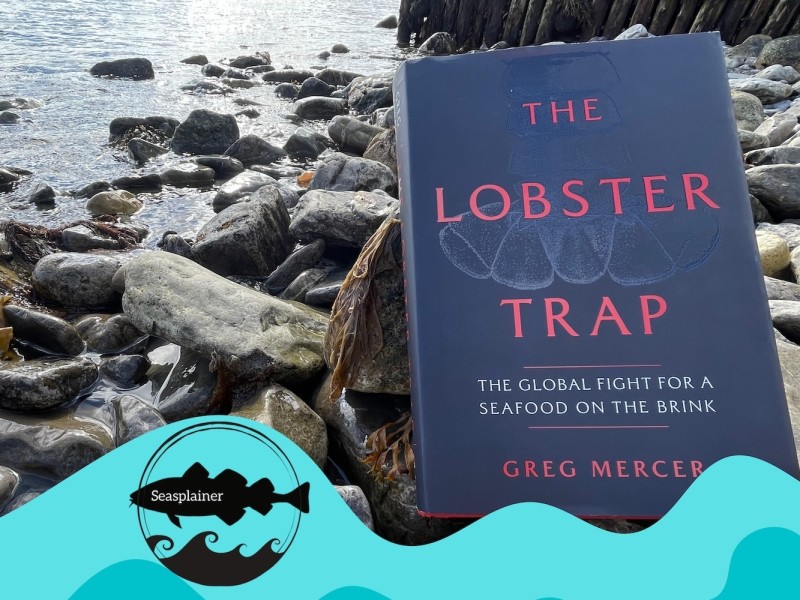
The Lobster Trap: Why Atlantic Canada’s golden fishery may be headed for collapse
Greg Mercer’s book exposes how million-dollar debts, climate change, and market forces are pushing harvesters—and lobster—toward the breaking point
N.L. parties agree we need more say on fisheries — but what about climate change?
What three party leaders said about provincial fisheries and ocean priorities—and what they didn’t say
Where N.L. parties stand on fisheries and ocean priorities
Ahead of the provincial election, all parties agree the province needs a stronger voice with Ottawa, but they diverge on priority areas