
Home is where the harvest is. And for coastal communities across Newfoundland and Labrador, the wild fisheries harvest of the North Atlantic ocean is as essential to local economies as it is to the lifestyles of the people who live here.
Fishing boats in harbours are the lifeblood of an estimated 400 communities across the province, employing nearly 16,000 people, according to the province’s annual seafood report. But climate change is bringing unprecedented challenges to the ocean ecosystems these communities depend on. For fishers, those challenges first appear as changing weather patterns.
“It’s some of the worst weather I’ve seen in my 23-year career and I’ve fished all over,” says Paul Reddy, a fisher in Wareham, on the northeast coast of Newfoundland. Reddy says over the past decade, he’s seen more frequent northerly winds along with “very unsettled weather” that appears to be “trending worse from year to year.”
“It makes for adverse conditions,” says Reddy, adding “boats with big quotas are forced to fish in harder weather.” That means boats with larger quotas can’t afford to wait for good weather if they want to catch their limit.
“Worsening weather systems” are impacting fishing
Will you stand with us?
Your support is essential to making journalism like this possible.
As part of its broader membership consultation to inform the federal government’s Blue Economy Strategy, fisher’s union FFAW-Unifor issued its Blue Economy survey to members in 2020. The unpublished results, shared exclusively with The Independent, show a majority of fishers surveyed reported feeling the brunt of climate change on the water.
“Has climate change impacted your fishing in the past 10 years? If so, how?” the survey asks. In turn, 60 per cent of the 120 respondents replied “yes,” with 40 of them offering specific responses. “Worsening weather systems” was the most common response, followed by “deteriorating harbour infrastructure” (e.g., fishing wharves), and “changes in spawning patterns for some species” (with specific reference to the forage fish, capelin).

Worsening weather patterns are seen in the changing atmospheric pressure, which since 2012 has meant more northwesterly winds and stronger and more frequent storms travelling across the Atlantic Ocean. This data is collected as part of the Newfoundland and Labrador Climate Index by the Department of Fisheries and Oceans Canada (DFO) and describes the environmental conditions of the Northwest Atlantic ocean.
Frédéric Cyr is the DFO research scientist who maintains the NL Climate Index, which became publicly available in 2021. Cyr says last year saw record-breaking ocean surface temperatures.
“Warmer sea surface temperature in Atlantic Canada may imply stronger storms since the latter are fueled by the heat contained in the ocean,” says Cyr.
Meanwhile, Cyr says ocean bottom temperatures—the temperature recorded on the seafloor—was the second warmest ever on record; and 2022 was the ninth warmest year overall.
“The world’s ocean is unquestionably trending warmer and that warming trend is unquestionably a direct result of human-caused global carbon emissions. Ocean warming is also certainly impacting fish populations, though how this warming will translate to Newfoundland and Labrador and how it will impact the fish is not entirely understood,” says Cyr.
“We know that climate change is and will continue to impact fish populations in the Northwest Atlantic,” says Katie Schleit, the fisheries director with the marine research conservation group Oceans North.
According to a 2021 Oceans North report, available climate data points to a number of worrying trends for marine species. Warmer water temperatures are leading to increased deoxygenation, the northward migration of species, and more invasive species. With warmer conditions also comes earlier sea ice melting, impacting the timing of phytoplankton blooms, which in turn slows the spawning time of commercially caught species.
Meanwhile, ocean acidification—the reduced pH of the ocean over an extended period of time, primarily due to carbon dioxide (CO2) absorption from the atmosphere—is impeding growth (a decrease in the overall size of most species), slowing metabolism, and worsening the overall condition of marine species. This is particularly true among shrimp, lobster and phytoplankton. And with depreciated health comes greater vulnerability to disease and death.
“If you’re looking at a worst-case, climate emissions perspective, or if you’re looking at a best-case scenario—in either one of those cases, it’s actually the commercially exploited stocks that are going to fare some of the worst under climate change, in particular, in the Northwest Atlantic,” says Schleit.
That finding is based on two scientific studies, led by fisheries climate scientist Daniel Boyce. A peer-reviewed study published in Nature Climate Change found that if emissions are not reduced, then 87 per cent of the 25,000 marine species studied face critical risks like those described above. A second study (that’s not been peer-reviewed, but conducted by the same researchers) found that under a high-emissions scenario risks to commercially valuable species are three times higher than that for non-harvested species in the Northwest Atlantic ocean, a known global hotspot of climate change impacts.
Canada dropping the ball on climate change and fisheries management: report
Together, climate change and overfishing are depleting many Canadian fish stocks. That’s one of the key findings from the latest Oceana Canada Fishery Audit. Last year marked the sixth year the ocean charity has undertaken its audit and the first time it examined the increasing role of climate change on Canadian commercial fish stocks.
It says DFO is dropping the ball on climate adaptive fisheries management, noting that fewer than one-third of wild fish stocks are considered healthy, nearly one in five stocks are still critically depleted, and the number of healthy stocks has declined since 2017.
“DFO is also failing to take a growing body of climate research into account,” the report says. “Although many studies show how climate change is affecting fish, that science isn’t being reflected in assessments or management plans for fisheries. This is worrisome for species like shrimp and snow crab that are especially vulnerable to ocean acidification, extreme marine heat waves and other climate-related impacts.”
“We know that there’s a wide recognition that climate change is altering fish populations in many different ways, and there’s actually science that shows that fish stocks that are managed with climate change in mind actually fare better than those that don’t,” says DFO climate scientist Daniel Boyce. “So we have clear evidence that if we account for climate change in our fisheries management decisions, we have better outcomes. So there’s a clear motivation for doing this.”
When it comes to climate-smart fisheries management, over 20 years ago DFO recognized that “changes in climate cannot be ignored.” Yet, with more climate data than ever, DFO still doesn’t routinely rely on that existing data to make fisheries management decisions.
So why aren’t climate variables being used to inform fisheries management decision-making?
“It’s a good question,” says Boyce. “It’s a layered problem. At the core level, you need several things to incorporate climate change or ecosystem information into your fisheries decision-making and management.”
First, is monitoring data for all the species in the ecosystem, including each species’ rates of growth, mortality, age distribution and the environment.
Second, is knowledge about how different species respond to ecosystem dynamics.
“We need to know how the fish responds to variation in its predator abundance, and then what it eats as prey. We need to know how its growth is affected by temperature,” Boyce offers as examples.
Third, is technical knowledge about how managers can incorporate the data and knowledge into a fisheries assessment model to provide understanding of the fish stock in fisheries management decisions.
“In very few cases, we have all of those ingredients in place in Canada,” says Boyce. “Even in situations where we do have good data, it might be the case that we’re missing the knowledge that we need and also the technical knowledge and expertise, somehow, to incorporate that data into the fisheries assessment model and framework.”
On DFO’s progress toward climate-smart fisheries, Oceana Canada reported in the climate considerations appendix to its 2022 fishery audit that the effects of climate change is considered in less than one-third (28 per cent) of stocks, despite there being evidence available for the majority (82 per cent) of stocks.
As part of the audit’s recommendations, the charity is calling on DFO to implement a long-term national climate change adaptation strategy. But DFO has not committed to such a strategy.
“Protecting fish habitat and the science-based management of fish stocks are important to growing Canada’s fish and seafood sector. The oceans have become warmer, more acidic and less oxygenated, largely due to climate change,” federal Fisheries Minister Joyce Murray’s office told The Independent in a written statement.
For its part, DFO notes it already considers environmental factors, such as climate, oceanographic and ecological information in its fishery management decisions.
“We have seen climate change impact migration patterns, prey availability, geographic range, and spawning times,” the statement reads. “Factors like these can lead to changes in how a fishery is managed; for example, changes to season opening / closing dates and protocols.”
Meanwhile, the department says it’s working to adopt an ecosystem approach to fisheries management, which—contrary to today’s common single-species fisheries management approach—considers multiple species within a marine area, and looks at everything from the changing natural environment to the effects of human activity such as marine traffic and oil and gas development.
This shift holds the potential to revolutionize fisheries management, from considering one stock at a time to considering how each stock interacts with other fish (predators and prey) and in its environment.
The feds also point to Fisheries Act revisions in 2019 intended to increase protections for fish and fish habitat, funding for monitoring marine ecosystems, the establishment of a Marine Protected Area Protection framework, and the adoption of its Blue Economy Strategy.
These are all important ocean protections investments, but fisheries require their own climate mitigation and adaptation tactics, says Oceans North.
“We need to start talking about adaptation. We need to start figuring out how to make sure that we manage our fish stocks according to climate change,” says Schleit. “We need to make sure that the industry is prepared for the changes. But we also still need to put a lot of eggs in the mitigation basket because the impacts will be much more severe to fisheries if we’re looking at increased emission scenarios.”
Back on the water, as finer weather prevails, fishers are back to doing what they do best: fishing. Climate change will continue to rear its head — above and below the surface of the ocean. For now, other issues, like the price paid on the wharf, tend to dominate headlines. But as the weather worsens, and as more species are affected by changes in the ocean, the climate crisis will become impossible to ignore.
“I think that fishers are acutely aware of climate change, but I think that they’re also being faced with a lot of challenges to their industry and their businesses […] alongside a short-term planning perspective of running a fishing business,” says Shleit.
As such, climate change doesn’t get the attention it deserves.
“In Atlantic Canada, we’re still pretty fortunate that our large cash crops—big industries like lobster—are still doing well and are expected to continue to do well. I think if we saw a change in that industry, you know, people would be talking a lot more.”

Authors


Related Articles
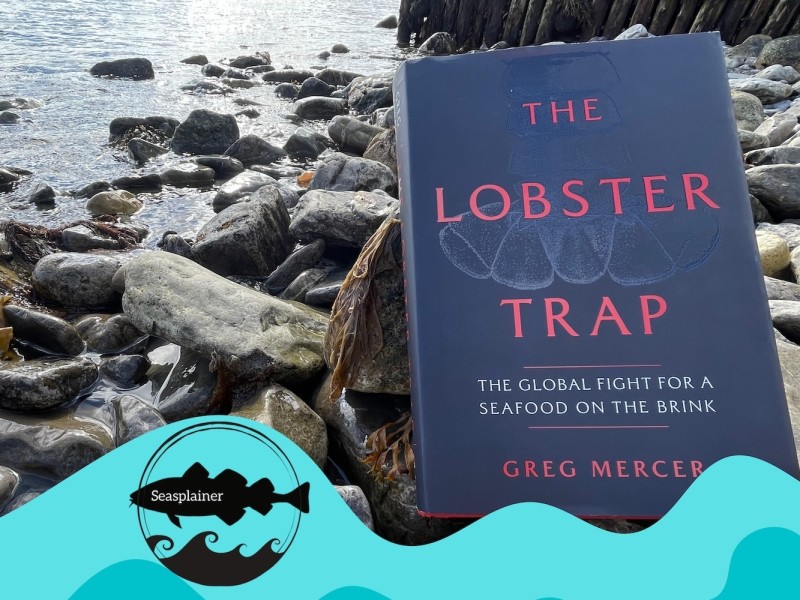
The Lobster Trap: Why Atlantic Canada’s golden fishery may be headed for collapse
Greg Mercer’s book exposes how million-dollar debts, climate change, and market forces are pushing harvesters—and lobster—toward the breaking point
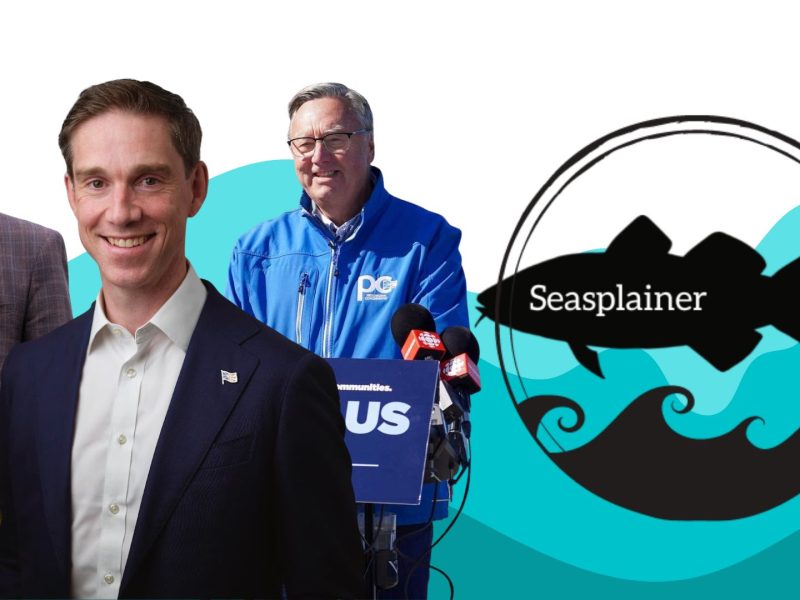
N.L. parties agree we need more say on fisheries — but what about climate change?
What three party leaders said about provincial fisheries and ocean priorities—and what they didn’t say
Where N.L. parties stand on fisheries and ocean priorities
Ahead of the provincial election, all parties agree the province needs a stronger voice with Ottawa, but they diverge on priority areas