

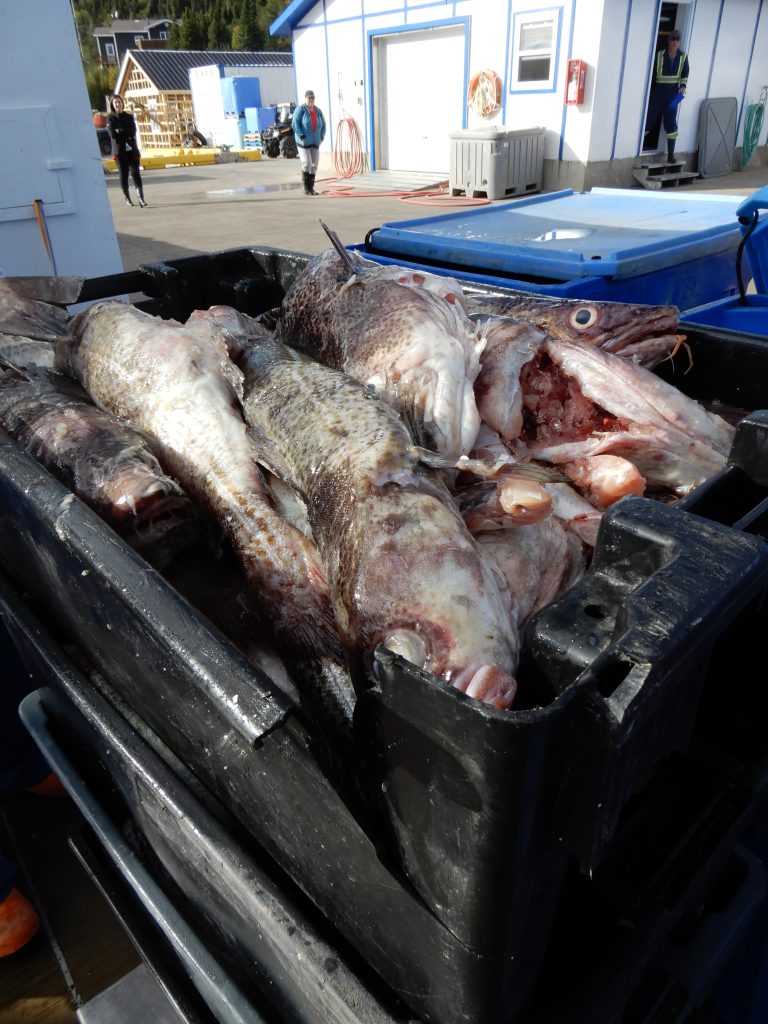
Cod fishing has been a boon to the economies of many outport communities across the province, but some might have considered Icewater Seafood’s $14-million investment in a brand-new cod-processing equipment back in 2019 a dangerous gamble.
While the federal government has operated an Atlantic cod fishery (including an inshore commercial fishery, called the “stewardship fishery,” a recreational fishery and Food, Social and Ceremonial fishery) since 2006, the commercial fishery has remained under moratorium since 1992. Add to that, that all eight populations of Atlantic cod in Canadian waters of the Northwest Atlantic ocean are not healthy and significantly below historic levels of abundance.
Yet, backdropped by the decades-long plight of Atlantic Canada’s most iconic fish, Icewater Seafoods has persisted, operating the only production facility of its kind in North America focused exclusively on processing Atlantic cod. Using high-tech equipment to debone, fillet and chill cod, this small-town plant competes in big global markets. Now with news that a key Atlantic cod stock likely moved out of the critical zone for the first time in decades, the owner of Icewater Seafoods’s cod-processing plant is hopeful about what that means for cod and the fishery too.
“A more positive perspective on Northern cod from DFO science is certainly welcome news in Newfoundland and Labrador, including for the 200 employees of our Arnold’s Cove plant,” said Alberto Wareham in an email. Wareham is the president and CEO of Icewater Seafoods, on the southeast coast of Newfoundland.
At the end of October, scientists at Fisheries and Oceans Canada (DFO) reported that Northern cod – a population of the Atlantic cod species that inhabits the waters between the tip of the Grand Banks, in eastern Newfoundland, all the way to Hopedale, Labrador – likely moved out of the critical zone into the cautious zone. While Northern cod is not healthy, that’s a shift in the right direction, say federal scientists.
Will you stand with us?
Your support is essential to making journalism like this possible.
“With changes to the Northern cod stock assessment model, we were able to determine that cod was in the cautious zone between 2016 to 2021,” says Paul Regular, DFO research scientist and stock lead for Northern cod.
Back in Arnold’s Cove, betting on cod is practically tradition. Icewater Seafoods is built from Wareham’s family business that began 200 years ago, in 1823, in Harbour Buffett. A sheltered harbour on the southeastern side of Long Island in inner Placentia Bay, Harbour Buffet is one of many tiny fishing communities that were resettled in the mid-1960s. The Fisheries Household Resettlement Program was a federal-provincial program designed in the Smallwood-era to modernize and rationalize the fishery, moving people from small fishing outports to larger growth or receiving centres.
Arnold’s Cove was one such centre. Home to about 200 residents before the resettlement program, the community saw a five-fold increase within a few years from nearby communities. Today, the population holds steady at about 1,000 residents — one-fifth of whom work at Icewater Seafoods, making the stakes for a cod comeback particularly high. But while the latest Northern cod assessment news may give reason for optimism, the reality is that all Atlantic cod stocks in the Northwest Atlantic ocean remain historically low.
With November 21 marking World Fisheries Day, a day highlighting the importance of sustainable fisheries globally, along with the release of two Canadian audits criticizing DFO for falling behind on sustainably managing and protecting Canadian wild fisheries—one by the Office of the Auditor General of Canada, the other from the independent ocean charity, Oceana Canada—The Independent is profiling the latest news on Atlantic cod, one of Canada’s most iconic fish species.
Cautious optimism about a Northern cod comeback
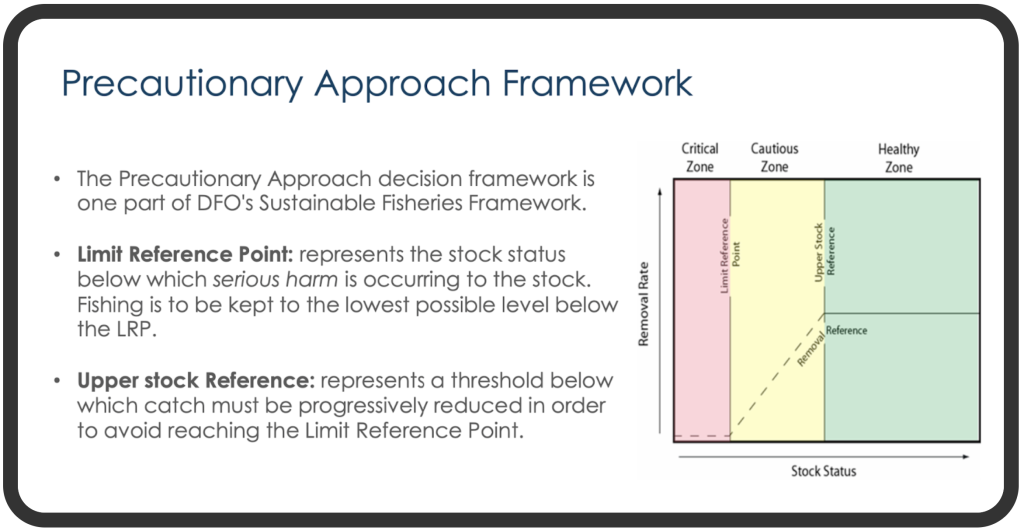
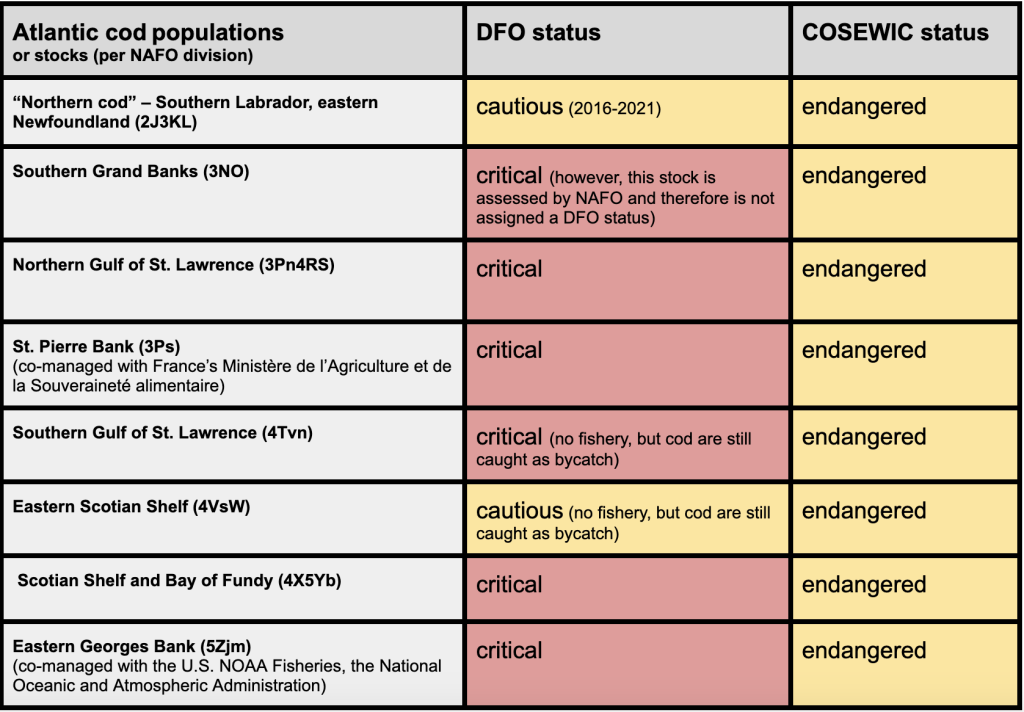
Fisheries and Oceans Canada categorizes commercial fish populations (called “stocks”) into one of four zones: healthy, cautious, critical, or uncertain. That categorization is based on DFO’s “Precautionary Approach,” a policy which calls for greater caution whenever scientific knowledge is uncertain (see Figure 1). According to DFO, “this approach is widely accepted internationally as an essential part of sustainable fisheries management.” At present, none of the eight Atlantic cod stocks are healthy (see Table 1).
In addition, the Committee on the Status of Endangered Wildlife in Canada (COSEWIC), an independent body that makes recommendations to the federal government about species at risk listings, has found all eight Atlantic cod populations are endangered. Endangered is one of the committee’s four risk categories (endangered, threatened, special concern, or extirpated, meaning locally extinct) and means a species is in danger of extinction throughout all or a significant portion of its geographic range.
The federal government has yet to take COSEWIC’s recommendation to list Atlantic cod on the species at risk registry. An investigation by The Narwhal in November 2022 shows DFO’s bias against listing commercially valuable species. Investigating all 209 fish species at risk in Canada, The Narwhal found that the more commercially lucrative a fish species, the less likely it is to be protected under Canada’s species at risk legislation. An October 2022 report from the Office of the Auditor General of Canada that investigated a smaller sample—12 aquatic species or populations assessed as being at risk—also concluded that DFO is failing to protect commercially valuable fish species at risk. DFO did not directly respond to these findings, but noted to The Narwhal that the federal fisheries department has several legislative tools (most notably, the Fisheries Act) to protect marine species at risk. The Narwhal’s investigation found that DFO likely chooses against listing commercially-valuable fish species at risk because doing so stops fishing access.
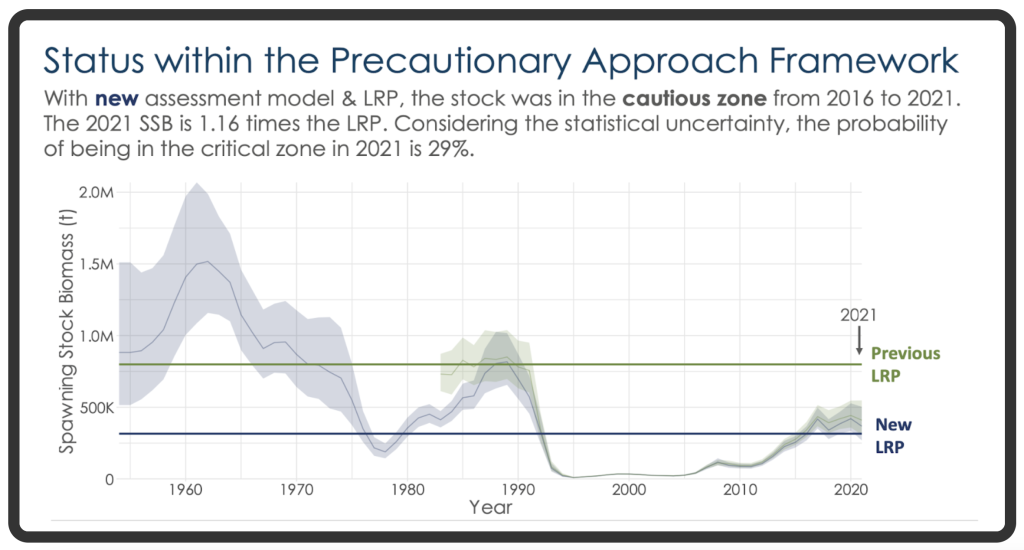
The news about the change in stock status for Northern cod comes after DFO adjusted its scientific assessment model in late October 2023. The new model takes into consideration cod’s primary prey (capelin), more information about juvenile cod and a longer period of cod data – adding three decades of data, expanding the period from 1954 to 2021 (see Figure 2).
“The additional time period reflects when catches peaked in the late 1960s and cod were severely overfished,” says Rebeccaa Schijns, fishery scientist with Oceana Canada. Few scientists bring her perspective; as a modelling scientist she has examined 500 years of Northern cod catch data. To Schijns’ point, having a longer time frame of cod data is important because it includes the period when cod catches were greatest, and from which Northern cod have arguably never recovered.
In the same way, recognizing the relationship between cod and its primary food source (capelin, a species that’s followed a similar historical trajectory as Atlantic cod, and today remains in the critical zone), gives a more concise understanding of the health of the cod stocks. But to move from a “single species” to an “ecosystem approach” in fisheries management—where fish populations are considered not independently but as interacting with other species and in their environment—means we have to think of other things, too. The new model does not yet consider cod predation (for example, seals) or ocean conditions (like warming waters due to climate change), although these factors are on the table for future revisions to the modeling, says DFO’s Paul Regular.
While the model updates are good news from a science and practice perspective (e.g., better data can inform better decision-making), DFO has no on-the-water data since 2021. Because of problems with the federal fisheries department’s research vessels, scientists have been unable to carry out surveys for the last two years. But the annual fall survey is currently underway and its results are crucial for informing the March 2024 northern cod assessment.
“We eagerly await the March stock assessment that will hopefully have a full suite of projections [and] enable decision makers to better understand the effect that different catch levels may have on stock growth,” says Vanessa Byrne, director of fisheries management and science with the Atlantic Groundfish Council.
Only with new data can DFO science determine if Northern cod has maintained its cautionary standing since 2021. If that’s the case, then DFO could abandon its Northern cod rebuilding plan and even move to reopen a full commercial Northern cod fishery for the first time since the cod moratorium. The current rebuilding plan—one of the first to be released under 2019 Fisheries Act revisions meant to strengthen critically depleted commercial fisheries—was highly criticized upon its release in December 2020 for failing to include rebuilding targets and timelines. DFO is currently scheduled to produce an updated Northern cod rebuilding plan by April 2024 that corrects these failings so that the plan is in line with the new legal requirements of the Fisheries Act.
Given the most recent assessment model found a 71 per cent chance that the stock is in the cautious zone as of 2021, DFO may consider this finding sufficient reason to already abandon the plan given it falls within the federal fisheries department’s guidelines for writing rebuilding plans: “A rebuilding target has been reached when there is at least a 50% probability that the stock is at or above its rebuilding target,” reads the guidelines.
“We’re on the cusp of having a new rebuilding plan for Northern cod that is in line with the latest legal framework for stocks with a critical zone. There’s a question about whether that process continues. We would obviously like to see the work that went into it not go to waste,” says Katie Schleit, fisheries director with the marine research conservation group Oceans North.
“Under the new fish stock provisions, a stock has to be out of the critical zone with a high probability to no longer require a rebuilding plan,” says Erin Carruthers, science lead with the Fish, Food and Allied Workers union (FFAW), which represents NL inshore fishers and plant workers.
“The update that DFO gave [last month] says that it was very, very close, but, it’s not quite yet time to say that no rebuilding plan is needed,” Carruthers continues. “What we’re really waiting on is that March 2024 assessment, because that’ll tell us what the status of the stock is right now.”
Auditor General and Oceana Canada audits find DFO lacks data to sustainably manage Canadian fisheries
The dose of cautious optimism for a Northern cod comeback came just weeks before the Office of the Auditor General of Canada released its latest report, on November 7, from the Commissioner of the Environment and Sustainable Development.
“Overall, Fisheries and Oceans Canada remained unable to collect the dependable and timely catch data that it needs to sustainably manage commercial marine fisheries and protect Canada’s fish stocks,” reads the report. It recognizes that efforts to recover fish stocks and effective monitoring go hand in hand.
Fisheries and Oceans Canada has yet to deliver on most of the corrective measures it committed to seven years ago, when the Office of the Auditor General of Canada last audited the federal department’s fisheries monitoring capabilities.
Today, on World Fisheries Day, Oceana Canada is also releasing its seventh annual fishery audit, which once again finds less than a third of Canadian wild fisheries are considered healthy and nearly 40 per cent are uncertain, meaning they lack adequate information to assign any health status at all. This year’s audit also finds that DFO management decisions on Northern cod have ignored scientific advice, and that DFO is falling behind on creating rebuilding plans for critically depleted fish.
“Even worse, there has been a decrease in the number of healthy fisheries and no significant improvement in Fisheries and Oceans Canada’s performance against science, monitoring and management indicators since Oceana Canada’s very first Audit in 2017,” Rebecca Schijns says in a press release.
Back on the cod processing line, Icewater Seafoods remains hopeful, but realistic.
“We are cautiously optimistic that the upcoming DFO research vessel survey may confirm a continued rebuilding of this stock. That said, Icewater Seafoods maintains its long-standing position that we must be patient and go slow to ensure long-term sustainability and a healthy cod stock that can continue for generations,” says Wareham.
To do so, DFO must follow through on its rebuilding commitments to restore Northern cod to healthy levels. A move from critical to cautious is a good start, but a healthy Northern cod population is better for the fish and the fishing communities who depend on it.

Authors


Related Articles
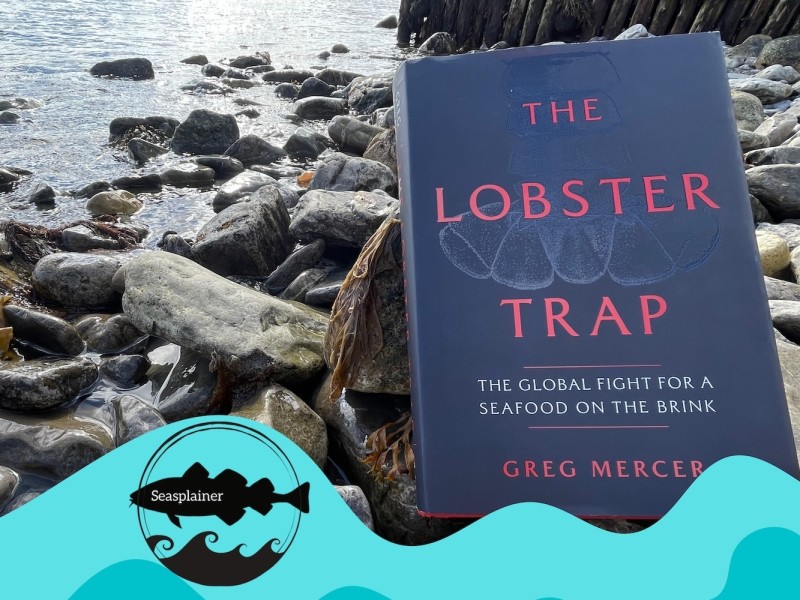
The Lobster Trap: Why Atlantic Canada’s golden fishery may be headed for collapse
Greg Mercer’s book exposes how million-dollar debts, climate change, and market forces are pushing harvesters—and lobster—toward the breaking point
N.L. parties agree we need more say on fisheries — but what about climate change?
What three party leaders said about provincial fisheries and ocean priorities—and what they didn’t say
Where N.L. parties stand on fisheries and ocean priorities
Ahead of the provincial election, all parties agree the province needs a stronger voice with Ottawa, but they diverge on priority areas