
Politicizing science: how quota quarrels lose sight of sustainable fishing
Doubling Northern cod catch limits ran counter to what scientists and key stakeholders called for — so what’s behind the decision?
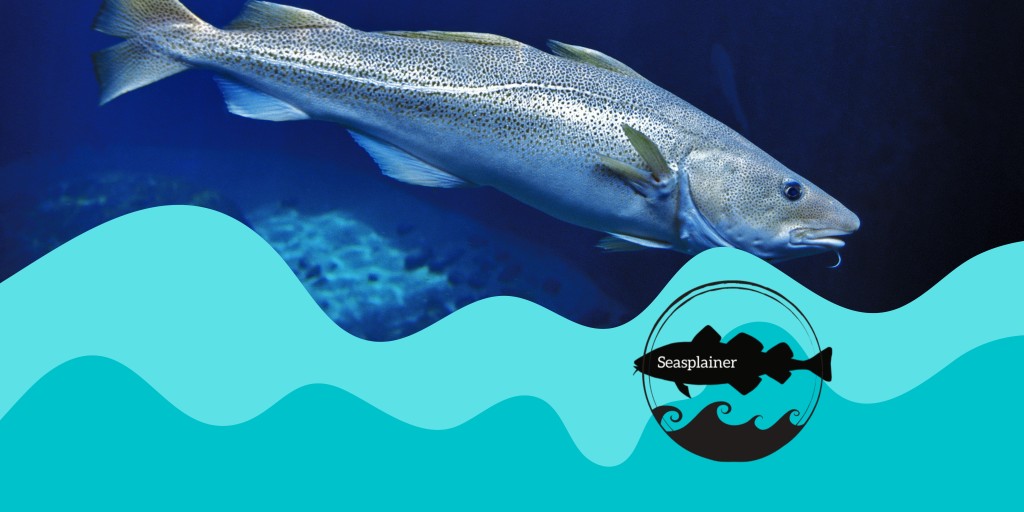
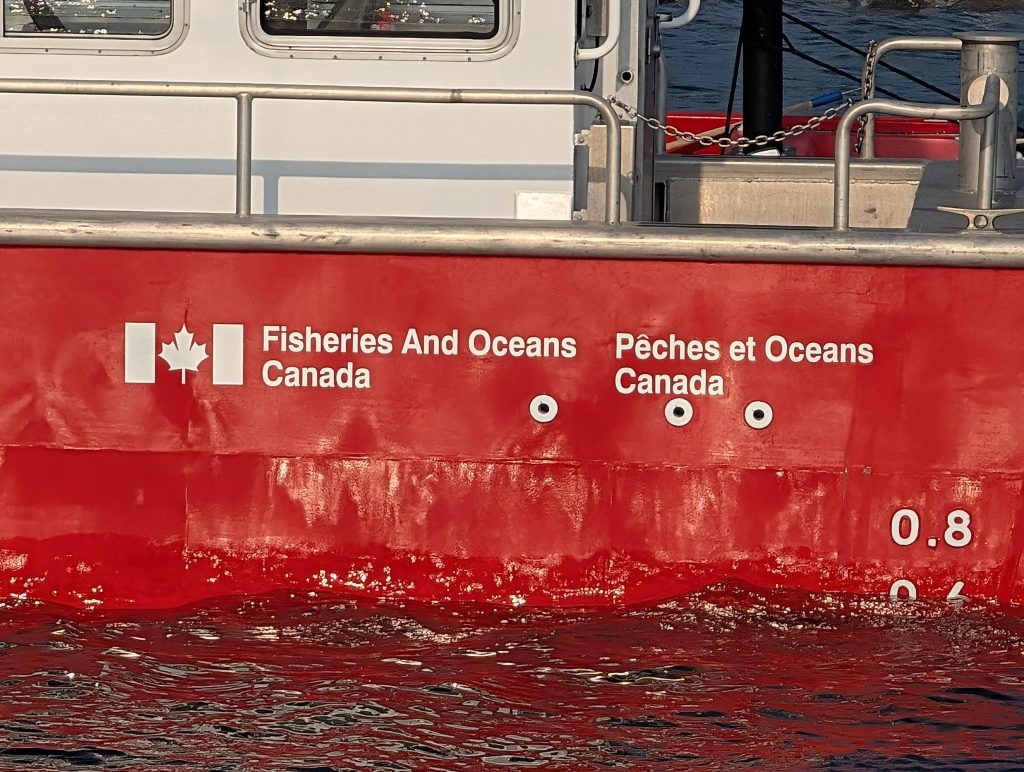
Fisheries and Oceans Canada (DFO) more than doubled the commercial catch limit for Northern cod to 38,000 metric tonnes last month, up from 18,000 last year, in an area of the Northwest Atlantic ocean that extends from the tip of the Grand Banks to Hopedale, Labrador.
The new catch limit, announced a year after DFO reopened the Northern cod fishery following a more than three-decades-old moratorium, is greater than what most groups had called on the federal government to consider this year.
Prior to the announcement, the union representing inshore fishers and plant workers in Newfoundland and Labrador—the Fish Food and Allied Workers Union (FFAW-Unifor)—had called for a lesser increase in the Northwest Atlantic Fisheries Organization (NAFO) divisions 2J3KL.
“FFAW-Unifor Cod Working Group recommends a 2025 inshore allocation of 35,000t, with 30,000t allocated for 2J3KL,” the union said in an early-June press release.
Will you stand with us?
Your support is essential to making journalism like this possible.

On June 1, as part of its full proposal to DFO for an allocation decision for the Northern cod fishery, the FFAW also published a summary table of Northern cod quota recommendations by various groups, from those representing commercial interests to those urging conservation efforts.
On the commercial side, most groups recommended a total allowable catch (TAC) of between 25,000-30,000t. The Atlantic Groundfish Council—which represents vessels larger than 100-feet-long—and the Atlantic Fixed Gear Council recommended catch limits of 49,000t and 50,000t respectively.
On the conservation side, non-governmental organizations including Oceana and Oceans North recommended lowering the TAC to 12,800 and 15,300 respectively.
Quarrels over quota limits often overshadow the critical importance of sustainable fishing—a reality Newfoundlanders and Labradorians understand well, given the devastating collapse of cod stocks in the early ‘90s, which led to the closure of fisheries, fishing enterprises, fish plants, and the relocation or shuttering of fishing communities too. More than three decades after that moratorium, and two years into the reopening of the commercial Northern cod fishery, the conversation on cod remains fixated on catch limits.
“We can only be sustainable with good knowledge. What we exploit on TAC will never be an issue if we do our homework,” says Dwight Russell, a long-time fisher and chair of the Labrador Fishermen’s Union Shrimp Co. in Mary’s Harbour. “The science on cod is fairly strong, although I never thought it would go to 38,000 tonnes. In many chats with DFO the magic word was ‘cautious’.”
Evidence-based policymaking, or policy-based evidence-making?
Cod scientist George Rose, who has spent 40 years studying Atlantic cod, including eight years at DFO, says science isn’t always given the weight it deserves. “One of the big problems with fisheries management in Canada is that the minister makes political decisions about management – whether based on science or not,” he said, speaking to The Independent last fall.
Last year’s ‘historic’ reopening — as federal politicians called it then — was (as access to briefing documents have shown) a politically-motivated decision that contradicted the scientific consensus and the wisdom of experienced fishers, who recognized that the Northern cod population remained then, as it does now, historically low.
In a recent analysis for The Independent, Memorial University researcher and author Dean Bavington called DFO’s decision to up this year’s Northern cod quota, “managerial choreography disguised as ecological concern.”
Most modern countries do not allow politicians to overrule scientific recommendations, says Rose. The U.S., which has Canada’s most comparable fisheries system, has historically not managed fisheries decisions from Washington, Rose explains, but from regional management authorities much closer to the actual fisheries. Granted, the U.S. requires a ‘watchful waiting’ approach since the Trump administration took over in January, especially given its rounds of cuts to the agency responsible for fisheries in that country, the National Oceanic and Atmospheric Administration (NOAA). The point, says Rose, is that science—particularly when there is a scientific consensus on matters of public interest—should not be sidelined for the sake of politicking.
An examination of fish species at risk in Canada shows a long-time fatal flaw of DFO is its contradictory oversight responsibilities — on the one hand to promote commercial fisheries, while on the other hand, conserving marine biodiversity and the ocean. Pitting conservation against commercial interests oversimplifies a complex issue into two opposing viewpoints. The risk of “false balance” or “bothsidesism,” in turn, informs media reporting on fisheries management, running the risk of undermining the credibility of scientific evidence, and misrepresenting and creating confusion among the public.
Look at any news media reporting on fisheries management decisions and you’ll find a preeminent focus on the ‘Goldistocks’ debate, a term we have used to describe the usual rumblings after a fisheries management decision when conservationists argue a quota is set ‘too high,’ fishers’ unions say it’s ‘too low,’ while few others say it’s ‘just right.’

So, what does the latest March 2025 science assessment on Northern cod say?
- The stock is nowhere near its one-time level of abundance – and is unlikely, under current conditions, to foreseeably return;
- The stock has shown no growth since 2015-16, and as recently as 2023 it was assessed to be in the critical zone, meaning it required a formal rebuilding plan. This is particularly noteworthy given DFO’s recent claim last month that, “recent scientific data and assessments confirm Northern cod has remained stable since 2017 and is at a higher level than previously understood from the 2024 assessment, allowing for a responsible total allowable catch (TAC) increase from 18,000 tonnes (t) to 38,000 t.”
- While DFO noted a “more optimistic” assessment than last year, improvement in the stock status – from critical to cautious – is not due to population growth but rather to DFO having changed the stock’s Limit Reference Point (LRP)—the point below which a stock is said to be in the “critical zone” and where fishing should be kept to the lowest level possible. While this change was based on additional data, it has also created a misleading sense that the stock is increasing. As George Rose said last year, “It is not a change in the stock, which hasn’t grown significantly since 2015-16, just a change in the goalposts by which the stock is judged.”
- Stock projections presented during the latest (2025) assessment show a 56-71 per cent probability that the stock will decline by 2028, even if fishing levels remain the same, and this risk grows with increased removals.


- The ecosystem conditions that influence Northern cod productivity continue to be unfavourable: capelin, a primary prey species, is expected to decline in 2025, and natural mortality remains high. Even so, DFO announced (on the same day as the Northern cod quota increase) that the quota for capelin for divisions 2J3KLPs would be maintained at 14,533 t. Other environmental constraints that could limit the stock’s ability to recover—including predator abundance such as seals and environmental conditions such as warming water—are not yet factored into the assessment or fisheries management planning.
- The decision to increase fishing pressure despite this best-available science contradicts DFO’s precautionary approach, which is supposed to underpin fisheries management decisions. According to the approach, the greater the scientific uncertainty, the greater the caution that ought to be applied.
Higher cod catch, but stay the course for capelin
In response to DFO’s decision to maintain capelin catch limits this year, FFAW argues the science on capelin backed an increase. “DFO quietly released the 2J3KLPs capelin management plan alongside the Northern Cod increase—an apparent attempt to downplay the disappointing 14,533t rollover on capelin, which ignores scientific evidence and falls well short of FFAW-Unifor’s 23,000t TAC recommendation,” the union said in a June 19 press release.
In its latest capelin stock assessment, DFO reported the capelin biomass index “reached a recent high in 2024, but we are anticipating a decline back to average levels in 2025. The stock remains well below historical levels.”
DFO says the reason for this is that “the current food availability and the biological conditions (spawning and larval productivity) observed in the previous two years were average.” As a result, the department says, “we predict a decline in the biomass index in 2025 due to a smaller 2023 cohort.”


As the debate over catch limits for cod and capelin quotas continues, it is crucial to prioritize sustainable fishing practices over political maneuvering and short-term gains. DFO’s decision to double the Northern cod quota runs counter to the scientific consensus that the population has shown no growth since 2015-16.
What if, instead of contentious quota disputes, the focus shifted to collaborative efforts that prioritize marine ecosystem health? Placing science and sustainability at the forefront of fisheries management ensures a responsible approach that benefits both the environment and fishing communities, protecting the ocean for future generations.

Authors


Related Articles
The Lobster Trap: Why Atlantic Canada’s golden fishery may be headed for collapse
Greg Mercer’s book exposes how million-dollar debts, climate change, and market forces are pushing harvesters—and lobster—toward the breaking point
N.L. parties agree we need more say on fisheries — but what about climate change?
What three party leaders said about provincial fisheries and ocean priorities—and what they didn’t say

Where N.L. parties stand on fisheries and ocean priorities
Ahead of the provincial election, all parties agree the province needs a stronger voice with Ottawa, but they diverge on priority areas