
On living the dream in Canada’s happy province
Wherein the author eschews the hot take-industrial complex for a project where everything is grist for the mill.
Just when I thought I was out, they pulled me back in. And by “they” I mean Galen Weston and other assorted robber-barons.
Despite our comrades’ best efforts, capitalism seems likely to survive for at least another five or possibly even 10 years, which unfortunately means I need money to live. As it stands, I will be a full-time grad student for at least another year and—thanks to more than a decade of being a dick to people on Twitter—I have alienated everybody in St. John’s who might be rich or well-connected enough to grant me a respectable sinecure. Given that my prospects on OnlyFans are grim and ArtsNL was unwilling to fund my novel about a polycule getting divorced, my least-bad option for being able to buy groceries seems to be suiting up for a fresh shift in the content mines.
Just kidding—ish. Nobody takes up writing a column for a non-profit independent journalism website because they’ve decided to prioritize their financial well-being. I am here mostly for pure love of the game.
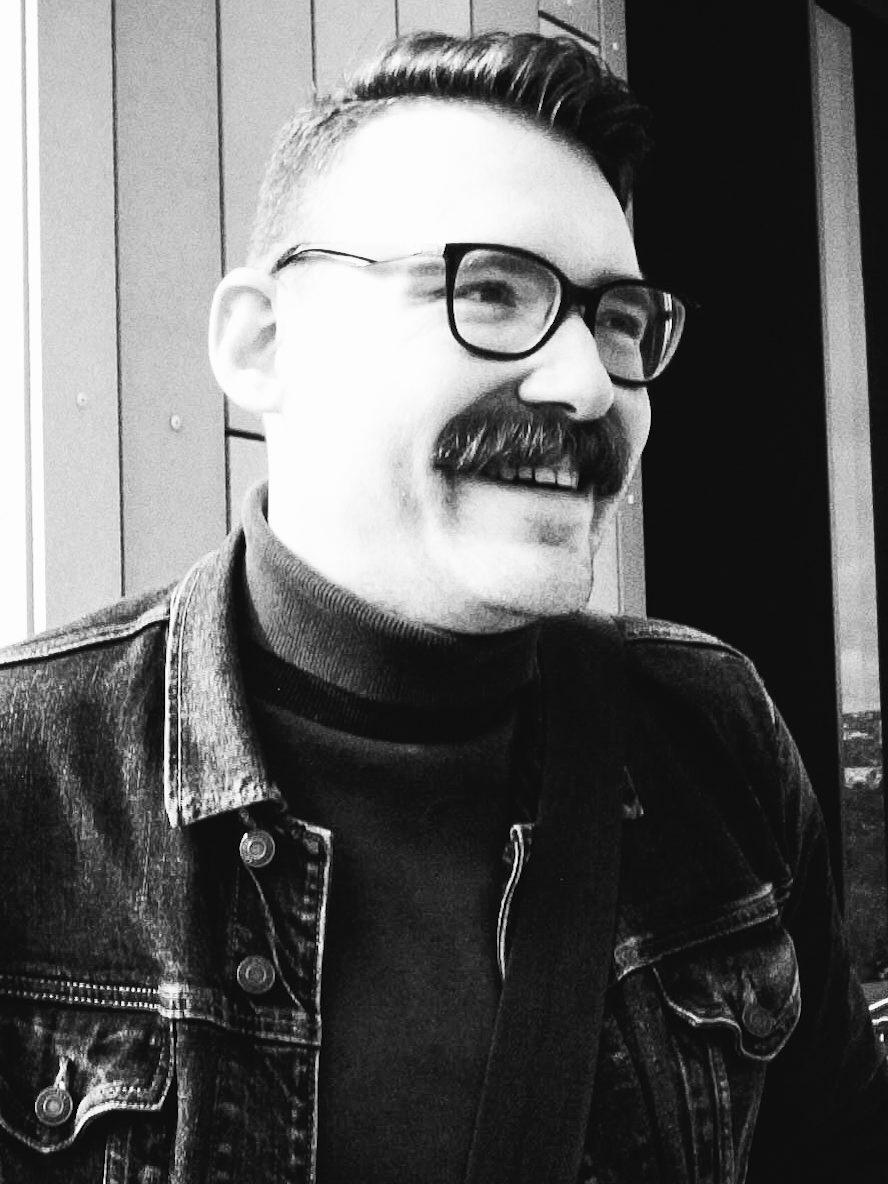
I’d like to start with some housekeeping. It’s been a hot minute and in the same way one never steps into the same river twice, I am intending for this column to be a more free-ranging experience than my recent work. I’m envisioning Ray Guy meets Adrian Chiles meets P. E. Moskowitz meets… I don’t know, this guy.
Will you stand with us?
Your support is essential to making journalism like this possible.
Same as it ever was, except for the stuff that’s different
I want to say from the jump that this will be less exclusively capital-p Politics focused. Obviously I can’t—and wouldn’t want to—promise that I will never write about politics; it’s how I made a living for a long time. I am sensitized to the way power dynamics shape everything from world geopolitics and national policy down to personal relationships and the so-called individual. We Live In A Society and it’s good to know, and think carefully about, what’s happening around us. The issues we face keep getting more complex—and the stakes keep getting higher.
But I’m also wary of reprising my role as someone who gets mad about the government in lieu of developing a personality. By training and temperament I’m more interested in exploring and understanding the contemporary moment—in Newfoundland and Labrador, Canada, and the world—as an emergent structure of feeling that shapes who we are and where we’re going. You know: the vibe.
So sometimes maybe that’s spitballing about what both Andrew Furey and Tony Wakeham agreeing to knock around the carbon tax might tell us about the state of provincial politics, or tracking the progression of social media brain poisoning through the unfathomable Anglo-Canadian mind. Other times it might be spelling out my pet theory that every single one of us is a sibling in a dysfunctional family system organized around an emotionally unstable parent named “Newfoundland” who makes a lot of questionable life choices.
And sometimes it might be something else entirely—like a guide to fumbling through the weird grief of getting ghosted, or a comprehensive vibes-based ranking of every Jungle Jim’s in the province. Maybe I’ll watch Faustus Bidgood or read a J.G. Ballard novel or cook some Korean soup. I am abandoning the blood sport of the hot take-industrial complex for an adventure into the wilderness of Pure Columnizing. Everything is grist for the mill. It’s gonna rule.
Consider it a deadly serious foray into frivolity. I have been thinking for some time about recovering the ability to play. It’s a necessary correction after you go through burnout.

The perfect is the enemy of the good
Bear with me as I try on my trainee therapist hat for the first time.
In the academic literature, burnout is understood as an exhaustion syndrome resulting from chronic and unresolved work-related stress. It involves emotional (and physical) exhaustion, depersonalization—a negative, callous, or detached attitude towards one’s self, one’s work, one’s coworkers, and/or one’s clients—and feelings of incompetence or poor performance on the job. I can say that this coheres with my own experience; the only thing I would add is that I think burnout can result anywhere that “chronic and unresolved contextual stress” is present, like community activism or romantic relationships.
There are a lot of factors that can contribute to burnout, but the biggest one that I brought to the table is a propensity for perfectionism.
This is more than a temperamental fussiness around unreasonably high standards. Writing in Canadian Psychology, clinical psychologist Paul Hewitt describes perfectionism as “a multifaceted and multilevel personality style”—i.e. a chronic pattern of thinking, feeling, behaving, and relating to self and others—that can manifest in many different ways for different people. What perfectionists all share in common is a pervasive (if largely unconscious) conviction that their authentic self is wrong or repulsive in whole or in part, and that other people will react to them with hostility: criticism, rejection, abandonment, even annihilation.
In these conditions—the visceral certainty that other people will attack or abandon you if they ever see your flaws—the only way to safely form and manage connections with others is from an unassailable defensive position: the constant performance or achievement of personal, professional, physical, intellectual, and/or moral excellence. In other words: perfection.
But this is impossible, and it makes real authentic connection to others (and the self) impossible. The efforts to perform an inauthentic, paradoxically self-aggrandizing and self-negating perfection for other people often elicits the alienation and hostility it is meant to circumvent. And even when this strategy is successful, the outcome is at once hollow and hollowing. As psychotherapist Leon Garber writes, “with perfectionism, praise brings less joy and more relief. It isn’t so much that the perfectionist is ever really happy; momentarily, they feel safe from judgement, the freedom of which is the main purpose of the personality style.”
In other words, for a perfectionist, both success and failure reinforce the underlying conviction that they are worthless without achievement, perpetuating and deepening the whole maladaptive complex. This is an exhausting and fundamentally unsustainable way to live—not to mention a core vulnerability for a host of psychological, relational, professional, and physical health problems.
When someone prone to perfectionism inevitably fails to meet unrealistic expectations, the response is often to collapse into withdrawal, avoidance, depression, self-sabotage, and occasionally active self-destruction. If exposure feels like a fate worse than death then one might reasonably conclude that it’s better not to do—or be—anything at all. In the immortal words of Homer Simpson: “Trying is the first step towards failure.”
And so, here I am: trying again—the only known method for reliably transforming compulsion into freedom.

Fear and loathing in the smiling land
In this province we talk a lot about talking about “mental health issues”—as an abstract awareness, usually around the lack of accessible treatment despite the plethora of government-sponsored wellness apps—but not many of us really get into what mental health actually means on a human level.
Which is understandable; talking about mental health is complicated and messy, misunderstood and stigmatized. It reveals our imperfections to a culture still steeped in shame and gossip as methods of social control, and where cavalier cruelty is wielded for personal protection and pseudo-connection. It is an act of astonishing courage in a place where vulnerability is often either exploited or punished, or both. (And if you too struggle with perfectionism, odds are good that you came by it very honestly.)
So, as much as I can, I also want to use this space for an honest and compassionate exploration into the way we understand, treat, and talk about mental and emotional wellness (and illness) in Newfoundland and Labrador. I can only speak for myself in this regard, but it’s a necessarily collective undertaking; there is no such thing as purely individual psychology.
Our most intimate inner experiences are irreducibly social, shaped by the relationships around us and the culture in which they are situated, fully freighted with the gravity of global political and economic and environmental forces largely outside of our awareness or control. The traditions of all dead generations may weigh like a nightmare on the brains of the living, but so too do we carry all the dreams and aspirations of our ancestors for lightening the world to come. Life is a mixed bag all the way down.
Many seemingly contradictory things can be true at once—and if you look patiently enough at anything, eventually you will see everything. That’s the wager I’m all in on these days, anyways, and the vibe I’m hoping to bring to this column.
Let’s find out if it works. If nothing else, it should at least be fun.

Author

Related Articles

Betrayed by the elephant in our bed
Our American ‘allies’ keep talking about annexing Canada. With friends like these, who needs enemies?

The pendulum swings back toward Canada’s ‘common sense’ Conservatives
Politicians of all persuasions shut down critical thinking by invoking “common sense”—which is never as obvious as it’s made out to be