
I’ll never forget November 6
Our lives at work are shaped by our lives outside of work – in today’s political chaos more than ever

I’ll never forget November 6, 2024.
I’d long suspected Trump would win the presidency, so it wasn’t a terrible surprise when I woke up the next morning and read the news. By the time I got to work, I was still processing what happened.
The first email sitting in my inbox was from a stranger — an American trans man from a southern U.S. state. He’d read my book, he explained, and through it developed an interest in Newfoundland. He’d found my email address online. He was in a panic and seeking advice about how to immigrate here in the wake of the U.S. election.
The email really brought home the reality of our changed world. I responded as best I could, inwardly reeling over the fact that American trans people were reaching out to strangers in desperate need to flee their country.
Will you stand with us?
Your support is essential to making journalism like this possible.
I work at Memorial University, and before the day was out no less than three trans students stopped by my office. Most of them weren’t really sure why they were there; they were frightened and worried and needed someone to talk to.
Later in the day I attended a meeting of university administrators, where chitchat was all about the U.S. election. As I walked in the room, I overheard a white, male political science professor say with an ambivalent drawl in his voice: “Still, I think the situation could offer up some unexpected opportunities.”
Sitting through that meeting, I was struck with the realization of how those in the room were experiencing Nov. 6 so differently. It was truly remarkable to see elderly political scientists casually bantering about the election outcome as though it were a gameshow, while all I could think about was the terror of the email from someone preparing to uproot their entire life just to survive, and the tears of fright from students who’d visited me that day, grappling with deeply existential fears for their future. But in this space, it was mostly banter and laughter.
There was an international student in the room, and at one point we caught each other’s eye. We didn’t know each other well, but when we locked eyes I sensed a shared recognition of the immense chasm of privilege separating our experiences of Nov. 6 from those of the cis, white, mostly-male administrators with their six-figure salaries.
The experience underscored for me the way we carry different mental and emotional weight in the workplace. We all smile the same smile, sit at the same desks, follow the same agenda and work toward the same goals. But inside, each of us is a world of turmoil and difference, silently and subtly shaping the ways we engage with each other and work together. And a lot of those differences stem from the identities the world inscribes on us. The white male professors didn’t feel a fraction of the fear and vulnerability felt by myself as a trans woman, the international student, or the others I’d spoken with that day. I’m sure the tone of voice I took with them in that meeting, my ability to concentrate on the subject matter at hand, and even my ability to smile, was impacted by the things going on in my head, of which they knew nothing.
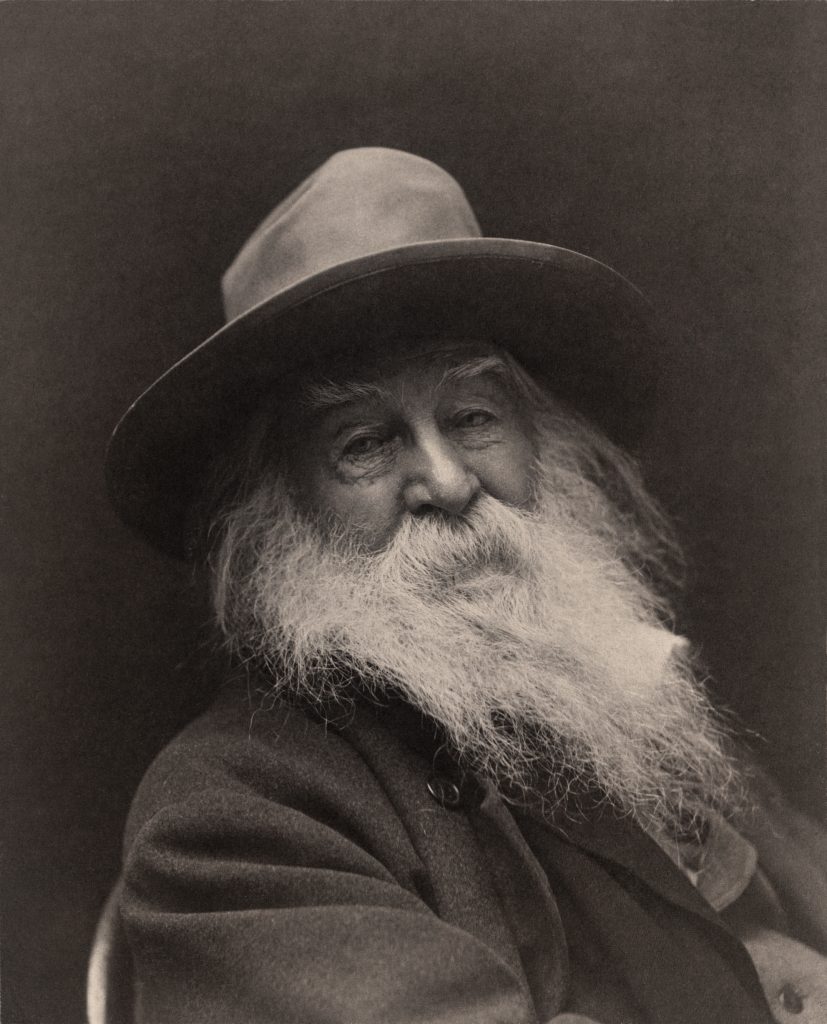
“I contain multitudes,” wrote queer poet Walt Whitman. It’s true – each of us contains multitudes, and it’s easy to forget when we walk through the halls or sit at our desks at work that we don’t know the inner struggles of those who sit beside us. The existential fears for her future consuming the trans worker at her desk, or the frustrated inner rage of a Black employee across the hall who faces racist microaggressions every day from his supervisor, the cafeteria worker and the bus driver. The traumatic memories of childhood sexual abuse being triggered in the head of your team lead in the lunchroom while coworkers joke about the latest Netflix series. These multitudes shape us and they shape the ways we carry ourselves in the world. They shape how we talk and act toward each other. They shape our ability to do our work or even to show up at work.
Collective agreements and workplace policies can be long and complex because they represent efforts to address, in reasonable and understanding ways, the multitudes we each bring to the workplace, and the ways they affect us as workers and community members. The reason we sit through diversity, equity and inclusion (DEI) workshops, anti-racism training, or gender-diversity courses isn’t just to tick a box; we do it to cultivate the understanding, empathy and care for those we work, live and cohabitate with in our communities. Some find these processes onerous and some employers frown at their cost. But if they help even one of our coworkers breathe more easily when they come to work, isn’t that worth the effort?
This column, Toast & Tulips (an upgrade on a classic for our new modern era), focuses on the intersection of work and labour, and diversity and inclusion. DEI has been thrust into the spotlight lately by American politics. It’s important to be clear on what is actually happening. U.S. Republicans have targeted DEI because however imperfect DEI policies might be—and it’s a developing field, so there are imperfections, competing theories and debates within the field, as in any field—DEI fundamentally seeks to create more inclusive, equitable, accessible workplaces.
As a brazenly white supremacist, misogynistic organization, the Republican Party is fundamentally opposed to equality and has embarked on a program of stripping women of rights, of purging federal and state institutions of Black people and minorities, of persecuting every minority and identity that is not an ‘able-bodied’ white man. It’s not actually DEI itself Republicans are concerned with — it’s the outcome they do not want. They don’t want Black people, women, and minorities in workplaces or positions of authority. If anything, their attack on DEI demonstrates how effective DEI is at creating a better, more inclusive and equal society.
With these things under attack, the response should not be to avoid the topic, but to embrace it more loudly than ever: to write about it, talk about it, grow the field and expand its role and presence in our institutions and workplaces. If we are truly committed to the principles DEI espouses—equality, justice, fairness—this is the true moment of reckoning that calls us to demonstrate that commitment — not when it is easy to do so, but when it is hard.
If we want to define ourselves as a society committed to equality, democracy, and the rule of justice in contrast to the hate-filled cesspool of white supremacy that is being cultivated in the U.S., then it is incumbent on us to champion those positive things which make us distinct. Companies like CitiGroup, PepsiCo, Amazon, Meta, Target, WalMart, McDonald’s and others have buckled under right-wing pressure and backtracked on diversity commitments. (Meanwhile, Apple, Microsoft, Ben & Jerry’s, Costco, Lush and others have refused and are holding firm.) If a company’s commitment to diversity—to doing the right thing—is so fragile and based solely on an idea’s political popularity, what’s next? Will they roll over and accept racial segregation, or firing women from employment, if and when U.S. Republicans demand it?
As corporations reveal their true colours, there’s room to be heartened by those defending DEI in loud, even playful ways. Soap retailer Lush named its latest bath bombs ‘Diversity,’ ‘Equity’ and ‘Inclusion,’ while DEI-supporting Costco seems to have gained business from its position. Target experienced a loss of five-million shoppers in January 2025 (compared to last year) after publicly abandoning its DEI initiatives, while Costco gained an additional 7.7-million shoppers after loudly defending its policies (nearly one third of those gains were from Black and Hispanic/Latino households).

Toast & Tulips will also focus on unions, which are more important now than ever. Lost amid the cascade of terrible news and anxiety emerging from the U.S. is the important role unions are playing in the nascent fightback. The brunt of Elon Musk’s and Donald Trump’s purges of the federal civil service have impacted non-unionized workers, or new employees who are still on probation and lack union protections. They’ve targeted unionized employees too, but many of their initial attacks have been on the non-unionized. Many of their firings are blatantly illegal, but it takes time to fight back in the courts. Unionized workers have recourse to better, faster appeal processes to protect or win back their jobs — processes which are beginning to play out now. The non-unionized workers fired by Musk and Trump have fewer resources to fight, a fact those tyrants are banking on. And unions have moved swiftly to file lawsuits or seek injunctions blocking some of the firings. All of this underscores the importance, now more than ever, of unionizing your workplace.
American workers are discovering this, and the turmoil might very well help to revitalize the U.S. labour movement. Organizers report that non-unionized government employees are now seeking to join unions at record rates. “I literally just don’t even have time to process them all. It’s the largest growth in membership I’ve ever seen in 10 years,” one organizer recently told New Republic magazine.
Of course, a president who’s willing to flagrantly ignore the law in other areas is probably not going to be held back by laws protecting unions either, at least not for long. That’s where the importance of unions as social movements comes in. There are over 16-million unionized workers in the United States, a formidable foundation for street-based resistance if unions are willing to take that step.
Unions can—and in many ways are—playing a similar role here in Canada. Canadian workers are unionized at three times the rate of their American counterparts, reflecting their importance in the struggle against fascism. They’ve been at the forefront of organizing against the transphobic hate being fomented by provincial conservative governments in Saskatchewan and Alberta, which mirror U.S. Republican opening salvos on human rights. This is a good start, but we must ensure unions continue centering, and intensifying, these struggles.
When those provinces brought in their first sets of transphobic laws, I remember some people debating how heavily unions ought to invest themselves in the fight. Fortunately, several unions—CUPE, IATSE, UFCW, the Canadian Labour Congress, and others—have taken a central role in the coalitions that formed to fight back. And now, witnessing what’s happening in the U.S., we see why that is so important, not just for trans people but for everyone.

The attacks on trans people in the U.S. were a precursor, strategically designed to maneuver the Republicans into power in the wake of public confusion, uncertainty and disinformation about gender. Now that they’re there, they’ve revealed their true strategy: removing women, Black and racialized people from the workforce, and mass-firing millions of hard-working people of all identities — tanking the economy and public infrastructure in order to disempower Americans, sow disorder and amass power. It’s a strategy we will undoubtedly see play out in Canada if the Conservatives win power here. What began as a high-profile attack on a tiny number of trans and gender-diverse kids in the school system will, if we allow it to continue, ultimately result in blatantly illegal attacks on everyone’s workplace and human rights. Unions are right to try to stop the right-wing, anti-worker, anti-human rights playbook in its earliest tracks.
But it’s important to remember we do these things not just because they’re strategically wise—although that helps—but because they’re the right thing to do. In a situation like the U.S. now faces, where the federal government is acting in unabashedly illegal, corrupt and anti-democratic ways, the only ethical response is to follow our own moral compass and do the right thing whenever and wherever we can. Each of us cannot single-handedly stop the spread of fascism, but we can contribute to that struggle in our own ways.
Sometimes the things we can do might seem small, but 25-million refusals to succumb to injustice in small, everyday ways? That becomes an unstoppable force to beat fascism in its tracks.

Author

Related Articles

It’s time for equity consultants and community organizers to ditch AI
Tools are never neutral, and artificial intelligence has no place in social justice work

External consultant controversy a first test for Wakeham government
After being sworn in as premier Wednesday, Tony Wakeham called right-wing conservative strategist and PC transition team hire Steve Outhouse “one the best political minds in the country”

More police is not the solution
We need to challenge the public safety discourse in the provincial election