
When art imitates life imitates art
Newfoundland was an appropriate filming location for the hit TV series Severance, for more than obvious reasons

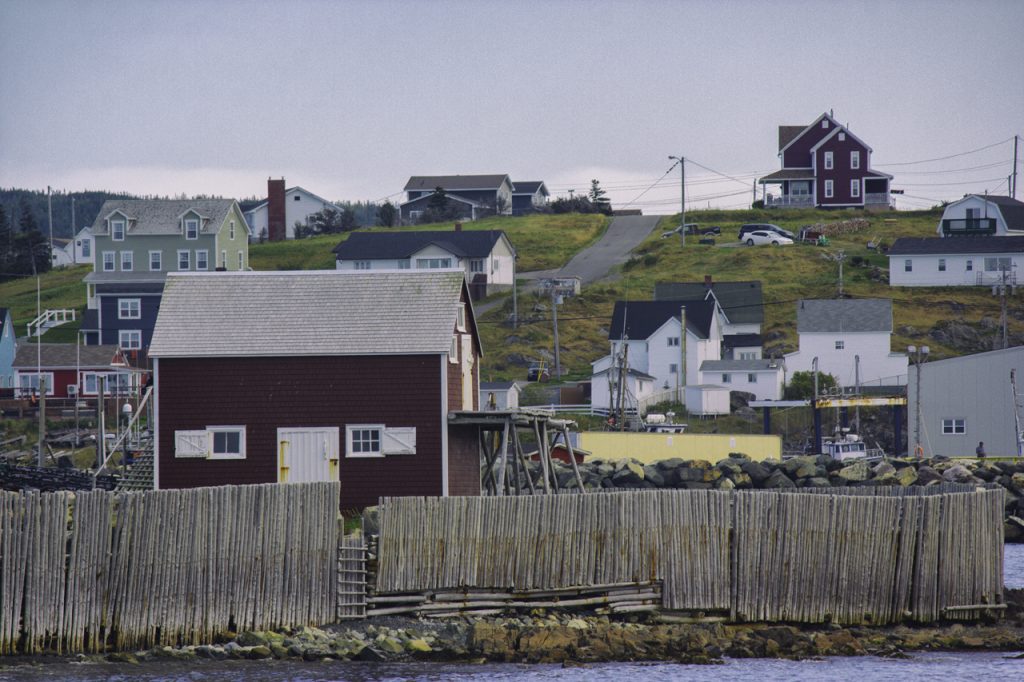
Local fans of Apple TV’s hit series Severance got a long-awaited treat on March 7, with the airing of Episode 8 of Season 2. That episode was filmed right here in Newfoundland in the summer of 2023. The episode focused on the backstory of Harmony Cobel (played by Patricia Arquette). She returned to her hometown — ostensibly set in a US coastal town, but actually filmed in Newfoundland locales including Bonavista, Keels and Port Union.
The local connection titillated fans of the show, and even non-fans for whom any appearance of the province in big media is a thrill.
In the show’s behind-the-scenes segment, location manager Ryan Smith explained that the scriptwriters asked them to find a coastal town. Cinematographer Jessica Lee Gagne had previously worked on a film in Fogo and quickly suggested Newfoundland. The rest, as they say, is history. In more ways than one.
The work is mysterious, and important
Will you stand with us?
Your support is essential to making journalism like this possible.
There was a fundamental appropriateness in the selection of rural Newfoundland for this episode. It’s truly a case of life imitating art, or perhaps art imitating life. Severance, which depicts the daily drudgery of Lumon’s corporate employees performing seemingly incomprehensible and purposeless tasks, does a spectacular job of rendering visible the inscrutable operations of contemporary capitalism, and the suffering it induces among those it touches. Newfoundland is in many ways the quintessential example of a place ravaged by the self-perpetuating contradictions of capitalism; by corporate arrogance and the all-consuming dreams of narcissistic millionaires.
“The work is bullshit!” exclaims employee Helly R in one of the show’s early episodes, referring to the inscrutable nature of the bureaucratic tasks Lumon workers perform daily.
“The work is mysterious and important,” counters her supervisor, Mark S.
This exchange sums up so much about our continued gullibility in the face of get-rich-quick-schemes from corporate adventurers. Governments and voters alike are repeatedly bamboozled by audacity and excess: from the rubber boot and chocolate factories of the 1960s, to the world-dominating cucumbers of the 1980s, to the fantasy airports and genetically modified fish fields of today. We can’t seem to keep our roads paved or provide basic health care, but of course we can create a wind energy grid to power Germany, or a hydropower project that will dominate the eastern seaboard, just as long as we give enough money and land to the rich people who come asking for it.
In Severance, the show’s protagonists toil away at their computer screens, moving numbers around until the numbers — randomly, it seems — vanish. When Helly R. has the temerity to question the point of it all, she’s quickly admonished by her superiors: the work is mysterious and important, and beyond the comprehension of those doing it.
If this produces an eerie sense of déjà vu, it’s not surprising. Why, exactly, do our power bills go up despite frozen rates and less usage? Why, exactly, does the government seem to restructure the health care system every five to 10 years — first centralizing, then decentralizing, then centralizing it again, then decentralizing? Why does our government sell Crown land and buildings to private businesses, and then rent or buy them back again at several times the cost?
But when anyone asks whether such things make sense, they are quickly admonished: the work, and the economy, is mysterious and important, and ought not to be questioned or looked at too closely.
An older, frailer place
In the behind-the-scenes extra, writer and producer Dan Ericksen explains the episode’s grim backdrop and the decaying coastal town in which it is set: “Lumon pulled a lot of natural resources from this place, one of those being the people […] it was left gutted,” he explained.
“The town is older than I expected. Frailer,” Cobel reflects in the episode, appraising how her hometown has changed in her absence. She steps out of her truck and gazes about her. Paint is peeling off rotting wooden houses. Elderly locals peer out of dirty windows at her, less with curiosity and more with a bitter sense of ennui. One man, dressed in flannel, sits in the decaying carcass of an old bus. There are no young people to be seen.

The selection of Newfoundland for the episode says a lot about this place. Insofar as the series focuses on the destruction caused by rapacious corporate greed, and the detritus left in its wake, Newfoundland fit the bill perfectly. Fishing towns gutted by greedy merchant firms and the get-rich-quick schemes of locals and transnationals alike dot our shores, testimony to the repeated failures of economic development in this place. Even today, corporations gobble up old fish plants, airports, office buildings and land, sowing grand dreams and visions in order to get these things free from our desperate and gullible governments. And every time they pull out — leaving our towns worse off than they were before — we shrug stoically, pull the frayed flannel jackets closer around our shoulders, sit back behind our dirty windows and wait for the next dreamer and schemer to cruise into town and exploit us all over again.
Of course Newfoundland has an excess of decaying post-industrial towns, gutted of resources and people, for any dystopian film or television series that needs them. It’s one of the few things we do have left. Now that our natural resources are going or gone, we are reduced to marketing the evidence of our own ruination.
It adds a further layer of irony that the episode was filmed here during the Writers Guild of America strike, which saw over 11,000 film and TV writers on strike against several major studios, including Apple. Filming was shut down and prevented from proceeding in other locations. But little solidarity was shown here, where the company was welcomed with open arms – even in North America’s only union-built town.
In the show’s behind-the-scenes segment, crew members almost struggle to find something nice to say about the place. “There was a lot of crazy change in weather, lots of wind. But I thought it was nice to work with a different environment,” says Gagne.
“We were at this place in the world that was just so hostile of an environment […] it was just so cold, and icebergs are floating by. I felt like it was very much in keeping with Harmony’s inner landscape,” reflects Arquette.
For all of its bleak portrayal of corporate capitalism run amok, Severance is a compelling series. Its oddball quirkiness, creative questions about identity and the desire to understand exactly what’s going on keep viewers hooked. And despite the obvious ravages of greed and capitalism, there is always the hope that our main characters will see through the murk and ultimately triumph over their oppressors.
“Within all of that chaos there still may be love,” reflects Arquette, summing up the suffering and despair so evident in her hometown, and the gritty attitude of its residents, for whom accepting their hopeless fate appears equal parts fatalistic resignation and gritty resolve. It’s an all-too-familiar attitude: the Newfoundlander’s stoic resolve in the face of hardship is a trait we’re taught is a virtue. But often, the ones who tell us that are the very people who profit from our perpetual sense of being resigned to our fates; our refusal to break the cycle of gullibility and exploitation and for once demand better for ourselves.
But there’s hope. As is the case for so many Newfoundlanders and Labradorians who return from years away to see with fresh eyes the ravages visited upon our hometowns, the trip home appeared to prove a turning point for Harmony Cobel.
“Harmony [is] realizing she’s been used […] combined with seeing the pain that they’ve caused to her hometown and the people she used to love, these are things that are slowly turning her,” Ericksen explains. “But we’re still not sure exactly what she’s planning to do.”
The same could be said of us.

Author

Related Articles

It’s time for equity consultants and community organizers to ditch AI
Tools are never neutral, and artificial intelligence has no place in social justice work

External consultant controversy a first test for Wakeham government
After being sworn in as premier Wednesday, Tony Wakeham called right-wing conservative strategist and PC transition team hire Steve Outhouse “one the best political minds in the country”

More police is not the solution
We need to challenge the public safety discourse in the provincial election