
Trans Day of Remembrance 2024: Reflecting on more than a century of trans culture and activism
Despite progress, we’re still battling anti-trans rhetoric and the belief that transgenderism is a ‘fad’

I watched an interesting fight break out on social media last week.
A distant acquaintance — the sort that only pops up on your Facebook feed once in a blue moon to say something egregious and make you wrack your brains over how and why you even know them — went on an angry rant about the appearance of menstrual products in the men’s bathroom at his workplace.
This of course is thanks to changes to the Canada Labour Code introduced in 2023, requiring federally-regulated workplaces to provide free menstrual products for employees — an excellent step toward tackling issues of equity and the cost of living crisis. “Menstrual products like pads and tampons are as necessary as toilet paper and soap,” the federal government said in a news release last year.
This person’s beef, he said, wasn’t with the provision of free menstrual products (although his vague rants about a Liberal ‘woke’ agenda suggest otherwise), but with their presence in the men’s bathroom. Why would men require menstrual products?
Will you stand with us?
Your support is essential to making journalism like this possible.
Others, to their credit, responded beautifully, coolly chiding him for being ridiculous and worked up over nothing at all. Either the products are there for trans masculine/non-binary employees, or they’re useful backups in case the women’s bathroom runs out. Or why not bring them home to partners or family members, they suggested, with a collective virtual shrug.
He continued to get worked up about catering to the needs of trans users of the men’s bathroom, quickly revealing his real beef was with the existence of trans people. It didn’t make sense, he argued, to have them in his workplace since he believed trans identity was a youth trend and there wouldn’t be any older trans people in his workplace of 30-somethings and above.
It’s hard to know where to start with a mess like that.
As The Independent has previously reported, Statistics Canada data reveals this province to be one of the most gender-diverse places in the country. Newfoundland and Labrador has the second-highest proportion of both trans women and trans men (aged 15-34) per capita in the country. That means literally hundreds of trans people live in the capital city alone (Statscan estimates over 1,300 trans people in the province). That’s more trans people in our province than Buddhists, Baptists, Hindus, Jews, Seventh-Day Adventists, Portuguese, Spaniards, or people from the Caribbean or Latin America, for those counting. Although we likely encompass members of all those groups.
Not a new thing
In my research I’ve spoken with multiple trans people from Newfoundland and Labrador who tried transitioning in the 1980s. Many had to leave the province, either because of the inadequacy (and downright nonexistence) of healthcare and medical supports, or, like others from the province, for economic and employment reasons.
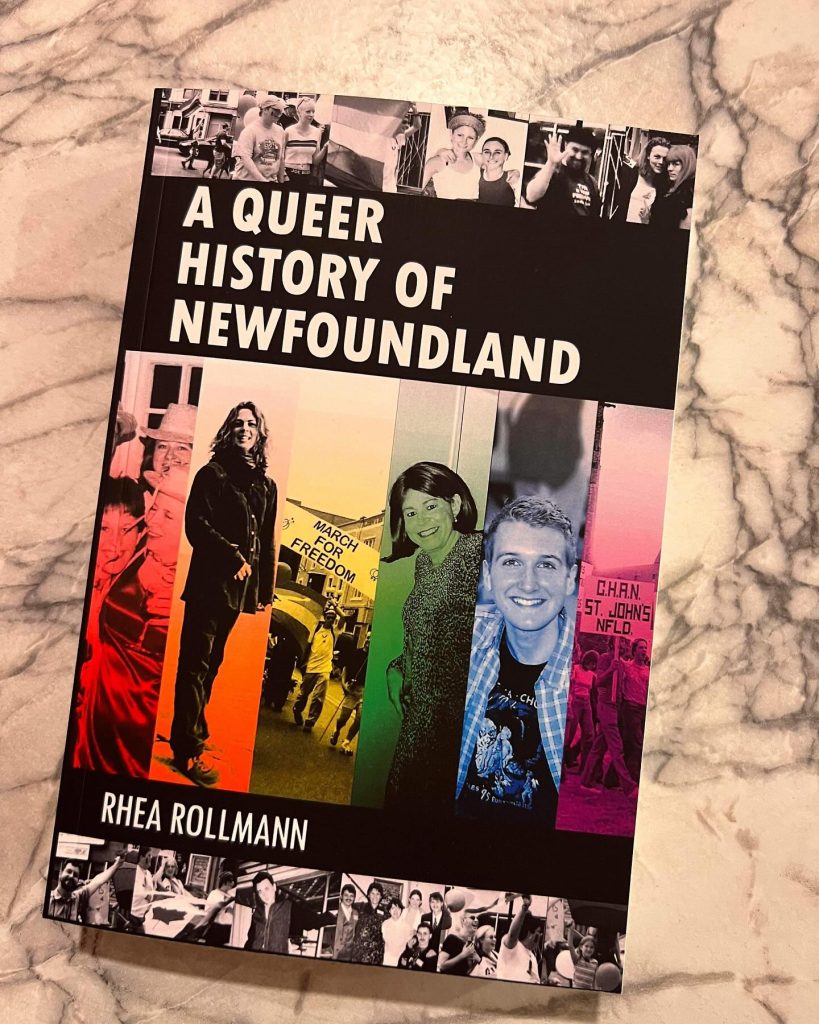
In my book A Queer History of Newfoundland, I chronicle the story of Jeannie Shepherd, a trans woman originally from Sandy Point who transitioned in the 1970s in Toronto after her family was relocated during the resettlement era. I also look at the story of Alexandria Tucker, who left St. John’s in the early 1990s despite making every effort to stay. As Tucker put it in her own memoir:
All I could think of was just how disgusted I was in that being only 15 years old I was left to fend for myself. No doctor wanted to help me with this problem I laid on their table. Their only solution was to suggest I move to a larger city where they would know what to do for me. […] I guess in retrospect Newfoundland was not ready for me and although I said before that I did not leave in fear, as I look back, I know now that I did. I not only walked away with my back stiffly turned on a town that to this day I long for, I ran.
By the late 1990s, some were fighting to stay and to have necessary medical supports provided here at home. One of the first out-trans Newfoundlanders and Labradorians involved with the 1990s-era community group NGALE was a trans woman construction worker, whose all-male crew was apparently among the strong and accepting supports in her life.
That’s just the recently documented history of gender diversity in this province. People have been medically transitioning for well over a century. Michael Waters’ book The Other Olympians: Fascism, Queerness, and the Making of Modern Sports (2023) explores the stories of famous athletes from the first half of the 20th century, such as Mark Weston, Zdeněk Koubek, Willy de Bruyn and Witold Smętek (among others), who all transitioned in the 1930s. It’s from this period that some of the earliest moral panics about trans people in sports date, fueled largely by Nazi Olympic officials with their regressive views on women and gender roles, along with racist sports commentators seeking to stem the rising tide of Black, working-class and other non-traditional bodies entering women’s sports (trying to gatekeep women’s sports for “dainty girl runners” as Canadian sports journalist Alexandrine Gibb put it in the Toronto Daily Star in 1936).
We see that attitude — that women athletes ought to be “dainty” (and white) — in repeated manufactured controversies since that time, right up through attacks on Imane Khalif at the Paris Olympics earlier this year.
Much media coverage of the time was more reasonably open-minded than today’s British and American tabloid press, and matter-of-factly, even eagerly (if somewhat sensationally) accepted the growing normalization of medical transition. Other newspapers (especially those sympathetic toward the Nazis) began grasping toward today’s conspiracy theories, suggesting that women athletes at international competitions were influencing each other to transition.
Yet other media commentators suggested it was the mere act of doing sports which precipitated transgenderism among women (this was an era when women were still fighting for the right to compete professionally, and the trans panic was one of many ridiculous reasons used to try to bar women from sports entirely).
Those lines have gotten pretty old in the intervening 90 years.
However old, debunked, and discredited these ideas are, it doesn’t mean they’ve gone away, sadly. The past few years have seen Conservative politicians dust them off in an unprecedented way. The legislation recently brought forward by the Alberta UCP government – which includes the same old baseless attacks on trans girls in sports – is rooted in the same falsehoods that were being peddled by Nazi officials to keep trans people out of the Berlin Olympics 90 years ago.
Now, like then, they’re being brought forward by politicians in an attempt to appeal to the worst of their base: bigots and hatemongers, who in turn aim to recruit and exploit other frightened people whose anger and frustration at the status quo render them susceptible to all sorts of hateful propaganda.
Saskatchewan’s government, meanwhile, has decided it’s willing to use the notwithstanding clause — a constitutional backstop meant to be used only in the rarest of instances — purely to prevent trans kids in school from being able to safely use their names and pronouns.
Federal Conservative leader Pierre Poilievre, for his part, has also recently jumped on the US Republican-style bandwagon of stoking hate and fear against trans people, drawing criticism from Amnesty International for his dangerous and baseless fear-mongering.
Newfoundland and Labrador’s Progressive Conservative Party deserves credit for resisting those same shameful tactics; the PCs have been vocal and active on human rights issues, including trans rights. But there have been a few oppositional voices in the party, and it faces a fraught and difficult path in navigating how to relate to a federal Conservative party that has traveled a very different path. It is to be hoped the PCs maintain the integrity to resist the lure of hate and duplicity.
This is where we are in 2024
In some ways, it’s a very similar place to where we were 90 years ago, with the rise of fascist movements and misogynistic and transphobic rhetoric and laws being spun by right-wing politicians.
In other ways, it’s a tremendously different place.
The past century’s rich history of trans and gender-diverse people here in Newfoundland and Labrador and around the globe is a proud testament to the creativity, perseverance and accomplishments of that community.
Where once upon a time the announcement of a gender transition precipitated sensational news coverage, now it’s so commonplace as to barely raise an eyebrow, except among small, narrow and fearful minds.
More importantly, decades of medical and scientific research has filled in the knowledge gap that all those transitioners faced in the 1930s. Scientific research has revealed just how commonplace gender diversity is; the notion of a simple, normative gender binary is as unnatural among humans as it is among other lifeforms on this planet.
When transphobic people have sought to undermine medical science on the normalcy of gender diversity, they’ve had to create their own half-baked quack organizations to do so, since every single credible medical organization is on the same page about the ubiquity of trans and gender diversity and the importance of supporting those exploring or transitioning their gender.
There’s a wealth of literature and guidance out there to make parenting easy for those parents who actually want to support their gender-diverse kids (which is most parents) and who don’t get co-opted by religious or conspiracy-fueled strictures into hating and harming their kids.
Walk into any bookstore or library and you’ll find shelves upon shelves of trans literature; any large multi-sited employer probably has a trans/2SLGBTQ employee group; and any modern shop worth its muster will greet customers with a, “Hi folks,” instead of the “Sir” or “Ma’am” that sound as bizarrely antiquated today as they did 30 years ago. These are all wonderful changes.
And yet.
Trans Day of Remembrance was founded in 1999 as a day to memorialize those murdered as a result of transphobia. In 2024, 350 trans people were reported murdered globally, a significant increase from last year’s 321 reported murders and the third-highest number since Transgender Europe began recording statistics in 2008.
Ninety-three per cent of those murders were of Black and Brown people. But of course, these numbers are only the tip of the iceberg, since most trans murders and other violent deaths are not recorded or documented as such. Despite a 69 per cent increase in reported hate crimes involving sexual orientation (according to 2023 Statscan reports) and calls for better data collection (including 2013 calls from both the Ontario and BC Coroners’ offices for their provinces to conduct more research into links between gender and sexuality and youth suicide), little has been done.

As a trans woman who grew up in 1980s and ‘90s Newfoundland, I barely made it through a school system that was still very backward and ignorant in so many regards. I lost two young sexually/gender-diverse friends to suicide before I graduated high school; and at least three more after graduating.
None of those deaths were inevitable. If institutions had been doing more to stem the tide of ignorance my friends would probably still be alive today. In subsequent years of work as a journalist and activist, I’ve come to know the partners and family members of many, many more trans people lost to violence, or to suicide because of a lack of medical and social supports in this country.
It’s jarring to see political parties lean into the violence, instead of working to protect our communities from it. Transphobic policies and rhetoric coming from Conservative parties in Saskatchewan, Alberta, and at the federal level could not be more effectively designed to kill children if they tried.
If we truly wish to honour Trans Day of Remembrance, we ought to do so not just by gathering for one day to mourn, but by dedicating ourselves to ending the existence of political parties that stoke hate against minorities for the sake of winning votes.
But on Transgender Day of Remembrance, let’s also remember the tremendous array of culture, creativity, art, community, knowledge, activism and social change trans people have brought to the world over the past century and more. All of that has flourished in spite of the hate and repression, and reminds us that trans culture and lives are, ultimately, fearless, irrepressible, and undefeatable.
Author

Related Articles
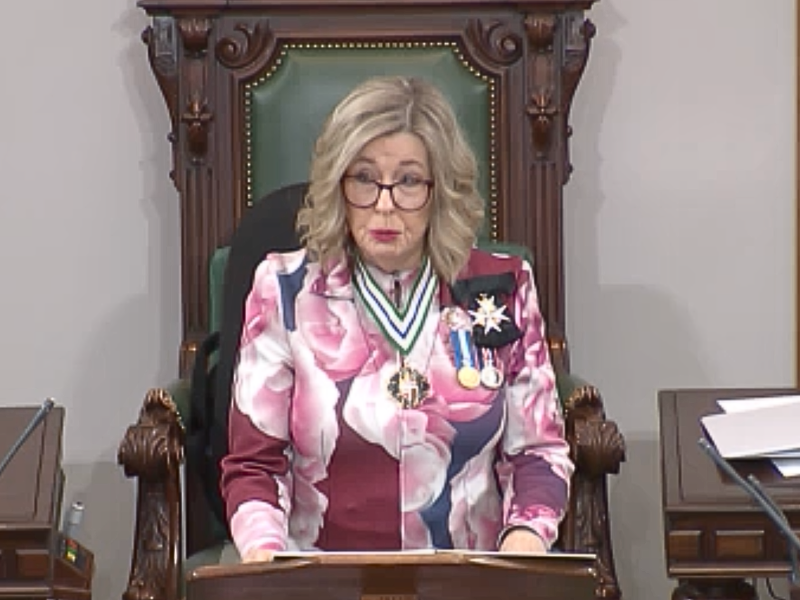
The PC’s subtle Throne Speech caveat
Wakeham government quietly places an asterisk next to its promise, ‘For all of us’
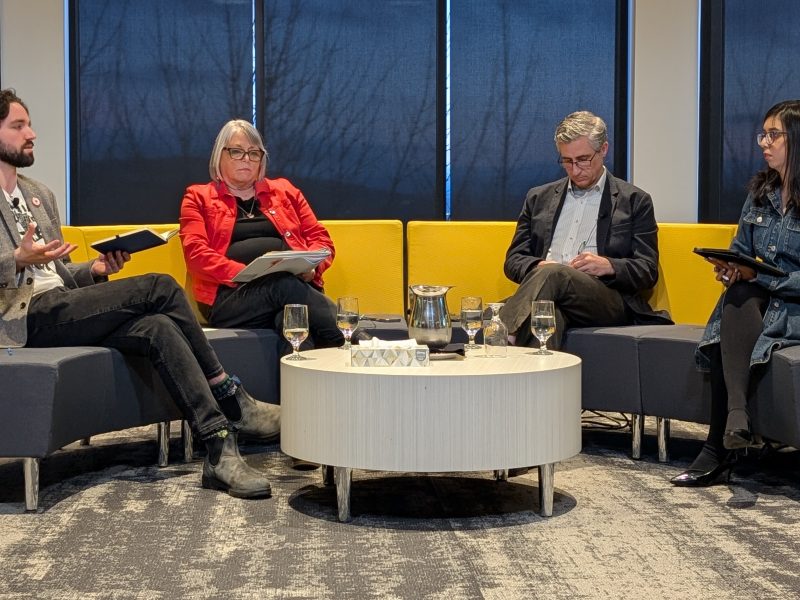
Slowly killing research at Memorial University
A university is not its buildings, and it doesn’t exist to serve private-sector interests. It is about the pursuit of knowledge.