
Why History Matters in Understanding the Devastation of Gaza
International media have largely chosen to avoid giving any historical perspective on the plight of Palestinians. What don’t they want you to know?
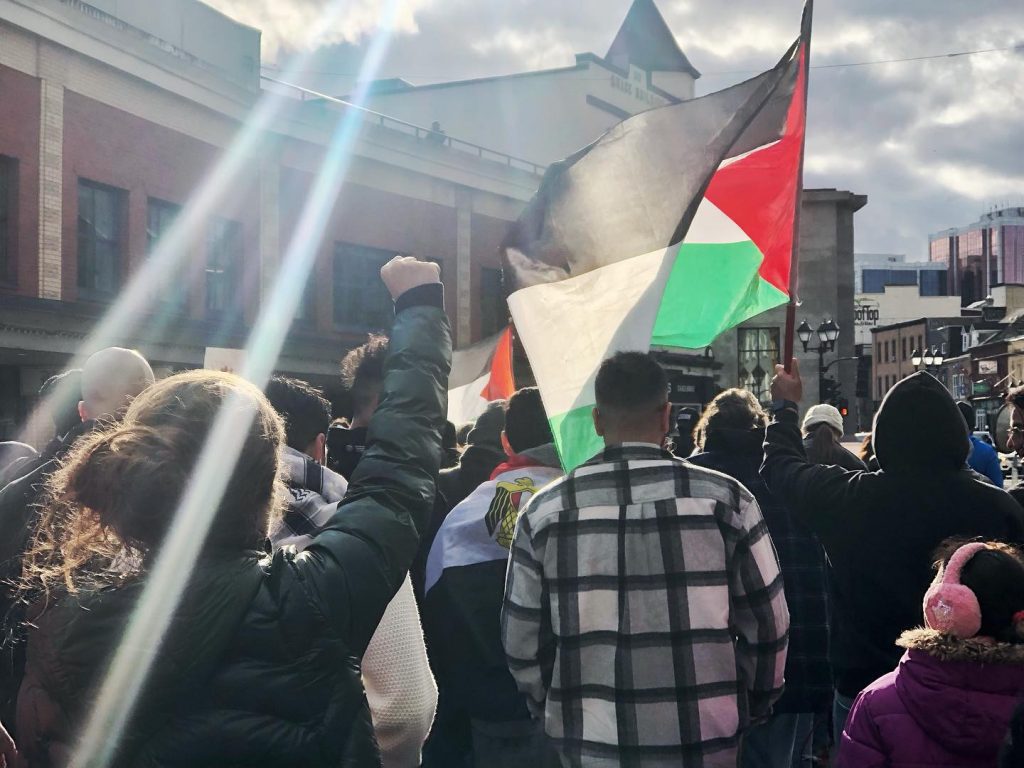
On November 4, around 500 people gathered in St. John’s in solidarity with Palestinians. Last Sunday, it was Corner Brook’s turn, where about 50 people showed up. Both protests conveyed disappointment and criticism of the Canadian government’s failure to call for an immediate ceasefire and an end to Israel’s occupation of Palestine.
As our government continues to stall in its response, the carnage in Gaza continues daily. Since October 7, more than 11,000 Palestinians have been killed in Gaza. Around 4,500 of the deceased are children, while another 1,350 children are said to be missing under the rubble.
Israeli president, Benjamin Netanyahu justifies this because the Gaza militant group Hamas killed between 1,200 and 1,400 Israelis and took 240 hostages. “All the places that Hamas hides in, operates from, we will turn them into ruins,” Netanyahu said the day after Hamas’s attack.
Sadly, too many in both Western governments and the international media are going along with the play-by-play narrative of war. Rarely is the question asked: Why does Hamas exist, and why do so many Palestinians feel compelled to support it?
Will you stand with us?
Your support is essential to making journalism like this possible.
Any fair answer to that question involves understanding the history of the region and the extent to which land has been, and continues to be, stolen from Palestinians.
Stolen Land
Understanding the Palestinian claim that their land has been stolen from them requires a history lesson that extends back to the 19th century Ottoman Empire when the region known as Israel-Palestine was occupied predominantly by Muslims. At that time less than four per cent of the population was Jewish.
This changed in the 20th century when the Zionist movement—with the support of the British government—began encouraging Jews around the world to emigrate to Palestine. The long-term objective was to establish a homeland for Jews in the land of their ancestors. That objective was realized when in November 1947, the United Nations voted to partition Palestine into separate Arab and Jewish states. Almost immediately, violence ravaged the region. And since that time, the land masses of those states have changed significantly.
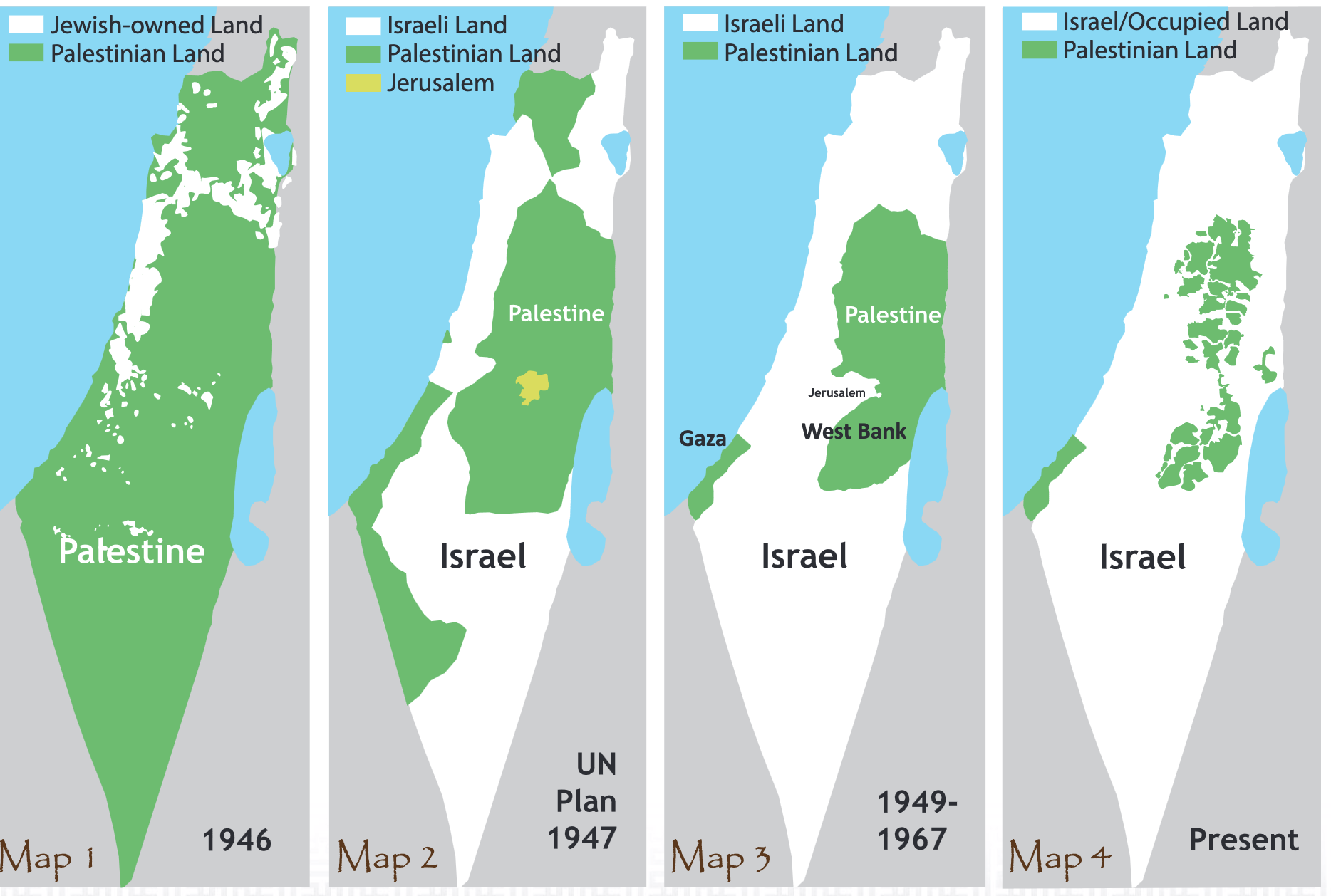
Map 1 shows Jewish settlements, in white, while the area was still under the protection of Great Britain.
Map 2 shows the division of the area after 1947. Fifty-three per cent of the land was allocated to the Jewish state of Israel, and 47 per cent to a Palestinian state, in spite of the fact that Jews represented only one-third of the total population. Western countries voted in support of the Partition Plan, while almost all Asia-Pacific countries voted against it.
Map 3 shows what Israel and Palestine looked like after the Arab-Israeli War of 1948 in which Israel defeated its opponents. Around 700,000 Palestinian Arabs, or 85 per cent of the total population, fled or were expelled from their land and homes. When Israel refused to allow them to return despite a UN resolution calling on them to do so, many ended up in the West Bank, which had been temporarily annexed by Jordan, and in Gaza, which was under the military control of the United Arab Republic (Egypt and Syria).
Map 4 shows the shrinkage of Palestine after the Israelis seized the West Bank, the Golan Heights and the Gaza Strip during the 1967 Six-Day War.
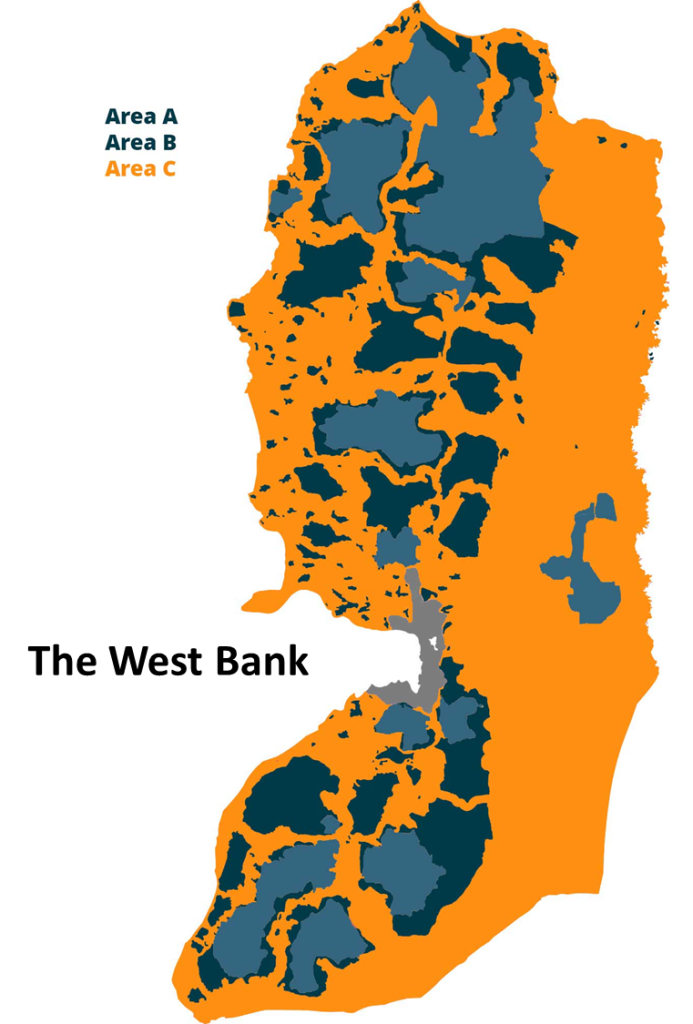
Today, only 18 per cent of the West Bank (Area A) is under the full control of the Palestinian Authority. Another 22 per cent (Area B) is under Palestinian civil administration, but Israel retains exclusive security control with limited cooperation from the Palestinian police. Area C, which represents 60 per cent of the territory, is completely under Israel’s control.
Palestinians in West Bank cannot travel outside their areas—and sometimes even to other parts of their own area—without crossing Israeli checkpoints. Then there are the illegal (and always underreported) West Bank Jewish settlements that have steadily and violently encroached on Palestinian territory over the last decade. That aggression has escalated since Hamas’ October 7 attack on Israel. According to the United Nations, at least 132 West Bank Palestinians—including 41 children—have been killed by security forces and settlers in recent weeks.
The Gaza Strip
Gaza is an enclave. It extends a mere 40 km in length, and is six to 12 km wide at various points. More than two million people live there, in a place comparable in size to the Bonavista Peninsula. Seventy-five per cent of the residents are refugees or descendants of refugees who were never allowed to return to their homes after the 1948 and 1967 wars.
Since 2007 Israel has—in contravention of international humanitarian law—imposed a land, sea and air blockade, which effectively means the people of Gaza, with few exceptions, are held captive in their own land with little to no access to the outside world, including the West Bank. In addition, trade is heavily inhibited between Gaza and other countries and Israeli digital surveillance means that all communications are monitored. All of this has led human rights organizations such as Amnesty International, Human Rights Watch and Action Aid to describe Gaza as an “open-air prison.” Even before the current crisis 64 per cent of Gazans were food insecure and 80 per cent of them depended on humanitarian assistance.
Today Gaza is being razed to the ground. More than half of housing units have been damaged or destroyed and 1.5 million people are internally displaced. This, plus leaked Israeli government documents, is leading to speculation that Israel’s far-right government led by Benjamin Netanyahu is intending to expel all 2.2 million Gazans into the Sinai Desert and Egypt. While that outcome is possible, it’s unlikely Egypt would support the plan.
Are Western governments biased?
It’s difficult to refute the Palestinian claim that their farms and homes are being endlessly stolen from them and that their safety and rights under international law have been trampled on by Israel.
But does that justify what Hamas did on October 7? Western governments, including our own, have almost unequivocally said “no.”
“The unspeakable acts that the terrorist organization Hamas has carried out against the people of Israel cannot be tolerated,” Newfoundland and Labrador Premier Andrew Furey said in an October 13 statement. “We stand with the Government of Canada in condemning acts of terror and call on all parties to abide by the requirements of international law.”
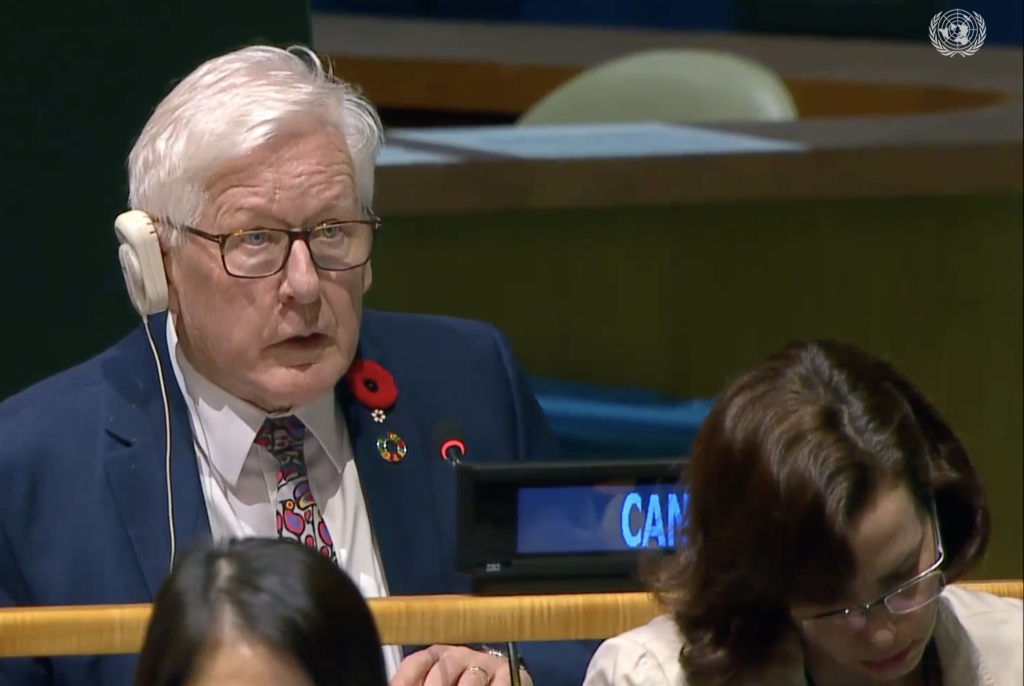
The response in the rest of the world has been more nuanced, however. On October 27 the UN General Assembly passed a resolution calling for a ceasefire. Canada abstained and presented an alternative version which included the condemnation of Hamas. Pakistan’s UN Ambassador Munir Akran’s response drew loud applause from UN delegates. “If Canada was really equitable it would agree either to name everybody—both sides who are guilty of having committed crimes—or it would not name either as we have,” he said.
It’s interesting that this rebuke of Canada was not published in any mainstream media in Canada. Why is that? A 2021 Statista report certainly lends credence to Akran’s perspective. Between 2008 and 2020, Palestinian deaths outnumbered Israeli deaths by a factor of 22 to one.
Jewish criticism of Israel
As concern grows for what’s happening in Gaza, it’s important to realize there are Jewish organizations firmly in support of Palestinian rights. Jewish Voices for Peace is the largest progressive Jewish anti-Zionist organization in the world. The group’s stated goal is to organize “a grassroots, multiracial, cross-class, intergenerational movement of U.S. Jews into solidarity with Palestinian freedom struggle.”
Meanwhile, Canadian group Independent Jewish Voices vows to “reclaim the tradition of Jewish support for universal freedoms, human rights and social justice,” adding those principles “are violated when we allow an occupying power to trample the human rights of an occupied people.
“Palestinian inhabitants of the West Bank and Gaza, living under Israeli occupation and military blockade, face appalling living conditions, with desperately little hope for the future,” the Independent Jewish Voices website reads. “At the same time, Palestinian Israelis are subjected to a range of discriminatory laws and regulations and are consequently unable to enjoy the same rights and freedoms that are enjoyed by Israeli Jews. This institutionalized discrimination has led increasing numbers of people around the world to identify Israel an apartheid state.”
Will Palestine ever be free?
If Palestine had been partitioned fairly into two states 75 years ago, the present situation in the region might be radically different. But the reality today is that Palestine doesn’t exist on most online maps of the Middle East. This implies acceptance that its territory has been absorbed by Israel. The two-state solution has all but disappeared.
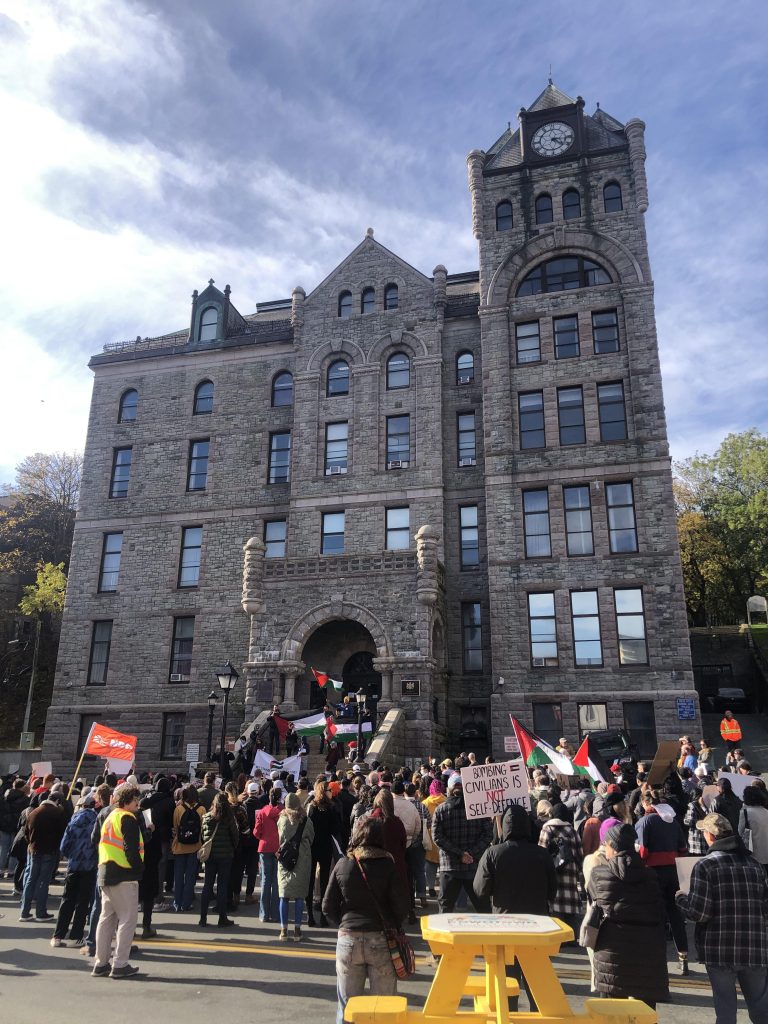
Currently only the 1.7 million Palestinians who live in East Jerusalem are allowed (with some restrictions) to vote or run for Knesset, the Israeli parliament. The 5.5 million Palestinian subjects who live under Israeli control in the West Bank and Gaza cannot. They have no voice in Israeli decision-making and no way politically to stop the abuses and terror inflicted on them. Not surprisingly, this has led a growing number of international organizations, including many inside Israel itself, to accuse the Israeli government of apartheid.
At the Palestine solidarity rally in St. John’s on November 4, Zaid Kay, a Newfoundlander of Palestinian descent, gave us his vision of what Palestine could be. It seems appropriate to conclude with his words.
“My dream is a secular, democratic, multicultural, binational state from the river to the sea where all people live in freedom and equality, no matter their race or religion,” Kay said. “My dream is a free Palestine.”

Author

Related Articles

Throwing shade on solar myths
‘Someday the sun will shine and have-not will be no more,’ Brian Peckford famously said. Solar ‘someday’ can’t come soon enough, writes Angela Antle
No energy justice with Bay du Nord
Newfoundland and Labrador’s Bay du Nord ambitions are out of step with the dire need to phase out global oil production and the province’s benefits agreement with Equinor underscores the need for a new approach to fossil fuels

A housing corporation without a housing mandate
The Liberals and PCs have no right to point fingers at each other in response to the auditor general’s scathing report on social housing