
Our Eleanor
Playwright Megan Gail Coles and director Emma Tibaldo talk about their new play, Grace, and how art can transform our collective narratives, safeguard us against chronic stress, and build resilience in our communities

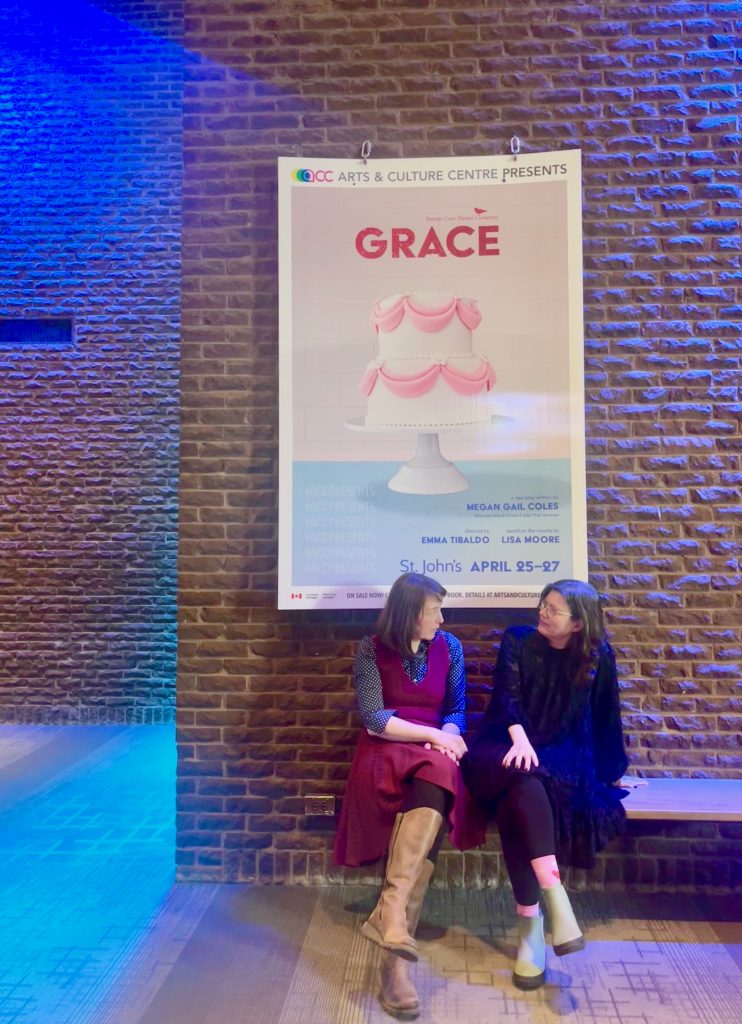
“It is a beautiful thing for a group of people to get together and make something for everyone else to watch,” says Megan Gail Coles. Coles is the artistic director and co-founder of Poverty Cove Theatre Company, and an award-winning writer of plays, screenplays, poetry, and prose. The beautiful thing at hand is Grace; it opens today for a short run at the Arts and Culture Centre in St. John’s.
Coles describes Grace as a “collective offering,” and she hopes people will come out for it–even if they say they don’t like plays, even if it’s April, or even if they don’t like to leave their house after supper. Coles gets it. She has a toddler. But she believes it’s important and rewarding. “I am very much of the camp that believes we have to leave our homes with purpose to engage in public discourse in a meaningful way.”
It’s a cold and gloomy Friday afternoon when I meet her and Emma Tibaldo at the Arts and Culture Centre. Tibaldo, a seasoned dramaturg based out of Montreal, is directing the play. In addition to being part of Poverty Cove’s creative team, she’s also Coles’ mentor, friend, and biggest fan.
The dark calm of the concourse provides a welcome break from the whipping northeasterly winds outside. I’ve always had a soft spot for this hard brutalist hunk of a building. When it opened in May 1967, then Premier Joey Smallwood called it the “cultural heart of the province,” and hoped it would become “a people’s place, and not merely for the arty-arty people, as important as they are, but for the toiling masses too.”
Will you stand with us?
Your support is essential to making journalism like this possible.
From the parking lot, it doesn’t much look like that kind of place, but its large cavernous interior is really something to behold. There on the mezzanine wall in the centre of it all, is a brick relief mural. It looks like some half-excavated archeological site, where fossilized life forms are surfacing in the present. It’s easy to miss it — the terra cotta is camouflaged within the brown rock-faced brick. Only the skylight above accentuates its protruding shapes.
The mural was sculpted by the late Québecois artist Maurice Savoie in 1966. His murals appeared on the G.A. Hickman Education Building at Memorial University, and in the McGill metro in Montreal that same year. An ancient sculptural method, relief has long been used to introduce dimension where there is none, foregrounding elements that were just background before.
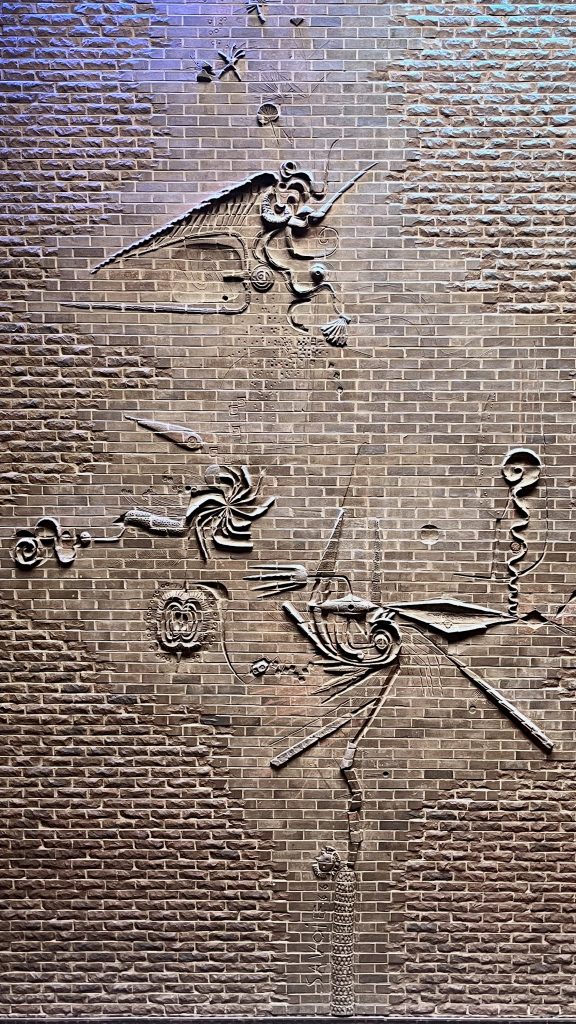
The connection isn’t immediately obvious, but I think Coles and Tibaldo are attempting something similar in their theatrical approach, putting old, enduring things into relief, making them present on stage where they can be collectively acknowledged and worked through. “Everything Emma and I work on, we’re trying to look at the larger crux of the problem,” Coles says.
The problem, I have come to learn through our conversation, is our inheritance: old, well-worn ways of thinking and behaving, the structuring elements that continue to give shape to our lives—even when they no longer serve us. Even when they harm us.
“By showing something on stage which is not representative of real life,” Tibaldo says, “we can get down to the root of an experience.” Audiences and actors alike are free and safe to explore this experiential core more deeply in their own ways, and feel something of what it might be like to transform it.
Grace is an invitation to let go of our defaults, and think differently about families, marriage, and motherhood. These transitions aren’t smooth, which is why the stage is the perfect place to test them out. “It’s a mucky process,” Coles says — it requires breaking new emotional and energetic ground.
Coles is holding hers, literally. She’s sitting at my feet, cross-legged on the carpeted floor. Tibaldo and I, meanwhile, are perched on the immovable benches across from her. Three of us are huddled together, trying to create a quiet corner for ourselves on the upper level of the concourse. Preparations are clearly underway for another event, people are setting up a merch table beside us, loudly rummaging through boxes. A security guard saunters past guiding a squeaky-wheeled dolly, as theatre techs mill in and out of the proscenium. In the distance, someone is vacuuming.
But we proceed undeterred, with Grace.
‘See-the-thing, be-the-thing’
It might be new to the stage, but Grace has been a long time in the making. “We’ve been working on this project together for 15 years,” Coles tells me. Coles adapted Grace from Lisa Moore’s novella of the same name during her first year at the National Theatre School. The story is the anchor of Moore’s Giller-Prize nominated short story collection, Open. It takes place at a wedding over the course of a late summer night in St. John’s, and circles around the character of Eleanor as she celebrates the newlyweds, connects with old friends, and undergoes a personal reckoning.
But Coles’ relationship to the work even precedes that. She initially read it in a Newfoundland literature course when she was 19; it proved formative in her development as an artist. “In many ways, it changed the direction of my life,” Coles says, describing it as “my see-the-thing, be-the thing moment.”
It was the first time she’d read fiction by a Newfoundland writer that presented complexity in the lives of contemporary women who shared characters that were akin to the kinds she too wanted to create.
“Lisa’s character, Eleanor — my character, now our character — exemplifies all these attempts at being her full self, at realizing herself as an entire person,” Coles says. “That was really kind of impactful for someone at my age […] because I didn’t actually know either. All the things that Eleanor doesn’t know, I think young women also don’t know.
“A lot of my experiences at that point of Newfoundland women on the page and on the stage,” she explains, “were characters who were celebrated for self-sacrifice, and nobility. The goodness of these women seemed to be the entirety of their complexity.” They were defined by what they did for those they served, rather than who they were as people. Coles longed for more. “There was such a small container for what womanhood was meant to be like in Newfoundland and Labrador.”
‘Nanny ate the scraps’
Coles grew up in a small fishing village on the Great Northern Peninsula. She remembers being a teenager and watching her grandmother spend the morning making food, then feeding everyone in order of priority. “The men sat down to the table first, then the adult women, then the children,” she says. “And then Nanny ate the scraps.”
She wonders what modeling such behaviour does to young minds. “How does that influence future generations of growing women and men?”
At one time, it wasn’t out of the ordinary for a woman to feed herself last. In Newfoundland and Labrador, in particular, such a practice evolved out of the gendered division of labour that characterized so many outport economies. Men were responsible for the outdoor, strength-based work of fishing, forestry, mining, and agriculture, while women took care of everything and everyone else at home.
The labour market looks much different now. For one, most households can’t function on a single income. And yet, the domestic expectations for women remain unchanged. Coles remarks, with a hint of exasperation, “we still have that mentality that runs through our communities where the default is that the woman cleans the house and cooks the food and rears the children and everything else.”
Women’s domestic duties might have emerged as a practical solution in the face of challenging circumstances, but they’ve been performed and repeated so often, that they’ve been internalized and ingrained as an inherent part of womanhood.
Though the play reflects so much of Coles’ experiences living in rural Newfoundland and Labrador, Tibaldo says it resonates with her own experience. She’s a child of Italian immigrants. “It’s also my experience of immigrant families,” she explains, “who are suddenly transposed into an urban centre but still have all the same habits.” The beats are familiar. “The specificity of where it’s set and where the characters are,” she adds, “make this play completely universal.”
‘She put everyone before herself’
The inclination to associate women with subservience and self-abnegation is not only archaic, to Coles’ mind, but harmful. There are “physiological ramifications of not realizing one’s truth,” Coles says.
It leads to chronic stress, which has long-term consequences on the body. She notes that we’ve come to normalize watching people live under duress until they falter. “When I was 24, I wrote a play about a woman who cares for everyone and gets cancer. That’s Our Eliza,” she explains. At that time, she knew that something wasn’t right with the world, she just didn’t have the perspective she has now.
“I think obituaries are really interesting,” she observes, “where the individuals writing the obituary go on in great detail to talk about how the person put everyone before herself.” It gives the impression that a woman making herself secondary is something special, something to be grateful for, and what makes her deserving of love.
“I read these kinds of obituaries and I think, ‘No! Enough!’’ Coles exclaims. “Like, how many women have to die at an early age servicing the wants and needs of others before we realize that this is not working well for us?”
She pauses to ask me: “Is that too dark?”
It’s not, I reassure her. And I mean it, because there’s an undercurrent of optimism that courses through everything Coles says. It’s clear she believes this default programming can be changed.
After all, if self-abandonment was really an inevitability for women, it wouldn’t have to be venerated. The fact that it is suggests it requires our participation to be maintained. This means we can direct our energies and efforts elsewhere, toward behaviours that actually do support the values that serve us — all of us.
We can benefit from having more choices modeled for us, beyond simple dichotomies of selfless and selfish. “This idea that you can only be a good woman or a bad woman is a really overly simplistic, inauthentic notion,” Coles says. “There’s a gradient of humanity between good and bad.” It shouldn’t be such a radical notion, but it is.
‘You conceal things from yourself’
Having the play unfold in the performative space of a wedding is significant, Coles points out. Marriage rites are traditionally places where our default programming is activated and rearticulated, gender roles are reaffirmed, values are reified, and reproduced. But it has the capacity to be adjusted; it can accommodate us as we change.
The point, Coles suggests, is not that there is no happiness inside of a traditional monogamous relationship. Rather, it’s that every relationship is situated within its own particular context, and must be built from the ground up.
“We often don’t look at the context of situations because it’s so time consuming,” she says. It’s easier to take cues from the norms we see practiced around us, rather than craft our own roles and narratives. But it’s only easy in the short term, on the surface of things; over time it will take its toll, deeply.
“Rather than saying, ‘We can all be equal,’ we can just say, ‘We will all have to find the place where we can be our full selves, and we’ll each have to compromise something to get there,” Tibaldo adds.
It’s hard to forge this path. “You conceal things from yourself,” says Coles. Grace explores “how you can try to come to terms with your own self-deception in a way that is compassionate.” It’s very hard to be honest with yourself about why you’ve made the choices that you have, she contends. “You can only withstand so much reckoning.”
‘Big older sister energy’
What happens in the world of the play is intense, Coles admits. At the same time, “it’s also kind of delightful to watch someone move through this emotional space. It’s liberating to be a bit of a mess.”
More to the point, it’s a necessary part of the process. There are no shortcuts.
“I got big older-sister energy,” Coles says. “I have given a lot of unsolicited advice over the years, which is not helpful.” She realizes now that people have to find their own way, at their own pace — but they still need support.
This is also part of what the play explores: how we can support someone without telling them what to do. It requires patience and restraint. Eleanor’s friends get frustrated, but they also know they can’t dictate her decisions. Instead, they try to allow her to have the space to see the reality, and feel it out on her own. Time and time again, “she’s never quite ready to let it sink into her deeply enough,” Tibaldo says.

Not only do we need support through such a process, we also need access to our imaginations. “Without this ability to imagine a different reality,” Coles says, “we can’t make any progress forward.”
Art, and performance art especially, allows us to imagine those alternatives collectively, and open up possibilities in our lives to do things differently, even in the smallest, most innocuous ways — even if it’s just how we wash the dishes.
‘Art is a protective mechanism’
While fiction can create a private conversation between author and reader, Coles offers, theatre has “the capacity to create a dialogue that actually alters the movement of our collective narrative.”
One of the reasons she’s so committed to playwriting (“even though it is a slog in 2024 to get to play up on the stage!” she says) is because of its social benefits. “There’s so many things that happen inside that room when we watch something together, that can’t be replicated in any other format.”
She uses sports to emphasize her point. “Watch the fans watch their team at the moment when a goal occurs. That is intoxicating, right?” Their bodies move, they stand, raise their arms, and look upward in unison. She compares it to what happens at a concert, or during a standing ovation. Sociologist Emile Durkeim called this energetic, synchronized phenomenon “collective effervescence.” Any live performance can inspire similar feelings of awe and connectivity, even the spectacular murmurations of starlings.

For Coles, theatre isn’t just a therapeutic aid, a communal good, but a vital resource that humans have relied on to sustain us for millenia. “Thousands of years ago, we were drawing pictures on the walls,” she says, “we were making up dances, we were performing for one another.”
These activities weren’t done just for fun — they were a matter of survival.
“Our body physiologically understands that art is a protective mechanism for us,” she says. “This distance that is being built, between humankind and the art forms that have sustained us? This is a very damaging distance.” She’s referring to our increasingly mediated lives.
“We seem to have gotten into a habit where we live on our tech, but we also live for our tech,” Coles says. “I think we need to start living for ourselves again.”
Art and engagement with art, and live performance especially, bring us back to our human bodies, their capacities for feeling and connecting, and create opportunities through them to build resilience. We need these interventions now more than ever, particularly here in the province.
“You can’t live in Newfoundland and Labrador and not have an experience with traumatic events,” she says. “That boom and bust [cycle] we’ve been on for 200 years means that trauma has touched all of our lives.”
Trauma and chronic stress are associated with adverse health outcomes, and have been shown to have a shortening effect on telomeres, the caps that extend from the ends of our DNA. Shortened telomeres are a biomarker for worsening health and early death.
Engaging with art can reduce stress, but it does much more than that, too. “Art builds a buffer against disease,” Coles says. She’s very serious about its power. Art is a good and necessary thing that helps us humans be present in the world — starting with presence in the performance space.
Coles wants us to know that if we accept what Grace has to offer, we might change our neural pathways, or even regenerate a telomere or two.
Grace runs April 25-27, 2024 at the Arts and Culture Centre in St. John’s. Tickets are available here.

Author

Related Articles
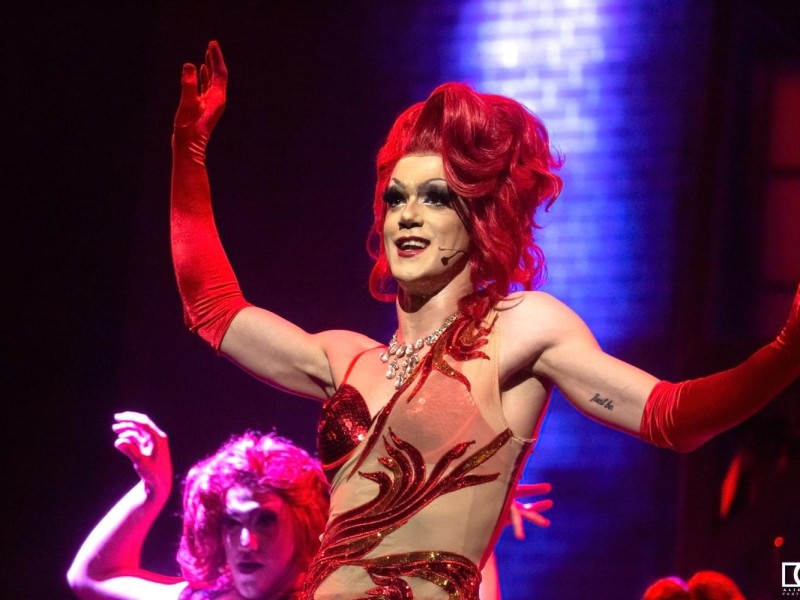
‘Honest storytelling’: N.L. drag icon set to unveil new show
Barbra Bardot brings her personal journey to the public stage in new St. John’s production ‘Becoming Barbra’

Queerness, science, and the Mistaken Point fossils of Newfoundland
Art meets science in a unique Eastern Edge residency
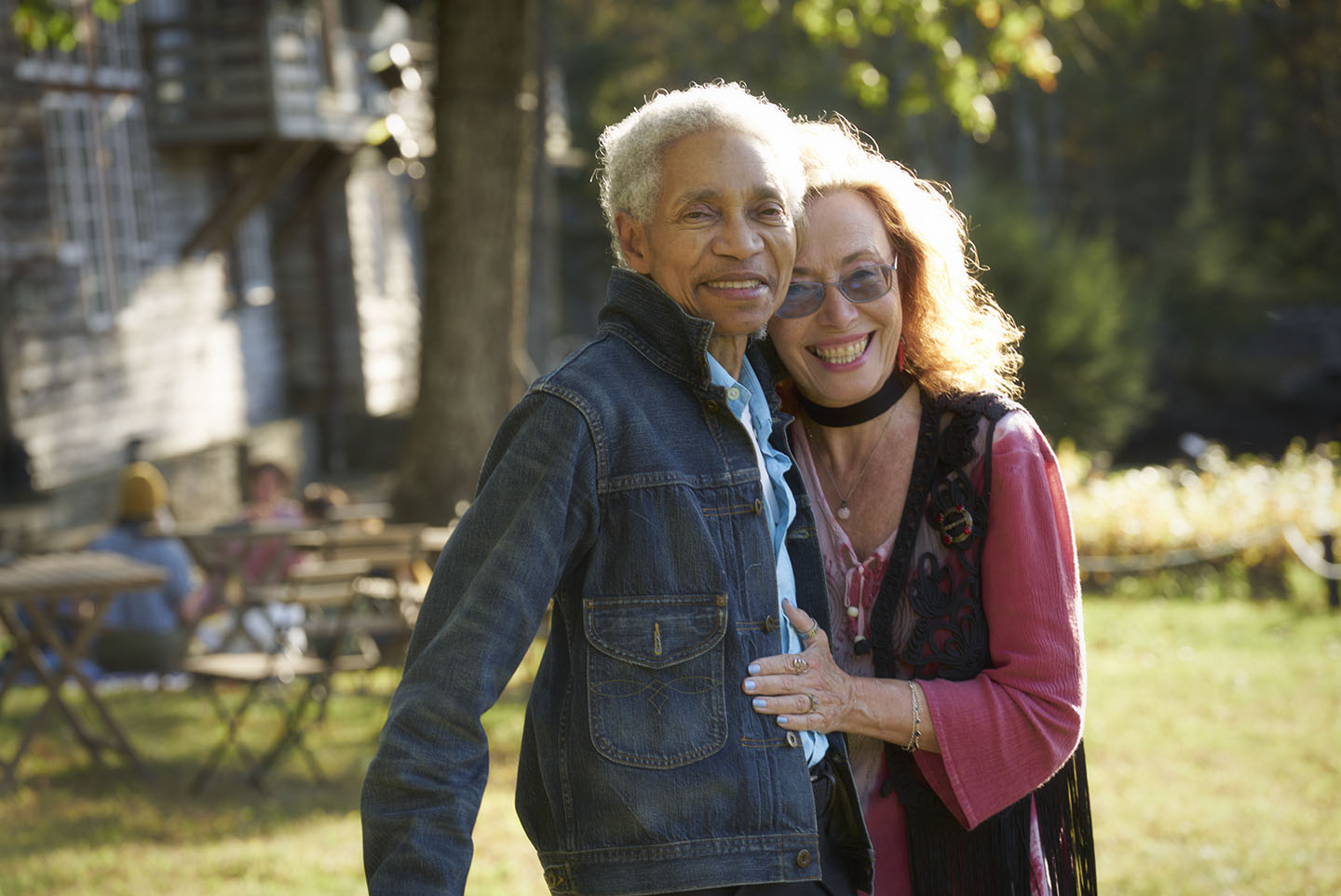
‘Our strength is in community’: the creative life of Beverly and Elizabeth Glenn-Copeland enters a new era
Acclaimed musician/writer couple Beverly and Elizabeth Glenn-Copeland share reflections on their love story and history together, on visiting Newfoundland, and on fighting hatred with courage and song