
‘Our strength is in community’: the creative life of Beverly and Elizabeth Glenn-Copeland enters a new era
Acclaimed musician/writer couple Beverly and Elizabeth Glenn-Copeland share reflections on their love story and history together, on visiting Newfoundland, and on fighting hatred with courage and song
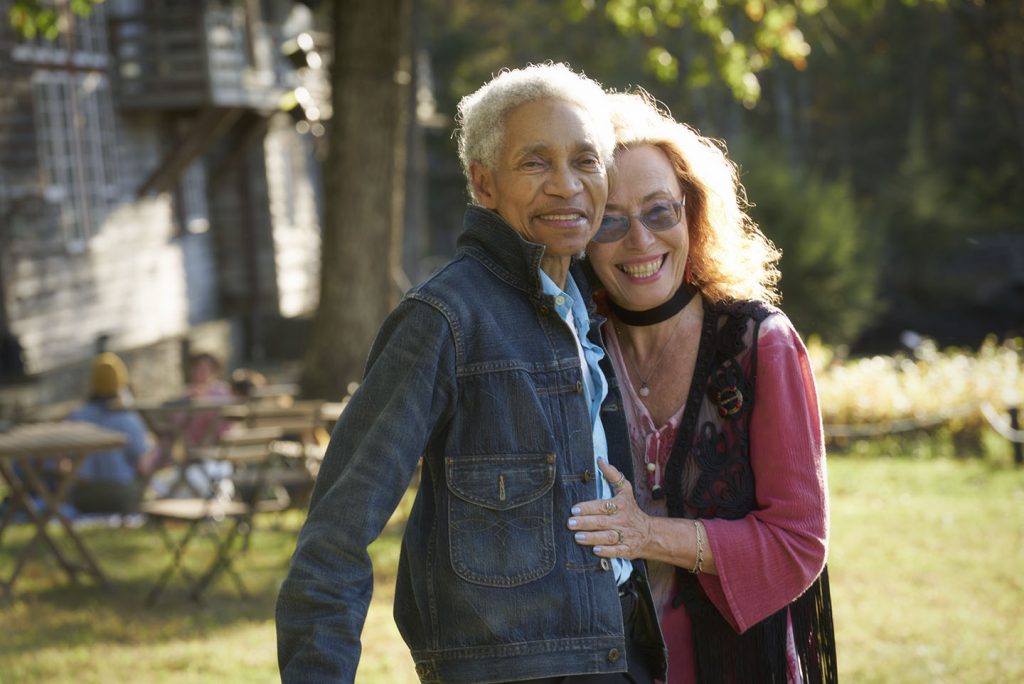
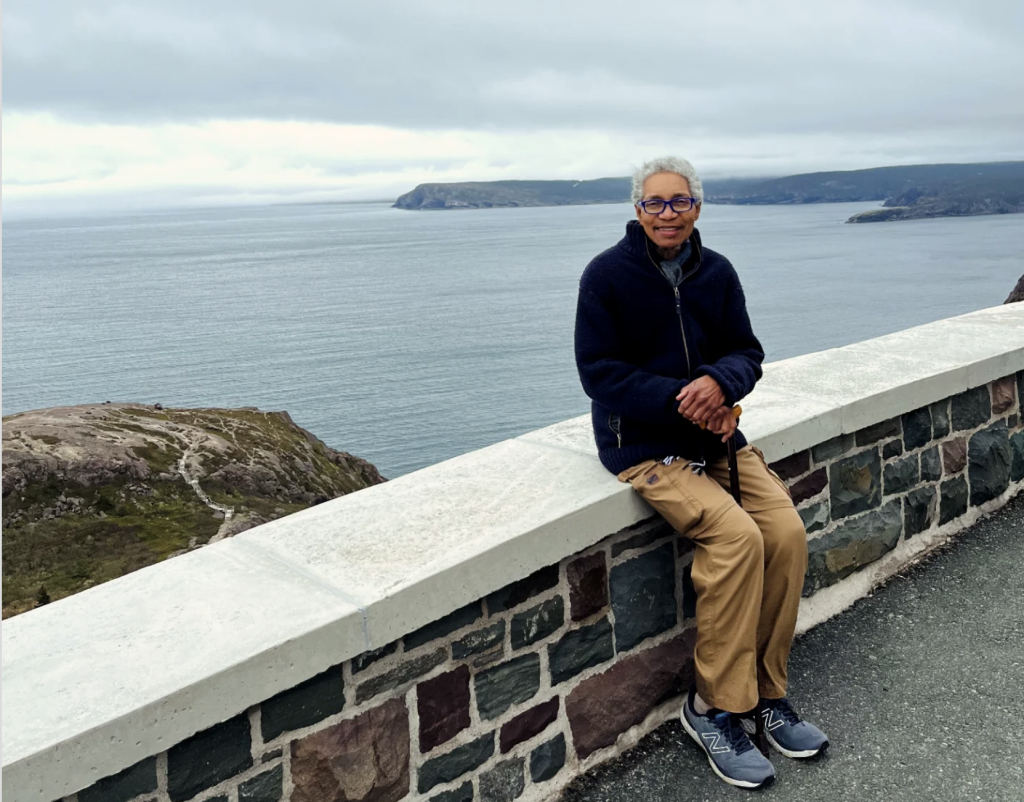
Beverly Glenn-Copeland is looking forward to his first-ever visit to Newfoundland.
The iconic folk singer, who once wrote for Sesame Street and had a recurring appearance on Mr. Dressup, has been recording music since 1970 but is perhaps best known for his groundbreaking 1986 album Keyboard Fantasies. The album received little notice on first release, but was subsequently hailed as a New Age electronic “classic.” The album exploded in popularity after being ‘rediscovered’ in 2015 and reissued two years later, leading to a new appreciation for the breadth of Glenn-Copeland’s work and a bevy of awards and accolades, including the 2020 Polaris Music Heritage Prize.
By that point Glenn-Copeland (who goes by Glenn) and his wife Elizabeth (a writer, theatre artist and artist educator) were living in New Brunswick, producing songs, musical theatre and poetry. The 81-year old musician and his wife now live in Hamilton, having relocated there after a series of tumultuous events sparked by the cancellation of international tours due to the COVID-19 pandemic.
Coming to Newfoundland has been a long-standing dream for both of them – especially Glenn, who’s never been (Elizabeth made a brief work-related visit in the 1990s, but recalls the city being so fog-enshrouded during her whirlwind tour she wasn’t able to see much of anything). The couple have a photo of Gros Morne on their wall; a daily reminder of their desire to visit. Within seconds of our convening on a virtual call, Glenn recounts how riveted he was by online videos of Newfoundlanders struggling during Snowmageddon (a 2020 blizzard that dumped nearly 100 cm of snow on top of more than 100 cm of snow already on the ground). He was touched by the spirit of mutual aid and community he saw in those clips.
Will you stand with us?
Your support is essential to making journalism like this possible.
“I saw how kind the people were with each other, what they did to help each other get out of those houses. I looked at that and went – ‘Just look at those people! They’re so caring for one another!’”
A love story decades in the making
Glenn and Elizabeth have been friends and collaborators for over four decades, but their partnership has developed over time.
Elizabeth first set eyes on Glenn in 1976, at the Groaning Board Café on Jarvis Street in Toronto. She was 19 years old, and has a vivid memory of walking into the café and seeing Glenn on stage.
“Here was this gender-fluid person – at a time when gender fluidity was not even a term for most of us – who was up there playing this beautiful music, and not remotely interested in the audience,” she recalls. At that moment he was singing a children’s song called Greedy Feet (it’s a piece the two now perform as a duo).
But Glenn was immersed in his music that day, and it would be another 10 years before she encountered him again. She was then 29 years old and pregnant.
“Somebody came up to me and said ‘Hey, have you heard of Beverly Glenn-Copeland?’ I said ‘No’ – I didn’t even remember the name of that gender fluid person I’d seen.”
Her friend gave her a cassette with two of Glenn’s songs on it.
“The whole gestation of my daughter in my belly was done to those two songs,” she recalls with a smile. “I learned them off by heart, and I sang them.”
Fast forwarding again to 1992, Elizabeth was working on an album of her own, and wanted to record one of those songs for it. She called Glenn to ask permission to use it. He quickly assented, and then the two got to talking deeply for the first time.
“We realized we had shared community – spiritual community, musical community – and we became friends. We started collaborating – sometimes he’d collaborate with me on a show I was producing, sometimes I’d collaborate with him, sing backup, whatever.”
Their friendship ebbed and flowed for the next 15 years. In 2006 Elizabeth was going through a difficult period. She lost a few key contracts and faced the possibility of bankruptcy, and of losing the home she and her daughter lived in. In desperation, she followed a friend’s advice to ask the universe for help.
“I stood under the night sky and I called out to every deity that has ever existed,” she recalls. “I said: ‘I’ve done everything you’ve asked me. I have tried to live a good life, and you are NOT leaving me with no money! I need a job, and by the way I also want my mate.’ That night I went to sleep and I had a dream. I saw Glenn standing on a hilltop with the full moon behind him – it was very cinematic. I thought to myself: ‘I haven’t seen Glenn in a few years.’”
The next day she called a mutual friend and asked if she knew what Glenn was up to. He was just getting a divorce, her friend said, and urged her to reach out to him. The rest is history. (A week after the dream, she fell into a well-paying job as well)
“I loved our friendship,” reflects Glenn, smiling with half-lidded eyes while Elizabeth recounts the story. “And I loved all the things we did on stage. And Elizabeth is really, really funny.”
Their new-found romance led to the blossoming of a variety of creative undertakings. They moved to the Acadian coast in New Brunswick, and began collaborating on theatrical projects through their not-for-profit company KPH Theatre Productions.
“When we were in the Maritimes we created collaborative theatre with the goal of building community, doing intergenerational projects,” explained Elizabeth.

The couple discovered that the differences in their personalities and pace of life actually helped them work better together, as both creative and romantic partners. Far from proving a barrier, they found ways in which their differing styles and approaches complemented each other.
“Elizabeth’s genius lies in thinking things up,” explained Glenn. “She would think up what we should be doing, and then she’d say to me: ‘Now I need some music for this.’ And the next day I’d have the music! That’s how we would work, both of us together. We were able to collaborate really quickly.”
Elizabeth describes Glenn lovingly as a “turtle,” quipping that when they go grocery shopping she could be halfway through the produce aisle while he’s still in the car searching through his multiple pockets for his phone (Glenn nods at this with a childish, rueful grin).
“In the first few years of our being together, that was really hard,” she said. “But we eventually came to see how the difference in our pacing is actually an advantage. Glenn is very slow and steady and methodical.
“But where he is not a turtle is in writing music. I could literally go to him at the end of a day’s rehearsal and say ‘Okay, I need a song that advances a story in this way, it needs to be up-tempo, I need a 12-bar dance break about here, any chance you could get me something by tomorrow?’ – because we’d often have to work fast. And he would come back with something brilliant.”
The two have a joke that Elizabeth is like a balloon floating high in the sky full of ideas, while Glenn is the rock keeping her tethered to earth. Glenn smiles over at her fondly as he describes the metaphor in an emotive voice, gesticulating theatrically for emphasis.
“She would be saying to me: ‘Whatever happens, don’t let go! Don’t let go!’ And I would reply: ‘Don’t worry. I won’t.’”
“We’ve still got a lot of life left”
Glenn’s dementia diagnosis in 2023 led to some shifts in how the couple approach their work. But their shared creative life means they’ve even incorporated the topic into their performances.
“Dementia is the most horrible word,” Elizabeth said. “It conjures up all these terrible images. But like, he’s not sitting here drooling – he’s very much alive!”
Given the imprecise nature of the term ‘dementia’ and the stigmas and inaccurate stereotypes that today often accompany it, the term is in the process of being replaced in medical parlance. The preferred term these days is ‘Major Cognitive Disorder’ (MCD), or ‘Major Neurocognitive Disorder’ (MND). As Elizabeth is explaining this to me, Glenn leans over toward her with a sly smile, a mischievous glint in his eyes.
“Is this the time for us to sing our song?” he asks in a gleeful tone.
“Our song?” Elizabeth pauses, confused. Glenn whispers in her ear.
“Oh yes!” she exclaims, and they both light up with a smile. Before I know what’s happening they break into song, swaying together on their sofa. The song is a humorous ditty about being diagnosed with MCD, which ends with the two of them confused about what they were singing about in the first place.
When the laughter on the zoom call begins to abate – even Glenn’s caregiver is giggling boisterously – Glenn leans in toward the camera, beaming from ear to ear.
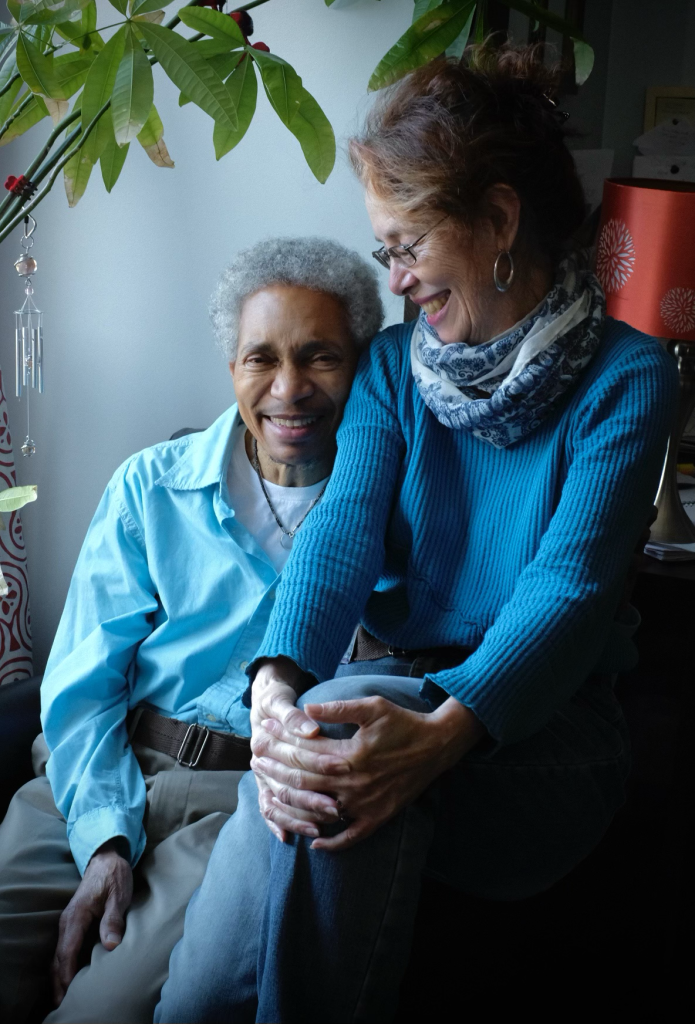
“Comedy is one of our things,” he explains. “I hope that to the day I die I am still having fun with this.”
The conversation turns serious again for a moment.
“The cultural story of it focuses so much on loss,” Elizabeth reflects. “And yes, there is a lot of loss. I’m going to be dead honest about that. But there’s also a different kind of life. Glenn may not be able to drive our car or do our taxes any more, or remember the sequence of things, but his essential presence, that part of him is even more present. All the focus should not be on loss, on the idea that it’s all going to be downhill and just going to be bad. Yes, it’s hard for both the person who’s caretaking and the person with the illness. But we’ve still got a lot of life left here. This is not the end.”
Glenn, ever the joker, begins serenading her with an exaggerated, deep-voiced song: “This is the end, my friend…”
She turns and scolds him: “No it’s not!” Everyone on the call chimes in, hastening to remind him about his upcoming UK tour, and to assure him that his performance and work is more spectacular than ever.
Glenn sits back with a satisfied, bemused smile playing over his face as he listens to all the praise.
“Maybe I should have developed this sooner!” he quips.
Transitions
Both Glenn and Elizabeth have spent much of their lives trying to bring joy into the lives of the people they perform for, through poetry, song, and theatre. A message of positivity, of overcoming adversity and finding strength through community and love echoes through all their creative endeavours.
So it’s been difficult for them both to watch the spread of hatred, of resurgent fascism, of racism and homo/transphobia in recent years.
Glenn didn’t encounter the word ‘transgender’ until the 1990s, but had an innate sense of his gender identity from a much younger age. He says he told his mother when he was two years old that he was really a boy.
“So she was on guard all the time, reading my secret diaries that I hid under the mattress – because of course where else would I hide them? – and looking through them. But eventually my mom came totally on board.”
While Glenn had been out as a lesbian since the 1960s, it wasn’t until the mid-1990s that he put a word to his gender identity. That was thanks to Leslie Feinberg’s acclaimed autobiographical novel Stone Butch Blues. Glenn describes with vivid clarity the moment he encountered the word transgender in that book.
“I remember EXACTLY where I was. It was in Massachusetts, I was on a beach, lying in the sand. I’m lying on this beach, and for some reason I had this book – I don’t know why I had it, but I did. And I opened it, and the book went on for a while, and then all of the sudden [the protagonist] said it. And I sat totally upright. I sat upright and I cried – ahhhhh! THAT is what I am.”
His voice vibrates with emotion as he tells the story. Elizabeth jumps in.
“I remember! We had begun our friendship then, and I remember you taking me out for a long walk to explain it to me. And what a sense of freedom you had. It made total sense, because there was just no way to describe who he was.”
“Not in those days,” Glenn shakes his head. “It just wasn’t possible. You couldn’t tell just anybody who you were, right?”
He prefers not to discuss in depth the hardships involved in coming out as trans at that time – isn’t there always such a voyeuristic, cynical focus on the hardships? – but Elizabeth recalls the avid media interest in Glenn’s identity. While there was some positive coverage, she recalls at least one major media outlet accusing him of doing it for the attention.
“It was just cruelty piled on cruelty,” she recalled. “It was so upsetting. It was around the same time that Chaz Bono was coming out, and I recall the treatment of Chaz Bono – I was just so horrified, it was just so voyeuristic, it wasn’t about a human being coming to terms with their identity, it was all about ‘Let’s talk about this surgery.’”
Elizabeth recounts how, when she wrote her award-winning novella Jazz – Nature’s Improvisation (a coming-of-age novella about a young trans person, published in 2013), she had to fight with editors who tried to insist that the trans youth in the book needed to have “the surgery.”
“I was like – it’s nobody’s business!” she recalled. “It’s nobody’s business what somebody does with their body! This is about identity. I had to literally fight with the publisher, because he wanted that voyeuristic thing. I said – ‘In what other world is it okay to ask somebody about their genitals? Like seriously! Come on!”
Fighting hatred with courage and song
The current attempts by right-wing conservatives to stoke hatred against queer and trans people reminds them both of their experiences living through the AIDS crisis in the 1980s and ‘90s.
“I lost so many dear friends at that time,” Elizabeth said. “And the hatred that was aimed at these beautiful beings because of what they were dying from! And their deaths were so horrible because the treatments weren’t ready yet. And so to see what came out of that in terms of laws and policies – to see it all now going back the other way is so deeply upsetting, to say the least. To see this sort of culturally sanctioned hatred coming back into vogue, I don’t even know what to say about it.”
“One of my best friends in the world was a bisexual,” Glenn explained. “I watched him die a horrible death, and it just about killed me. He was a brilliant artist. He was a weaver. The things he could weave – we have one of his things here that he wove, that he put together. It’s incredible artistry. So I experienced that on a very personal level.”
Today’s teenagers and youth are more open and confident than ever about their diversity of sexualities and gender identities, and many of them have been caught off guard by witnessing for the first time the perplexing rise in hatred targeting queer and trans people. What advice would Glenn and Elizabeth have for today’s youth, drawing from their own decades of experience and struggle?
“I’d say find out about the generations before you, who fought so that you can have your preferred gender on your passport, so that somebody can’t just come and pick you up off the street,” Elizabeth says. “This is Glenn’s legacy, and I don’t think many people understand what he sacrificed to be the advocate that he is. So find out, and be willing to get involved. None of those changes happened because people just sat around going ‘I don’t like how I’m being treated.’ They got out on the streets, they protested, they advocated. This is all fairly new, right? Women have only had the vote for about a hundred years, queer rights is relatively new, and we all have to get in and fight if we don’t want to see them disappear in our lifetimes.
“And know that when you choose to stand up, you are by the very nature of taking that action going to feel more hopeful. We become despairing when we’re sitting around in our living room going ‘Oh this is so hard.’ It IS hard! But when we get together with others in community and have the courage to speak up and stand up, we realize that it’s all the same root, it’s about how we relate to other people. We’re more easily controlled when we’re in despair. It’s easy to control people if they feel like they have no power. We have massive power. There’s billions of us and just a few hundred of them.”
Glenn interjects, humour momentarily gone, all seriousness. One of the challenges to this, he says, is the fact we’ve become so isolated from each other through our reliance on technology and virtual worlds.
“Our strength is in community,” he emphasizes. “People these days, they walk around with things in their ears, on their phones. They’re not even looking around. They don’t see anything except their phone. And on the phone is probably their friends or whatever, but we need to get to the point where we walk around and see our neighbours and say hello. That’s how you make community. You have an interaction with people.”
“Look up!” agrees Elizabeth. “We have to look up. We have to look at each other. Pay attention to the people who are fighting the good fight. You’re not going to read about them on CBC. You’re not going to read about them in the media. In fact you’re going to have to search to find the movements of people that are doing amazing things around the globe, for justice.”
Glenn nods emphatically, his lively energy returning as he leans forward for emphasis, wide eyes underlining his point.
“Let’s just put it this way,” he says, reflecting again on the rise in hatred against queer and trans people. “There were people that hated it from the beginning. And there are still people that hate it, maybe more than there used to be. But there are even more people that understand and are going in the opposite direction.
“And I would say, in whatever way they can summon it, tell the youth that they must have courage.”
The June 5 show in St. John’s – part of the 15th annual Lawnya Vawnya festival – features local folk trio Topanga (Valmy, Katie Baggs, and Carole Bestvater) and will see Glenn and Elizabeth joined by a couple of musical collaborators from Glenn’s band Indigo Rising. It’s being billed as an eclectic blend of serious songs, children’s music and improv.
Author

Related Articles
‘Honest storytelling’: N.L. drag icon set to unveil new show
Barbra Bardot brings her personal journey to the public stage in new St. John’s production ‘Becoming Barbra’
Queerness, science, and the Mistaken Point fossils of Newfoundland
Art meets science in a unique Eastern Edge residency

What the water holds
Ignatius Baker’s exhibit ‘Belonging’ is a tribute to queer and trans joy and the beauty of Newfoundland waters