
Coalition “deeply shocked” by proposed name change law amendments
Legislative changes would further marginalize trans and gender diverse people, women, and victims of crime, advocates say
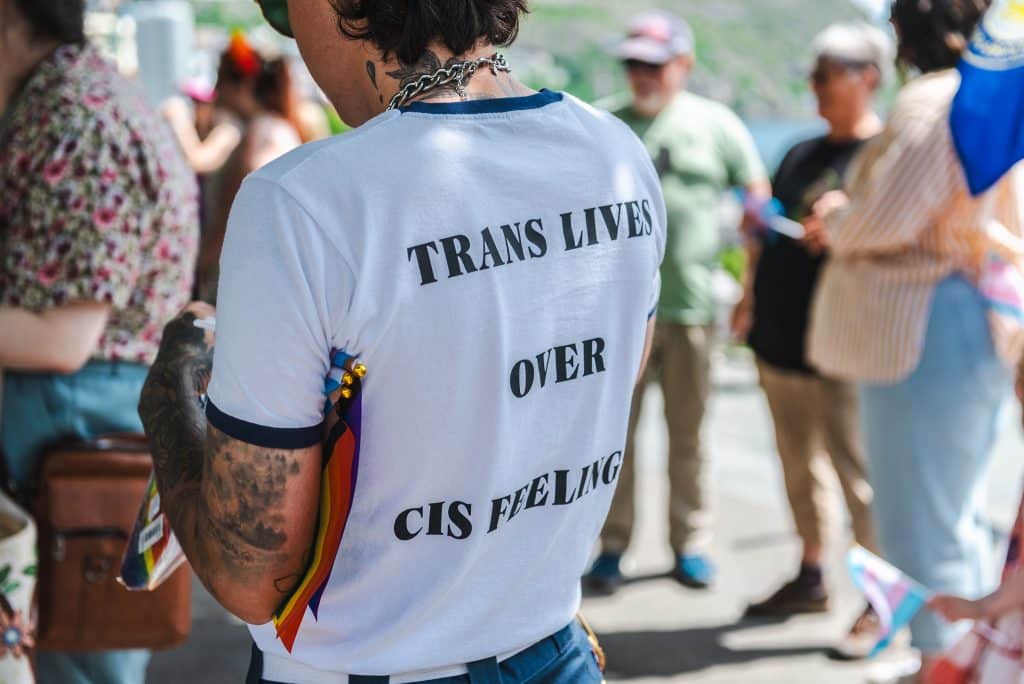
Transgender and gender diverse rights advocates are sounding the alarm on a proposed amendment to provincial name change legislation they say will disproportionately impact transgender and non-binary people.
On Oct. 17 the Furey government introduced a legislative amendment to the province’s Change of Name Act, 2009 in the House of Assembly that has since undergone a second reading and could become law in a matter of days or weeks.
The proposed change would force adults applying for a legal name change to provide a certified criminal records check, a step that rights advocates say will make changing a person’s name less accessible for gender diverse people, women, and victims of crime. The bill’s stated purpose, however, is to prevent convicted criminals from changing their name and evading public scrutiny.
The amendments come one year after CBC News reported that convicted sex offender Adam Budgell had legally changed his name to Adam Penney, a move that shocked one of Penney’s victims. The broadcaster has described the province’s name change laws as having “the least stringent rules,” without acknowledging the legislation’s benefits for people who are not sex offenders.
Will you stand with us?
Your support is essential to making journalism like this possible.
Bill 50 was read a first time in the legislature on Oct. 17. On Monday of this week Minister Sarah Stoodley read the bill a second time and the proposed change was opened to committee debate. At no point during the discussion were women’s rights or the rights of transgender and non-binary people raised.
The amendments would “create serious barriers for all adults looking to change their name and will disproportionately impact the trans and gender diverse communities,” Trans Support NL (TSNL) Director Logan St. Croix said in a joint news release Friday. “They will also make it harder for victims of crime who might want to change their name as a safety measure against their abusers. The overwhelming majority of NLers seeking name changes are not sex offenders and making innocent citizens pay more money and jump through more hoops is not the way to deal with sex offenders. There are ways the NL government can combat gender-based violence and support victims of sexual crime – this just isn’t it.”
The release, sent to media on behalf of TSNL, Quadrangle NL (QuadNL), the St. John’s Status of Women Council (SJSWC), and other 2SLGBTQIA+-serving organizations, says the province “has one of the country’s more accessible name change policies – one considered a gold standard by 2SLGBTQIA+ advocates across the country.
“The Liberal government’s proposed amendments will roll back this progress and leave the province with one of the worst, most inaccessible policies for those seeking gender-affirming personal data corrections. Government has also brought forward the amendments without consulting organizations that represent those who will be negatively impacted by these amendments.”
The coalition also says requiring transgender and gender-diverse people to undergo criminal record checks in order to change their names “feeds into transphobic and harmful narratives rooted in the criminalization of 2SLGBTQIA+ populations.”
“These amendments directly harm and discriminate against the many trans and gender diverse [Newfoundlanders and Labradorians] for whom transition is a matter of life or death, health and safety,” says St. Croix. “Government should instead focus efforts on improving policies and resources for a justice system that presently provides inadequate support for victims.”
Quadrangle Co-Chair Ailsa Craig says the government should look at “more appropriately focused” solutions. “Inflicting harm on those who are not part of the problem creates further structural violence against trans and gender diverse people. It is the job of policy makers to consult appropriately, and to be vigilant about the consequences of policy for all affected,” Craig says.
“With the already limited access to Gender Affirming Care in our province, adding more barriers to the changing of one’s name is another struggle the government will be placing on trans, non-binary and gender diverse people,” says Quadrangle NL Executive Director Charlie Murphy. “There are other creative ways we can secure safety without removing it from others.”
Advocates say the government’s apparent lack of awareness is indicative of its failures to work with 2SLGBTQIA+ organizations and activists to develop policies that help, not hurt, non-binary people.

“2SLGBTQIA+ organizations and activists have been speaking with government departments for years about working with the community more closely on matters that impact our communities’ well-being and safety,” says Murphy. “This policy change is a clear example where more consultation with the 2SLGBTQIA+ community should have been taken. This is a missed opportunity for impactful consultation with community.”
The Independent asked Digital Government and Service NL if the changes would require transgender people to undergo a criminal check in order to change their name. The department didn’t directly answer the question; instead it sent a statement reiterating what has already been said about the proposed amendments.
In a follow-up email, The Independent asked the department if it considered the negative impacts on transgender and non-binary people. On behalf of Digital Government and Service NL, Media Relations Manager Krista Dalton said the department “has considered that people may wish to change their names for a variety of reasons and that most people wishing to change their names do not have a criminal record.
“These amendments are being made in response to concerns from the public and victims of abuse regarding a specific incident of a sex offender obtaining a legal name change, the associated negative impact on the victims, and to strengthen public confidence in the name change process,” Dalton wrote. “The changes are proportional to the policy objectives of this legislation, which is to allow the denial of name changes by persons convicted of prescribed provisions in the Criminal Code of Canada. The department would collect the minimum information required to achieve the policy objective. Newfoundland and Labrador is one of six provinces that does not require the collection of fingerprints as part of the name change process.”
The department also pointed out that people have an option other than going to police for their criminal record check. “The Canadian Corps of Commissionaires will be able to provide these criminal record checks as well, which is another option for those who may feel uncomfortable going to police. Like law enforcement, applicants are not under any obligation to disclose to the Commissionaires why they are seeking a criminal record check.”
In Friday’s media release, St. John’s Status of Women Council Executive Director Lisa Faye (who is an occasional columnist for The Independent) said Bill 50 “is yet another example why the St. John’s Status of Women Council advocates for a provincial task force focused on ending gender-based violence.”
Such a task force, she says, “could inform this legislative process, but even more than that, it would be able to proactively build systems informed by survivors and develop evidence-based strategies to end [gender-based violence]. For survivors and people at risk of violence, Bill 50 would function as an attempt to plug one small hole in a sinking ship, while simultaneously increasing the potential for violence against members of the 2SLGBTQIA+ community as they seek to change or correct their names.”
The coalition is “calling on government to halt its ill-prepared amendments until appropriate consultation takes place with 2SLGBTQIA+ stakeholders
and organizations.”
Editor’s note: The story has been updated to reflect the government’s response to questions from The Independent. A previous version of the story said the bill had yet to be read a third time; however, Digital Government and Service NL confirmed that the bill was read a third time on Oct. 25.

Author

Related Articles

Meaningful response to homelessness requires more than new builds, says NDP leader
Jim Dinn’s comments come in response to PC’s announcement of 10 new ‘micro homes’ in St. John’s
Muslim community commemorates 9th anniversary of Quebec City Mosque shooting
Anti-hate advocates say there’s still work to be done to combat Islamophobia in the province

PCs invite public input ahead of Budget 2026
The coming provincial budget will be the Progressive Conservatives’ first in more than a decade