
Coming Face-to-Face with Racism
How hate-provoked graffiti brought these two racialized Newfoundlanders and Labradorians to tears—and why “doing better” is urgent.
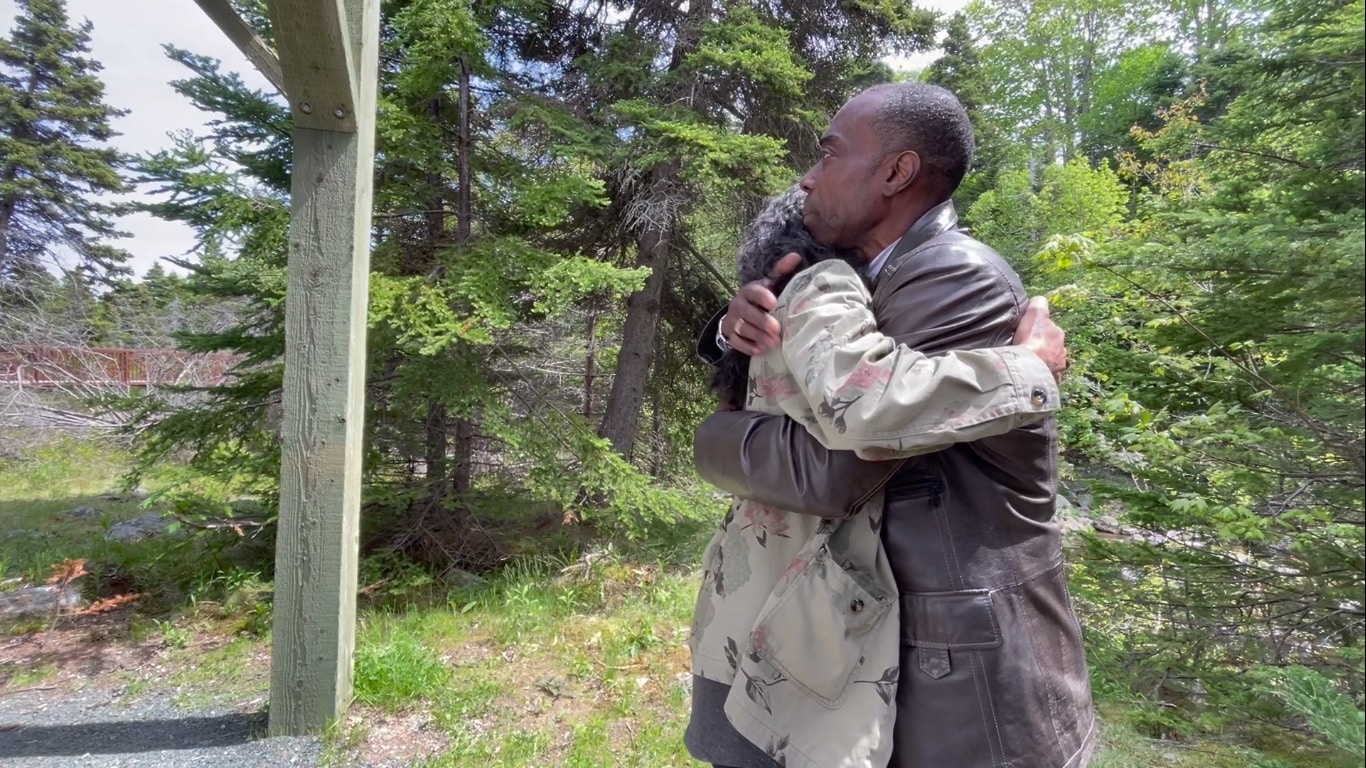
By now we’ve all seen the hate-provoked graffiti discovered in Conception Bay South last week. But in this exclusive video report, we’re on the scene with Vincent Estick and Vanessa Cardoso Whelan—who discover more hate-speech that hasn’t been washed away.

What happens next is a moment of deep-rooted pain and sadness for Estick and Cardoso Whalen.
From swastikas to the n-word, the defacing was traumatising for Estick and Cardoso Whelan. But it’s not an isolated event. It’s the latest in a string of hate provoked violence that’s shaken local communities—including an incident in May, when a group of Muslim teenage girls were attacked.
Dr. Sobia Shaikh is with the Anti-Racism Coalition of Newfoundland and Labrador.
Will you stand with us?
Your support is essential to making journalism like this possible.
“The belief is that this is just vandalism but what’s being missed is the impact on human beings,” she told The Independent. “This kind of violence, white-supermacy and anti-black racism has an impact.”
Dr. Shaikh says the political silence around these incidents has been deafening.
“There’s no strategy. No conversation. None of the provincial politicians have spoken up about this. None of the mayors. No one has spoken up proactively, and said hey when you see this kind of stuff, call it what it is, report it. These things matter and it’s rising and nobody is speaking up against hate. So people think it’s ok to do. You’ve got to take it seriously.”
Since it went public, staff at Manuels Interpretation Centre cleaned up the racist graffiti. Things got so bad, executive director Janet Rumsey says they eventually removed an outdoor chalkboard because they couldn’t keep up with perpetrators—who continued to smear it with hate-provoked speech and symbols.

Author

Related Articles

Accounting watchdog to investigate Deloitte over fake citations in $1.6M healthcare report
Chartered Professional Accountants N.L. is leading the investigation after Deloitte admitted AI was involved
St. John’s teen says community, activism helped her find her voice
13-year-old Nyala Adam was inspired by a local summer camp focused on social justice and cultural inclusion
PC’s minimum wage increase ‘far from a living wage,’ says NDP leader
NDP Leader Jim Dinn is calling on the PCs to legislate wage increases