
Education Accord interim report lacks focus on students with disabilities
Advocates say students with disabilities deserve an inclusive education system
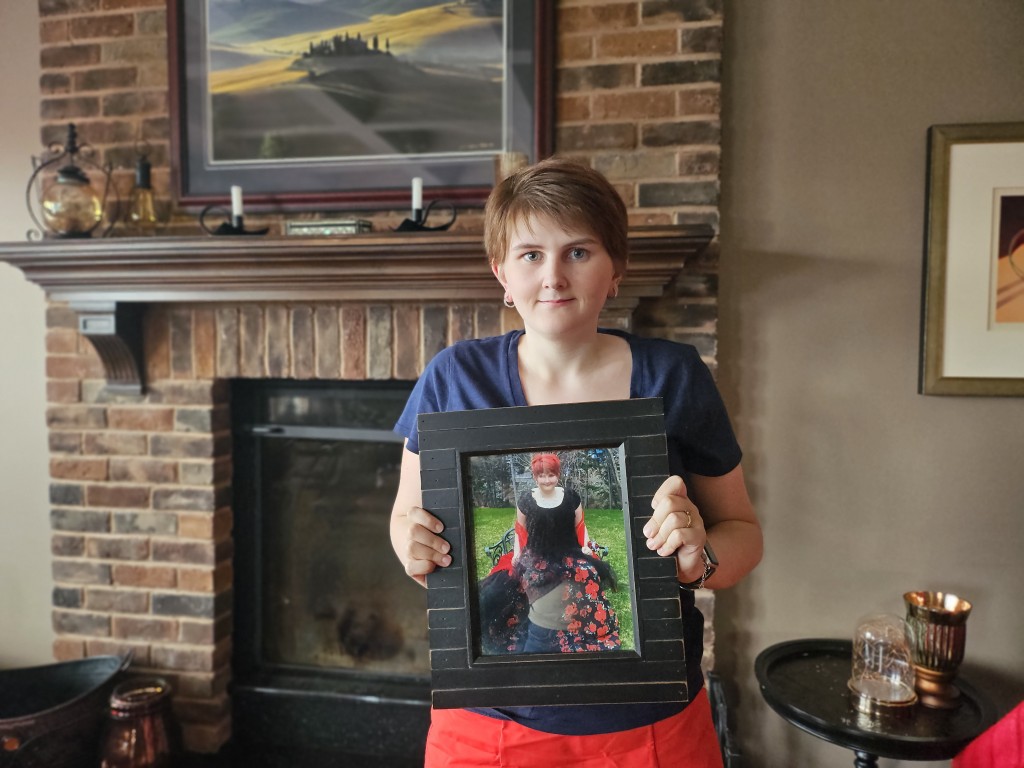
“Sunshine” is how Hayley Anne Moore’s mother, Paulette, describes her 28-year-old daughter. “She won the sunshine award in junior high, she won the sunshine award in high school,” Paulette says, adding Hayley Anne radiates positive energy and sees every day as “the best.”
Hayley Anne graduated from high school in 2018, which Paulette describes as the best day of her daughter’s life. She adds with a smile that Hayley Anne is really proud of her high school diploma.
Hayley Anne sits in a brown armchair, wearing a navy blue shirt and a red skirt. “I like geography, math.” While I take pictures of her for this story, she tells me about the things she liked about school, including her Instructional Resource Teachers in high school.
But getting to that day was a gruelling journey for the mother and daughter. “School was the war that we fought and won,” Paulette says. “I still have my own trauma from it.”
Will you stand with us?
Your support is essential to making journalism like this possible.
Hayley Anne is on the autism spectrum. Autism is a neurodevelopmental difference that affects how a person thinks, learns, communicates, and interacts with others. Autism presents in many ways, so those on the spectrum typically need different types of supports to help them succeed in school. But those supports often aren’t available due to underfunding, limited resources, and insufficient training.
Paulette, now retired, founded Spectrum Consultants Group in 2009, a company offering services to families and individuals living with neurodevelopmental and mental health conditions. Through her work, Paulette says she has met many parents who can’t send their children to school at all. For those families, navigating the education system feels like a constant battle—one not all parents win.
That’s why disability advocates were hopeful the province’s new Education Accord would address the longstanding issues facing students on the spectrum — a need that perhaps has additional significance given the province’s higher-than-average prevalence of autism spectrum disorder.
Paul Walsh, CEO of the Autism Society of Newfoundland and Labrador, says there are significant gaps in how the education system supports students with disabilities, including a lack of access to appropriate supports and accommodations, inadequate staffing and resources, inclusive education policies, and geographical and social barriers. He emphasizes that addressing these issues must be a key priority in any plan to improve education in the province, including the Education Accord.
The Education Accord was first announced by the provincial government in January 2024, an effort to modernize the education system in the province. Over the following year, the Accord’s team consulted with individuals, families, and community groups to gather feedback and ideas for improving education in public schools.
In an email to The Independent, the Department of Education and Early Childhood Development says the final preparations for the Education Accord final report are “almost complete” and that it will be made available to the public soon.
Ten-year education plan lacks focus on disability
In January, the Education Accord released an interim report titled A Vision for the Future: Transforming and Modernizing Education. The report outlines a 10-year plan to reimagine and enhance the provincial education system. The report highlights the difficulties learners encounter at every stage of the public education system; it also presents key themes and insights drawn from research and community input to help build “an inclusive, supportive educational system.”
Among those who took part in the conversations were Walsh and Leah Farrell, the advocacy manager at the Autism Society. They met with members of the report team — including lead authors Anne Burke and Karen Goodnough — to raise concerns about the challenges faced by students with disabilities in schools.
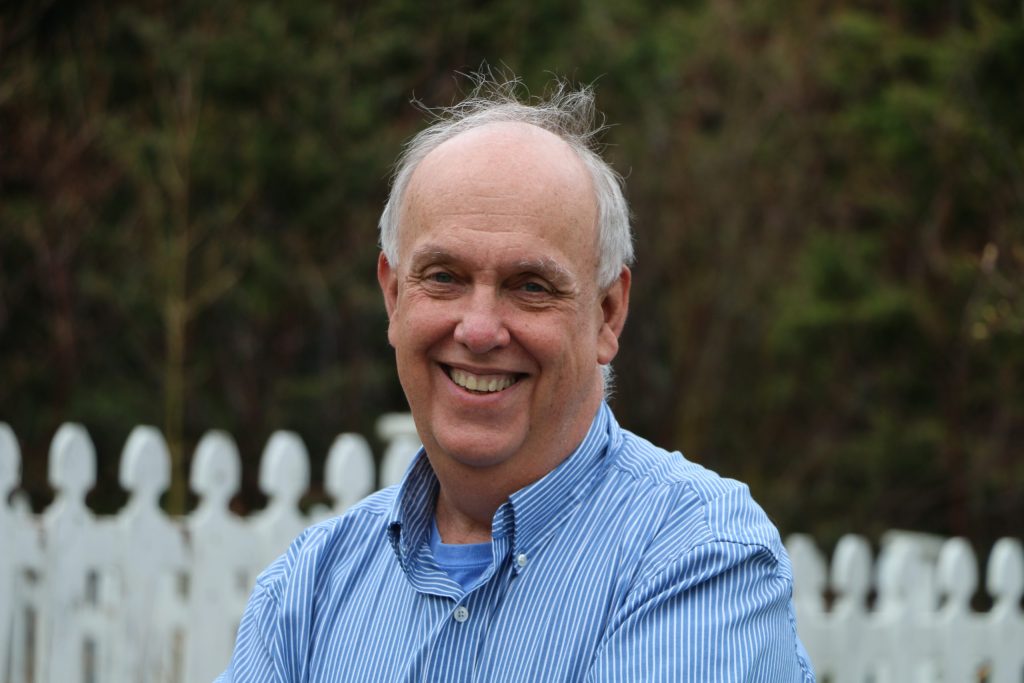
Walsh expected the report to reflect those conversations — but when he read it, he said, he sat in disbelief. “For the whole disability community to be ignored even in the definition of inclusion, to me, was impossible. It was unbelievable,” he says. Walsh is referencing part of the report that states, “diversity recognizes that people are different, reflected in factors such as race, culture, ethnicity, religion, sex, gender, gender expression, age, and family or socioeconomic status.”
“I am wondering where the disability is in that particular definition?” he says.
The authors and the Education Accord team declined The Independent’s request for an interview, and the province’s Department of Education and Early Childhood Development did not respond to our request for comment.
Greg O’Grady, Chair of the Newfoundland and Labrador Stuttering Association, says the school system has the power to either build up or break down a student’s confidence. He explains that once a student enters the school environment, the pressure to communicate increases, whether through oral presentations, conversations with teachers, or interactions with classmates. “There is a lot of shame and humiliation associated with stuttering. There’s a lot of anxiety as well,” he says. And when a student sees that his school cannot provide the support they need, “they feel that they’re left alone.”
Lack of training
Paulette Moore says Hayley Anne’s school experiences differed vastly through the years, depending on how understanding and accommodating her teachers and other school staff were. When her mother asks Hayley Anne what helped her cope, she replies, “kind teachers.”
When Hayley Anne was in kindergarten, the school principal allowed Paulette to volunteer in the school, and to help if her daughter’s stress levels rose and she became dysregulated, Paulette recalls, “which was pretty much daily, sometimes several times a day.”
Throughout her K-12 education, many of Hayley Anne’s teachers thought she was “spoiled.” In high school, one teacher told Paulette she “would break [Hayley Anne’s] will.” During that time, Paulette says her daughter’s anxiety worsened. “It got to the point where Haley was coming home with holes in her clothes.” Driven by anxiety, she would pick at her clothes until the fabric ripped.
Eventually, the school had to intervene and prevent that teacher from interacting with Hayley Anne. Paulette says the school administration and the guidance counsellor were supportive through it all.
In another incident, a teacher didn’t want Hayley Anne in her class, calling her “too disruptive,” Paulette recalls. As a result, Paulette, a former teacher, taught Hayley Anne separately.
If there were teachers who lacked the training and resources, others were making an effort to help accommodate Hayley Anne. Paulette says the school allowed her to convert a closet into a small room that Hayley Anne could use to decompress when she wanted to; Paulette added a futon and brought 1,000-piece puzzles to help make the room more comfortable. She says she hopes other kids who may have needed the room got a chance to use it. “This room was the reason Haley graduated.”
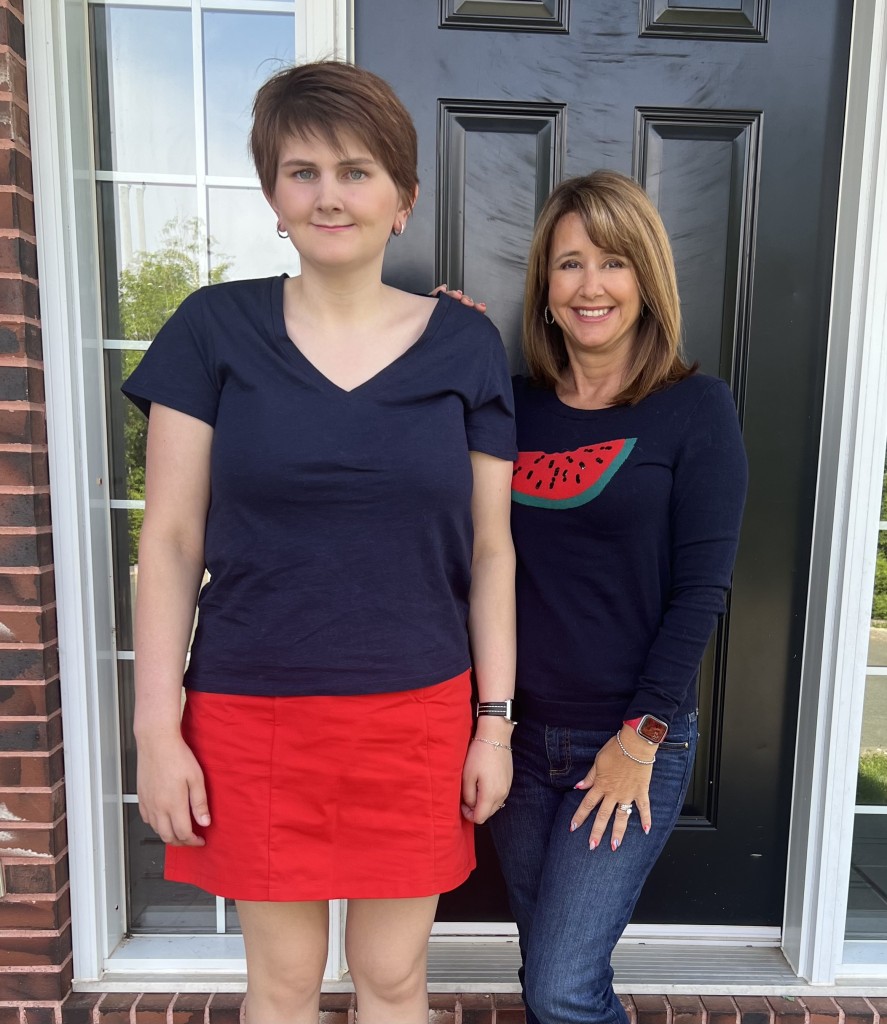
There were also times when teachers tried to accommodate Hayley Anne, but because they lacked proper training, their efforts ultimately highlighted her differences rather than fostering true inclusion, Paulette explains.
When Hayley Anne was in the first grade, her teacher discussed Hayley Anne’s autism with the class with the intention of educating the students. When Hayley Anne came back after lunch, Paulette recalls, “they were all hugging her and saying, we hear you’re special. We hear you’re special.”
The words “your special” and unsolicited hugs singled Hayley Anne out and made her feel different, her mother says. “I know the word special sounds nice and a hug sounds nice, but hey, she didn’t ask for those hugs. She didn’t expect to come back after lunch and be surrounded by hugs.”
A better alternative, Paulette says, would have been demystifying Hayley Anne’s needs in the classroom. For example, when Hayley Anne covered her ears, the teacher could have explained to students that specific sounds bother her, then ask the students, ‘What are some things that bother you?’”
Walsh says when teachers or school staff do something for one student, “that’s not inclusion, that’s exclusion and segregation.” Walsh shares a hypothetical example of a school award ceremony where students are called to the stage to receive their awards. To accommodate a student in a wheelchair, a school representative steps off the stage to hand the student their award. “That’s not inclusion. Inclusion would be everybody [going] on the floor to receive their award, and everybody receives it in the same fashion.”
By showing that disability-related barriers stem from the environment and by offering clear steps to create inclusive classrooms, expectations, and assessments, Walsh says the province’s Education Accord can better support teachers and staff. It’s an approach, he says, that can guide educators who want to be inclusive by helping them do so more effectively and appropriately, while also ensuring they have the necessary resources.
Lack of acknowledgement a ‘slippery slope’
After the release of the interim Education Accord report in January, Walsh contacted Accord staff to question the lack of reference to disability, and to advocate for a stronger focus in the final report on making schools more accessible. He says that when they met in early February, one of the Accord team members told him the meeting wasn’t a space for him to ask questions. Instead, Walsh says, he was told the meeting was intended for advocates to present again.
Walsh fears that a lack of acknowledgement of students with disability, and the barriers they face when accessing education, is a “slippery slope” to more exclusionary practices. Of the 253 schools in the NL Schools directory, 34 are inaccessible to students with disabilities. The remaining 219 schools have varying levels of accessibility. The website asks parents to consult with the school administration to ensure the child’s needs can be accommodated.
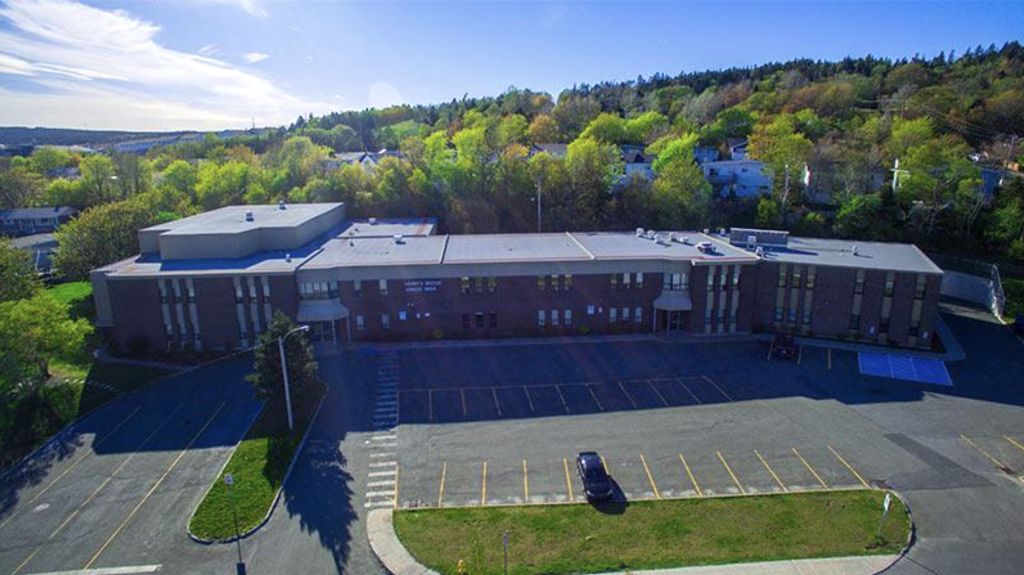
When a Grade 6 teacher told Paulette Moore she didn’t expect Hayley Anne to graduate, Moore decided to home-school her daughter – something she could do because she was financially stable and was able to hire a teacher for half the day, while she taught Hayley Anne herself for the other half. Hayley Anne excelled in math. In 2012, Paulette presented her portfolio to a guidance counsellor at Leary’s Brook Junior High – a new school for Hayley Anne. Impressed by the work, the counsellor at the St. John’s school told Paulette her daughter could graduate. A week later, Hayley Anne was back in school.
Advocates push for inclusive revisions in final report
In February, Walsh and five other representatives — including Greg O’Grady — from various disability advocacy organization sent a letter to the Education Accord team. The letter, reviewed by The Independent, urges the Accord team to clearly and consistently reference disability throughout the final report, and explicitly recognize a broad spectrum of disabilities, including intellectual, sensory, physical, neurodivergent, psychological, and invisible disabilities.
The letter also urges NL Schools to adopt a social model of disability which recognizes that barriers are rooted in the environment, not in the individual. This approach calls for schools to examine how teaching methods, communication styles, behaviour expectations, and evaluation tools may unintentionally exclude or disadvantage some students.
The letter also asks that schools recognize communication skills impact a student’s health, and that the education system plays a key role in how children develop these skills. Many students face unique communication challenges at school, especially those who stutter, are hard of hearing, deaf, or who use nonverbal methods to communicate.
The letter also calls for schools to keep students in the classroom by finding alternatives to sending them home when their needs aren’t being met.
Hayley Anne graduated with honours, walking through the aisle and sitting among her classmates. She proudly tells everyone she is a high school graduate, Paulette explains, smiling. Hayley Anne needed the school setting, she adds. “Being in school, […] that’s a kid’s community. That’s where they are meeting each other and interacting.”
Now that Hayley Anne has graduated, Paulette no longer has to worry about the school system. But she knows that many students and their families are still facing similar challenges, and that their situations won’t change until the education system does. “All that is left for me is the trauma,” she says. “It’s all done, but there’s so many kids coming up, and I would really love to see changes.”

Author

Related Articles
Meaningful response to homelessness requires more than new builds, says NDP leader
Jim Dinn’s comments come in response to PC’s announcement of 10 new ‘micro homes’ in St. John’s

Muslim community commemorates 9th anniversary of Quebec City Mosque shooting
Anti-hate advocates say there’s still work to be done to combat Islamophobia in the province
PCs invite public input ahead of Budget 2026
The coming provincial budget will be the Progressive Conservatives’ first in more than a decade