
Rhea Rollmann: rethinking our social movements
On Trans Awareness Week, Rhea Rollmann shares observations from her life as a journalist, author and activist — and how we can better organise to fight fascism and far-right conservatism
All photos by Tania Heath.
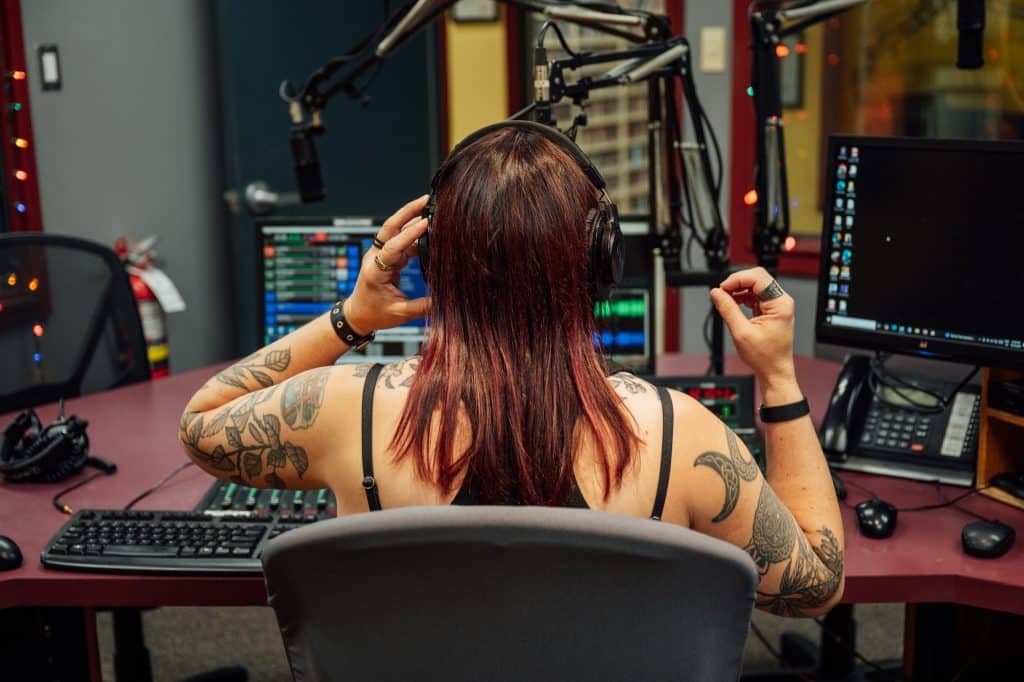
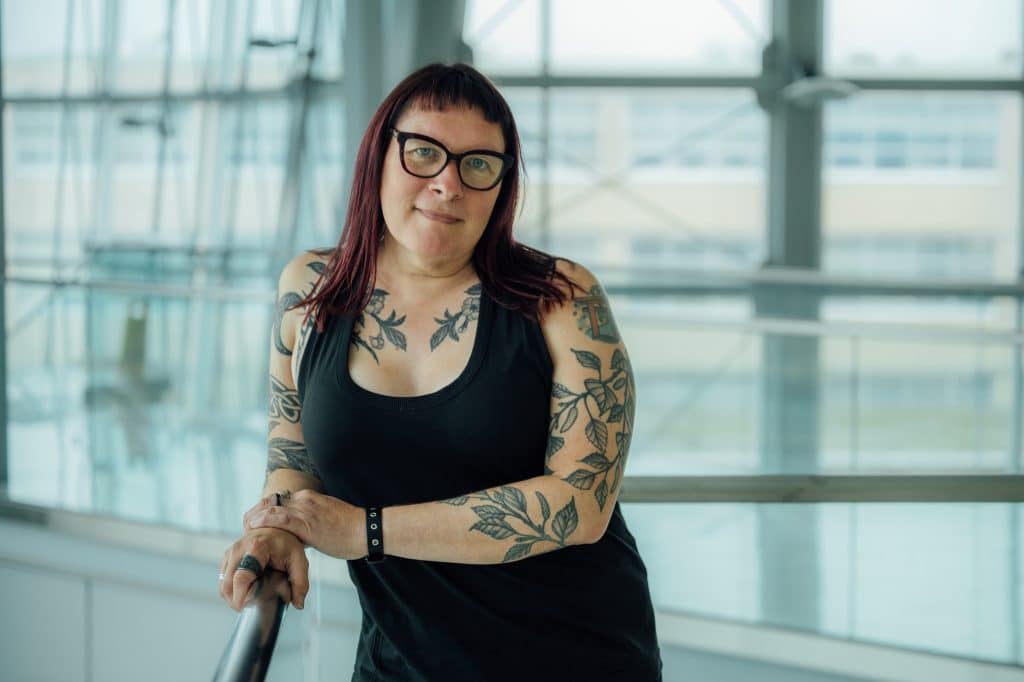
As an author, audio producer and award-winning journalist, activism runs through every part of Rhea Rollmann’s life.
Born and raised in St. John’s, Rollmann built her academic and professional career around understanding people, uncovering truths, and telling stories that need to be heard. She hasn’t just watched the world change; she’s helped change it.
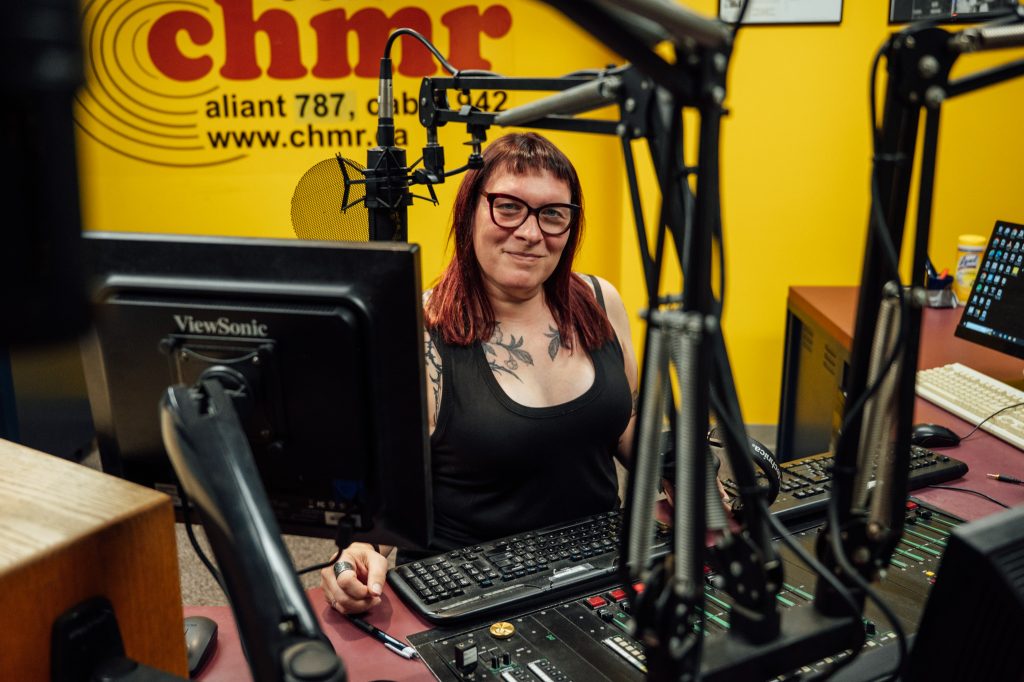
That commitment is clearly reflected throughout her work: from her locally-renowned book, A Queer History of Newfoundland and her award-winning journalism, to her role as a founding editor of The Independent and station manager at CHMR-FM. For Rollmann, telling the right stories is part of the fight for a more equitable world.
Will you stand with us?
Your support is essential to making journalism like this possible.
But as much as we’ve gained, there are things we’ve lost along the way.
Rhea sat down with us to talk about her own story, the evolution of journalism and activism throughout her lifetime, and why the fight for equality is more important than ever.
When I was doing my research, I found a ton of your work online – but I didn’t actually find that much about you. So to start off, I would like to know a little bit about you and your early life.
I guess that’s the beauty of having grown up in the pre-social media era. I’m from St. John’s, I grew up here in town. When I first went to university I studied archeology. But I had always been writing, from literally the day I first started university. I worked with the student newspaper, so writing increasingly came to dominate a lot of my life. And as much as I loved my archeology experience, I became increasingly interested in people – living people – and society and culture. So that shaped my trajectory into a master’s in cultural anthropology, and then I wound up going into gender studies.
And like I said, I had always been writing and been involved in activism, and those things started playing a bigger role in my life, especially,as I began working in the labor movement, the student movement, and journalism. Those three things have always been circulating in my life: academics, activism, and journalism.
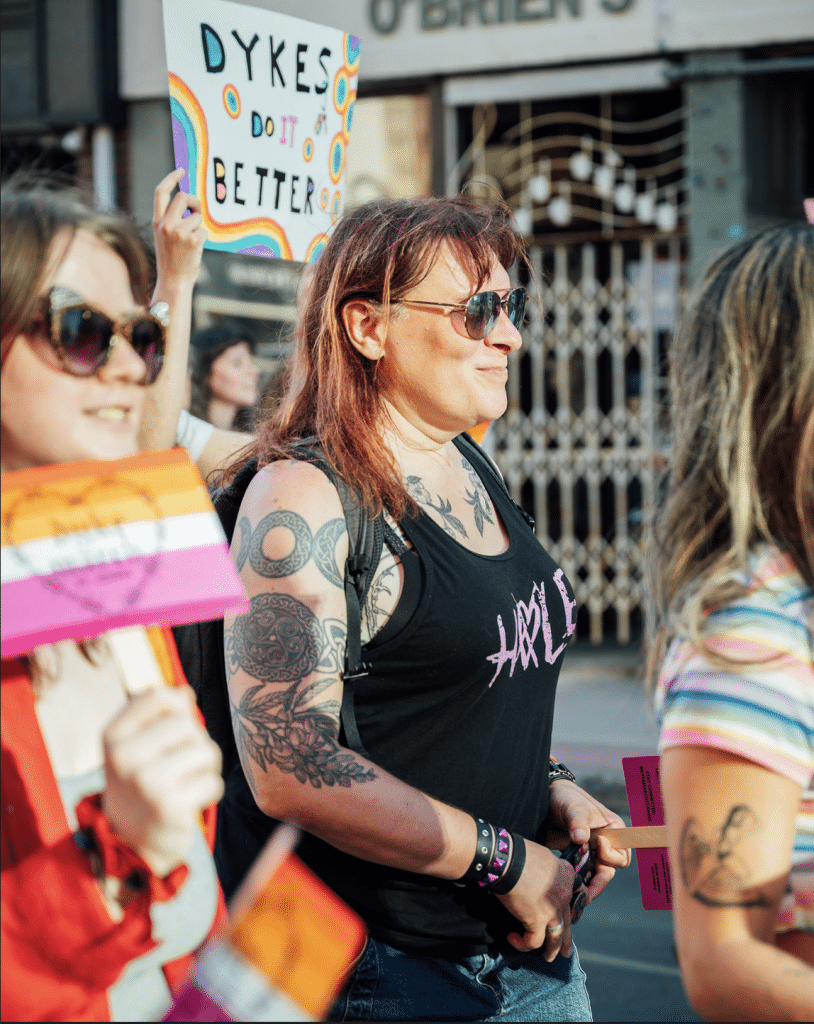
You began your book A Queer History of NL by talking about how you accidentally organized the St. John’s Pride Parade back in 2007. You were already part of the student union, and from what you just said, you were already part of the labor movement. So even back then, you were already an activist and an advocate. Looking back, when do you think that started?
I think this started pretty early. I remember growing up and reading a lot about activist movements, and even in high school a lot of my friends were political activists; I hung out with friends who had a real political bent, and we even organized some protests in high school. So I think we always had a strong political consciousness, myself and my friends growing up. When I started university, that just continued. When I started working with the student movement, I co-organized a union drive to unionize the place, since folks were being really poorly and inequitably treated. When I was a grad student I was part of the team that unionized the Teaching assistants, research assistants and lecturers here. Those things marked my start with the labour movement.
You’ve said that when you were younger, there were very few supports for trans and gender-diverse people. During that time, what did you turn to for support, or inspiration, or comfort?
That was very difficult because I knew I was trans from a very small age – before I knew what trans was, before I had the words and the language. This was a time when there was no education or supports in the school system for trans and gender-diverse folks, virtually no sexual health education, no gender-affirming healthcare, no pathway to coming out as trans and getting those kinds of supports. This was the tailend of the denominational education system in this province, when the churches controlled the schools. And some were better than others, but by and large – and I often say this – it was a very violent system and there’s never really been a true reckoning with how that damaged generations of Newfoundlanders and Labradorians.
I was fortunate in that I was one of the early people who became active on the internet – and the precursors to social media – so I was able to connect with folks outside of the province. That’s when I began developing an understanding of what it meant to be trans, of gender identity, and [of] the whole queer liberation movement. But there was none of that in the schools. I wasn’t even aware of any queer activism going on in the province. It was only much later when I was doing research for my book that I learned about trans activists in the province who were trying to bring about change.
So, I kind of reconciled myself that [support] was just impossible to access here in Newfoundland and Labrador growing up, and that shaped a lot of my early life. We talk about how gender-affirming healthcare saves lives and how important it is, and it’s very true. I went through life not thinking I was going to live past the age of 25 or 30 because I knew how intense gender dysphoria was, and so I figured it would get me eventually. It’s really difficult growing up when you don’t see a future for yourself. I think it really underscored for me the need for change, the need to build a society that was more open and inclusive and progressive-minded. So that also helped fuel my broader activism. I was just determined to do what I could to try to create a better province as long as I could. And it’s thanks to the works of trans and other queer activists that things did get so much better.
For a while I thought that it would be too late for me to go down that path. But then I realised it wasn’t, and it was thanks to other trans folks that I realised it’s never too late to live your life authentically.
When you think about what’s changed, and what hasn’t, what’s the good and the bad?
It’s interesting because, yeah, things have changed. First of all, there are human rights protections for trans and gender-diverse youth, which is really important. But in Newfoundland and Labrador, those human rights protections only came in 2013, which is not that long ago. Sexual orientation protections only came in less than 30 years ago. And I think it was only in 2019 that the province overhauled its MCP coverage to provide gender-affirming healthcare – and what it does provide is still very limited. It’s definitely not as accessible as in other parts of the country, but these are improvements.
That’s all very good and very important – the fact that there is now a pathway for trans and gender diverse folks, and that there is gender-affirming healthcare accessible in the province. When I grew up in the school system, there was none of that, and I knew trans or gender-diverse kids who did not survive to graduate. So it really underscores the importance of these supports we have in our school system today, the gender and sexual health education we have. None of that came out of a vacuum; it came out of the fact that there was so much harm being inflicted on our youth, and on our province, by the lack of that education and support.
It’s so impressive to me that I’ll interview trans and gender-diverse kids these days who are in high school, and the fact is that they do see a future for themselves, and they have such a strong sense of their identities. It gives you such a different sense of existence to think that you know you’re not going to live to get old, but trans and gender-diverse kids in the schools these days have such a sense of their own identities – even though a lot of them are still exploring their identities and changing – there’s a confidence there, and a sense of ownership they have over themselves, and they see such bright, strong futures for themselves. That’s a remarkable shift from when I was going through the school system, and one of many reasons why it’s so important to preserve and protect and build on these rights and these supports and liberties.
I work on campus now at the radio station, and it’s kind of sad seeing some of the shifts here at university. I think things are a lot harder for students these days. The cost-of-living crisis is huge, students are experiencing massive financial burden. When previous generations were going to university – we had more space to organise and do activism, and there was a stronger cohesion. The student body was a lot more connected. You come to campus these days, and the place is empty half the time. People come in, do their classes, and then go home – whereas when I went to university you spent your whole day here. This is where your friends were. Even if you weren’t in class, you were talking to people, working on projects together, or just having fun. So I think there was a much stronger community in those days, and I often wonder what has changed.
A lot of the students I know are working multiple part-time jobs to afford tuition. They’re under much greater pressure to pile up on courses and do these unrealistic course loads, and the cost-of-living crisis is much more extreme for students these days, and getting worse every year. I don’t know how international students survive. A lot of them are getting by without sleeping. All of that, coupled with our phones and social media. When people do have a spare moment, they tend to just zero in on their phones. The people I do see around campus, so many of them are just solitary, engaged with their phones as opposed to connecting with each other. There was just a lot more organic activism going on all around me when I was doing my undergrad. So I just naturally became involved in the labour movement, the student movements, and later the queer movement.
The internet and social media is really a double-edged sword. I went through that phase of thinking [they] could be used to strengthen activism, and I have come around to the other side. I think it is a huge impediment to activism, and I think it’s brought us more negative than positive. Certainly, there’s brief strategic things you can use it for, like organizing a meeting quickly. But I think we need to find ways of going back to in-person organizing. That’s a lesson that I think I’ve learned from the research I did for my book as well – just the value and importance of in-person activism, and not just for political activism, but just for community-building and living good lives.
From your journalism to your book to your audio productions, is there anything in particular that changed you, or changed how you see the world? Any specific projects that you worked on that had a huge impact on you?
Working on the book – that entire experience was very transformative. I initially thought I would mostly do a quick archival chronological history rooted in archival documents. And then I realised how tough that was, especially when it comes to queer history, because so much was not written about – or was written about in euphemisms – so it was hard to tell what exactly happened. That’s when I started reaching out to people for interviews – and that became a much bigger project. It was very fulfilling because I learned a tremendous amount about our queer history and trans history. I learned that there were trans people fighting for change at the time when I was growing up in the school system, and reading about their lives was mind-boggling because I knew hardly anyone else who was, to my knowledge, trans or gender-diverse growing up. So that was really powerful. And learning about the work they did to change the system was very inspiring and continues to inspire me.
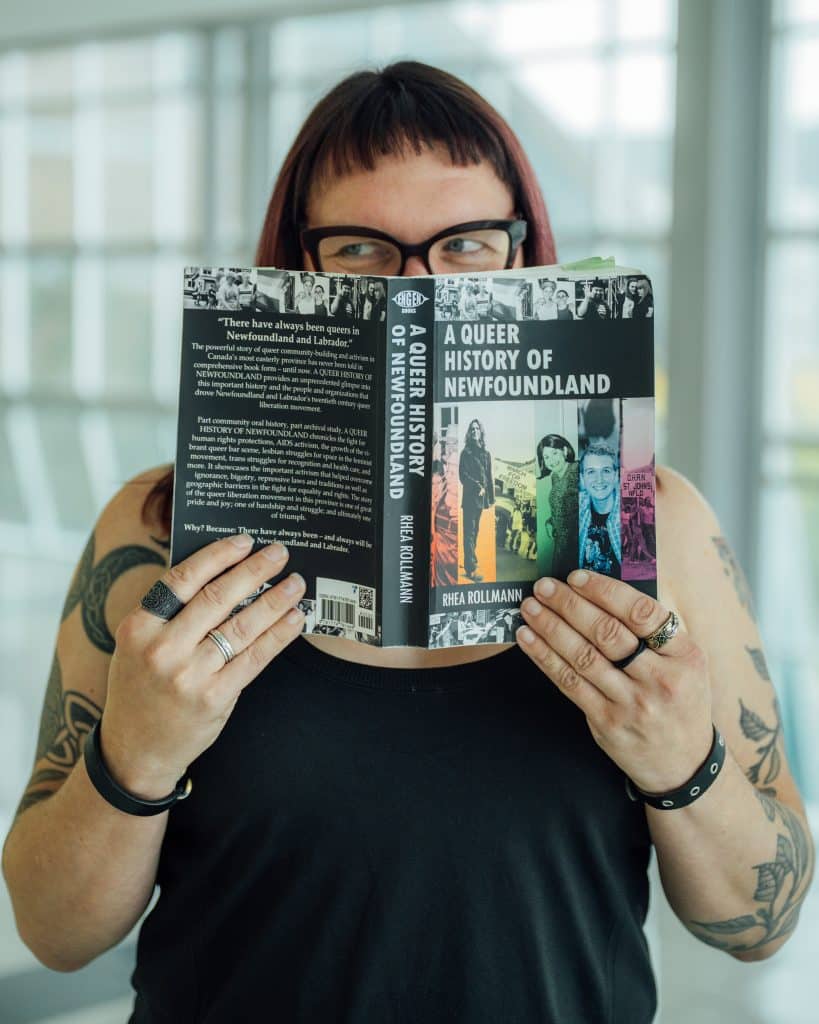
There were also a lot of practical lessons in that research; for instance, the importance of in-person activism and connecting. I continue to do a lot of research around the early queer liberation movement and the reality in which they organized when there was no internet. They had to meet in person to plan things; or at most they might be able to connect with each other by telephone, which still is a more substantive form of communication than a text message. You’re hearing someone’s voice, you have free-flowing conversations. Also hearing from activists about the early queer liberation movement and how it was so strong because this was an in-person movement. They would have to get together and spend a few hours folding pamphlets to hand out.
These days, people outsource that stuff. But the activists pointed out that when they started outsourcing that work they began losing community, because the act of sitting around a table together and doing that kind of manual work – that forms a stronger community bond. Talking to people on the phone to organise protests and meetings, as opposed to just sending a mass email – all of these things build much stronger movements. So I learned a lot of practical knowledge.
How has your understanding of your role as a journalist changed over the course of your career?
I think journalism itself has changed a lot, and journalists are wondering what their role is in the age of social media. I think the role is even more important because we’re inundated with so much information that it almost shuts us down. As journalists – especially with independent media outlets like The Independent or CHMR – our role is to almost curate information and say, “Hey, this is important. Hey, do you know about this?” And try to pinpoint what is really important that we need to know as a community.
Our not-for-profit community independent media spaces are so important because we’re losing those as the social media transnational giants take over. It’s really important to preserve these spaces; they’re some of the last democratic spaces giving space to local community voices and they’re vital to preserving our democracy and civil rights. I’m determined to do what I can to try to make sure that spaces like CHMR or The Independent, or any of our other community media outlets, keep surviving and thriving.
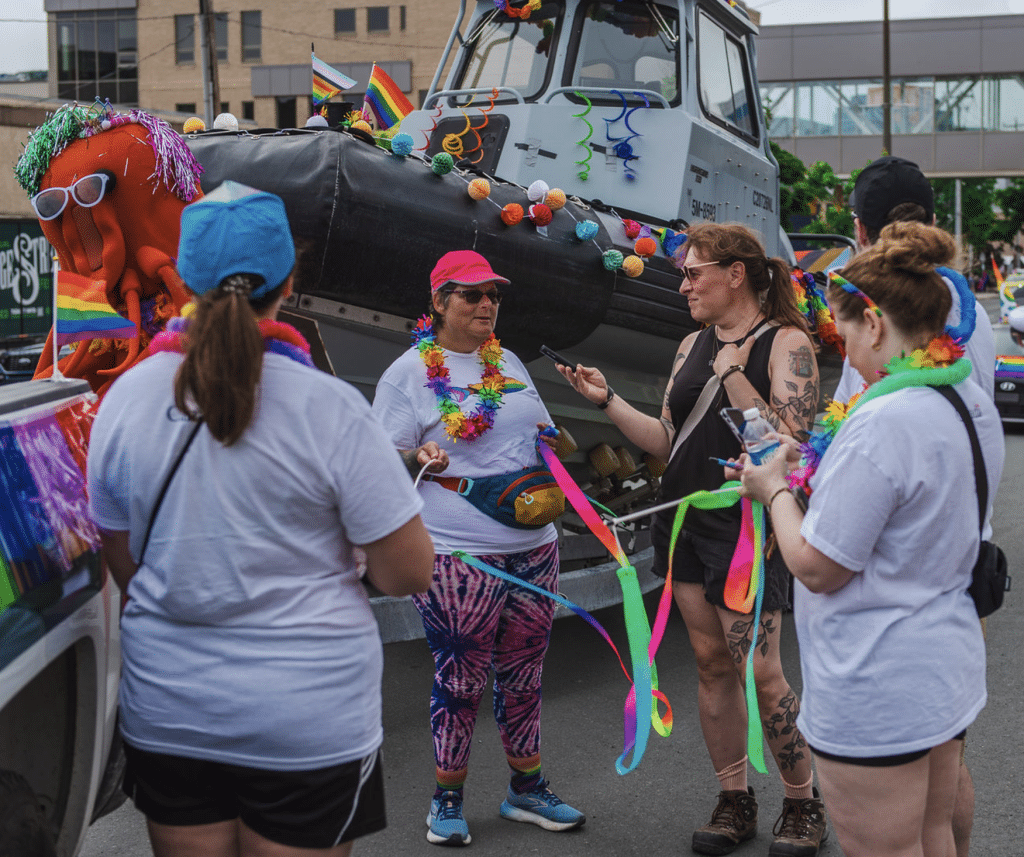
You wrote an article back in March about how International Women’s Day isn’t really a celebration, at least right now, because of this uprising of far-right conservatism and fascism. What do you think we can all do to fight against this?
That article particularly arose out of a frustration at seeing where a lot of our social movements were going. I think we’re in a real crisis, not just as a society but in terms of our social movements.
So much of modern contemporary activism and advocacy has become co-opted by the very structures they are supposed to be challenging. When everything from Pride parades to International Women’s Day – all of these occasions that are supposed to be reminders of struggle and part of an ongoing struggle – become celebrations, we risk losing sight of the struggles behind them. Gender inequity is increasing in society. The problems are getting worse, not better, so we should not be celebrating; we should be working for change.
Over the years I’ve become really concerned with the “professionalisation” of activism and advocacy. I’ve even started to question social work itself – does it do more harm than good? – in the sense that it creates this structured institution that doesn’t facilitate the kind of radical change we need to to bring about greater equality and equity in society. It manages an existing problem without really trying to change it. I become really concerned about the “professionalising” of our activist structures because that disempowers so many people. These are supposed to be open, democratic community spaces.
When I did research on the history of the queer liberation movement, these were just everyday people volunteering hours of their time every week, whole evenings of their lives, to movements. They had no training; there was no set way of doing these things. They were figuring things out as they went, but they were figuring them out collectively and responding to situations that arose, I think in a much more authentic way than being told by someone, “Here’s how you do this. Here’s how you organise a protest. Here’s how and why you do these things.”
I don’t want all the activists in the city to hate me [laughs], but our movements have become very individualistic and fragmented. Whether it’s anti-racist work or gender equity work or queer rights work—society won’t change because consultants are out there giving top-down workshops to leadership teams. Society will change when people in our communities come together and collectively figure out how to move forward and work for change.
I’ve become very critical of this formal structuring of how advocacy and social work and activism all play out. No one should be winning awards for activism. It’s a very serious matter, changing society so that people aren’t literally starving in the streets, so that people aren’t dying alone from lack of healthcare. These are very serious undertakings that should be the priority of all of us, and so I get very upset when I see our movements turned into celebrations. And certainly we need to celebrate our victories. We need to come together. We need to party and dance and have a good time together. That is critical, too. That’s vital to building strong movements.
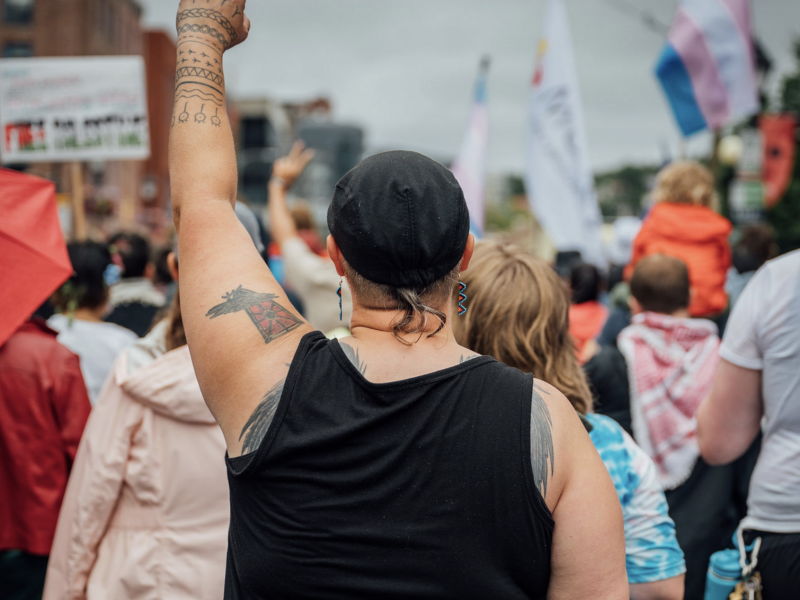
I think our activism has become too individualistic. Everyone wants to be distinguished as the ‘founder’ of this or that, or get credit for something. Movements are collective processes. Yes, we ought to give credit where credit is due, but at the same time no one should be singled out as founders or leaders or more special than others. That disempowers the collective nature of our social movements. The obsession with ‘leadership’ in organizing and activism – and even in education more broadly – is unhealthy. We don’t need to be training ‘leaders’ – we need to be building democratic community bonds so that we can all contribute, to the best of our respective abilities, to the communities and movements we are part of.
We need to re-centre the collective, and I say that as a rampant individualist myself. Individualism is important in the sense you should think for yourself and not follow mindless trends, but I think we’re forgetting how to build collective movements, and that’s contributed to our sense of collective helplessness. Look at our community organizations; how many of them have boards of directors that are mostly wealthy elites who are disconnected from the people they supposedly serve? How many boards vet and control who gets appointed to them? These organisations are supposed to be community-based, open, democratic. Instead, they’re turning into highly elite closed spaces. Populism has its problems, but so does the disconnected elitism we see in so many of our community organizations.
I worry that the system has really co-opted a lot of the potential for change, and that became really apparent to me researching my book when I looked at the strength of the rights movements in the ‘80s and ‘90s compared to our social movements today.
I don’t want to be too pessimistic because I think it can change. I think part of the problem too is we’re not teaching people to be disobedient enough. Again, when I think of what the experience is like for students these days at university—I mean, we were breaking rules and laws right and left when I was growing up. That’s important, I think, because it teaches you to develop your own sense of responsibility and agency in the world, and to be accountable for what you do. I really worry for people growing up today. At the university, I see they’ve imposed these codes of conduct. I think codes of conduct are evil and need to be eradicated wherever they exist. We have laws to protect people and rights. Codes of conduct are just these informal ways of trying to control people without any accountability. I see students who are really harmed by them. I think it’s critical to be instilling and teaching people a stronger sense of disobedience because a lot of the status quo needs to be challenged, and if we’re not teaching people how to challenge the status quo – how to challenge unjust laws or systems or people who are oppressing them – that’s vital to a democratic society.
In terms of what we can all do to fight the rise of fascism, I think no matter who we are or what we do, most of us have space somewhere in our lives where we can be helping to push forward that more liberatory agenda. You know, space where we can encourage people—give them the space and grace to ask questions, to bend or break rules. For instance, when I was TAing or teaching courses, you’d find students who do academic plagiarism. Turning them in or failing them doesn’t really accomplish much; better to talk to them about it, figure out where they’re coming from, what they hope to get out of the university experience, and how they plan to do that if they skip the hard learning part. We live in such a carceral system these days that just turning people in to be punished or to be expelled from a system or a space or a community doesn’t solve any problems. So I think we all – whether we’re a secretary in an office or leading some volunteer organization – have space in which we can create more space for others to be rebels and take agency and responsibility in their lives.
What are you working on now? Is there anything coming up?
I usually always have various writing projects on the go. I am working on a couple follow-up book projects from my previous book. There was a lot I couldn’t fit into that one queer history of Newfoundland, even though it was over 500 pages. I always have various freelance articles and journalism on the go. So I’m just continuing to write, and you know, live. I would say “doing activism,” but I think activism should really be inseparable from just living our lives in community.
Author

Related Articles
May Day Rally Shows New Face of Today’s Labour Movement
Turnout for May 1 march and rally in St. John’s one of the biggest yet in this province
Recimply the Best: Pitch and Pick Competition Winner Aims to Reduce Paper Waste
Recimply won big at Genesis’ annual Pitch and Pick competition last week. The startup is solving the problem of non-recyclable paper receipts.

Coming Home Queer for the Very First Time
For three days in July, queer Newfoundlanders and Labradorians from all over the world celebrated a rural homecoming 30 years in the making.
Daze Jefferies: an overflown chorus
On International Sex Worker Pride Day, the Newfoundland artist and academic explains why there is ‘no feminist future without sex worker justice’