
From startup to success: how the province’s tech industry is attracting global talent
Tech enthusiasts in N.L. are “pushing the envelope of research,” says a young entrepreneur from Bangladesh.
Newfoundland and Labrador’s tech industry may not have the same long-standing legacy as the province’s energy or fishing sectors, but its economic contributions are growing. And so is its reputation within the global tech community.
In 2020, the global giant Nasdaq bought Verifin, a fraud detection software company based in Newfoundland and Labrador, for USD $2.75-billion. At the time, it was the largest private acquisition of a technology company in Canada’s history.
Maggie Courish, a manager with Genesis, a St. John ’s-based tech hub offering programs and resources for entrepreneurs, says 45 per cent of participants in Genesis’ incubator program are newcomers.
Courish, who works with diversity, equity and inclusion initiatives, says diversity is “foundational” to the tech industry. It leads to “diverse teams with different outlooks, different viewpoints,” she says.
Will you stand with us?
Your support is essential to making journalism like this possible.
Newcomers taking industry to new heights
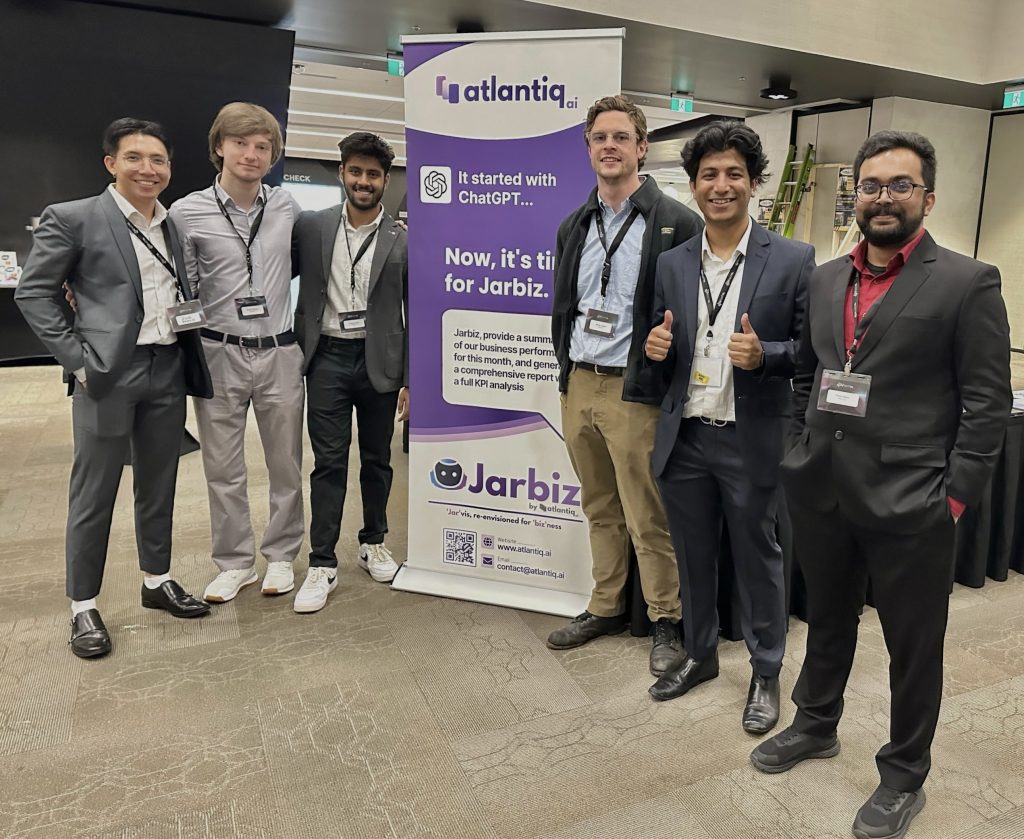
Four years ago, at the age of 19, Nurul Ibrahim moved from Bangladesh to St. John’s to study physics at Memorial University. Today, he is the CEO and co-founder of Atlantiq.ai, a tech company based in St. John’s.
In November 2024, Ibrahim was featured on the cover of Atlantic Business Magazine and was recognized as one of the 28-under-30 Atlantic Canadian innovators. Reflecting on his accomplishments, Ibrahim smiles and says, “I’m actually following my dreams. I’m doing things I’m passionate about and pushing innovation.”
His creation, Jarbiz — inspired by his favourite superhero, Ironman’s AI system J.A.R.V.I.S — helps business leaders sift through thousands of corporate documents, including annual reports, press releases, and competitor data, to streamline decision-making.
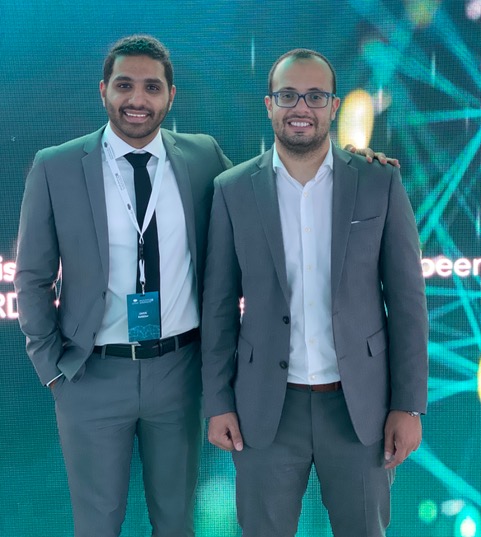
In 2016, Ramy Abdulzaher co-founded Bonocle, a startup aimed at increasing braille access and education. Born in Egypt, Abdulzaher grew up in Qatar. While studying at Qatar University, Abdulzaher and Abdelrazek Aly, his co-founder, met a blind student.
To get lecture notes for his classes, the student would bring a USB flash drive to his professor, who would then transfer them onto the drive. Then, a volunteer would type the notes in an accessible format and give them to the student on a memory stick that he would plug into a bulky device that the student would wear around his neck.
Abdulzaher says he was itching to create a cheaper, lighter, and easier device for people who are visually impaired. Abdulzaher says there was a lot of trial and error, but he and Aly remained persistent. The end product was Bonocle, a small computer mouse-like device individuals can use to learn braillie and access a wide range of reading and gaming apps. Bonocle’s invention landed Abdulzaher and Aly on Forbes Middle East’s 30-under-30 list in 2023.
In 2022, Abdulzaher moved to Canada as a graduate student at Memorial University and set up Bonocle’s headquarters in St. John’s. Now 31, he and his team work closely with the local blind community and organizations like the Canadian National Institute for the Blind to improve Bonocle.
A close-knit community
The province’s tech industry might be smaller than that of Toronto, Vancouver, or Montreal, but its strength lies in how tight-knit and supportive everyone is, tech enthusiasts say.
“A lot of people who you would think are not accessible are actually more accessible,” Abdulazher says. “It’s really nice when you’re looking for mentorship [or] when you’re looking for someone to support you with something specific.”
Ibrahim says it was the provincial tech industry’s support that motivated him to create Jarbiz. “I don’t think I would have gotten into this journey if the community was not supportive.”
But Ayush Neupane, the co-founder of Beena, emphasizes the need for more start-up events in the province to help foster networking and collaboration. When he was studying in Jersey City, Neupane participated in various startup events for entrepreneurs to pitch their business ideas and bring together the most talented minds in the region. He says similar weekly or monthly events in St. John’s would introduce newcomers and new talent to the rest of the tech world.
“It would allow a lot more people to come to those, get inspired, connect with the right people, get guidance,” he said.
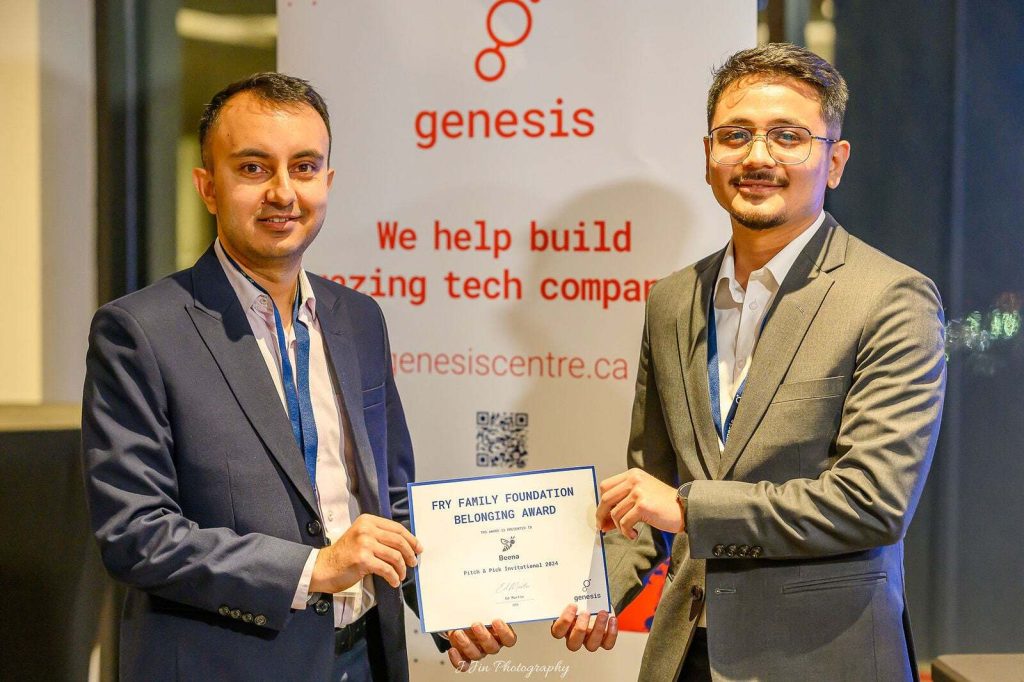
Neupane moved to Newfoundland in 2023. The 36-year-old and his co-founder, Dikson Rajbanshi, are from Nepal but wanted to establish their company headquarters in North America. Based on previous start-up experience, they knew their customer base would be mostly in the North America.
Their company, Beena —named after Neupane’s wife Bina — allows businesses to use predictive AI in their email/SMS marketing campaigns for their online store. While looking at incubators across Canada, they came across Genesis, which Neupane says was a “great fit.” He adds that the application process was faster, and Genesis’ three-year incubator program was more accommodating to new businesses.
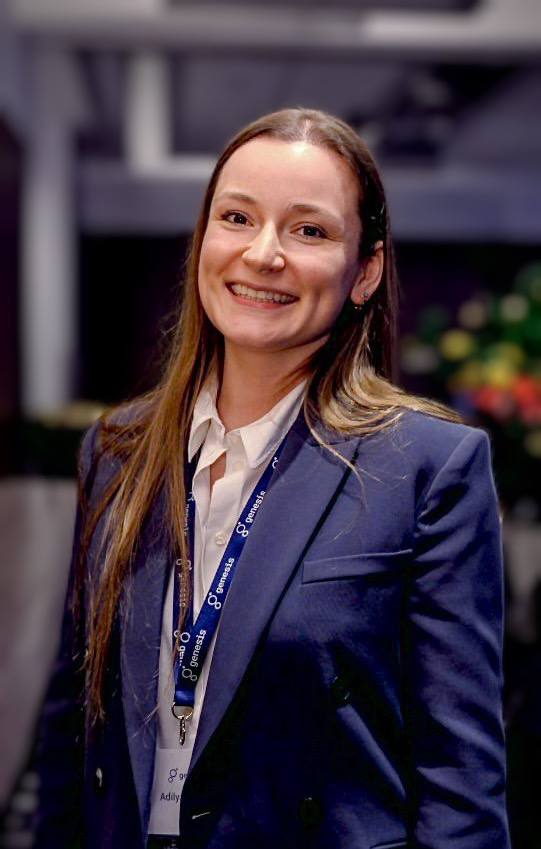
Adilya Dragan, the founder of Starluv, moved to St. John’s for a one-year stay but quickly “fell in love” with the province. Originally from Russia, Dragan lived in the United States before moving to Canada. She chose to remain in St. John’s because she was drawn by how the community came together during times of need. One moment that left a lasting impression on her was the warmth and support Newfoundlanders extended to Ukrainians upon their arrival in the province in 2022. “I’ve never, ever realized people can come together so well and help.”
Starluv is an AI-powered marketplace for buying and reselling clothes. The 35-year-old loves shopping and says she is the “ideal customer profiler for my own business.” The idea for an online store came to her as she struggled to find time for herself after the birth of her first son. “I couldn’t go [to] physical shops because I was nursing all the time,” she says.
Now, as a successful entrepreneur and a working mother of three young boys, the community in St. John’s has become a part of her family and plays a crucial role in helping her raise her children. “My kids’ teachers, coaches, and neighbours have all become an integral part of our lives, part of my children’s lives,” she says.
Barriers to startup growth
Ibrahim says there is a lot of talent among international students and newcomers that could benefit the province’s tech industry, but the provincial government must invest in programs that target newcomers.
Ibrahim says that until he becomes a permanent resident, there will be a “wall” between him and most of the resources and funding that will help grow his business. He says with more resources and funding he could hire more people and further enrich the province’s economy. “I can give back to the community more.”
Abdulzaher adds that the government could offer greater clarity about immigration programs related to entrepreneurs. He says the immigration process can be slow and confusing. “I want to build my business rather than go and look for other things that require us to just stay in Newfoundland, or stay in the country,” the 31-year-old says.
The immigration process is longer for self-employed immigrants, with the federal government requiring individuals to operate their businesses for at least one year to demonstrate viability. Due to backlogs that have led to increased application processing times, the federal government has paused the self-employed immigrant program until January 2027.
Company founders also have access to the start-up visa program, which grants permanent residency to 10 start-up founders annually, provided designated organizations like Genesis support them. In 2024, Genesis helped three founders secure permanent residency through the program, says Courish.
Abdulzaher adds that the process of filing taxes and handling payroll varies from country to country, which can confuse newcomers. “That is not as simple for people coming from outside the country.”
Ibrahim, 24, says he wants to see more financial support and resources for startups in the province. He says tech enthusiasts here are “pushing the envelope of research.”
The tech sector is one of the most profitable in the world. “Tech companies bring huge amounts of revenue, innovation, and just money into the province,” Nurul says. The provincial government and tech leaders need to create more programs and funding to assist new businesses during the early stages of a company start-up, he adds..
The Newfoundland and Labrador blueprint
Dragan says that while Newfoundland and Labrador has some incredible women tech leaders, there’s a need for more. She says the province is ideal for women entrepreneurs, adding “the competition is low and the support is outstanding.”
Neupane says the province is a great place to build a tech start-up. Tech communities like Genesis care about start-ups and offer various programs and services, he says, explaining that as tech companies grow they can establish connections with global markets and avail of opportunities to reach markets faster and understand their customers and their needs more quickly.
Neupane and the other sources interviewed for this story say a stronger and more diverse tech industry will lead to internships and mentorship opportunities for students, more jobs, and a stronger economy.
Starluv presently has 12 employees. Dragan says she wants to expand in the United States, where her business has seen success. She says that in January alone, her website had 10,000 visitors from the U.S. To expand her business, she will need to hire more employees.
Tech companies can also boost other industries. Jonas Anseeuw founded Bookinghook in 2023, a platform for vacation rental owners to manage direct bookings independently of third-party providers. While his wife began her PhD at Memorial University, he joined Enterprise, Genesis’ incubator program.
Anseeuw, originally from Belgium, says by being in the province, he can provide instant and in-person service, “instead of going with the competitor that only offers online support or a call center.” The tourism industry adds over $1 billion annually to the province’s economy. Anseeuw says he wants to reach more rental owners in the province to help them efficiently manage online bookings and increase revenue.
Abdulzaher says Bonocle is raising awareness about accessibility. He says due to the province’s sparse population, residents may go their whole lives without meeting a visually-impaired person. He says there’s strong excitement for Bonocle within the blind community. “We get a lot of people who are like, yes, we want this. This is something that we need.”
Companies based in the province have become a part of the community’s blueprint, says Abdulzaher. “Newfoundland has some ownership to what we’re doing, considering that we started here.”

Author

Related Articles
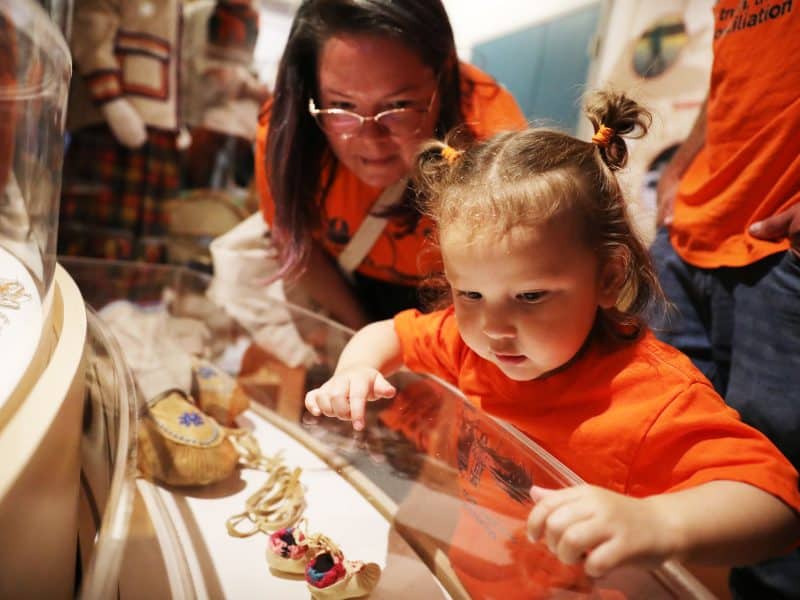
As Innu exhibit opens in Labrador, Grand Chief says truth must come before reconciliation
Innu Nation Grand Chief Jodie Ashini says it’s disappointing to open the Innu Pakassiun exhibit without the provincial government’s participation, but Innu know their history and who they are

Liberals’ Bill C-39 a wake-up call for Canadians: Avi Lewis
‘Cracks starting to show in the Carney consensus,’ Lewis tells N.L. NDP convention in St. John’s

As NDP convention gets underway in St. John’s, will N.L.’s third party prioritize growing rural support?
Former party candidates say it’s a steep hill to climb, but there are ways