
Ground-breaking new study reveals the poor state of 2SLGBTQIA+ healthcare in NL
A year-long survey conducted by Quadrangle confirms what advocacy groups have been warning
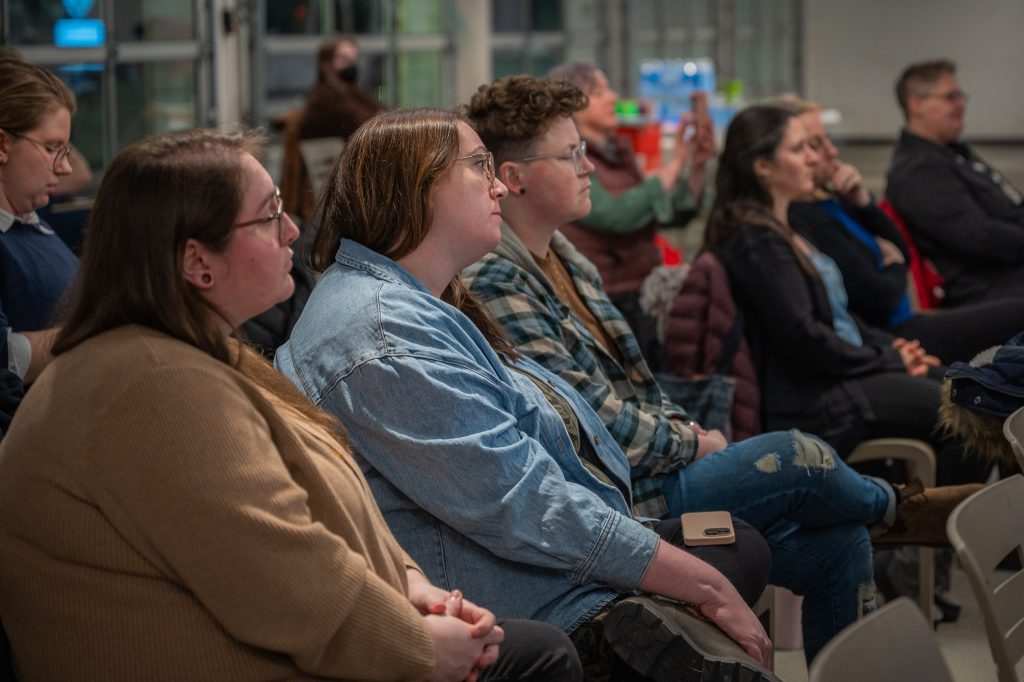
When medical professionals don’t have up-to-date training, patients wind up having to educate their doctors about their health care needs.
According to a new survey conducted by Quadrangle NL, that’s the case for nearly half of 2SLGBTQIA+ Newfoundlanders and Labradorians. For more than 40 per cent of them, the fear of having to do so has deterred them from seeking primary healthcare — while nearly a quarter of respondents have been deterred from accessing emergency care.
These are among the preliminary findings of a groundbreaking research project examining the state of 2SLGBTQIA+ healthcare in Newfoundland and Labrador.
The survey was undertaken by Quadrangle NL — the province’s 2SLGBTQIA+ community centre — with funding from Women and Gender Equality Canada. The final report is still being prepared for publication, but earlier this month Quadrangle held public town halls in St. John’s and Happy Valley-Goose Bay to release its key preliminary findings.
Will you stand with us?
Your support is essential to making journalism like this possible.
The results didn’t surprise Quadrangle Executive Director Charlie Murphy. But Murphy says they provide the sort of robust data needed in lobbying efforts to back up what Quadrangle has been hearing from residents of the province. It will also play a key role in developing policy proposals to fill the gaps researchers have identified.

“It allows us to look at the big scope,” Murphy explained.
The findings released at the town hall were revealing.
PrEP and PEP are medications taken to reduce the risk of HIV infection, either before or after potential exposure (almost half of those living with HIV in Canada are men who have sex with men). But only 1.8 per cent of 2SLGBTQIA+ people in the province are currently taking PrEP, while 8.5 per cent would like to. Meanwhile, barely a third of local residents are familiar with the medications, indicating a gap in education.
Mental health was also a focus of the survey. More than 50 per cent of respondents (and 58.7 per cent of gender-diverse respondents) reported their mental health as being poor or very poor. Meanwhile, 73.2 per cent reported needing mental health care services in the past year that they did not receive.
The survey also shone a light on racial disparity in access to healthcare. Racialized 2SLGBTQIA+ respondents were 13.5 per cent less likely to have a primary care provider than non-racialized respondents, 20 per cent less likely to have a medical insurance plan, and 12.1 per cent less likely to have access to mental health care.
The survey revealed medical providers in this province are woefully undereducated when it comes to 2SLGBTQIA+ healthcare. Close to half of 2SLGBTQIA+ patients had to educate their healthcare providers on their needs; the knowledge they would have to do so — fear of how medical providers would respond to being educated by their own patients — was a significant deterrent in people seeking necessary healthcare. Almost 43 per cent reported being discouraged from seeking primary care as a result, while more than a quarter of respondents said it even deterred them from seeking emergency care.
The survey revealed that some progress is being made at educating the next generation of healthcare providers; just 71 per cent of undergrad nursing students in the province have had mandatory coursework on sexual orientation, and just 43 per cent on gender identity. Meanwhile, just over 58 per cent of healthcare students felt their mandatory 2SLGBTQIA+ education was inadequate and below average, 91.7 per cent felt their curriculum does not adequately cover 2SLGBTQIA+ topics, and 83.3 percent felt their instructors were not knowledgeable about 2SLGBTQIA+ healthcare needs. Only 41.7 percent of healthcare students feel they have sufficient knowledge and training to serve 2SLGBTQIA+ patients.
Medical providers have previously pointed out that better education for healthcare students only translates into better practice if those students opt to stay in the province following graduation. Many do not, and unless current practitioners are given adequate access to retraining and further education, patient experiences will not improve.
The poor state of access to gender-affirming healthcare in this province has come under fire before, and been criticized by both provincial PC and NDP parties. The survey revealed that just 54.7 perc ent of health-care providers feel confident in their ability to provide gender-affirming care to patients.
Negative experiences proliferated on the patients’ sides too. More than 46 per cent of gender-diverse people reported experiences of misgendering by health-care providers in the past year. Meanwhile, cost was cited as the biggest barrier to accessing gender-affirming care. This includes financial barriers to accessing hormone blockers and hormone replacement therapy, gender-affirming surgeries and other procedures, and gender-affirming gear. Sixty-one per cent of patients reported cost as preventing them from accessing gender-affirming surgeries, and despite growing coverage of hormones and hormone-blockers by private insurance companies, more than 12 per cent of patients were still unable to afford them. Over 72 per cent of patients were unable to afford gender-affirming gear (i.e. binders).
The data confirmed what practitioners and advocates have been warning for years and bolsters the urgency of their calls for better supports and funding.
“It’s affirming in a lot of ways,” said Kelsey Collins, a therapist and director of the Jacob Puddister Memorial Foundation, which has partnered with Quadrangle to provide a designated number of weekly free counselling sessions for members of the 2SLGBTQIA+ community. Collins attended the launch and spoke out about the fact that the those community services are often provided by the most precariously funded organizations in the province.
“We need the government to listen to us, to hear us, to understand that we are in the community, we are listening and we are gathering this information, and we need the government to trust us to provide these services,” Collins told The Independent. “And one way they can prove that they trust us is to provide us funding to do the work that we’re already doing so that we can continue to expand our services and so we can continue to make them bigger, better and stronger for our community.
“I also think that they need to be listening to people with lived experience, just in general. I think we’re always better as a community if we’re listening to the people who are going through those experiences and having those lived experiences, those experiences of trauma.”
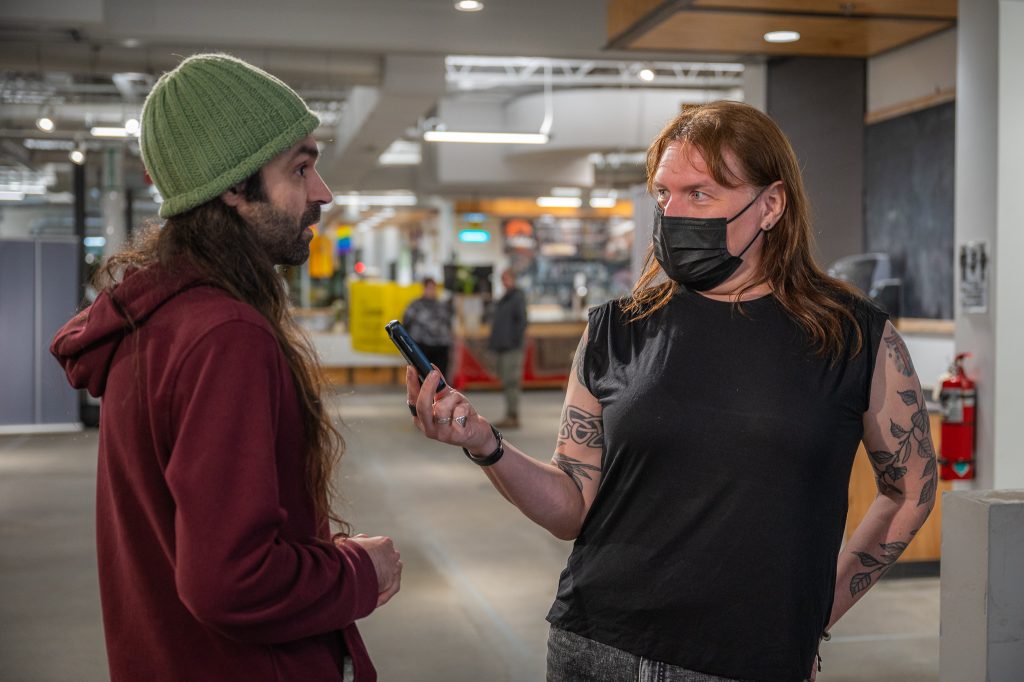
Murphy agrees.
“We need more funding to stabilize those kinds of initiatives, as well as peer support. People have noted that they just want to feel more connected. We need more opportunities for community to gather and connect.”
Quadrangle was precariously funded, too. But in December 2023 it received $900,000 over four years from the provincial government — funding that comes from the federal government’s National Action Plan to End Gender-Based Violence. And while the funding provides some short-term stability for the organization, it doesn’t address the shortcomings in provincial healthcare identified by the survey.
“I want to see some actual changes,” says Murphy. “There are pieces of Newfoundland and Labrador that are very limiting when it comes to gender-affirming care. This should help validate the reasons why we need to look at other provinces, look at other places around the world, and start making some really strong shifts in how we look at health care in our province.”
Cole Kippenhuck, founder of Crow Kinship Consulting, also attended the town hall. Originally from Labrador, they emphasized the importance of the work Quadrangle is doing to identify rural care gaps for 2SLGBTQIA+ people in the province.
“I’d really like to see how deep the research can get into rural and remote areas,” they told The Independent. “Because in little tiny communities that just have a two-person clinic, how do you go talk about your gender there? How do you get the services you need the smaller the place becomes, when there’s still a lot of stigmatization and lack of policy, lack of training?”

Political parties respond
The Independent reached out to all three political parties with a request to speak about the report and the state of 2SLGBTQIA+ health care in the province. The Liberals responded with a statement emailed on behalf of the Department of Health and Community Services, citing its partnership with Quadrangle on the Gender Journeys virtual program for adults exploring their gender identity. The statement also said the department is working on establishing a family care team in the St. John’s region with a focus on gender-diverse and 2SLGBTQIA+ communities.
In an emailed response, PC leader Tony Wakeham said he was “deeply concerned by the shocking inequalities” revealed in the report.
“These findings highlight the harsh reality of marginalized individuals facing barriers in accessing essential healthcare services,” the statement said. “It is disheartening to see that a significant percentage of 2SLGBTQIA+ individuals lack access to primary care providers, medical insurance plans, and mental healthcare.
“The cost barriers preventing access to gender-affirming care further exacerbate the challenges faced by individuals seeking essential treatments especially during a time when the cost of living is so high. The inadequate access to medications underscores the urgent need for improved awareness and availability of these preventive measures. It is crucial that efforts are made to educate and support the 2SLGBTQIA+ community in NL to ensure they receive the care and support they deserve.
“These findings demand action to address the systemic inequalities and barriers faced by the 2SLGBTQIA+ community in Newfoundland and Labrador. We must work together to create a more inclusive and supportive healthcare system that caters to the diverse needs of all individuals,” Wakeham’s statement continued. “If we don’t do these things people get left behind – that’s one commitment I have made when I become premier of the province of Newfoundland and Labrador. We are not leaving anyone behind.”
NDP health critic Lela Evans spoke with The Independent from Happy Valley-Goose Bay.
“I’m not surprised at the gaps and I expected them to be there,” she said. “I’m really concerned.
“I hope that the medical associations are identifying that gaps need to be filled and are starting to work toward making courses available so doctors can learn more about their patients, so that our people have options in being able to find doctors who are knowledgeable in meeting their health needs. This has to be a priority.”
Evans noted that one of the barriers for gender-affirming care is medical travel, and she would like to see more gender-affirming services offered closer to home. She said there’s also a need to expand and improve MCP coverage of necessary services.
“We need to make sure more surgeries are available in our province. We have the expectation that society has evolved, and in 2024 you would have thought this would already be done.
“The fact is this is not new anymore. People thought that over time things would change, but time has passed. This is not new anymore,” Evans continued. “We can’t fall back on that excuse anymore. What we have is inertia among policymakers — a resistance to change. And that goes back to a lack of education.”
Precarity prevents effective advocacy
Evans said another barrier is advocacy groups’ inability to hold government to account properly because the province keeps them stuck in cycles of short-term funding. She wants to see a shift toward five-to-10-year funding cycles for community non-profit and advocacy organizations.
“A lot of the advocacy that needs to be done is calling government to task on these things. It’s hard for these groups to call out government on their failures, when they rely on government for annual funding.”
The poor state of 2SLGBTQIA+ health care in the province hits close to home for many, Evans included. She says that growing up in the 1980s and ‘90s she remembers the ravages of the AIDS pandemic on the province, as well as the deaths caused by lack of education and supports in schools and communities for 2SLGBTQIA+ residents.

“I remember all the beautiful [people] who were broken down by society through abuse, bullying, discrimination, not only from society at large but also through family and friends who judged them. It impacted their mental health so much. I remember all those beautiful, broken people. I come from the north coast and I was lucky enough to have a family that imparted to me the knowledge that I was whole.”
“A lot of the people I saw broken, I wonder if they had been born 20 or 30 years later, and if they were to join society now as young adults — I wonder what kind of careers they would have, what kind of lives they would have, because a lot of them were prevented from even being able to realize that because they were marginalized to the point where they couldn’t.
“Even now when I go to Pride, it makes me sad rather than happy. Because I see all these people celebrating, and I think, ‘If only we had had this back then, there would be a lot more people alive today.’ A lot of them would be teachers, lawyers, doctors — but they never had that chance.
“So to me, to read this [report] in 2024 is sad,” Evans said. “It’s sad to look at the poor access to medical care which should be our constitutional right to access. This is really impacting people at a quality of life level.”

Author
Related Articles
Hit comedy series North of North makes Nunatsiavummiut ‘feel seen’
‘I was completely obsessed with it from the very beginning,’ says Makkovik artist
Student federation calls for investigation into racism at Memorial University following head of E.D.I. and anti-racism’s departure
The Canadian Federation of Students wants an investigation of MUNL’s ‘upper administration with regards to all forms of racism within the institution, specifically as it relates to anti-black racism.’
Labrador town building 40 more homes for seniors amid housing crisis
Happy Valley-Goose Bay’s Housing and Homelessness Coalition launched 32 seniors apartments last summer; now it’s building more