
‘Honest storytelling’: N.L. drag icon set to unveil new show
Barbra Bardot brings her personal journey to the public stage in new St. John’s production ‘Becoming Barbra’
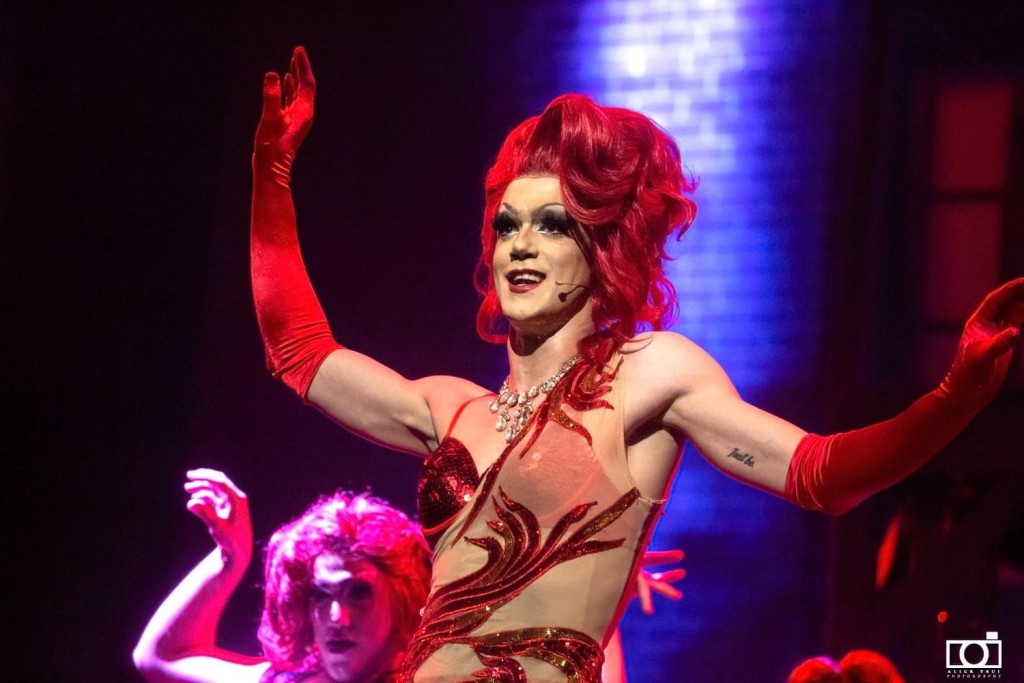
When COVID struck in 2020, drag performers around the world struggled with the sudden closure of drag bars and performance venues. Many moved online. Barbra Bardot took a more unorthodox route, relocating from Toronto to Newfoundland.
“COVID gave me the opportunity to try something crazy and move somewhere I never lived before,” she tells The Independent. “I took the opportunity and it turned out to be the right choice.”
Now she’s telling the story of that journey—and the ups and downs of what followed—in Becoming Barbra, a very personal show that hits the stage at the Majestic Theatre in St. John’s this weekend.
It’s undeniable that drag has exploded in Newfoundland and Labrador in the past decade. Dating back to the 1970s or earlier, local drag shows have long been a fixture of this place.
Will you stand with us?
Your support is essential to making journalism like this possible.
Visiting Canadian drag troupes like The Great Imposters sold out bar shows across the island when they began touring here more than 50 years ago. But drag’s recent, more mainstream popularity has gripped the province with a special power. Provincial audiences have watched, riveted, as Newfoundlanders regale the country on programs like Canada’s Drag Race.
Acclaimed drag musical Kinky Boots sold out when it hit the stage in St. John’s two years ago—the first Atlantic Canadian production of the show—while trans crip drag king Dr. Androbox—presently in Ottawa but originally from Newfoundland—is the only drag king in the world to release an album of original drag music (and was awarded Mr. Capital Pride Ottawa in 2022).
Drag is flourishing, and it plays an important role in community building, says local drag icon Barbra Bardot, who left the drag clubs of Toronto to relocate to Newfoundland five years ago and has witnessed that process firsthand.
“I was born in Quebec, raised in Ontario, but Newfoundland and Labrador made me a star,” she reflects with a laugh during a recent interview with The Independent. Bardot is bringing her reflections on this process, and its impact on her, to the stage in Becoming Barbra, a deeply personal new production that hits the stage Sept. 27 in St. John’s.
From Toronto drag performer to NL ‘away-to-stay’
Bardot moved to Newfoundland in 2020, but her roots here go much deeper.
Her grandmother grew up on Pennywell Road in St. John’s before moving to the mainland in her teenage years, but when Bardot was eight her mother brought the family to St. John’s for a visit. Barbra loved it, but it was the whales that won her heart. After a first boat trip in St. John’s Harbour came up empty—Barbra was devastated and her mother had never seen her so depressed, she recalls—they tried again in Bay Bulls, and she finally saw her whale.
“I lost my mind,” she laughs. “I will never forget that. It’s one of my core memories.”
But Barbra left the whales in Newfoundland and returned to the mainland. She studied musical theatre in Ontario and then went to teacher’s college. It was while she was studying to be a teacher that she began exploring drag. “I just missed being on stage,” she explained. I knew [teaching] was the right path for me, but I missed my moment in the spotlight and the feeling of being on stage.”
Living downtown Toronto, she attended drag shows five or six times a week. She befriended several of the performers, including her own drag mother (an established performer who mentors someone new to drag), Jezebel Bardot. She began performing in 2018 and soon became a hit on the stages of the city’s drag scene.
When COVID arrived in 2020 though, Bardot felt the need for a change and decided to give Newfoundland a try.
Within a week of her release from COVID quarantine in September 2020, Bardot was back on stage. She got out of quarantine on a Friday, went to the now-closed Velvet Club on Saturday to watch a drag show, and the performer organizing the following week’s show booked her on the spot. She recalls the performance vividly.
“I remember my first show here — it was wild, the energy from the audience,” she says. “The queen who walked off-stage in Toronto is not the same queen who walked on-stage in Newfoundland for the first time.”
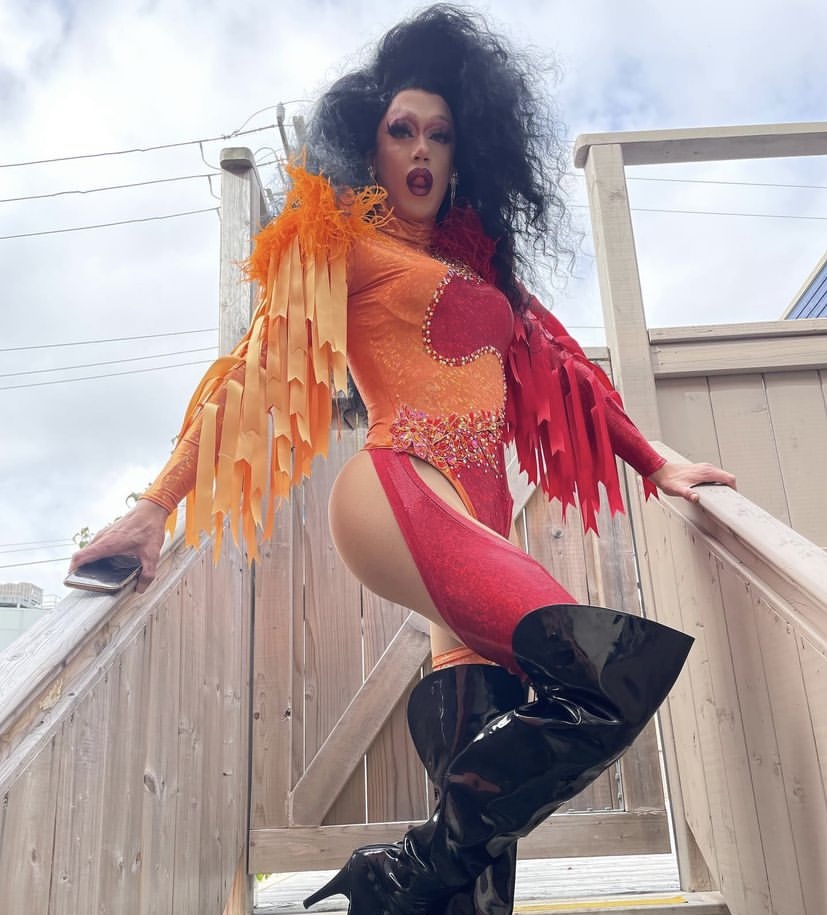
“I still felt like a relatively new queen at the time myself. I remember walking on stage and the people who had seen me perform before were like, ‘Wow, you brought it to a whole new level.’ I felt that way myself too; it was just a level of confidence that came from the support I got here.”
Relocating to Newfoundland was a double-edged sword for her as a performer, she says. On one hand, she felt pressure to meet the expectations people had of a Toronto drag queen. On the other hand, coming to a new place gave her the freedom to experiment.
“I felt like I had to raise the bar because it was expected,” she says. “I was expected to be better, to be good. So I guess I stepped up to it. I’m not saying I’m the best performer—there are really fantastic performers here—but because I didn’t know anyone here I wasn’t comparing myself to anyone anymore. It gave me the freedom to just be me and do what I wanted. The numbers that I loved weren’t the numbers that audiences were expecting me to do.
“I could be truer to who Barbra is and who I am because nobody knew me and I wasn’t being compared to all these other headliners in Toronto who had been performing for years. I was just a new person and everyone wanted to see what she did.”
Although St. John’s is among Canada’s smaller provincial capitals, it ranks extremely high in recent Statcan surveys of sexual and gender diversity. The city has been a welcoming space for drag, Bardot says, one with a surprising degree of cultural and artistic vibrancy for its size.
“St. John’s does feel like a big city to me in many ways because of all the arts and culture here, and the different types of people we have, and all the different opportunities you have to access different performances. It’s not on the same scale, but I feel like St. John’s has big city vibes, even though we have many of the small-town benefits too.”
As a drag queen, though, Bardot had to make adjustments. There were fewer venues offering shows, reducing performance opportunities. Shows were structured differently too, she adds, explaining her experience in the Toronto scene included longer sets and more time mingling and bantering with audiences. Here, sets are short, often only consisting of a single song, while mingling and audience chat were rare, she says. All of this worked against the building of a community. But that’s been changing, she says. “Everyone’s there for each other, as well as the show. It’s not just about, ‘We’re here to sit and watch a show with just our group.’”
Fighting for freedom and art
As a school teacher off-stage, Bardot has a unique vantage on the way drag has been targeted by right-wing politicians in recent years. It’s also given her important insight on just how valuable drag can be, especially for young people in a rural province like Newfoundland and Labrador.
“Drag is just such a visible representation of queerness. It’s very in-your-face and it’s very public, especially in this era,” she says, adding drag “gives queer youth permission to do whatever makes them feel great and makes them feel right, like the best version of themselves.
“I love that.”
It’s not just youth, either, she says. “Barbra gives me so much strength and confidence. I’ve always been an outgoing person, but Barbra’s given me a new confidence and ability to speak, even if I’m feeling more timid or scared. Barbra’s given me a different strength. And I think performing in drag can also give that strength to other people, too.”
In her off-stage teaching life she’s had to play a different kind of educational role, helping parents to understand the meaning and importance of drag. She recalls her first experience teaching in rural Newfoundland. She lived in Triton and taught elementary school music in Robert’s Arm.
“It was awesome,” she reflects. “It was quite an experience. Right in the Bible Belt of Newfoundland. I met queer kids out there, and that was such a special year for me because I got to see the impact Bardot had for people.
“I don’t hide my drag from my students. Once I build up trust with them and they know who I am I’ll share it with them just like a teacher would share something like, ‘Oh, I play soccer outside of school.’ With me, I share that I do drag.”
Since some parents had never encountered a drag performer before, there were some questions, she recalls, and she met with some of the parents to address their concerns. “Ultimately it was worth that tough meeting I had with the parents, to know that I helped those kids in that class that saw a little bit of themselves in me.
“Just like a TV show can be rated R or family-friendly, a drag show can also be family-friendly. I love an all-ages drag show, I love doing family friendly shows,” she says. “I take pride in knowing that what I’m producing and presenting—if I say it’s going to be family friendly, it’s going to be family-friendly. That goes from the outfits to the material I’m performing, and what I say on the microphone. It’s like any art. It doesn’t mean I’m hiding the queerness of it — Barbra Bardot is still a queer icon. I’m still sharing that queerness with them, but I’m able to make it age appropriate, like any art.”
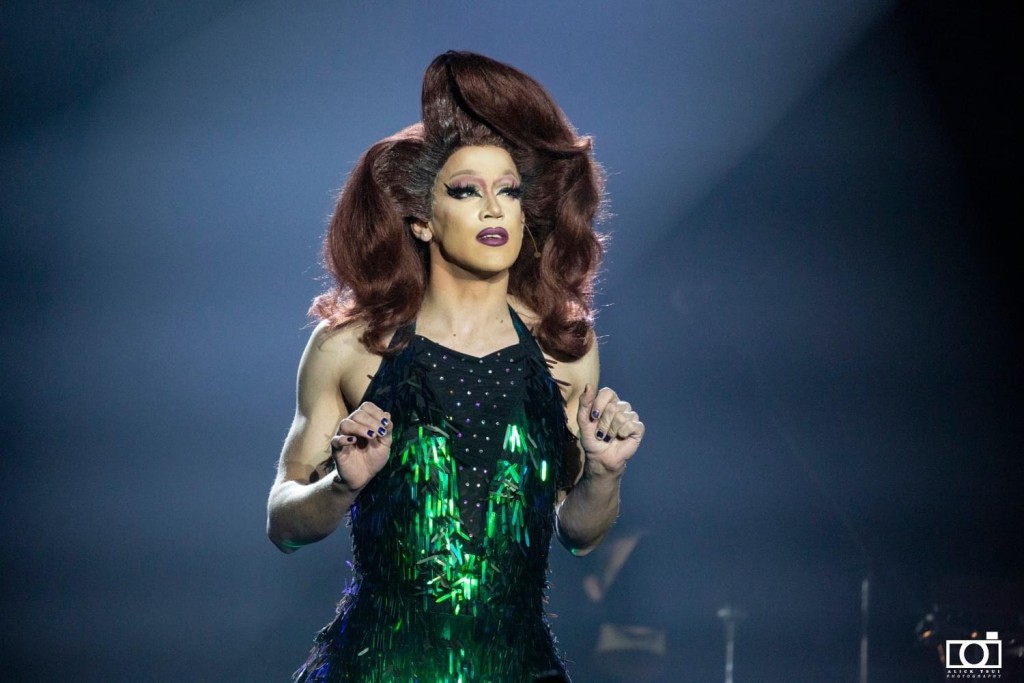
“When I talk about drag, I’m teaching and sharing about my personal experience so that I can connect with my students, just the same way I want to know what my students are doing. ‘Are you doing taekwondo? Tell me about that!’ It’s about building connections and finding common ground between us. Maybe they’re a big fan of K-Pop Demon Hunters and I just performed a song from [the film], and we find that we have that in common. It’s a way for us to connect as human beings. For someone to try to villainize that and turn it into something that’s evil, it’s so disheartening and it’s just ignorance.”
Bardot has been able to assuage people’s ignorance and curiosity in her personal meetings with them, but this occurs against a wider backdrop where right-wing social media and other forms of mass media still spread disinformation and hate against drag.
“I don’t really understand anyone’s anger about something like that,” she shrugs. “I’m not saying you have to come to a drag show. There’s no mandatory attendance. It would be like people rioting to prevent a football game happening. It’s like them saying, ‘How dare you play football? It offends us that you want to throw a ball around and tackle each other!’
“I hate that people assume that just because I do drag, I want to make other people do drag. It’s so strange to me. I think focusing on drag is often a way [for the right] to distract people.”
Remembering St. John’s drag bar Kaleidoscope
Kaleidoscope Drag Bar and Lounge opened on George Street in June 2022 and was operated by four friends, including Bardot. It was open for barely a year but its impact on the community was immense. The story of its rise and fall is an important part of Bardot’s journey, and one of the stories she explores in her upcoming show. Bardot witnessed friendships form that still run strong today, and romantic relationships too. She remembers seeing one couple have their first kiss at Kaleidoscope; today they’re engaged. For many, Kaleidoscope’s 2022-2023 run was a “dream come true,” Bardot says.
“What an impact it made on me. So much happened. A lot of Kaleidoscope was amazing but it was so hard at the same time. Morals were getting mixed: was I doing drag for fame and fortune, or was I doing drag because I loved it and I wanted to create community?
“That was a wild, crazy time for me. It was so rewarding at times, but so much hard work, and I wasn’t in the best place in my life to handle something like that. Ultimately, it led to substance abuse issues, alcohol being the biggest one.”

“The last few years have been pretty hard,” she continues. “And then I found sobriety. It’s the best thing that’s ever happened to me. I’ve now come out of that [time] with the realization that I love educating, I love doing community drag shows and shows that are uplifting. Now I’m sober and doing so much better, mentally and physically.”
This, she says, gave her the outline for her upcoming show, Becoming Barbra, which she describes as “the story of my career, my rise to fame, and the fall of Kaleidoscope, and me picking up the pieces after that.
“I feel like I decided to write it now because I now know where the story is headed.”
The show will feature a number of new songs and pieces she’s never performed before in Newfoundland, along with “classic” Bardot numbers. She’s always wanted to do a cabaret-style performance combining drag and musical theatre but didn’t have the framework for a narrative until now.
“This show has been quite therapeutic to work on; it’s a lot of honest storytelling,” she reflects.
“I want to do all these amazing things for our queer community here. I want us to have this beautiful, safe space and I want us to all be able to get together and celebrate art and drag and all of this. And it didn’t work out when I tried it [with Kaleidoscope], but I still have hope for our community. I still want our community to grow and I’ve learned that I can still be a part of that, even if I’m not going to be the Cher in burlesque of the next drag bar that opens.
“It’s about finding the ways to support the community and grow together. To grow with community.”
Becoming Barbra plays at The Majestic Theatre Lounge on Saturday, Sept. 27. Tickets are available online.

Author

Related Articles

Accounting watchdog to investigate Deloitte over fake citations in $1.6M healthcare report
Chartered Professional Accountants N.L. is leading the investigation after Deloitte admitted AI was involved
St. John’s teen says community, activism helped her find her voice
13-year-old Nyala Adam was inspired by a local summer camp focused on social justice and cultural inclusion
PC’s minimum wage increase ‘far from a living wage,’ says NDP leader
NDP Leader Jim Dinn is calling on the PCs to legislate wage increases