
This year’s St. John’s Pride Festival came to a close last Sunday with the annual parade, capping 11 days of activities showcasing and celebrating the breadth and diversity of the capital city’s 2SLGBTQIA+ community. The festival kicked off with a flag-raising ceremony at City Hall on July 10, followed by an array of activities, including faith events, sporting events, historical panels, dance parties and a panoply of drag-themed activities throughout the week and a half.
In early July St. John’s Pride (SJP) announced local Palestine solidarity group Palestine Action YYT would serve as grand marshals of the Pride Parade.
“We were trying to figure out how to support marginalized communities, and seeing all the work that Palestine Action YYT was putting into these rallies and marches and trying to draw attention to the issue [of genocide] here at home, we could see the overlap and the intersectionalities of it all,” St. John’s Pride Co-Chair External Eddy St. Coeur told The Independent at the time.
Some Pride festivals across the country were disrupted this year by protests over their partnerships with financial donors associated with the Israeli military, while others — including Pride organizations in New Brunswick and Prince Edward Island — also partnered with Palestine solidarity activists.
Will you stand with us?
Your support is essential to making journalism like this possible.
As part of an agreement negotiated with the local Palestine solidarity group, St. John’s Pride endorsed a boycott, divestment and sanctions (BDS) policy and committed to rejecting funding arrangements with companies complicit in funding the ongoing Israeli genocide or weapons manufacturers more broadly. Pride says it also returned a $5,000 donation to TD Bank as a result of the agreement.
The arrangement led one local corporation to cancel its Pride-affiliated event, a drag show sponsored by Harvey’s Home Heating. The Harvey’s Group of Companies also includes Browning Harvey, the local bottler for Pepsi. Pepsi is a key target of boycott lists because of its relationship with Tempo Beverages, an Israeli company which profits from the Israeli occupation of Palestine.
According to St. John’s Pride, when Harvey’s was asked not to display the Pepsi logo, they canceled the entire event. Harvey’s declined an opportunity to comment on the matter. In response, Palestine Action YYT and an array of local drag artists filled the gap by organizing a ‘Drag on the Water’ event which brought hundreds out to the harbourfront for an afternoon of lively drag performances.
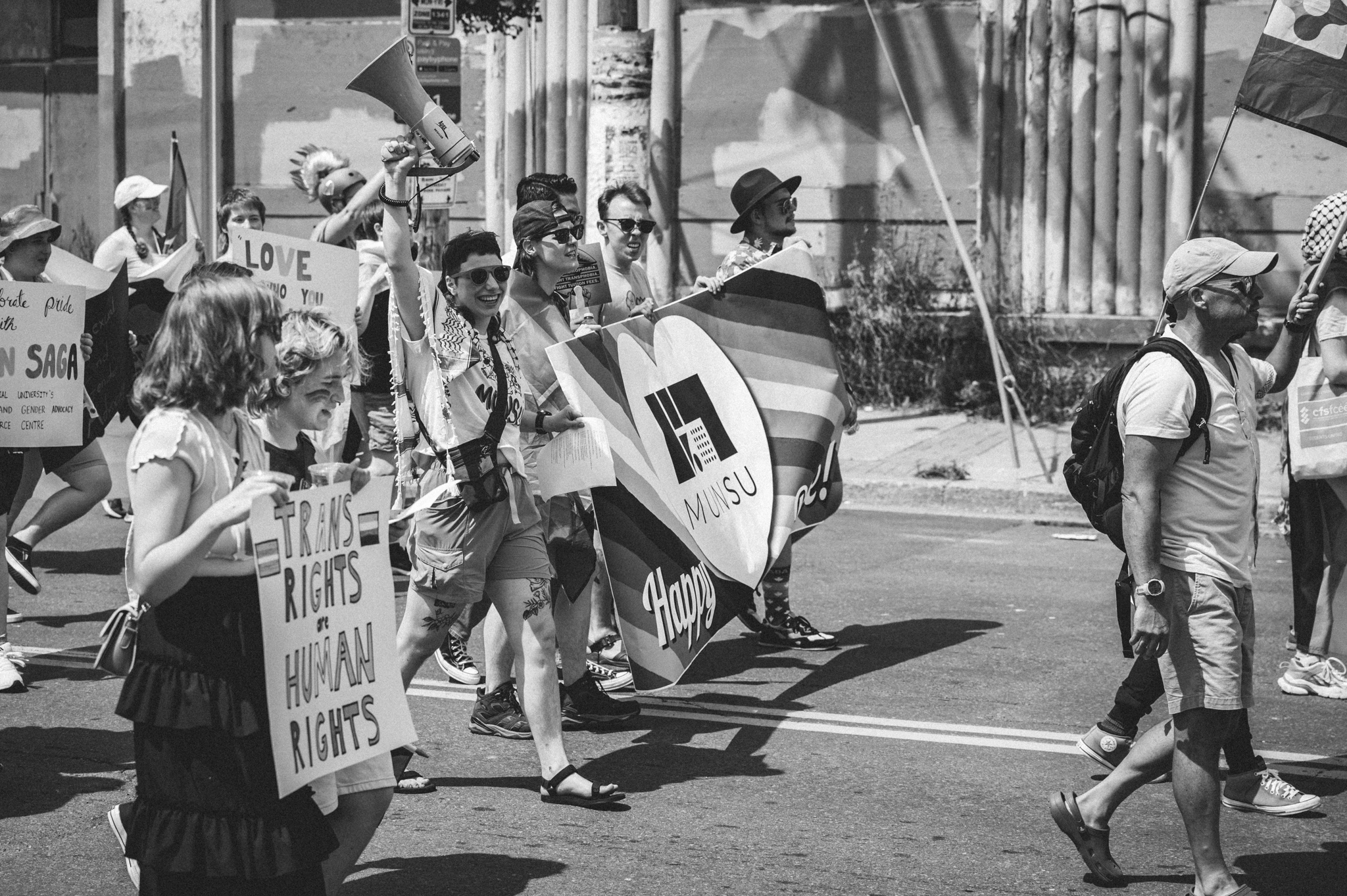
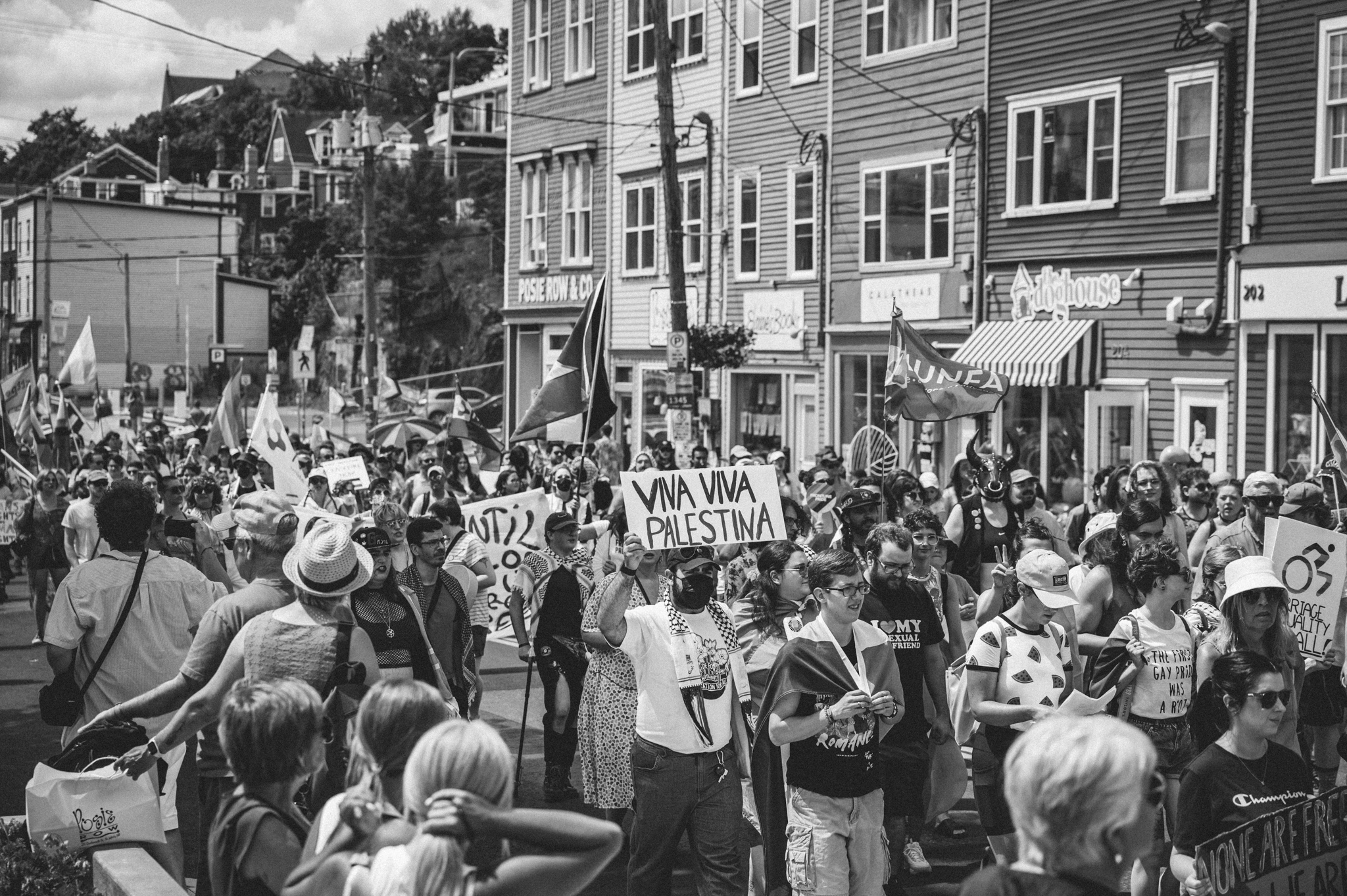
Palestine Action YYT led the parade with the group’s massive “End The Occupation” banner and chants of “Newfoundlanders take a stand!” Drumming and chants blended in with dance music and iconic 1980s anthems as participants marched, roller-skated, and danced their way through the downtown. The parade ended at Bannerman Park, where festivities, speeches and performances continued through the afternoon.
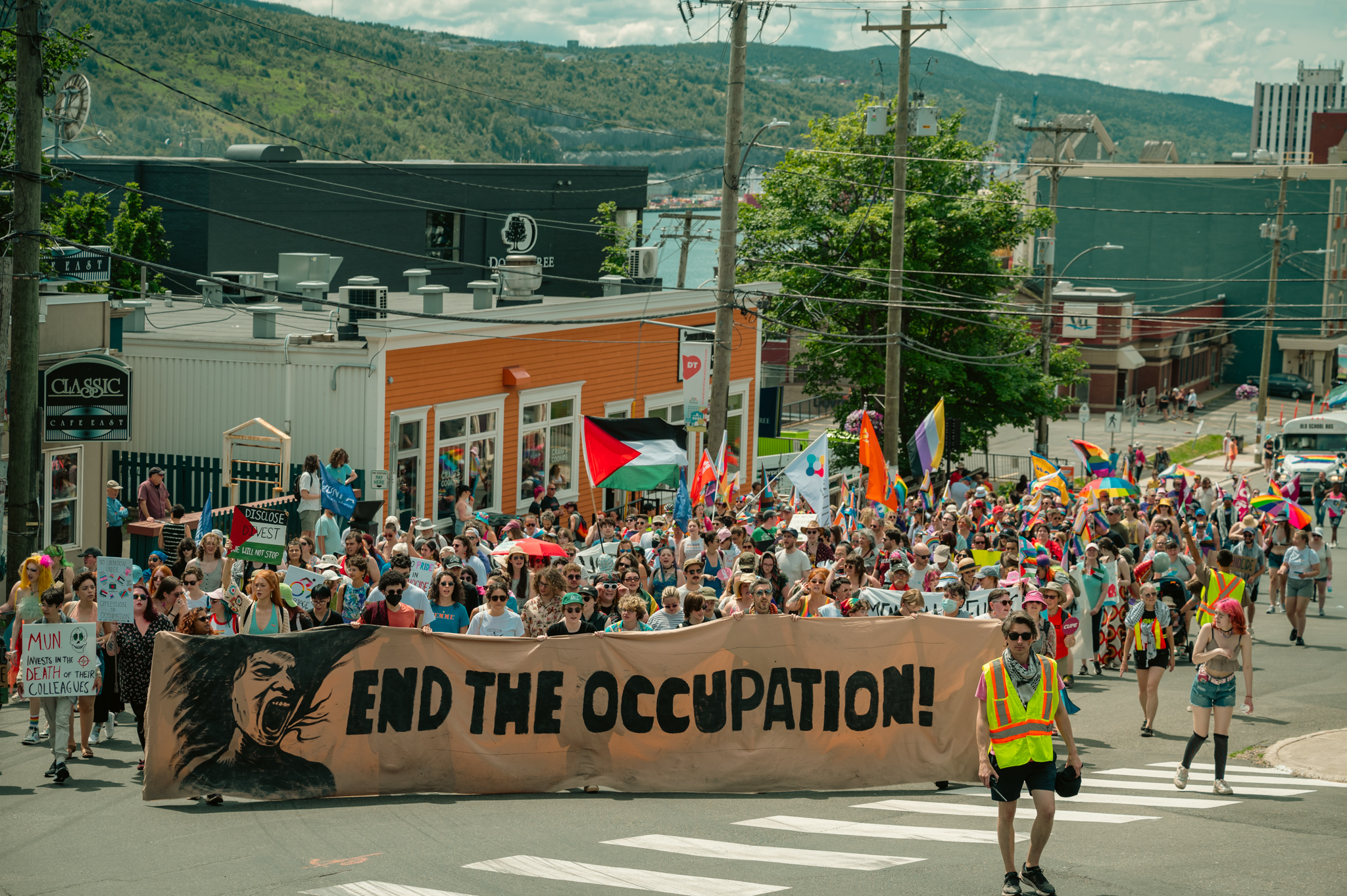
The Independent asked parade participants to share a thought, memory, observation or reflection about what Pride means to them.
Here are some of the responses (edited for length and clarity), along with a collection of photos from the day taken by photographer Tania Heath.
It’s a snapshot of the diversity of experiences, ideas and visions that make up our community.

I feel ambivalent about Pride. I think Pride actually means so many different things to different people, and I don’t take it in a literal way to mean that I’m proud of being queer, or proud of being trans. I think for me Pride can be a kind of spirit of defiance. It’s not about showing up year after year for a Pride festival, but it can be very much a year-round day-to-day way of living. I think I feel ambivalent about it for so many reasons, not only the commercialization of Pride and all that but just because whatever political gains might be made, we know they’re so precarious, so liable to being wound back. So I think Pride for me always comes with kind of a ‘but’ attached to it. I think it’s actually a good ‘but’ in the sense that it’s motivating. —Tom Cho
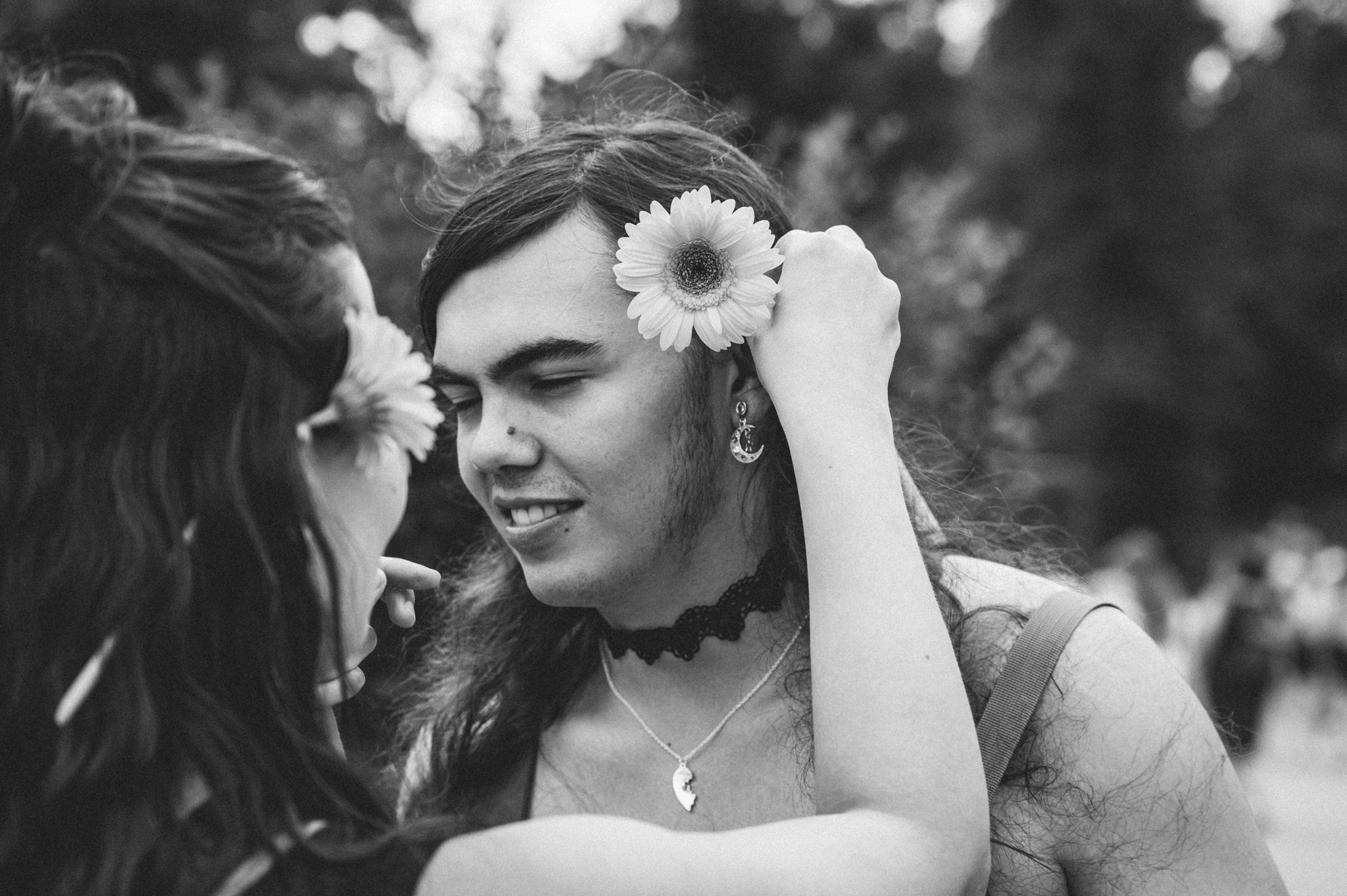
I’m from Jamaica, this is my first year here so I’m excited to see what it’s all about. It’s my first Pride. My aunt introduced me to it so I said okay, I’d like to get to know about it more. —Janoy Ellis
My partner and I have been together for 11 and a half years, and in the Philippines we’re not able to get married there. But now that we’re here, everything that we dreamed of will come into place. We’re getting married in December — December 12. It’s our first time that we’re both living here, it’s our first Pride together here. It’s a very special Pride. —Frances and Maria
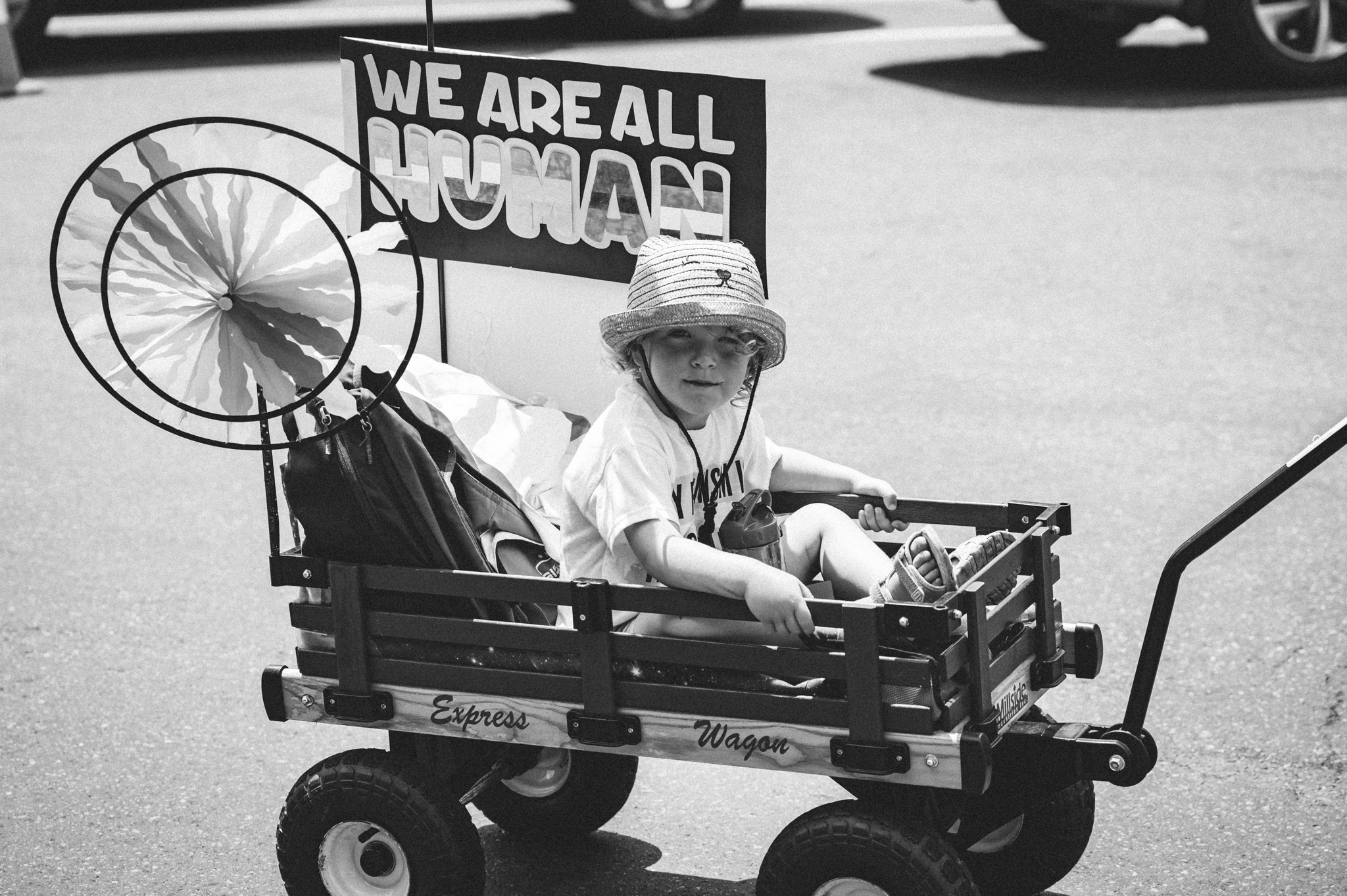
This is my second Pride in St. John’s, and I attended a couple of Pride parades in Seattle. Here is definitely a lot smaller, like I know more people here than I did in Seattle. That’s the thing about having a much tighter knit community here is you actually know people when you see them go by in the parade. So that gives it kind of a special feeling.
I think Pride is a space for people to feel normal, because you’re around folks that are like you. You get to have that sense of – yeah, this is just life. It’s a day where you get to be part of the majority, and that’s really kind of refreshing at times. —Bryn Follett
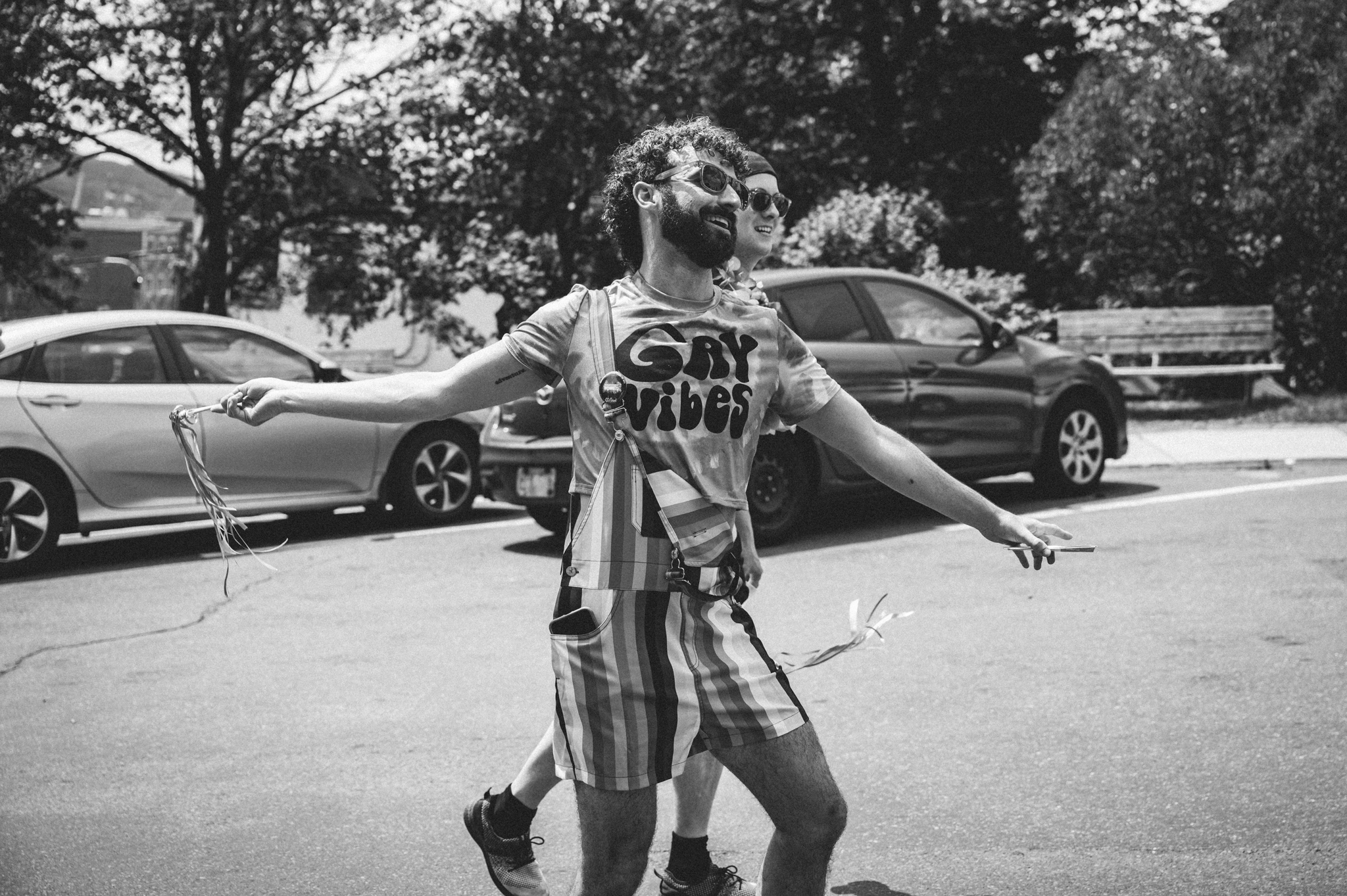
I’m a retired teacher. I spent about 10 years being the facilitator for a [gay-straight alliance] group in my school and that was awesome, but now I’m watching what’s happening in the world and the attacks on the rights of queer kids in particular, and I think we really need to come together for this now. It’s horrifying me, it’s breaking my heart. It’s everywhere; yes, it’s in the States, but it’s in several Canadian provinces as well, and I don’t think anywhere is safe. And I think we really need to get together and stand up for queer kids.
I am very afraid that we are collectively headed for some hard times and that the way to endure and to leave a legacy is for us to stay together and to nurture each other through it. I’m older, I want to leave a legacy of having been there for young people and hopefully that gives them strength for whatever comes for them after I am gone. —Nathalie Brunet

I’ve lived in St. John’s for 29 years. I came here from the US, and in the early days of Pride marches — which for me would have been in the late 1970s — there were so many people that had to wear paper bags over their heads because so much was at risk for them if they were identified. So coming out here and being wide open about who we are, it’s got to happen. It’s so important. And one thing that I do — I know there are a lot of people that invite queer people to come march in the parade, but I also do a lot of inviting allies. Because I think when allies come and take that step onto the street with the parade, not just on the sidewalk waving, it changes their commitment to what needs to be done. —Liz Ohle
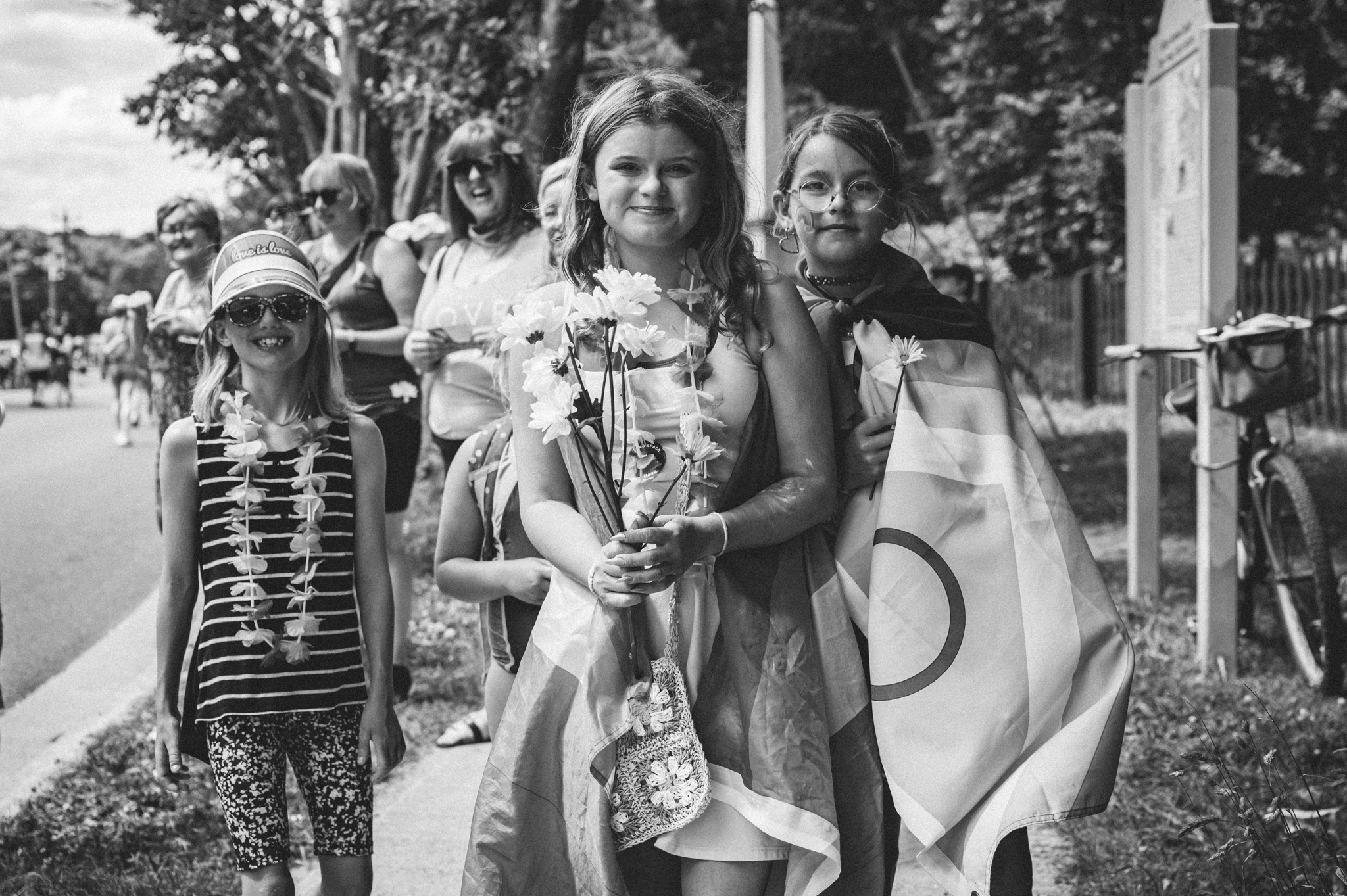
I’m new to Newfoundland and so for me seeing all the rainbows in different communities around Newfoundland is just so beautiful to see. Seeing all the different nooks and crannies of Pride. It feels good. This is my first Newfoundland Pride. I was in Regina last summer and that one was really beautiful — there’s a lot of really beautiful organizations, and then my hometown area always has one every September and that’s always fun. I’m looking forward to being new to this community and integrating into it and finding my place.
Pride’s important to me because as someone who came out later in life, knowing that people like me existed is so important. And I think ultimately Pride is about solidarity in all movements and we aren’t free until all of us are free. I just think it’s important to be prideful in who you are and that we be open about that because it’s important for younger generations and future generations to know it’s important to be who they are in all aspects of their lives.
—Gill Holmes


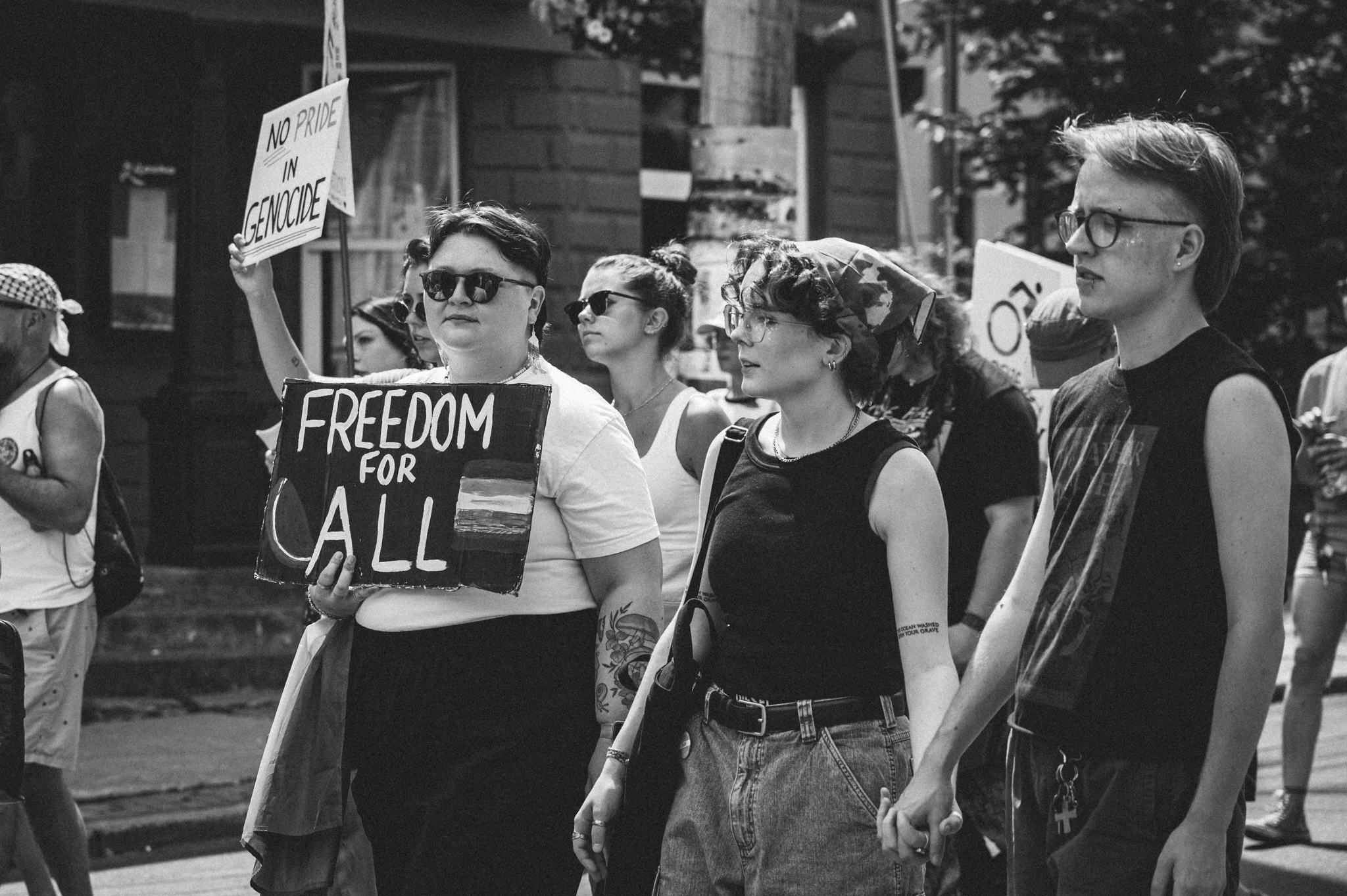
Pride is so important for us at the NL Public Libraries considering all the book bans and hate that’s been going towards libraries in regards to providing 2SLGBTQIA+ materials in our libraries and programming. So I think it’s really important for the libraries to be here as a presence to show that we do support the community here in St. John’s. It’s really frustrating — as librarians and libraries we believe in providing stuff for everybody and we believe in equality of information, so it can be really hard when we have people saying they don’t want something in their library, they don’t want a certain program. It’s really frustrating and we really just try to be that safe space that libraries have always been for a lot of people. We try to keep that up even these days. —Emma Craig (Regional Librarian for St. John’s, NLPL)
I think for me as someone who really came out fully as a bisexual as an adult, there was already such a solid foundation of inclusivity and celebration and that was a platform for me to feel very comfortable. And to be in this space now and to be able to have that shared with so many people who share the same vision for what it looks like to feel safe, to feel welcomed — I mean, it’s so important for everyone to feel that in their community. —Courtney Langille

I think during a time where governments and many organizations are trying to divide us, including our trans youth, including through legislation that they’re passing, we need to stand up now more than ever and let people know that they’re not standing alone, that we’re going to stand with them through every single moment of this day, of this celebration, for this community. —Jennifer Murray
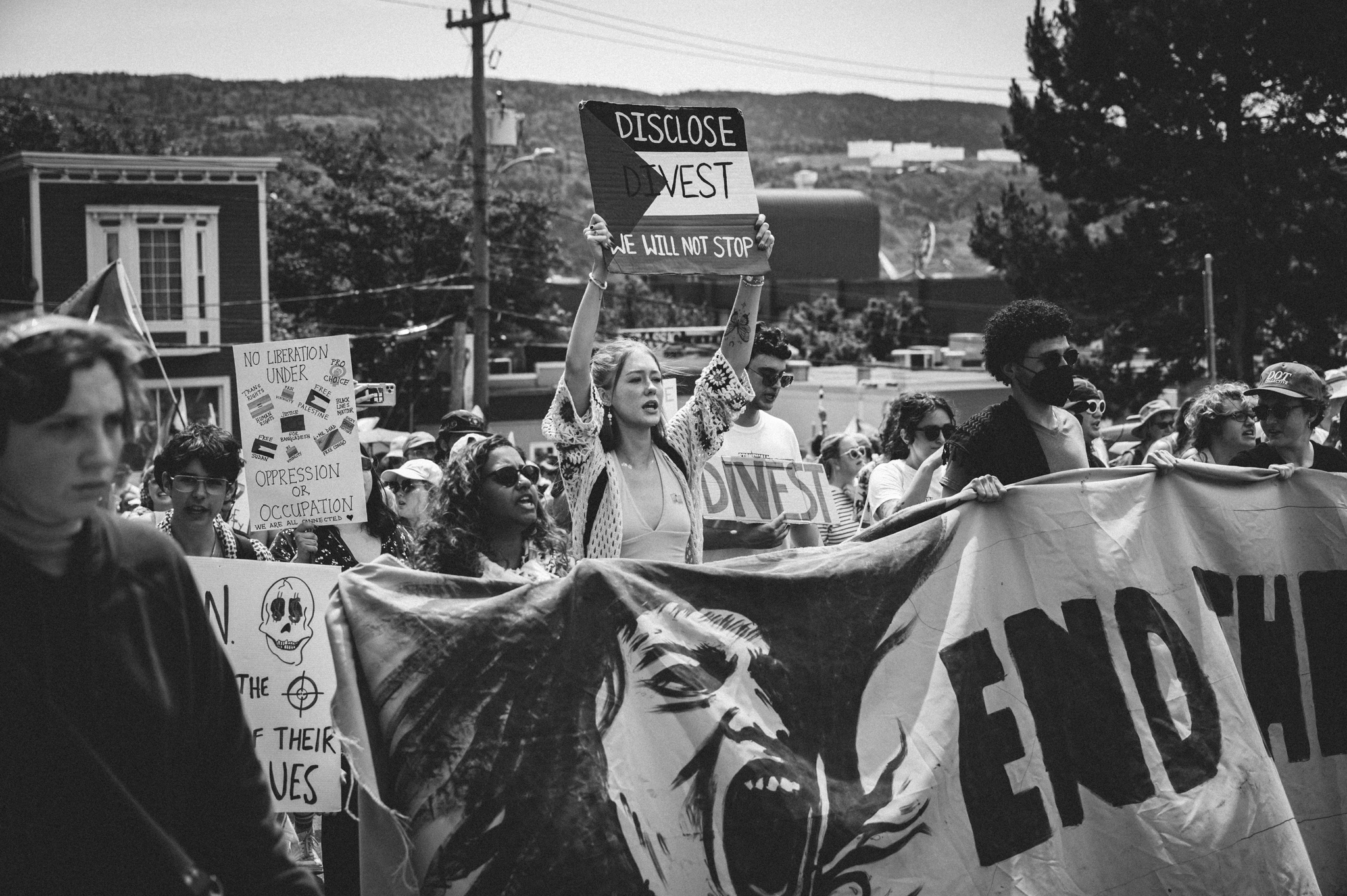
I went to my very first Pride parade in 2019 and came out. It feels intense. There’s a palpable energy, and solidarity and community, and connection and community, and I think that’s beautiful. And just a sense of connection. I think it reminds us of how far we’ve come and how much the queer community has strived for. But it’s also a stark reminder that there’s still a long way to go and we still have a lot of things that we’re fighting for. Trans rights are human rights, is a big one for me. —Jess Durling
This is my first time coming to St. John’s Pride. I grew up in Newfoundland but I left when I was 18 and coming back it’s so awesome to see how much more diverse the community here is now. I’m used to going to Toronto Pride which is huge and corporate, and this one feels a lot more personal and intimate and I love it. I love the smaller town feel.
To me personally, Pride is about community. I love seeing people come out and be their true selves and be with everyone else — that makes a more comfortable community. We want to be able to show our individuality and just come out and be with their community. I really feel that’s the connection we all have with each other. —Gail Olivia Fernando

I’m from Paradise […] and I always found the whole situation kind of lonely tbh. I always noticed there was a lot of queer action happening, but not in a way that I felt that I could access, and not in a way that I felt gave me that sense of community action that I really desire. So being home right now as a 42-year-old woman in St. John’s — it’s like, oh fuck, this is looking good! This is looking more intersectional than I’ve ever seen in St. John’s. Like literally, the Palestine Action YYT crew leading the Pride March? I’m crying, because that is the real anti-racism, decolonization of what Pride sometimes is, and I’m fucking here for it. And tying that in with the liberation for all — liberation for Indigenous communities — it’s fucking hot. So Pride for me is like another way of being in community and building relationships and love — love as action, love as resistance — and I just feel less lonely. Coming home to visit, I feel way less lonely and way more excited to keep building and collaborating with folks who really do focus on what liberation can mean for all. —Renee Sharpe
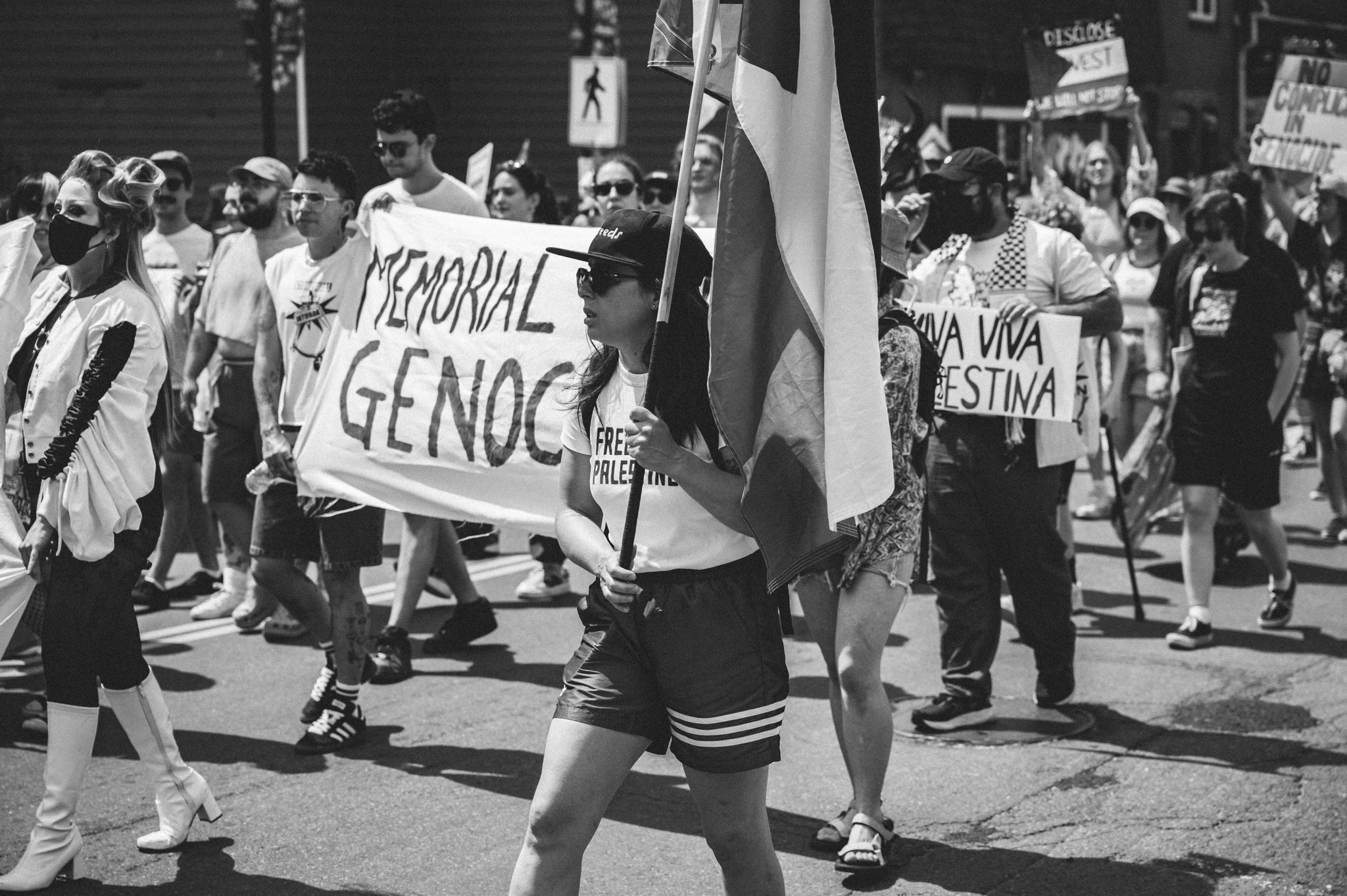
For me, Pride this year has this even deeper sense of inclusion where the Pride Committee decided to include Gaza. That’s why I’m wearing a Palestinian keffiyeh. It’s beautiful, it’s beautiful. Oh my gosh, I’m going to say I’ve attended maybe 20 Prides. I’ve attended a long time. I missed a couple of years. They’ve grown, for one thing. And the people on the sidelines – there’s more people on the sidelines watching the parade. And way more support. You can see the support among families like you’ve never seen before. Just way more acceptance. One time there was heckling and stuff like that. But this year, the parade just went on forever — people, people, people! I loved every moment of it. —Deborah Jackman
Pride started out as a protest, and yeah, celebration is important and it’s part of resistance, but just getting back to its original roots of being a protest and supporting Palestine is important. Because even though Newfoundland itself – like the island’s very queer-positive in places, but there are parts of the island that are very hostile towards queer people and queer communities. Personally I found that I had to create a community just within my friends and with people that I met, as opposed to finding one big one to go and meet people at. So this is putting the community back into Pride. It’s reconnecting with your community, and protesting for others that don’t have the same rights that we do. We have a long way to go and it’s not liberation for one, it’s liberation for all and we’re still very far from it. So at Pride it’s still important to come out and protest, because even if it doesn’t feel like a protest, it is a protest. Because through joy, that is resistance. Especially when you’re queer.
And it’s important for younger queer kids, even just allies, just to see older queer people, like elders, just people of their age group and older to know that there is a future for us and it’s not just that you’re young and you’re queer. You can be old and be queer and experience the whole spectrum of human existence while being queer, you don’t have to hide. And we do exist. So it’s just important to go out and see people. —Oliver Bannister
I think my first Pride was 2006 in Berlin. That was quite an exposure. But it also had within it very much a sense of community intimacy and friendship. And the reason why I come back to Pride every year — I’ve participated in Pride, I’ve walked in Pride, and I’ve believed in Pride as a statement of social justice — is because of those people who watch from the sideline, or from their TV screens or their social media channels and wonder: Can I do that someday? Will this community accept me as I am? And to feel that sense of community that I felt in that first Pride in a completely unfamiliar place that I’d never been in. That’s the power of Pride for me. —Remzi Cej
I think it’s important as a form of taking back power and showing that there’s nothing wrong with being who you are and loving who you love, because I think that was how things were seen for a very long time. And just reasserting that you have a right to be who you are and showing collective joy and care for each other. Because it’s not an individual thing, it’s everybody coming together and reaffirming that you have a community here. —Sadie Mees
I’ve been out for so long and Pride has always been important. But in the early days it was very, very important because we didn’t have a presence. So it was a big deal, it was a very big deal back in the day. Now it’s evolved so there’s more acceptance, but it’s still a really big deal. And Pride in the Park, I really love it because it gives a chance for families to mingle and children to play, adults to meet each other, and it’s a really safe space. —Lela Evans

This year’s Pride Parade felt particularly transformative. A small city like St. John’s can seem a bit isolating at times, and that’s something I’ve experienced before; being both gay and Palestinian, it’s easy to feel that there’s no one around who quite shares your experience. So it was incredibly gratifying to see St. John’s Pride stand in solidarity with Palestine Action YYT. There may have been some naysayers who felt that such a pairing was wrong, or that we should confine our politics to the private sphere rather than flaunting it openly—I wonder if they appreciate the irony of deploying that sort of rhetoric in relation to Pride. In any case, the smashing success of this year’s festival should be enough to answer their criticism.
In many ways, queer history has been defined by two tendencies, sometimes in tension — liberation on the one hand, and assimilation on the other. Pride originated as a movement for liberation, a desire to radically reshape society in a freer, more open, more inclusive image. In recent years, assimilationist discourse has been ascendant, embracing the view that queer people should be seen as a normal part of our existing systems. In my view, assimilation into an unjust system would mean denying our true potential. This year, I was delighted to see Pride embrace the promise of our collective liberation. When I marched this year, I marched with pride in every sense. I was proud of every part of my identity. I hope the queer youth of the future, and especially racialized queer youth, will get to experience that feeling too.
—Zayd Khraishi

Authors


Related Articles
PCs under fire for ‘disappointing’ treatment of Black History Month
Celebrated Black community leader and anti-racism advocate target of racist comments after speaking out online
New play portrays barriers facing N.L. women in politics
Women won the right to vote a century ago but are still underrepresented in public office. St. John’s playwright Ruth Lawrence’s play tackles that head on.
Meaningful response to homelessness requires more than new builds, says NDP leader
Jim Dinn’s comments come in response to PC’s announcement of 10 new ‘micro homes’ in St. John’s