
Inside Marine Institute’s partnership with OceanGate
Emails reveal senior admin opened ‘proverbial doors’ hours after meeting billionaire Stockton Rush, and that the late OceanGate CEO and Titan pilot hurried an MOU with the St. John’s ocean and marine polytechnic.
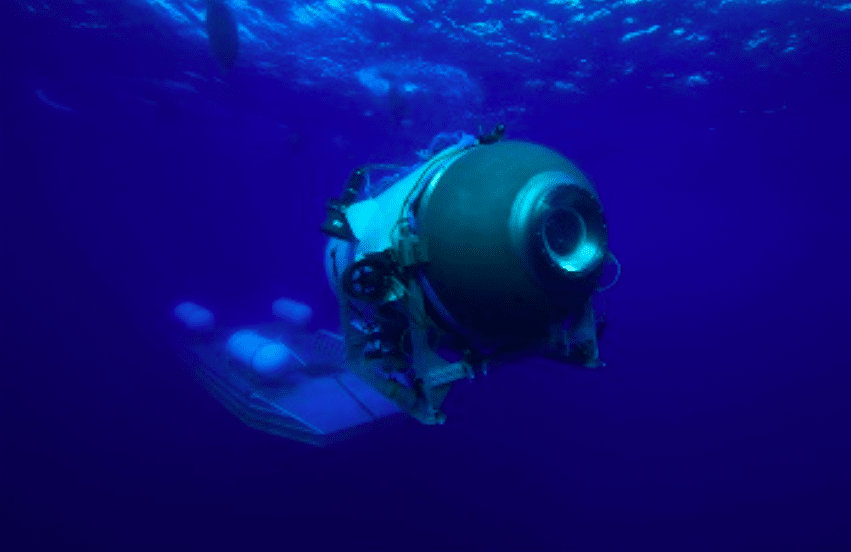
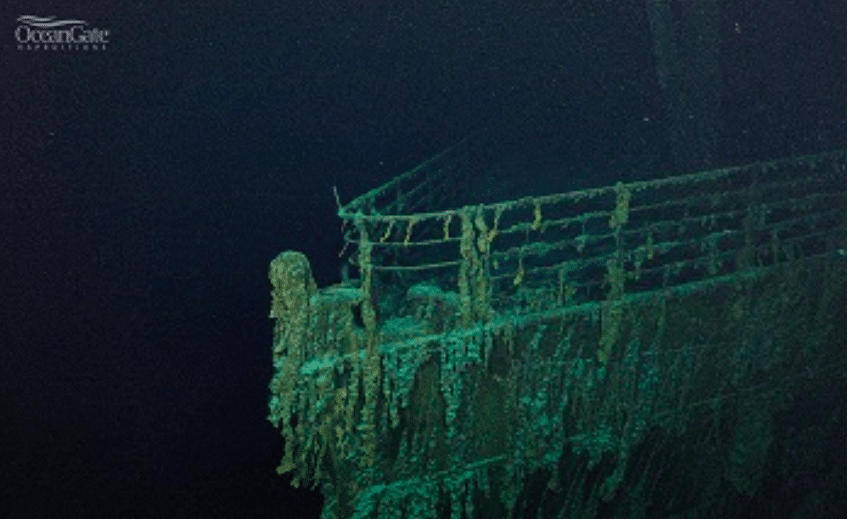
Months before the catastrophic implosion of the Titan submersible in June that killed all five people on board, leadership of Memorial University’s Marine Institute were enraptured by the prospect of partnering with the company that owned the controversial vessel and orchestrated its expeditions to the Titanic shipwreck and grave site.
The relationship between Memorial University’s Marine Institute and OceanGate has largely remained out of the spotlight following the June tragedy, but internal emails from the institute’s senior administrators reveal that American billionaire and OceanGate CEO Stockton Rush—who died on board the Titan—was persistent in moving along a partnership based on his company’s timeline.
The emails were released through an access to information request and reviewed by The Independent.
They show that Marine Institute leaders were eager to meet with Rush when the Titan was docked in the St. John’s Harbour on July 9, 2022 — and that, just hours later, then-Memorial University Vice President (Marine Institute) Robert Shea told Rush that “the ‘proverbial doors’ of the Marine Institute at Memorial University are open!”
Will you stand with us?
Your support is essential to making journalism like this possible.
He also told Rush he wanted to “discuss future possibilities!”
Joining Shea on the Titan visit that morning were incoming Associate Vice-President (Academic and Student Affairs) Angie Clarke, and Interim Head of the School of Ocean Technology Joe Singleton.
“Amazing what they are doing,” Clarke told Shea and Singleton in an email following the visit.
It’s not clear what information Rush shared about the Titan that morning, but skepticism and critiques of the vessel were publicly available at the time.
Rush, a self-described rule-breaker and risk-taker from San Francisco whose family’s riches were made in California’s oil industry, described his affinity for deep sea exploration and his thoughts on the Titan’s unique and unproven features during an interview with CBS News that aired in November 2022—at the same time he was negotiating an agreement with Marine Institute.

“I mean, if you just want to be safe, don’t get out of bed,” he told correspondent David Pogue, who accompanied Rush on a dive to the Titanic in July last year. “Don’t get in your car. Don’t do anything. At some point, you’re going to take some risk, and it really is a risk-reward question. I think I can do this just as safely by breaking the rules.”
To join the expedition, Pogue had to sign a waiver acknowledging that the “experimental submersible vessel has not been approved or certified by any regulatory body and is constructed of materials that have not been widely used for manned submersibles.”
The waiver also notes, “When diving below the ocean surface this vessel will be subject to extreme pressure, and any failure of the vessel while I am aboard could cause me severe injury, disability, emotional trauma, other harm, and/or death.”
In fact, the waiver mentions death three times on the first page, and nine times altogether.
Still, Marine Institute was eager to partner with Rush and OceanGate to store the Titan at its facilities and arrange potential student work placements.
Following his July 2022 dive to the Titanic, Rush and OceanGate Director of Logistics and Quality Assurance Scott Griffith visited Marine Institute on July 25.
“Lots of opportunities,” Shea noted in an email to Rush the following day.

The emails are heavily redacted so we don’t know what other opportunities may have been discussed at that point but in an email to The Independent earlier this week Shea says he left Marine Institute about six weeks after meeting Rush. At that point, he was only aware of OceanGate’s request to store the Titan at the institute’s facilities.
“If memory serves me correctly, after my tour on July 9th Stockton had mentioned a need to store the Titan and wondered if the Marine institute had suitable space,” Shea recalls. “I invited him up to look at the garage we had to see if it was suitable.
“Eerily, the next I heard was that the Titan was missing and I sent an email to Stockton not knowing he was one of the souls lost.”
“No rationale to vet OceanGate”: Marine Institute
In the days and weeks that followed the June tragedy, the world’s eyes were on Rush, OceanGate and the Titan. But not on Marine Institute, whose support made it possible for Rush to store the Titan in close proximity to the St. John’s Harbour, where OceanGate has launched the Titan with the help of the Polar Prince, a former Canadian Coast Guard icebreaker that OceanGate has commissioned to tow and launch the Titan on its Titanic expeditions.
David Lochridge, OceanGate’s former director of marine operations who was fired by Rush after raising concerns about the Titan’s structural integrity, said the vessel was “an accident waiting to happen.”
Now, some are asking questions about the short-lived relationship between OceanGate and Marine Institute.
“How could Canada’s premier ocean-technology institute, staffed by engineers and technicians trained in the exact fields where OceanGate had failed so prodigiously, miss the warning signs?” author and journalist Laura Trethewey writes a recent article for The Walrus.

Trethewey speculates that Memorial may have been “simply captivated by the swashbuckling Stockton Rush and the sensationalism of diving to the Titanic—enough to ignore the dubious ethics and scientific value of charging passengers to visit the same tragic shipwreck again and again.”
Ten days after the Marine Institute leaders met Rush and visited the Titan, Marine Institute Senior Placement Officer Bernie Brockerville received an email that appears to be from a student on a work term with Horizon Maritime. “We have just arrived in Titanic position,” the note says. “I send you some pictures of this unique adventure.”
Brockerville forwarded that email to Clarke, writing: “A nice start to this […] work term.”
Clarke replies, “Oh wow!”
Clarke did not respond to The Independent’s interview request. Marine Institute Vice-President Paul Brett, whose signature appears on the eventual MOU between Marine Institute and OceanGate, directed The Independent to the institute’s communications department.
In March 2023 Memorial University announced its partnership with OceanGate. An article in the MUNL Gazette titled “Titanic Voyages” features the subheading “Marine Institute, OceanGate partner on student internships for shipwreck expeditions.”
The article claims the partnership “will provide opportunities for student internships in support of OceanGate’s eight-day expeditions from St. John’s, N.L., to the site of the famous 1912 shipwreck.”
Rush is then quoted as saying, “Cadets can get hands-on experience by helping with submersible maintenance and operations. There’s always a lot going on whether we’re diving or preparing to dive.”
Six paragraphs into the article, Memorial mentions that the Marine Institute “will provide storage and workspace for the submersible, equipment and company personnel as they prepare for the third annual Titanic expedition in May.”

At the time, Memorial seemed eager to publicize the relationship and what it might mean for Marine Institute student interns and researchers.
Today, the university’s tone is different.
“While the [memorandum of understanding] mentions the possibility of research opportunities and internships, the MOU was a general agreement as to what types of partnerships there could have been. It was not a binding agreement,” a Marine Institute spokesperson wrote in an email to The Independent.
“Generally, and in this case, Memorial signs binding contracts once the details of a collaboration are worked out. It is at this point in a partnership that due diligence is done.”
Marine Institute confirmed it did store the Titan at its facilities but said it “was not involved in the transport or unloading” of the vessel.
The partnership did not evolve beyond that, they say.
“Initially, there were talks of OceanGate providing internship opportunities for Marine Institute students, because students need internships to meet their program requirements,” the statement continues. “However, due to OceanGate’s expedition schedule and MI’s academic calendar, planning for internships was not pursued. With no plans for students or staff to be aboard the Titan, there was no rationale to vet OceanGate.”
A barrage of emails
While Marine Institute leaders were enthusiastic to partner with OceanGate, it was Rush who wanted a deal in short order.
He followed up with Shea and his colleagues numerous times over the ensuing weeks and months in an effort to secure a partnership before the end of the calendar year.
“Wondering how your meetings went regarding an OceanGate/Marine Institute agreement,” Rush said to Shea in an August 8 email. “I have some MOU samples I could forward you, or do you have a format that I could help with?”
Shea’s reply is largely redacted but ends with the reassurance: “Suffice to say we are open to a significant partnership.”
A couple weeks later, on August 23, Rush emailed Shea again: “Any progress? Anything you need from us?” Some of the email is then redacted, and then Rush offers to “head to St. John’s if needed and give a presentation or two.”
The same day, Shea tells Rush that after consulting with Marine Institute’s lawyers, some wording in the agreement would have to change, but that they are “easy fixes”. He also tells Rush, “we can ensure that we can do a MOU signing at the time and prepare our comms for your presentation :> … Exciting.”
On September 12, Rush emailed Shea again. “Did your counsel ever get a revised draft back to you?” Shea forwarded the message to Marine Institute Manager of Finance and Contracts Tommy Hawco, asking if he and Hawco could talk about it the following day.
That same day, Clarke took over as lead on the OceanGate file. She emailed Rush to say she will look into the MOU status right away.
Two weeks later, on September 28, Rush asks Clarke if she is available to talk about “how we can move forward an agreement to work together on the basing, support and upgrades to the Titan submersible?”
Then, on October 3, Rush and his wife Wendy met with Clarke and Singleton at Terra Cafe in Halifax. An hour after their 11:30 a.m. meeting, Clarke asked Administrative Assistant of Student Affairs Chelsea Oldford to schedule a virtual meeting between Rush, Clarke and Singleton for the week of Oct. 17. The hour-long meeting is then scheduled for Oct. 21 but is later rescheduled for Oct. 31.

Ahead of an Oct. 17 Marine Institute Executive Committee meeting, the potential agreement is put on the agenda. “Through the MOU, OceanGate would store some equipment, including a submarine, at Marine Institute facilities and would agree to have Marine Institute student placements on their missions, seats on missions for research, and the potential for recruitment opportunities through school tours to see the equipment,” a draft of the agenda reads. “The Executive Committee is supportive of moving forward with further discussions with OceanGate.”
Rush contacts Clarke again on October 24, asking if she has “any early data on the MOU process or issues that have arisen?” He indicates that he was “hoping to come to St. John’s next month but [is] holding on booking flights until the MOU and related customs steps are done.”
Two days later, Clarke tells Rush Marine Institute “should have more details by the time we meet next week.”
On Halloween day, Rush sends Clarke and Singleton “a brief agenda” for a virtual meeting that afternoon. It includes “Agreement status,” “Visit to St. John’s,” “Temporary workers in St. John’s,” and “Interns for Titanic.”
Later that day, Singleton sends Clarke a first draft of the MOU. “First stab at it…high level,” he says.
Just days earlier, on October 19, Rush was a featured speaker at the GeekWire Summit, where he described certifying agencies’ rules and regulations for human-occupied submersibles as “over the top”. Despite there being no precedent, he believed that carbon-fiber was a better material for the hull than the standard titanium construction of other vessels.
“One of the things I learned is, when you’re outside of the box it’s really hard to tell how far outside the box you really are. And we were pretty far out there,” he said.
Days later, on November 4, Rush asked Clarke if there was “any easy reading material ready from the lawyers for my weekend work?” Clarke replied, saying likely the following week.
On November 8, Rush emailed again asking how the “paper work [is] coming,” and says he plans to be in St. John’s the first week of December.
The following week Clarke forwards the draft MOU to a colleague. The document is titled “MOU – Ocean Gate Expeditions v1”.
“We are hoping to move this along [as] quickly as reasonable,” she says in the email. “The company would like to sign early in December if that is possible.”
The next day, on November 15, Rush emailed Clarke yet again. “Any word on the MOU and contract?”
A week later, Griffith contacted Singleton asking for a draft copy of the MOU. “We are coming up on a maintenance cycle for our battery powered systems. Ryan (operations manager) and I will likely be in St. John’s the week of December 5th to complete maintenance. Hopefully we can also supervise movement of assets during that time.”
The Titan’s battery system had failed before. A passenger from a 2021 expedition said the battery “went kaput” before the vessel reached the Titanic and had to abort the dive after Rush could not get a consensus from passengers that they sleep in the submersible overnight. Then, in 2022, the Titan’s batteries suddenly drained and the vessel lost communication for two hours. The team had to resurface after just an hour at the Titanic site.
Rush conveyed more urgency to Marine Institute as his December 2022 deadline approached. “Even if you do not have all the answers it would be good to talk so I can get a sense as to the timeline and challenges faced as we will need to make other arrangements to service and upgrade the sub/systems if we cannot get something completed by year end,” he told Clarke.
Griffith followed up with Clarke and Singleton on November 29, saying OceanGate had an “exciting weekend because of the airing of the CBS Sunday Morning show reporting on the 2022 Expedition.” Griffith then confirmed that he and an OceanGate colleague would be in St. John’s the week of December 5 for scheduled maintenance on the Titan. He also told them he would like to visit the storage facilities in Holyrood “and have further discussions on collaboration of resources for upcoming projects.”
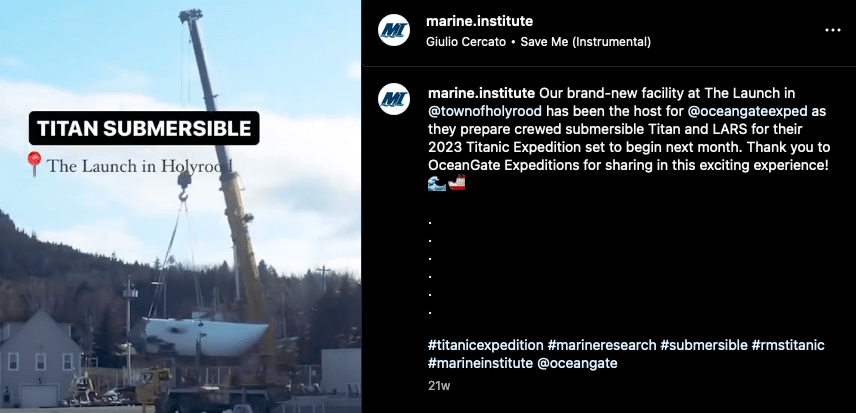
Singleton told Griffith he could accompany him to Holyrood on December 5, and that if they drive together from St. John’s, “we could use that time together as an opportunity to discuss collaborations of resources on upcoming project.
“Hopefully, for your next visit we’ll have the MOU ironed out and in place so that the submersible would be on site at MI.”
Throughout early December OceanGate and Marine Institute exchanged emails about the Titan’s specifications and logistics for transporting and storing it.
Then, on December 15, Rush asked Clarke and Singleton if there was “anything to report on the draft MOU/Agreement/Contract?” He explains, “we will need to have a completed agreement before year’s end.” The text preceding that line appears to explain the reason for the deadline, but it is redacted.
Two days later, Clarke asked Rush if they could push the MOU signing to January. “We are trying to facilitate this as quickly as we can but if this is signed the first week back to work in January is that ok?”
Rush said if the MOU would be signed the first week of January, “then we would send our team out the second week of January, and I would schedule my meetings and media interviews for then as well.” Several lines of Rush’s email are redacted, but he ends his message by asking: “Can I see a draft of the MOU before January?”
Clarke told Rush they would try to get him a “draft for review” the following Monday.
On that day, December 19, Clarke sent Rush a draft MOU and asked for his “suggested revisions as soon as possible.” Rush’s entire reply is redacted.
The MOU notes that its “general objective” is to “support mutually advantageous cooperation in the areas of ocean exploration, ocean literacy, and ocean technology education, research and training.”
That includes providing “opportunities for MI students to join OceanGate expeditions to gain work term experience,” providing OceanGate with storage space for its equipment, and for students to “apply academic endeavours that support the technical and operational requirements of OceanGate.”
Amid some back and forth on the MOU, Rush asked Clarke if she wanted “to discuss a potential announcement and/or a press release and/or presentation on the MOU and the sub/Titanic?” He said he would be in St. John’s the week of January 19, 2023, “if not earlier.”
On December 22, just hours before the university offices closed for the Christmas holidays, Clarke sent the final MOU to Marine Institute VP Paul Brett. “We are working to get this MOU back to OceanGate today. […] If you would sign today we can get it back to Stockton/OceanGate.”
Brett told Clarke his executive assistant, Deborah Janes, would sign on his behalf. Twenty-four minutes later, Janes sent Clarke the signed copy—and 10 minutes later Clarke forwarded the signed MOU to Rush for his signature.
Rush replied later that day, noting the “executed MOU is attached.”
“Have a Merry Christmas, Talk to you next year,” he signed off.
Despite the pressure from Rush and the amount of time it took to draft the agreement, the Marine Institute says the “appropriate processes were followed to put the MOU in place,” and that “additional review would have taken place if and when someone from the university officially planned to take an internship or research opportunity aboard the Titan.
“Because there was never an official plan for someone from Marine Institute to be aboard the Titan, this additional review wasn’t necessary.”

Author

Related Articles

Meaningful response to homelessness requires more than new builds, says NDP leader
Jim Dinn’s comments come in response to PC’s announcement of 10 new ‘micro homes’ in St. John’s

Muslim community commemorates 9th anniversary of Quebec City Mosque shooting
Anti-hate advocates say there’s still work to be done to combat Islamophobia in the province
PCs invite public input ahead of Budget 2026
The coming provincial budget will be the Progressive Conservatives’ first in more than a decade