

This project was supported by the Michener-Deacon Fellowship for Investigative Reporting.
In Susan Piercey’s obituary, no cause of death is mentioned and there is no suggestion gambling was involved. Of at least 965 gambling-related suicides recorded across Canada since 2000, a few dozen families at most have addressed the issue publicly.
Keith Piercey is not entirely sure what compelled his family to be one of the few to speak out. “I guess we were so saddened by what happened to Susan,” he says. The Pierceys considered how her gambling addiction affected the family in ways nobody was talking about. Going public seemed like it might inspire other families to do the same or stir someone with authority to take action on reducing VLT harms. That’s why Susan’s story was told in multiple news articles and Playing The Machines, a CBC-aired documentary inspired by one report from The Telegram. It’s why, for a time, Piercey did anti-VLT activism alongside others who lost children and spouses to gambling-related suicides.
But the Pierceys came to the same realization as other families who speak up after private tragedies: awareness doesn’t always lead to change. No evidence links Susan’s story to any policy or practice to reduce gambling harms or track gambling-related suicide in Newfoundland and Labrador.
Will you stand with us?
Your support is essential to making journalism like this possible.

The big push to discuss gambling-related suicides—the Canadian Press (CP) investigation mentioned in Part 1 of this story—started before Susan died.
In February 2003, the news agency reported gambling was a risk factor in about 10 per cent of Alberta suicides in 2001 and 6.3 per cent of Nova Scotia’s in the previous two years—more than anyone had previously reported, according to CP. Discussion ensued over whether enough was happening to track these deaths.
Several weeks before Susan’s death, the Canadian Association of Suicide Prevention (CASP) hosted a meeting of coroners and medical examiners in Iqaluit. “My recollection was that whilst we recognized gambling might be a precipitating factor [in suicides], that it’s very difficult to really determine,” says the province’s former Chief Medical Officer Dr. Simon Avis, who was in attendance.
Those at the meeting decided to track gambling-related suicides if gambling is mentioned during the death investigation process, in a suicide note, or by families, according to Avis. Experts suggested the high Alberta and Nova Scotia figures likely stemmed from “more intensive investigations” yielding more information. When investigating suicides between January 2001 and September 2002, the period reported by the Canadian Press, Nova Scotia proactively asked if the deceased gambled. This did not become a standard practice in Newfoundland and Labrador or elsewhere, and fell out of custom in Nova Scotia, as well as in Manitoba and Ontario.
The most notable harm-reduction measure after Susan’s death was clawing back VLT features and availability—measures the provincial government said promoted “responsible gambling.” In 2006, the ALC removed stop buttons from the machines, which lengthened spins and offered an illusion of control, despite results being controlled by preset odds. VLT players in Newfoundland and Labrador declined by about 1.5 per cent within months of the change.
All Atlantic provinces have experienced a decline in VLTs over the past two decades; today there are about 34 per cent fewer machines than in the early 2000s. At the end of the last fiscal year there were 1,771 VLTs in Newfoundland and Labrador, down from a high of 2,675 in 2005.
A few years after Susan’s death, an opportunity arose to seek accountability and force change through the legal system. In 2007, the Pierceys launched a class-action lawsuit against the Atlantic Lottery Corporation. After clients brought VLT-related harms to his attention, including gambling-related suicide, St. John’s lawyer Ches Crosbie got involved as class counsel. “It happens, and no one doubts it happens,” he says. “That’s what got me interested.”
Crosbie, Newfoundland and Labrador’s Progressive Conservative Party leader from 2018 to 2021, says the key problem is that VLTs, as was alleged in the lawsuit, are programmed to be played continuously rather than with built-in session limits. This may not affect some casual players, but can foster addiction in others, leading to significant financial losses. (Gamblers also set their own play limits, rather than having them enforced, at the ALC online casino.)
“Governments could address it, but they’ve got their hand too deep in the cookie jar,” he adds. Net revenue of ALC business lines in Newfoundland and Labrador, which include lotteries, the online casino and VLTs, was nearly $265.5 million last fiscal year.

Crosbie tried suing ALC under the Trade Practices Act, but the Newfoundland and Labrador Supreme Court struck down the lawsuit, saying the Crown corporation was immune from it. With Susan’s estate serving as lead plaintiff, a second lawsuit was filed. The suit alleged the Atlantic Lottery Corporation’s VLTs are inherently addictive and sought financial remedies.
But after the court ruled a deceased individual’s estate couldn’t lead a class action, new lead plaintiffs replaced the Pierceys. “It was just such a relief to get away from that,” Piercey says, though he and Catherine paid attention when the suit was in the news.
“We just didn’t want to be involved anymore because it wasn’t going anywhere. That can be discouraging, and you don’t want to keep on fighting.” Piercey also feels, in retrospect, that the lawsuit’s objective was about compensation more than the change he wanted, then and now—a ban on VLTs.
Attempts to proceed with the case sputtered for a few more years before being halted by a 2020 Supreme Court of Canada decision that favoured the Atlantic Lottery Corporation and the other defendants, 5-4. Over the next two years, each Atlantic province outlawed class actions against the lottery corporation, including Newfoundland and Labrador in November 2021. Backdated to the 1992 launch of the province’s Lotteries Act, the maneuver shields the ALC and provincial governments from group lawsuits.
Crosbie says individuals can still sue, but it can be more challenging, least of all due to “hundreds of thousands of dollars” in legal fees required. The legislation change also prevents plaintiffs from suing the ALC for punitive damages—the financial penalties that punish and deter behaviours a court finds harmful and which express community disapproval. Defendants can only request compensation for income loss, pain and suffering, or other harms.
“It’s all rigged against the individuals,” Crosbie says.
Medical examiner to ‘explore’ tracking and reporting gambling as a factor in suicides
Dr. Nash Denic, who became Newfoundland and Labrador’s chief medical examiner in 2019 following Avis’s retirement, has a relatively open attitude toward gambling-related suicide. He demonstrated an uncommon receptiveness to revisiting the province’s approach to the subject and filling the knowledge gap more than I’ve noticed from other provinces’ coroner and medical examiner offices.
Nonetheless, in a November 2022 interview Denic said he couldn’t remember investigating a suicide that was documented as gambling-related, despite the strong presence of gambling in the province. This may be due to loved ones being unaware of the deceased’s gambling or unwilling to talk about it with a medical examiner.
Denic says gambling may have been disregarded as one of multiple factors leading to a suicide, but also that the question of gambling’s role in suicide doesn’t come up. “Not saying that [gambling] wasn’t the issue,” Denic says, “but maybe [the question] was never asked properly.”
Denic has encountered suicides where the deceased had known histories of “financial issues.” He says the OCME records this without deeper inquiry into what it means: failed investments, bankruptcy, consumer debt troubles, or gambling. (The 1997-2001 review co-authored by Avis found eight of 225—or 3.6 percent of suicides—listed “financial problems” as a precipitating factor.) Sometimes people interviewed don’t know the specifics of the deceased’s financial problems either, no matter how close they are. Avis says if family members discover information after the fact, including whether gambling was a risk factor, that they can contact the OCME to update the file with this information.

Avis recalls health-related organizations regularly conducted research with OCME files before changes to privacy laws which limited access. Brad Glynn, executive director of the mental health peer service organization Lifewise NL, encourages the OCME to proactively collect and share data on gambling-related suicides. “All data that can be publicly shared is helpful for community organizations offering services,” he said in a November 2024 interview. “Having a better understanding of the trends and issues impacting and causing stress to people we support is always helpful.”
While potentially useful for researchers or suicide prevention efforts, the meaning of financial issues is not a critical distinction in the eyes of coroner or medical examiner offices. “Our duty is to provide the manner and the cause of death,” Denic says.
Chief coroner or medical examiner offices instead rely on the deceased or those close to them to proactively mention these issues, like the Pierceys did. But not everyone leaves a suicide note and the OCME says next of kin may not volunteer information related to gambling.
At the time of our November 2022 interview, Denic showed an openness to revisiting the topic. “Maybe that’s a question we should ask.”
In a summer 2024 email exchange with the OCME, a hint the office may have taken this to heart was buried in a lengthy response.
“While the OCME does not currently track gambling as a risk factor for suicide, it is being explored as a factor to be captured during OCME investigations going forward,” a representative wrote in an email.
In November 2024, the office elaborated that no decision was made “to specifically explore tracking gambling-related suicides but rather to explore it, as well as a number of potential suicide risk factors, for statistical tracking and reporting purposes.”
The OCME did not elaborate on what prompted this willingness to explore after decades of inaction.
“We continue to explore new avenues of investigation which may include looking into additional risk factors which may or may not be represented in any significant number in Newfoundland and Labrador,” the OCME says. The viability of tracking risk factors will be explored by the OCME in conjunction with stakeholders such as the Public Health Agency of Canada and Statistics Canada. How data will be captured will be determined after the OCME decides which risk factors will be tracked. No set timeline for this work presently exists, nor a commitment to release the data publicly or to mental health and suicide prevention associations. “The decision to release data is at the discretion of the Chief Medical Examiner,” says the OCME.
It also didn’t say whether the Office has spoken with the New Brunswick Coroners Service, which, as reported in Ricochet, implemented a new form for capturing suicide risk factors in January 2024 which requires the collection of information related to potential gambling issues. Instead, the OCME pointed out that the services, one coroner and the other medical examiner, differ from each other. “We use our population demographics in death investigation to track the reportable risk factors,” the Office says. “Gambling may or may not be a significant risk factor in NL. Current investigation reports seem to favor the latter.”
Though thinly sketched, the OCME’s plans may finally lead to strategies to track and prevent gambling-related suicide deaths, decades in the making and more important than ever amid the continued expansion of legalized gambling.
‘We never forget about Susan’
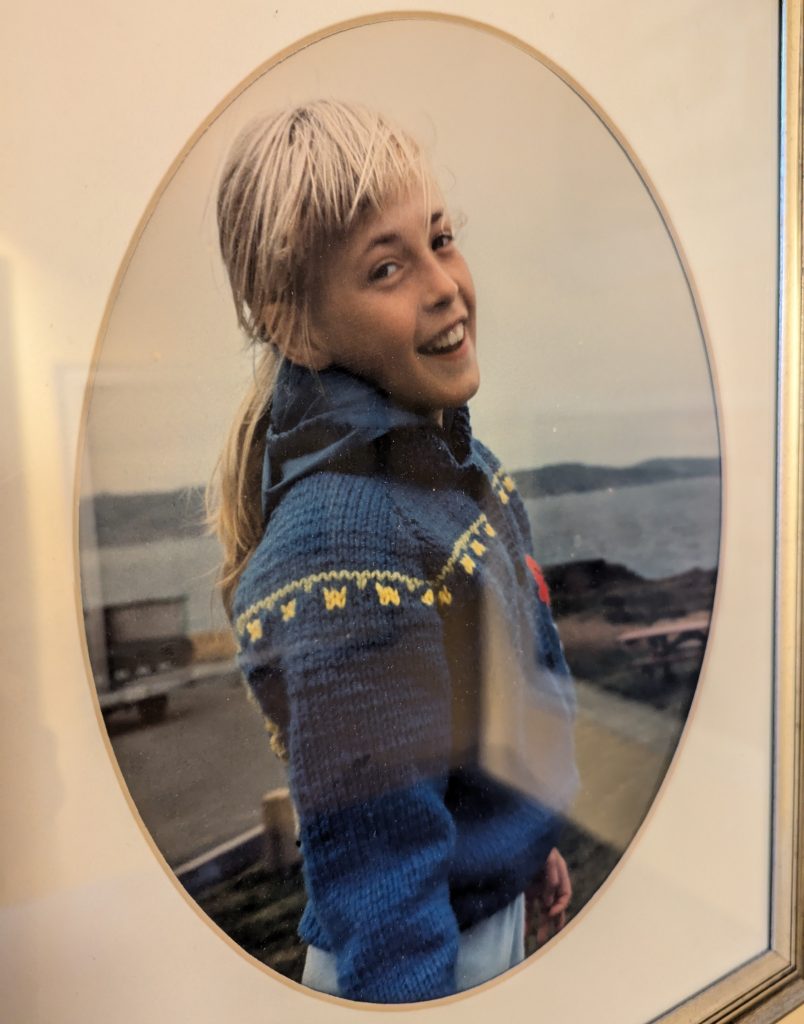
Susan was laid to rest in Mount Patricia Cemetery, surrounded by rolling green hills and a view of the Bay of Islands. She shares a simple grave marker with her grandmother who died in 2019.
Most years, the Pierceys get together around the day of Susan’s passing. But this year it was hard to get people together. They used to put a picture and a memorial note in The Western Star, but it shifted from being a paid daily paper to a free weekly a few years back. There’s still a memorial mass for her annually at a local church, where the minister is a family friend.
“We never forget about Susan, but we want to forget about what happened,” Piercey says.
The decision-makers who can act to prevent gambling-related suicides should never forget what happened to Susan, or to others like her, whose absences continue to affect their families and friends, but whose names we’ll never know.
Those lost whose stories won’t help prevent further suicides because it wasn’t policy to consider gambling as a factor in their own deaths.

This is Part 2 of a 2-part series. Click here to read Part 1.
If you or someone you care about needs help with gambling or addiction, reach out to one of the help lines listed on the Government of Newfoundland and Labrador Health and Community Services website.
If you are dealing with thoughts of suicide or are worried about someone else, dial 988 or visit the 988 Lifeline website to speak with a trained responder at Canada’s Suicide Crisis Helpline.
Editor’s Note: This story has been updated to include additional gambling-related suicides in the national total.

Author

Related Articles
Preventing deaths like Susan Piercey’s
The first step in addressing gambling-related suicide in Newfoundland and Labrador is admitting it’s a problem, starting with tracking the data that might show the extent of it. (Part 1 in a 2-part series.)

Province botched air quality monitoring plan for Labrador ahead of harrowing wildfire season
Government had plans to install a federally-funded network of air quality monitoring sensors throughout Labrador, but disagreement hampered progress

Uber’s screening process in NL ‘very disturbing,’ says lawyer
Internal emails reveal government approved Uber’s operating licence amid concerns from RNC, government staff