
Preventing deaths like Susan Piercey’s
The first step in addressing gambling-related suicide in Newfoundland and Labrador is admitting it’s a problem, starting with tracking the data that might show the extent of it. (Part 1 in a 2-part series.)

This project was supported by the Michener-Deacon Fellowship for Investigative Reporting.
Susan Piercey was on foot, braving the winter chill, a small television under her arm, and a receipt in her hand. She left the door open behind her as she trudged through the Pierceys’ Corner Brook neighbourhood. This didn’t surprise her parents, Keith and Catherine.
It was shortly after Christmas, and Susan, a friendly blonde in her late 20s who once scored top marks in her business administration program, preferred money to gifts. If she learned where an item was purchased, there was a tacit understanding that she wouldn’t keep it. Either she’d return it for a refund, or she’d sell it—sometimes for less than its worth.
Will you stand with us?
Your support is essential to making journalism like this possible.
Since around age 20, Susan spent her time in front of different screens—the video lottery terminals legally introduced in Newfoundland and Labrador in 1991. She was among the estimated 3.3 per cent of at-risk or problem gamblers in Newfoundland and Labrador, according to data from the 2018 Canadian Community Health Survey—a population nearly the same size as Corner Brook itself.
“For someone who hardly worked at all to take every cent that you did earn, and waste it on those machines was something unbelievable,” Keith Piercey says, estimating Susan lost at least $100,000 over the course of a decade. She worked three jobs at one point, yet sunk her pay cheques into the machines in the dark corners of bars and restaurants. A student loan met the same fate. To fund her addiction, she later wrote bad cheques, sold items that weren’t hers and stole money from her grandmother’s bank account. “They were as close as any two people could ever be,” Piercey says—but when gambling addictions take over, people make decisions against their nature.
With her family’s help, Susan attended residential gambling addiction treatment programs several times in Newfoundland and Ontario. At one facility, journal writing was part of the recovery process. In one entry, Susan addressed VLTs like they were a monster lurking behind her. “If you would only let me out of your clutches and allow me to reclaim back my life, without constantly fighting to stay out of your grasp.” In another entry, she was philosophical.
“I stayed and played on your empty promises and lost not only money but my soul.”
In 2003, to prevent herself from gambling, Susan asked if Catherine could take control of her finances. Her mother agreed to help, but Susan never followed through. She died by suicide about a week later at age 31.
On average since 2000, there have been 59 suicides in Newfoundland and Labrador per year. Following each, depending on where the death occurs, the RCMP or Royal Newfoundland Constabulary (RNC) conducts an initial fact-finding investigation on behalf of the Office of the Chief Medical Examiner (OCME). The office may then do additional research. The investigative process includes interviewing those close to the deceased. Piercey recalls mentioning Susan’s gambling addiction to the RNC officer who investigated her death.
“We don’t know if her name was ever added to any kind of roster or a list,” he says. But Susan’s father is clear about the cause of her death. “She died because of gambling addiction.”
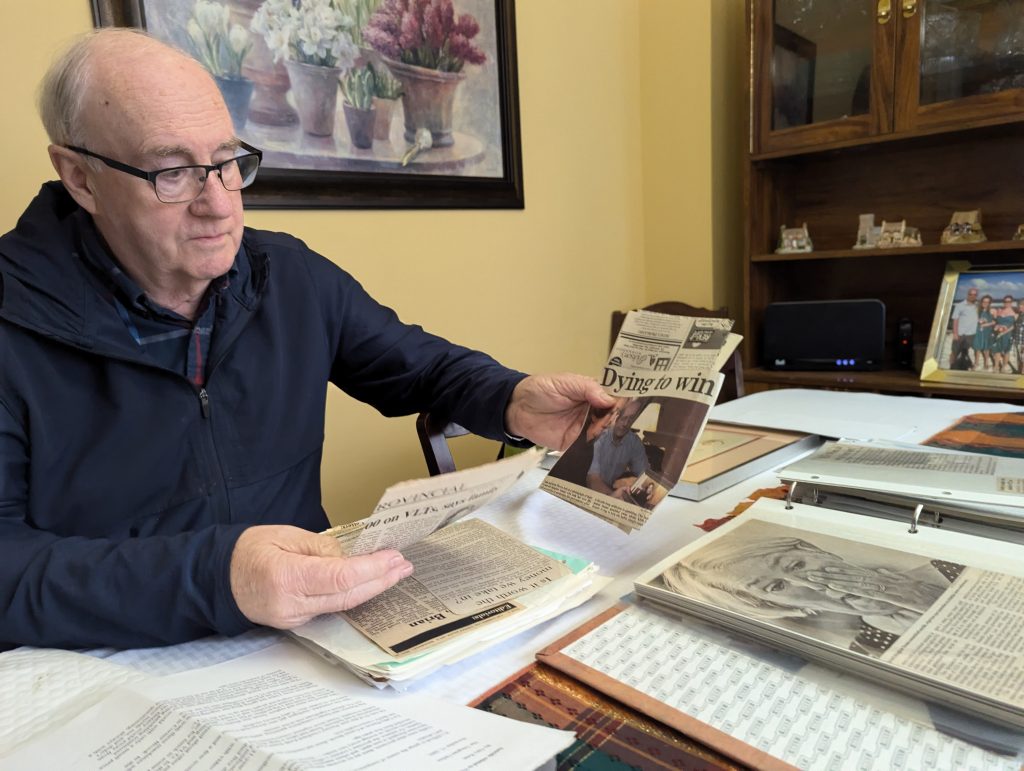
The link between Susan’s suicide and her gambling is no secret. It is on record in the Government of Newfoundland and Labrador hansard. On Nov. 25, 2004, NDP MHA Randy Collins read a letter of Susan’s in full before the House of Assembly. “This letter was written by Susan Jane Piercey shortly before she took her own life as a result of being addicted to VLT machines,” he told the legislature.
Addressing Susan’s suicide publicly broke a long-standing taboo. It was only in the previous decade that Dr. Charles Hutton, the province’s chief forensic pathologist, “publicly urged physicians to indicate on death certificates when a death was a clear-cut case of suicide,” wrote John Gushue in the Canadian Medical Association Journal. Newfoundland and Labrador historically boasted an artificially low suicide rate because families and the church pressured doctors to portray them as natural deaths.
The link between Susan’s addiction and her death should have been an inflection point, spurring quick action to prevent similar suicides in the future. Instead, Newfoundland and Labrador has never formally developed a prevention plan for gambling-related suicides or a reliable method for capturing these details. It doesn’t even know how many happen each year, and can’t readily access the data.
For my Michener-Deacon Investigative Reporting Fellowship project, I requested annual gambling-related suicide numbers since 2000 from each province to better understand the prevalence of these deaths in Canada. This involved asking coroner and medical examiners for annual figures of suicides where gambling was recorded as a potential contributor to the death. These figures allow the public to better understand the prevalence of these deaths in Canada, how they are tracked and what is being done to prevent them. Newfoundland and Labrador provided no data or estimates, claiming through a spokesperson that the province “does not determine nor track risk factors for suicides.” Meanwhile, all other provinces, except P.E.I., shared full or partial data.
At least 965 gambling-related suicides have been recorded in Canada since 2000.
Only 35 of them are from the Atlantic provinces.
Photo by Daniel Smith.
Academic researchers suggest five to 10 per cent of suicides—potentially up to 20 per cent—may be gambling-related, as recently reported by Ricochet. No province provided data that met this threshold, suggesting a nationwide undercounting problem. But in Newfoundland and Labrador, the challenge runs deeper. Without access to historical data, it’s impossible to know how gambling-related suicide has impacted Newfoundlanders and Labradorians over time. Without recent figures, it’s challenging to know the level of resources health authorities and suicide prevention groups need to focus on this issue.
There were 48 suicides recorded in the the province the year Susan died; her death alone means gambling was a factor in at least two per cent of suicides in Newfoundland and Labrador in 2003. Overall suicide numbers have increased in the province since 2000, and the gambling landscape has refashioned itself from being dominated by physical machines to apps and websites.
Today, Newfoundlanders and Labradorians have more legalized gambling options than ever. In 2021, the province followed its Canadian counterparts in legalizing online sports betting.
The same year, NL Minister of Finance Siobhan Coady said the province wouldn’t allow an Atlantic Lottery Corporation (ALC) online casino because of the known effects of VLTs. But in late 2023, the province followed New Brunswick and Nova Scotia by quietly opening an online casino, effectively bringing legalized gambling to even the province’s most remote corners.
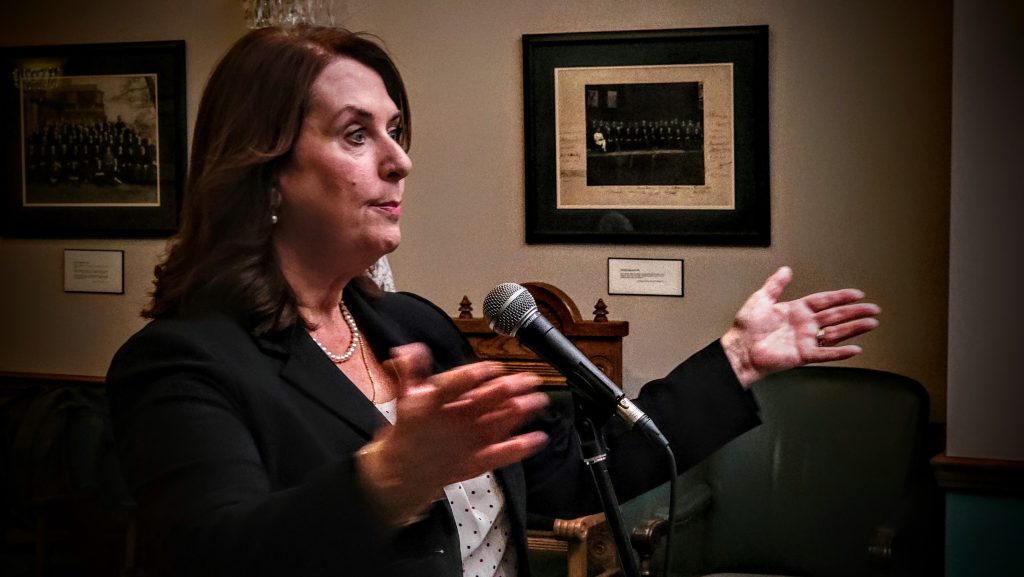
The Independent asked Coady what changed the government’s stance. In a written statement, Coady pointed to its regulated status compared to “a proliferation of online casinos which, while not legal or regulated to access in province, are encouraging Newfoundlanders and Labradorians to participate.” She also mentioned the Atlantic Lottery Corporation casino’s accreditations from the World Lottery Association and features like age verification and deposit limits as “reasons why we agreed to allow ALC to provide online access.”
Poorly-tracked data and increased legal gambling options aren’t unique to Newfoundland and Labrador, but elsewhere activists and researchers are fighting for gambling-related suicide reforms, in particular calls to track and prevent these deaths. After 30 years and a change in leadership, the OCME has informed The Independent it is considering changes to “start tracking gambling as a risk factor for suicide” more concretely for the first time. This could take Newfoundland and Labrador from behind the pack in Canada in recording gambling-related suicide data to being a leader, potentially inspiring other provinces to follow suit.
Office of the Chief Medical Examiner becoming less transparent
Newfoundland and Labrador’s troubled relationship with legalized gambling is no secret. For a 2020 Independent story, former premier Clyde Wells expressed regret on how it spread. “If I had my time back, I would never permit VLTs in the province,” he said. Most negative consequences—such as addiction, bankruptcy, or suicide—are whispered about but not recorded in detail.
Newfoundland and Labrador’s first-ever provincial gambling prevalence study didn’t happen until 2005 — 14 years after VLTs were legalized. It suggested approximately 13,150 residents over the age of 19 (or 3.4 per cent of the population) have gambling problems or are at moderate-risk. A 2009 survey reported similar figures; no gambling prevalence study has been conducted since.
Both prevalence studies asked gamblers suicide-related questions. The 2005 study reported several people with gambling problems had revealed having suicidal thoughts, though none attempted suicide. Even with a small sample size, one person at moderate risk and three with gambling problems interviewed for the 2009 survey said they had suicidal thoughts related to their gambling. Two reported having attempted suicide for the same reason.
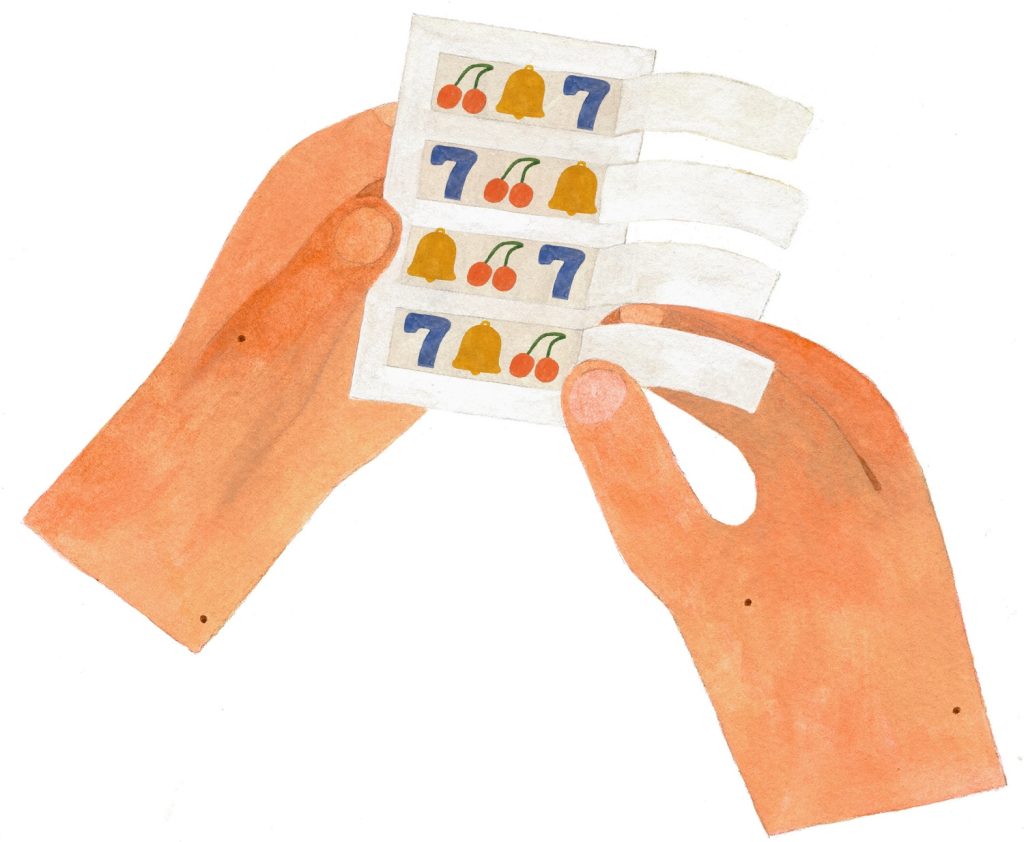
Gambling is often left out of mental health and addictions discussions in the province. The 2017 Towards Recovery report for mental health and addictions makes only two mentions of gambling, and its 2022 evaluation fails to mention gambling even once. This is also true of Newfoundland and Labrador’s comprehensive five-year suicide action plan launched in 2022.
Dr. Simon Avis, who became chief the same year the province’s medical examiner system launched, publicly discussed gambling-related suicides several times during his career. One 1997 newspaper report says, “Newfoundland’s coroner [Avis] says there are no known instances of suicide attributable to video lottery debts.” But over time that shifts.
In 2008, Avis co-authored a paper which found five out of 225 (or 2.2 per cent) suicides between 1997 and 2001 had a history of gambling as a precipitating factor.
That same year, after author and Universiy of Prince Edward Island professor Peter McKenna claimed 10-15 Newfoundland and Labrador residents died from gambling-related suicides annually, Avis told CBC only two of 505 suicides recorded in a decade had a proven link to gambling as a potential stressor.
Despite the OCME’s inability to share data, Avis, who served as chief medical examiner from 1996 to 2019, agreed to discuss gambling-related suicides in Newfoundland and Labrador during his tenure.
“Why, all of a sudden, is [gambling-related suicide] flavour of the day again?” he asked during a June 2023 telephone interview.
A few months before Susan’s death, the Canadian Press released an investigation that suggested gambling-related suicide was a bigger issue in Canada than previously reported. This led to a national public debate and the issue being discussed at a national meeting of chief coroners and medical examiners in Iqaluit in 2003. Avis attended the meeting and remembers no clear agreement among his peers over whether tracking gambling-related suicides was possible. At the time, he told the Canadian Press that gambling-related suicides existed but didn’t feel chief medical officers could prove the deaths beyond a reasonable doubt. Two decades later, Avis, who continues to work part time as a medical examiner, still feels this way.
“I have investigated suicides in which, according to the investigation, the person had a gambling problem,” he says, noting office of chief medical examiners’ summary sheets may mention gambling as a stressor. “That doesn’t necessarily imply that the person committed suicide because of the gambling problem,” he adds.

It’s commonly accepted that multiple factors, not a single issue, cause suicides. Yet because gambling disorder, reclassified as an addiction in the DSM-5 (the Diagnostic and Statistical Manual of Mental Disorders) in 2013, intersects with anxiety, depression and other suicide risk factors, it can play a unique role. Though the medical establishment increasingly accepts this, to date the province’s OCME has not kept up.
Reviewing past OCME gambling-related suicide disclosures suggests the office is becoming less transparent over time, despite the growing prevalence of gambling in Newfoundland and Labrador and across the country.
A 2007 Globe and Mail article about VLTs in Newfoundland and Labrador references a gambling addiction counselor’s claims of hearing about “at least 15 gambling-related suicides in the province in the past year.” This would represent approximately 29 per cent of suicides at the time, and five times the number of homicides. Yet two years later, the Globe reported that Newfoundland and Labrador identified only “nine deaths from Jan. 1, 1997, to Dec. 31, 2008, in which gambling was thought to be a stressor.”
The office of the chief medical examiner cannot confirm this number for The Independent. “[T]he statistics would have most likely been collected through a manual file review for the time period in question,” an OCME representative said in a June 26, 2024 email. They continue that if files contain “police reports, witness statements or additional information that notes gambling may be involved, then that information could be captured in a manual file review if the purpose of the data collection was gambling related.” A November 2024 Access to Information and Protection of Privacy (ATIPP) request for correspondence with the newspaper in 2009, which might have clarified the OCME’s methods, resulted in no records.
In most provinces, coroner or medical examiner offices can review files for gambling-related suicide figures by performing keyword searches in their computerized databases for terms like “gambling” or “VLT.” While the OCME says its physical files are digitized as PDFs, they are “difficult to search through” for information.
However, the files can be manually reviewed, if needed, for any information that may or may not be captured electronically. P.E.I.’s Chief Coroner’s office, which also didn’t share data, did not respond to clarification requests about the status of their files.
“We’re in the process of trying to get [the OCME] into the digital world,” Avis says. “I’ll point out that I’ve been trying to do that for 20 years and I never succeeded.”
The OCME tells The Independent it uses both paper and digital records, including a case management platform to enter codes and manage information “for data tracking and statistical analysis purposes.” The office anticipates launching a new case management system in 2025 and tells The Independent “all existing” records will be integrated into the new system. It’s not clear whether this will make it easier to search for historical suicide risk-factor data, like gambling.
Two decades later
Without the province freely providing gambling-related suicide data, The Independent filed an access to information request asking for a manual review of the approximately 1,300 suicide files since 2000 to determine how many recorded gambling as a suicide risk factor. Other provinces have responded with fee estimates and process breakdowns for such requests. Nova Scotia’s Information Access and Privacy Services Office estimated costs of $4,845 to search physical suicide records between 2000 and 2007 for gambling risk factors.
Newfoundland and Labrador’s Department of Health and Community Services responded that the OCME “does not track gambling as a risk factor and has no records responsive to the requested information.” This allowed the department to refuse the ATIPP request, though the office had previously shared numbers of gambling-related suicides with media.

When asked about this discrepancy and presented with evidence of previously published gambling-related suicide figures, the OCME reiterated it does not track this data, though it acknowledged information which suggests gambling as a risk factor may appear in the files of those who have died by suicide. Because the OCME did not have records where it tabulated gambling-related suicides, it would, in effect, have to create such a record to respond to the information request. Provincial legislation does not require the OCME to do this, so the office rejected the request. It suggested asking the Newfoundland and Labrador Centre for Health Information about this data, but the Centre did not respond to two separate information requests from The Independent.
Therefore, from all these deaths, after all these years, one name stands alone: Susan Piercey. Despite her story opening the province’s eyes to gambling-related suicides two decades ago, significant steps haven’t yet been taken to track or prevent other, similar deaths. It’s not for a lack of trying by the Pierceys, but obstacles keep popping up in the way of justice.
This is Part 1 of a 2-part series. Read Part 2 now: Learning lessons from Susan Piercey’s death.
If you or someone you care about needs help with gambling or addiction, reach out to one of the help lines listed on the Government of Newfoundland and Labrador Health and Community Services website.
If you are dealing with thoughts of suicide or are worried about someone else, dial 988 or visit the 988 Lifeline website to speak with a trained responder at Canada’s Suicide Crisis Helpline.
Editor’s Note: This story has been updated to include additional gambling-related suicides in the national total.

Author

Related Articles

Learning lessons from Susan Piercey’s death
After two decades of false starts, Newfoundland and Labrador might be closer than ever to tracking gambling-related suicides. It’s a necessary first step to prevent these deaths, but will the province take it? (Part 2 in a 2-part series.)

Province botched air quality monitoring plan for Labrador ahead of harrowing wildfire season
Government had plans to install a federally-funded network of air quality monitoring sensors throughout Labrador, but disagreement hampered progress

Uber’s screening process in NL ‘very disturbing,’ says lawyer
Internal emails reveal government approved Uber’s operating licence amid concerns from RNC, government staff