
Liberals’ climate action plan ‘misses the mark’
Observers say five-year strategy to reduce carbon emissions and mitigate the impacts of climate change lacks vision and doesn’t address the root of the crisis: fossil fuel extraction
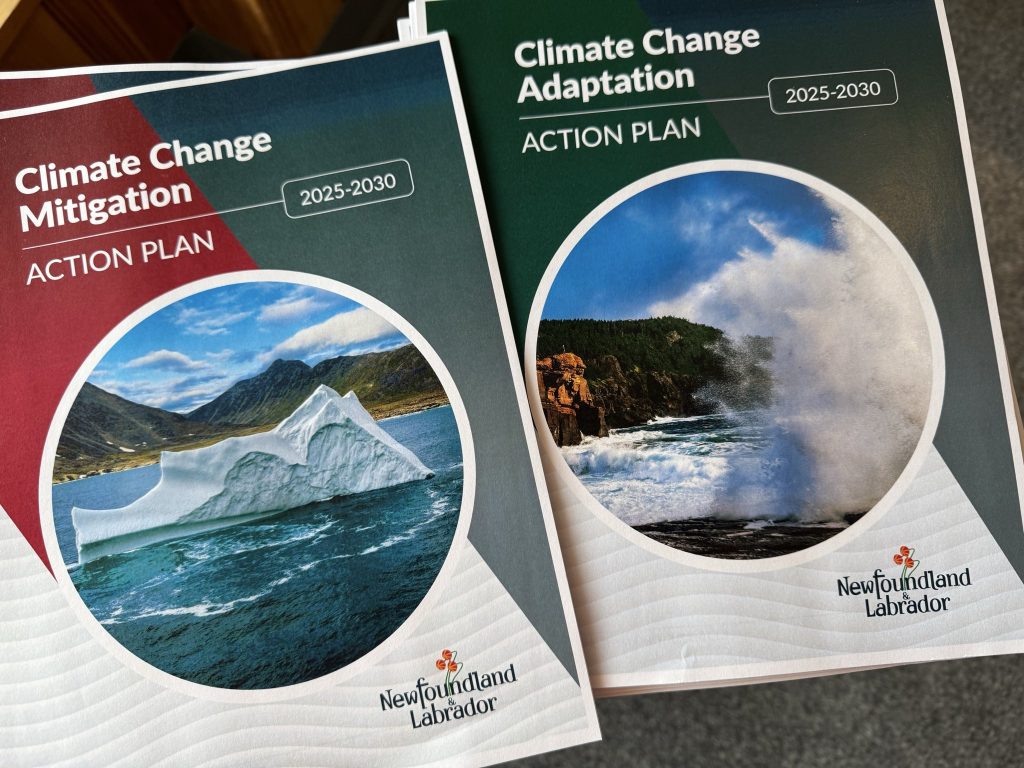
The province’s new climate action plan is insufficient on multiple fronts, say a researcher and a climate action advocate who are paying close attention to Newfoundland and Labrador’s response to the climate crisis.
The province’s new five-year plan, announced June 30, amounts to “very little, ultimately, for what we’re really looking [for],” says Camille Ouellet Dallaire, an assistant professor of geography and program chair for the Environment and Sustainability Program at Memorial University.
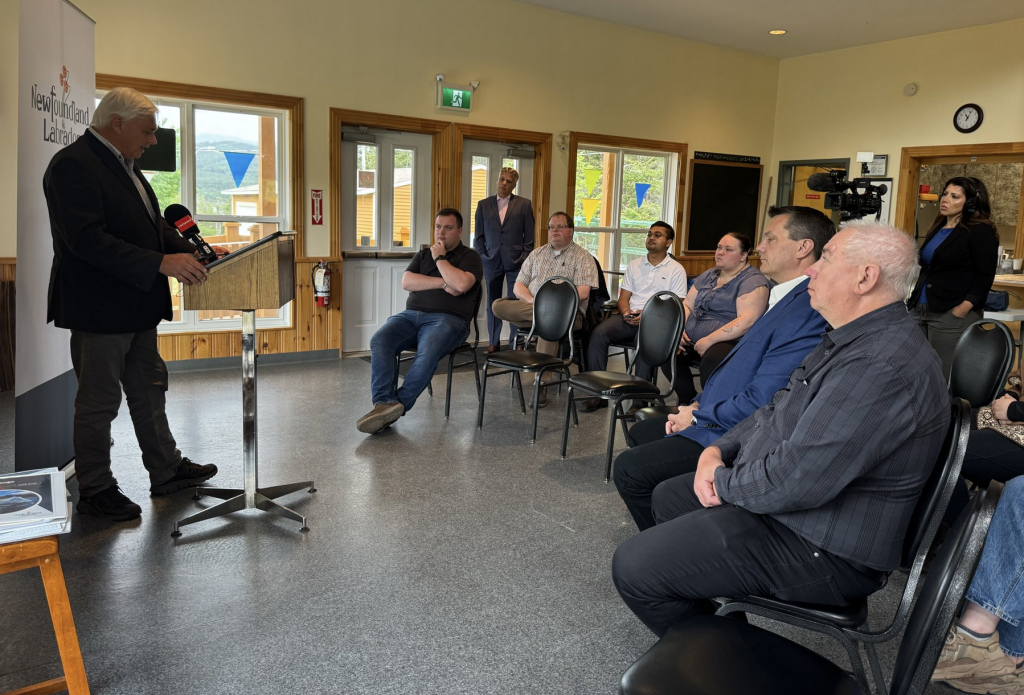
Environment and Climate Change Minister Scott Reid unveiled the province’s new climate action plan in Pasadena, on the island’s west coast. It builds on the Liberals’ 2019-2024 strategy to reduce greenhouse gas emissions and achieve net-zero emissions by 2050. The province’s goal is to reduce greenhouse gas emissions by 30 per cent below 2005 levels, bringing them down to 7.4 million tonnes.
But Ouellet Dallaire says the climate action plan — split into two reports addressing adaptation and mitigation strategies — fails to address the root cause of climate change: the largest source of greenhouse gases globally. “If we are talking about mitigation, but there’s nothing about the oil and gas industry, then we’re not really engaging deeply in the conversation, right?”
Will you stand with us?
Your support is essential to making journalism like this possible.
The 2025 provincial budget proposes $111 million in subsidies for oil and gas exploration and development. At the time of its release in April, Finance Minister Siobhan Coady reaffirmed the province’s commitment to subsidizing the offshore oil industry.
NDP leader Jim Dinn says the climate plan lacks “detail, ambition, and urgency.” In a statement to The Independent, he asks, “How serious can this government be about reducing greenhouse gas emissions when Budget 2025-26 earmarked $90 million to oil companies for exploration? Actions speak louder than words.”
Dinn adds that the province is already paying the price for climate inaction. “Just ask those who lost their homes in Hurricane Fiona, or the growing number of families forced to evacuate due to wildfires across the province.” He says the government needs to do more because the climate action plan “misses the mark.”
Premier John Hogan reiterated his support for the oil and gas industry at the annual Energy NL conference in St. John’s last month. “Conventional oil and gas has been the backbone of the energy industry in our province, and as premier I’m going to continue to show unwavering pride and support for this sector,” he announced.
Conor Curtis, head of communications at the Sierra Club Canada Foundation, says the report does not adequately address the expected decline in global oil and gas demand, nor does it reflect the scale of retraining and investment needed in other sectors to ensure workers in the fossil fuel industry have viable employment alternatives.
Green hydrogen
Curtis says he was encouraged to see a focus on renewable energy in the mitigation plan. The report references wind-to-hyrdrogen projects in the province—all at various phases—which it expects will “provide green energy to the global market, supporting the green transition around the world,” and establish the province as a leading clean energy provider.

While wind-to-hydrogen projects are important for the energy transition and could create jobs, Ouellet Dallaire cautions that the market for such projects remains uncertain and the province’s plans depend heavily on a market that has yet to fully materialize. High production costs, limited infrastructure, and ongoing technological challenges have contributed to a decline in demand for green hydrogen, slowing progress on projects like the Port au Port-Stephenville Wind Power and Hydrogen Generation Project, whose proponent World Energy GH2 has said it’s exploring alternate ventures.
Then there is the question of who benefits from the energy produced via green hydrogen. Current proposals, such as the North Atlantic Green Energy Hub and the Toqlukuti’k Wind and Hydrogen Project, plan to export the energy to the international market. “How do we distribute the benefits from these projects in a way that will lift everyone up in Newfoundland, not just support the decarbonization in Europe or support the shareholder?” Ouellet Dallaire says.
Curtis says the provincial plan should have included strategies to support stable, locally-driven electricity demand. He says the government should prioritize meeting communities’ needs through renewable energy by working with them to” make sure that they have control of their energy.” To drive further demand for renewable energy within the province, he says the province should work with the emerging tech sector to explore how they can utilize renewable energy, such as for data centers. “Renewables offer cheap power which is increasingly needed in the tech sector.”
Public transportation
The province’s climate change mitigation plan targets key areas, including transportation, building and home heating, industry, waste management, and electricity generation, while also exploring opportunities for negative emissions.
The transportation sector is the province’s biggest emitter of greenhouse gases, accounting for 44 per cent of Newfoundland and Labrador’s total emissions in 2023. The report projects that transportation-related emissions will remain constant, with a gradual decline expected around 2040. While the report focuses on the transition to electric vehicles, Dinn is concerned about the plan’s brief mention of public transportation. “Public transit gets a single reference with no commitment to expansion, despite how urgently it’s needed,” he says.

Ouellet Dallaire says that transitioning the entire province to electric vehicles comes with challenges, particularly around affordability — an issue made more pressing by the province’s current economic climate. “Millennials like my generation, and younger people—we can barely afford houses right now,” she says.
She adds that the plan should have focused on public transportation, alongside electric vehicles. Ouellet Dallaire says public transit connecting rural areas can play an important role in mitigating climate change, and that the province is well-suited to develop a strong public transit system that connects rural and urban areas, which would also offer residents a more affordable alternative to cars.
Funding municipalities
The adaptation plan outlines 31 actions aimed at addressing the potential impacts of climate change in the province, such as rising temperatures, extreme weather events like wildfires and flooding, and related health concerns. It focuses on governance, programming, partnerships, and public awareness, with actions organized into five areas: capacity building and partnerships, infrastructure and economic considerations, health and well-being, disaster and emergency preparedness, and nature and land use.
The plan highlights that between 2020 and 2023, $14 million was allocated through the federal Investing in Canada Infrastructure Program to support municipal coastal protection projects, including the construction and upgrading of breakwaters and seawalls, as well as slope stabilization near community infrastructure.
The province says it will collaborate with the federal government and municipalities to help communities access more funding for climate-resilient infrastructure. The government also says in the plan it will create a public-analysis tool to assess local infrastructure adaptation options.
Ouellet Dallaire says the province should have gone further and provided more clarity on how it plans to support municipalities in building resilience. She says that one of the main challenges municipalities face when implementing adaptation policies is securing sufficient funding. “That’s more than just giving people information, right? You need to be actually dedicating funding to helping municipalities.”
Curtis says that for the adaptation plans to be implemented, communities need proper resources. He points to the province’s delays in getting federally-funded air quality sensors installed and operating in Labrador. “You can have kind of the best plans in the world when it comes to adaptation, but unless you have the resources to actually help municipalities do the adaptation, it doesn’t amount to much,” he says. “It’s great for communities to know what the impacts are going to be, but often municipalities, particularly, lack resources in order to actually adapt to those impacts in advance.”
Negative emissions and carbon storage
The mitigation plan also focuses on negative emissions, which refers to the removal of carbon dioxide from the atmosphere. The provincial government is providing up to $6 million for the acceleration and the development of carbon capture, utilization and storage in Newfoundland and Labrador’s offshore oil industry.
Critics of carbon capture and storage argue that it is often used by oil and gas companies to justify continued fossil fuel extraction. They point out that the technology is not yet operating at a meaningful scale—most projects capture only a small portion of emissions and require large amounts of energy, often sourced from fossil fuels.
In 2023, there were five active carbon-capture projects capturing approximately 0.5 per cent of Canada’s emissions. It is important to note that Canada’s national emissions tally does not include greenhouse gas emissions from fossil fuels exported internationally. In 2023, Canada exported roughly 81 per cent of the country’s total crude oil production.
Additionally, some experts say the high costs associated with carbon capture could be more effectively invested in the research and development of renewable energy alternatives. Curtis urges the provincial government not to continue investing in carbon capture and storage. “The focus really does need to be on the alternatives to oil and gas.”

Author

Related Articles

New play portrays barriers facing N.L. women in politics
Women won the right to vote a century ago but are still underrepresented in public office. St. John’s playwright Ruth Lawrence’s play tackles that head on.

Meaningful response to homelessness requires more than new builds, says NDP leader
Jim Dinn’s comments come in response to PC’s announcement of 10 new ‘micro homes’ in St. John’s

Muslim community commemorates 9th anniversary of Quebec City Mosque shooting
Anti-hate advocates say there’s still work to be done to combat Islamophobia in the province